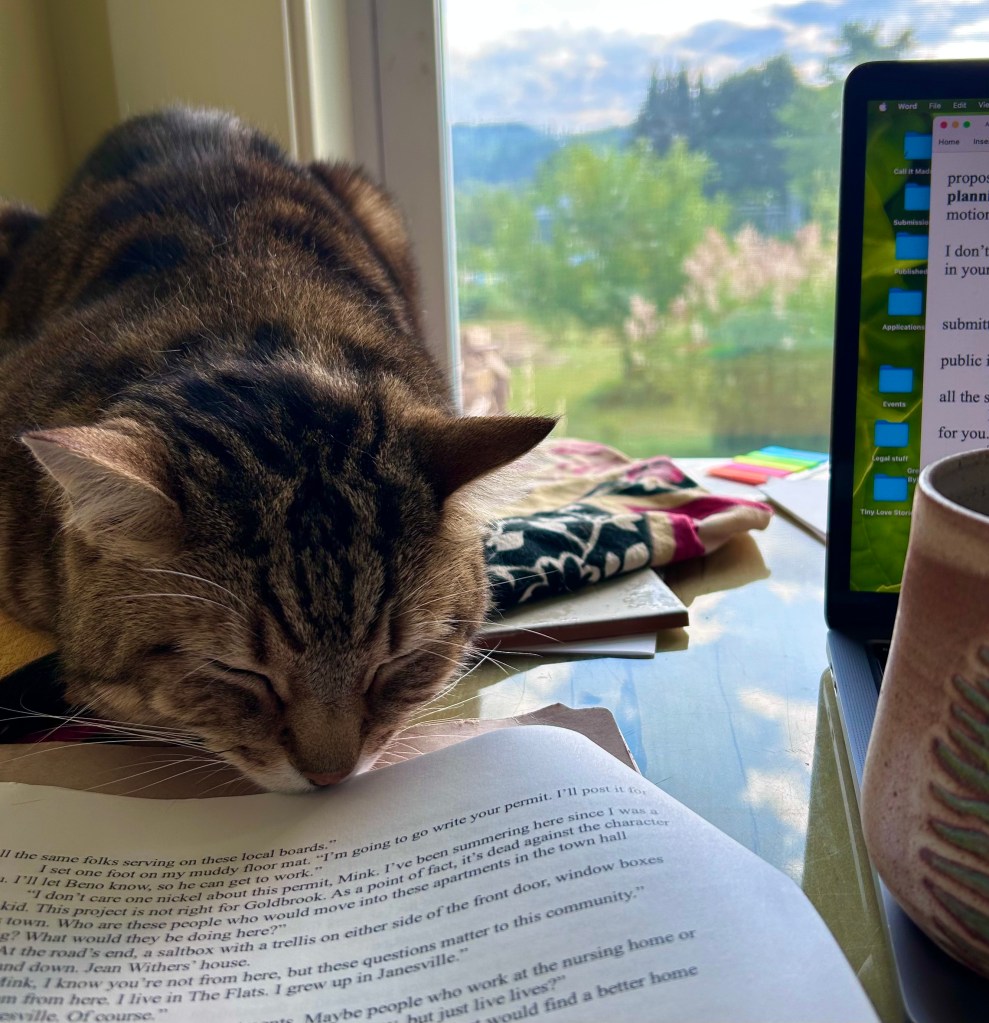
I read in the New York Times that Catcher in the Rye turns 75, a novel my mother first shared with me. My parents owned little fiction; our house was mostly filled with philosophy books, David Hume (who I never read) and Plato and Aristotle. In those shelves was jammed a copy of Huckleberry Finn and Salinger’s Catcher in the Rye and Ten Stories, drug-store paperbacks held together with rubber bands. Books I love — and maybe you do, too.
In this lushly lingering month of July — filled with sun and swimming, with work and chores — I’m lucky to have scheduled a dozen readings for Call It Madness, this novel about Vermont and family and how the sodden past shapes our lives. Of all the books that reflects my life, Long Day’s Journey into Night surely ranks at the top. A reader pointed out to me recently that Call It Madness moves forward linearly, but is packed with the past, events that happened decades ago that remain as vibrant as this morning’s news.
I write in the world of cause and effect — our actions always propel consequences — but the past with its radiant joy and unquenchable sadness propels us mightily. Nonetheless, the pear trees previous owners planted in my front yard bear reddening fruit. The bees suck globe thistle. Sunday evening, I walk far along the river, the running water sunk low among exposed rocks. The sunlight lingers — so much light in these days sugary with freshly-mown hay. I’d like to pocket a handful of July and return in January: humans, we can launch ourselves to the moon but July-in-January is impossible. Nothing to do but quaff the present while it exists.
hydrangeas
pale blue in the rain
blue in the moonlightBy Masaoka Shiki | Translation by Lucien Stryk


Amen to this: Nothing to do but quaff the present while it exists.
Beautiful poem.
💚
Ah!
✨
Maybe July-in-January is a good wish for Vermont.
On (too) hot summer days in Colorado, January-in-July seems more desirable. 🙂
Oh gracious!!
Quaff the present. As much as I think I can tuck summer in the winter bank account, I can’t. I can just pre-anticipate daydreaming about it while sitting by a fire. Let’s swim together in August! I’ll get in touch.
I’d love to swim in August!!