Risking Delight with the Lion

Precisely a year ago, to the day, Isele Magazine published my essay “Red Devil, Survivor Herself.” I had written all through the godawful cancer treatments, AKA chemotherapy, and publishing this essay marked my tenacious determination to remain among the living—and to remain a fierce writer, too.

Over the summer and autumn, “Red Devil” morphed into a manuscript-in-process. Recently, three more chapters were picked up. The kind folks at Isele Magazine published “Risking Delight with the Lion.” The following two will be published in different journals later this spring.

Here’s the opening of “Risking Delight.”

In my winter of chemotherapy, I woke at night, quivering. Where was I? What was happening? Gasping, I reminded myself that I was in bed, I was okay, that whatever demons had sought me in sleep had been banished by my waking. I didn’t blink my eyes open into peace. My breathing never eased into contentment.

Cancer-and-chemotherapy is a path of suffering, an involuntary hairshirt. The first morning I met my oncologist Dr. Valera in that Dartmouth-Hitchcock hospital room, I was surfacing, bleary and exhausted after an emergency admission and an exploratory surgery that verged on plunging me into a sedated coma. My daughters had been summoned through a snowstorm. What remained of my vitality was vanishing. Me or the lymphoma would triumph. There was no middle ground. Yet, that first morning, Valera assured me, “I can cure you.” Not cocky, not boastful, merely stripped down to facts: the lay of my body and disease, his skill and treatment course.

I clutched his words desperately, but I never repeated aloud, “This physician makes a claim that I will live.”

What was the levy I would pay for remission?…

Last… with the 2050: Vermonters Take a Swipe at the Future project, I’ll be reading at the Tenney Memorial Library in Newbury, Vermont, this Saturday, 4 p.m. Come!

Hell-bent robins.

I arrive home from the local arts center, get out of my car, and a robin nearly flies into my head. Winged creatures are swooping from the apple trees to the hedge of lilacs that is just beginning to bud. My god, what a lovely day.

In my bag, I have an empty pint jar of water I’ve been drinking, and a ball of purple linen I’m knitting into a summer shift, and the books of the two authors whose reading I just attended — Helen Whybrow of The Salt Stones and Jody Gladding’s translation of Jean Giono’s The Serpent of Stars. I have a new book, too, a collection of stories by a Turkish author I’ve never read. Sitting with my book world friend, her publisher friend hands me a book, too. The afternoon and evening has gone this joyous way, like that hell-bent robin — strangers and friends and people I haven’t seen in ages — exuberant about literature and art and the unstoppable profusion of spring.

I like this art center so much I imagine curling up on a cushiony bench and sleeping beside the wide windows, the starlight on my face. An acquaintance I met at a Vermont Studio Center residency works here, too, and we plot some amusing possibilities. We’re beside the table heaped in lush mounds of delicacies, and I graze on stuffed mushrooms and empanadas and fresh tomatoes. I wrap lemon squares in napkins and hold these in my hands away from my books and knitting.

Outside on the stone patio, the wind is lifting over the meadow, the sun sinking and the cold creeping in. All around me looms that chilly darkness, the nearness of sunset, the hole in the night where dawn seems impossible. So much of my life I’ve teased and poked at this, and, conversely, pushed the vast cold away — through distraction and once-upon-a-time through drinking and work. Now, as the twilight drains away and night stakes in for its duration, I wander among the yet leafless apple trees, the garden with its green garlic nubs, drinking tea and listening to the birds settle down to sleep. My god, the myriad lessons of cancer. Note this, too: clench joy and fear in the same fist. See what happens.

Kitchen renovation paint considerations….

The die is cast?

Writing notes for a reading for Call It Madness, I scrawl in my notebook that this novel is jammed with secrets. Avah Lavoie, protagonist, stashes secrets of theft of longing, and she’s surrounded by secret-keepers, too. Early in the novel, I offer readers two clues. These questions underpin my life, too. No surprise.

The first that’s slipped into the narrative is the story of beavers in New England, how these creatures and their laborious dams once flooded New England, rendering that birch bark canoe a viable form of transportation. When the craze for beaver hats set in, the beavers were trapped nearly to extinction, drying up the land. The story of the past shapes the terrain where we live and how we see the world.

The second is Caesar’s line Alea iacta est — the die is cast. The machination of fate. It’s a question that’s arced through my life since I was a teenager, immersed in Russian novels. Now, from my Vermont house, in the tender dawn, pearly crescent moon hanging low in the horizon, the stars snuffing out as light grows, the robins striking up their day’s singing, this line returns to me. Is fate sealed for this country where, by circumstance, I live, a madman as a leader, intent to wreck destruction and pain, war crimes? Around me, the questions reverberates through everyone: how to live?

Sunday morning, the earth after this fierce winter softening, the daffodils pushing up through black earth, the delicate snowdrops pearly, persistent, the strength of these slender stalks a strain of secret, too.

“If, then, I were asked for the most important advice I could give, that which I considered to be the most useful to the men of our century, I should simply say: in the name of God, stop a moment, cease your work, look around you.” — Leo Tolstoy

Natural resurrection.

I am reminded of spring by the quality of the air . . . It is a natural resurrection, an experience of immortality. ~ Henry David Thoreau

Friday begins raw and shivery. I’ve shed my long underwear and regret it. By mid-afternoon, the sun’s emerged. I park along a muddy road and hike up through a soggy pasture to the stone cellar holes. A hundred years ago, a farm must have been rooted on this hillside, bracing against winter’s snowy wind, full of summer sun. A view of mountains and the Lamoille River Valley. Sugar maples dominate what remains.

As I approach, robins flutter, fly, resettle, their singing unbroken. I tie my coat around my waist, cram my hat in my pocket. At home, green nubs of lilies and crocuses emerge, just beginning their greening. Among the lilacs, I look for those daffodils.

Mighty spring, season of healing. The winter’s debris of compost and spent woodpile and last fall’s unclipped perennials emerge. Every year, spring rushes in with a surprise. A certain reminder of mortality, but so lovely, so marvelously endearing…

Knock it down, revise your life.

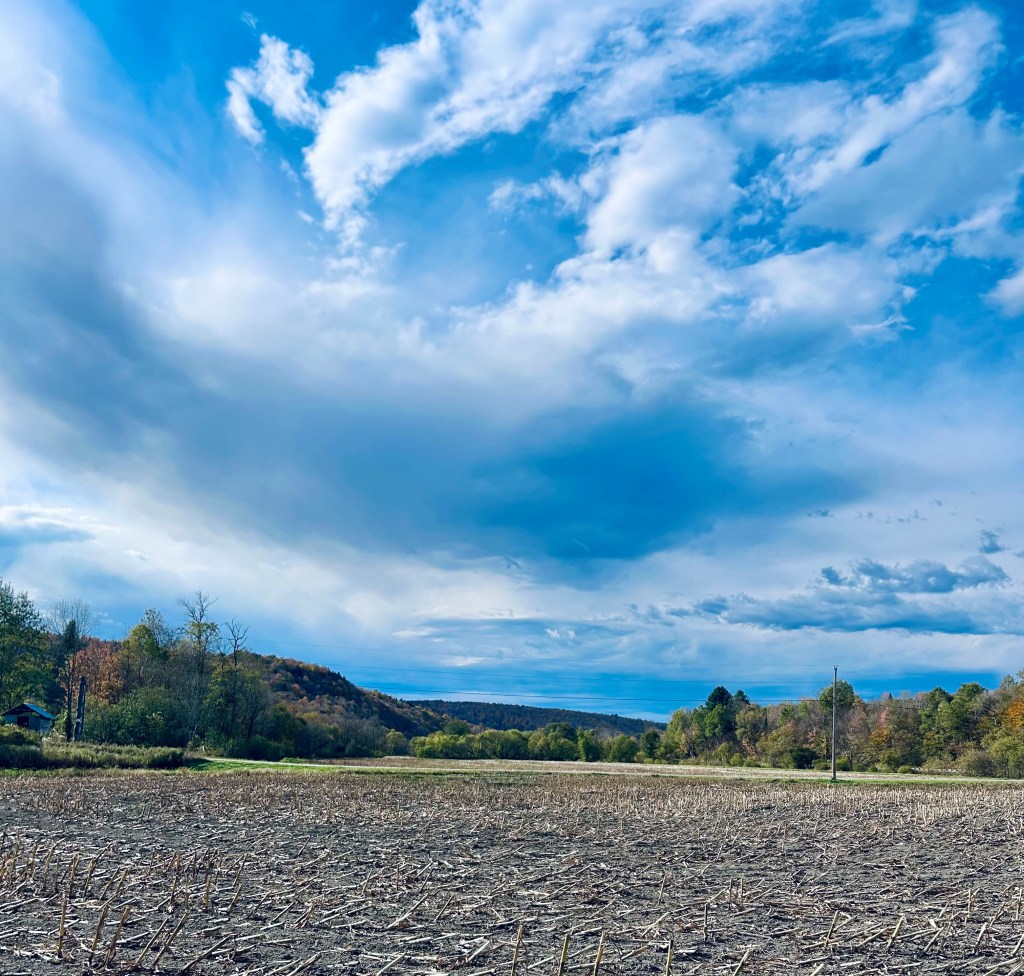
March, northern Vermont, the long dragged-out amorphousness where winter drags its slushy sulkiness into sodden spring. I long for a few hours of blistering sun. This season was the weather my mother despised most, all those New Hampshire years of my childhood. One afternoon, she pulled over on a back road and instructed my siblings and me to run through a farmer’s soaked pasture, patchily emerged from a winter of snow, and head for the woods at the far end. We did not know who owned the field and argued. Go, she insisted, go. You kids need to run. So we ran.

My novel, Call It Madness, which will be out in at the end of June, in a month when I intend to swim, is about the unvarnished craziness of family, of fiercely knotted threads of desire and thwarted passion, how the stories that shape and mold our lives are buried generationally. The novel is not about my mother, but it’s for my mother, the woman now dead nearly two years. She was mercurial, passionate about love and destruction. In the long-beyond-time stretch of recent cancer treatments, those endless months on the couch, I often thought of her; she was the only family member who had endured the triple violence of cancer-and-chemotherapy-and-surgery, sheer survival tenuous as a snowdrop. My mother surprised me until the very end of her life, the whole range of the unexpected, from sorrow to contentment. As her youngest daughter, how little I knew her, and yet I carry her with me, in my own might and fallibility.

In these months of remission, I’ve learned from yoga that inquiry is a force, a variation of that impossible Socratic dictum, know thyself. Healing, I plot a venture into transforming my kitchen, my home’s heart, and hire a carpenter to take down a wall, open an exterior wall with windows. Am I crazy, I wonder. At the edges at least of madness, recklessly heady with survival, with the raw knowledge of mortality clenched in one fist.

When the vinyl flooring is ripped up, the carpenter and I ponder the hardwood boards, stained and blackened and scraped. The lives of previous occupants rises like mist, mesmerizing, unknowable. What remains are their scars. My cat and I sit on the dusty floor and share a bowl of arugula. Wet snow slides from the roof in the flowerbeds. I planted the gold compass flowers. Who planted the pink roses I’ll never know.

Back out of all this now too much for us,
Back in a time made simple by loss
Of detail, burned, dissolved, and broken off
Like graveyard marble sculpture in the weather,
There is a house that is no more a house…

Here are your waters and your watering place.
Drink and be whole again beyond confusion. — Robert Frost, “Directive”

Nurses.

If you don’t know nurses, you will, or someone you love will. In my past year of cancer-and-chemo appointments, of those dozen hospital stays, in variations of days to weeks, the nurses were my very best friends. Nurses cajoled me to eat chicken soup and drink water (even a sip, just try); they were kind to me and looked out for my daughters. They taught us the ropes of the hospital ship: the habits of doctors and surgeons, how to adjust a bed and order food, find the light switches, turn up the room’s heat, find warm blankets. They offered orange juice and sandwiches to my daughters and hotel vouchers. The nurses told me I would live.

Nurses taught me about IVs, how not to bend my arm, what downstream occlusion meant, and when I must absolutely ring immediately for a nurse. They helped me to shower when I couldn’t stand, and never laughed when I said I forgot I had no hair. But they did tell funny stories and made me laugh. When I had a terrifying reaction to a chemo drug that was absolutely necessary for me to endure, a nurse sat with me for hours.

There was that terrible ED visit when I couldn’t stop throwing up from pain, and I was too weak to talk, and the nurse stayed long after his shift ended, holding my hand while I cried. There was yet another awful stay in the ED, those three nights in the room with the beige metal walls and the heat that wouldn’t turn off, and the nurse and the MD together figured out a pain med plan that brought me back to my body, that made the cancer bearable again.

Another nurse helped me get discharged on a spring day when I pleaded to go outside and see the apple blossoms, to have sunlight and wind on my face; she arranged for my daughter to sit with me on a bench and sip hibiscus tea, and she arranged for the hotel room where I slept all afternoon and then traveled in the morning across the road again, back to the cancer center for more chemo. She did this to help me heal. The chemo nurses tend the frail and the hopeful, the recovering and the dying. I had no port, so my arms were bruised and scabbed from months of sticking, and these fine nurses turned my forearms over and over and never failed me. Who in your life never fails you? They took such care.

I could write on and on. The nurse that first visit to the ED, who knew from a scan that I had metastatic cancer before I did. He walked in my room and looked at my daughters with such compassion. We did not know, but he did. He knew the hardship that lay ahead of my dear daughters.

The nurses, unfailingly, cared me as one of their own. I have notes in my journals, names and stories of strangers who cared so tenderly for me and my daughters, but really what I have is gratitude, admiration, and such sorrow for the unnecessary murder of one of our tribe.