The die is cast?

Writing notes for a reading for Call It Madness, I scrawl in my notebook that this novel is jammed with secrets. Avah Lavoie, protagonist, stashes secrets of theft of longing, and she’s surrounded by secret-keepers, too. Early in the novel, I offer readers two clues. These questions underpin my life, too. No surprise.

The first that’s slipped into the narrative is the story of beavers in New England, how these creatures and their laborious dams once flooded New England, rendering that birch bark canoe a viable form of transportation. When the craze for beaver hats set in, the beavers were trapped nearly to extinction, drying up the land. The story of the past shapes the terrain where we live and how we see the world.

The second is Caesar’s line Alea iacta est — the die is cast. The machination of fate. It’s a question that’s arced through my life since I was a teenager, immersed in Russian novels. Now, from my Vermont house, in the tender dawn, pearly crescent moon hanging low in the horizon, the stars snuffing out as light grows, the robins striking up their day’s singing, this line returns to me. Is fate sealed for this country where, by circumstance, I live, a madman as a leader, intent to wreck destruction and pain, war crimes? Around me, the questions reverberates through everyone: how to live?

Sunday morning, the earth after this fierce winter softening, the daffodils pushing up through black earth, the delicate snowdrops pearly, persistent, the strength of these slender stalks a strain of secret, too.

“If, then, I were asked for the most important advice I could give, that which I considered to be the most useful to the men of our century, I should simply say: in the name of God, stop a moment, cease your work, look around you.” — Leo Tolstoy

Natural resurrection.

I am reminded of spring by the quality of the air . . . It is a natural resurrection, an experience of immortality. ~ Henry David Thoreau

Friday begins raw and shivery. I’ve shed my long underwear and regret it. By mid-afternoon, the sun’s emerged. I park along a muddy road and hike up through a soggy pasture to the stone cellar holes. A hundred years ago, a farm must have been rooted on this hillside, bracing against winter’s snowy wind, full of summer sun. A view of mountains and the Lamoille River Valley. Sugar maples dominate what remains.

As I approach, robins flutter, fly, resettle, their singing unbroken. I tie my coat around my waist, cram my hat in my pocket. At home, green nubs of lilies and crocuses emerge, just beginning their greening. Among the lilacs, I look for those daffodils.

Mighty spring, season of healing. The winter’s debris of compost and spent woodpile and last fall’s unclipped perennials emerge. Every year, spring rushes in with a surprise. A certain reminder of mortality, but so lovely, so marvelously endearing…

Knock it down, revise your life.

March, northern Vermont, the long dragged-out amorphousness where winter drags its slushy sulkiness into sodden spring. I long for a few hours of blistering sun. This season was the weather my mother despised most, all those New Hampshire years of my childhood. One afternoon, she pulled over on a back road and instructed my siblings and me to run through a farmer’s soaked pasture, patchily emerged from a winter of snow, and head for the woods at the far end. We did not know who owned the field and argued. Go, she insisted, go. You kids need to run. So we ran.

My novel, Call It Madness, which will be out in at the end of June, in a month when I intend to swim, is about the unvarnished craziness of family, of fiercely knotted threads of desire and thwarted passion, how the stories that shape and mold our lives are buried generationally. The novel is not about my mother, but it’s for my mother, the woman now dead nearly two years. She was mercurial, passionate about love and destruction. In the long-beyond-time stretch of recent cancer treatments, those endless months on the couch, I often thought of her; she was the only family member who had endured the triple violence of cancer-and-chemotherapy-and-surgery, sheer survival tenuous as a snowdrop. My mother surprised me until the very end of her life, the whole range of the unexpected, from sorrow to contentment. As her youngest daughter, how little I knew her, and yet I carry her with me, in my own might and fallibility.

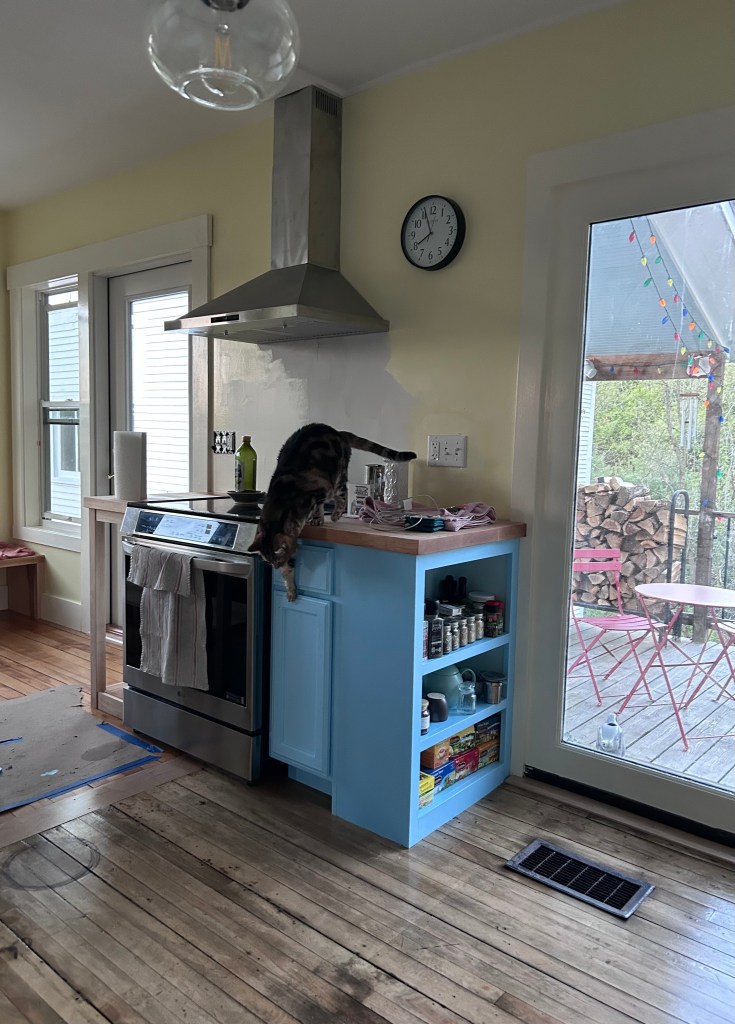
In these months of remission, I’ve learned from yoga that inquiry is a force, a variation of that impossible Socratic dictum, know thyself. Healing, I plot a venture into transforming my kitchen, my home’s heart, and hire a carpenter to take down a wall, open an exterior wall with windows. Am I crazy, I wonder. At the edges at least of madness, recklessly heady with survival, with the raw knowledge of mortality clenched in one fist.

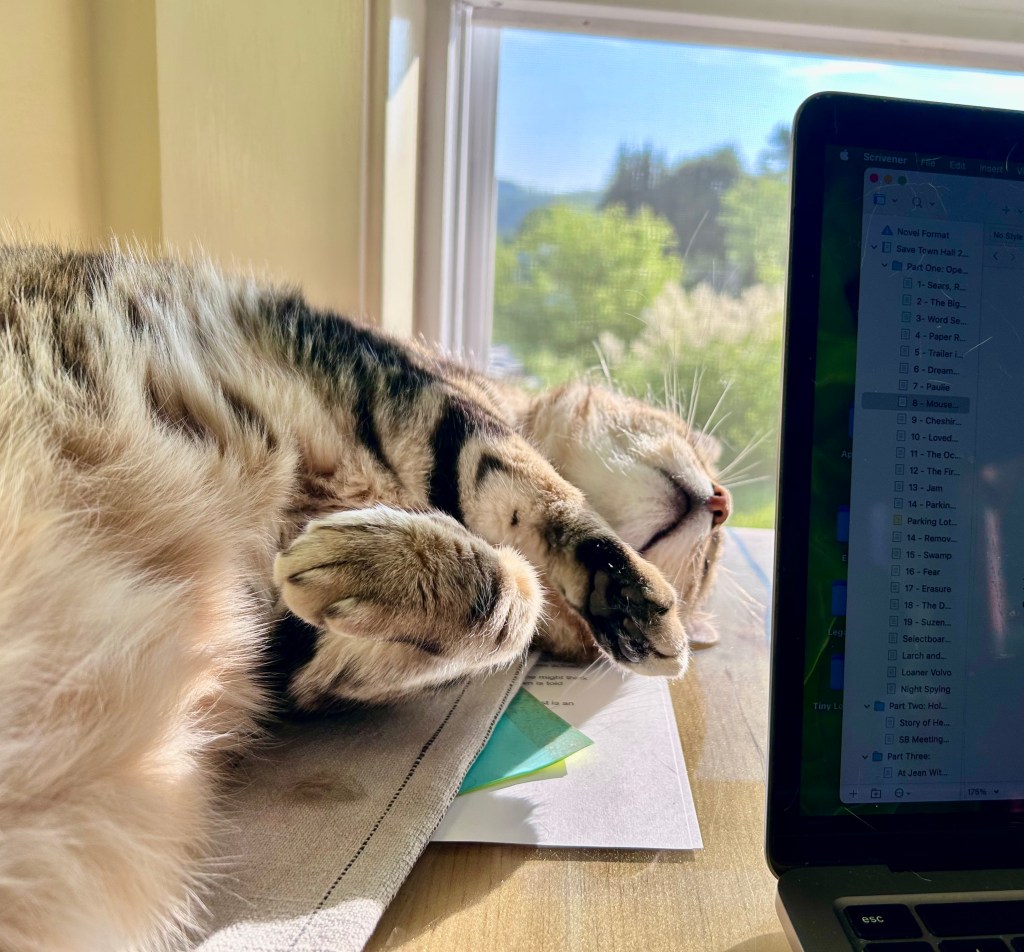
When the vinyl flooring is ripped up, the carpenter and I ponder the hardwood boards, stained and blackened and scraped. The lives of previous occupants rises like mist, mesmerizing, unknowable. What remains are their scars. My cat and I sit on the dusty floor and share a bowl of arugula. Wet snow slides from the roof in the flowerbeds. I planted the gold compass flowers. Who planted the pink roses I’ll never know.

Back out of all this now too much for us,
Back in a time made simple by loss
Of detail, burned, dissolved, and broken off
Like graveyard marble sculpture in the weather,
There is a house that is no more a house…

Here are your waters and your watering place.
Drink and be whole again beyond confusion. — Robert Frost, “Directive”

Nurses.

If you don’t know nurses, you will, or someone you love will. In my past year of cancer-and-chemo appointments, of those dozen hospital stays, in variations of days to weeks, the nurses were my very best friends. Nurses cajoled me to eat chicken soup and drink water (even a sip, just try); they were kind to me and looked out for my daughters. They taught us the ropes of the hospital ship: the habits of doctors and surgeons, how to adjust a bed and order food, find the light switches, turn up the room’s heat, find warm blankets. They offered orange juice and sandwiches to my daughters and hotel vouchers. The nurses told me I would live.

Nurses taught me about IVs, how not to bend my arm, what downstream occlusion meant, and when I must absolutely ring immediately for a nurse. They helped me to shower when I couldn’t stand, and never laughed when I said I forgot I had no hair. But they did tell funny stories and made me laugh. When I had a terrifying reaction to a chemo drug that was absolutely necessary for me to endure, a nurse sat with me for hours.

There was that terrible ED visit when I couldn’t stop throwing up from pain, and I was too weak to talk, and the nurse stayed long after his shift ended, holding my hand while I cried. There was yet another awful stay in the ED, those three nights in the room with the beige metal walls and the heat that wouldn’t turn off, and the nurse and the MD together figured out a pain med plan that brought me back to my body, that made the cancer bearable again.

Another nurse helped me get discharged on a spring day when I pleaded to go outside and see the apple blossoms, to have sunlight and wind on my face; she arranged for my daughter to sit with me on a bench and sip hibiscus tea, and she arranged for the hotel room where I slept all afternoon and then traveled in the morning across the road again, back to the cancer center for more chemo. She did this to help me heal. The chemo nurses tend the frail and the hopeful, the recovering and the dying. I had no port, so my arms were bruised and scabbed from months of sticking, and these fine nurses turned my forearms over and over and never failed me. Who in your life never fails you? They took such care.

I could write on and on. The nurse that first visit to the ED, who knew from a scan that I had metastatic cancer before I did. He walked in my room and looked at my daughters with such compassion. We did not know, but he did. He knew the hardship that lay ahead of my dear daughters.

The nurses, unfailingly, cared me as one of their own. I have notes in my journals, names and stories of strangers who cared so tenderly for me and my daughters, but really what I have is gratitude, admiration, and such sorrow for the unnecessary murder of one of our tribe.

Call It Madness

My newest novel’s advance copies arrived in a great big box at the post office that I hefted on my shoulder. The postmistress said, “You wrote another book? How cool is that.” Indeed. Then she wondered if I could carry out this box that she described as nearly large as myself. I laid the box on the passenger seat and then walked across the street to the co-op where I bought an orange and peeled it and ate the sweet sticky fruit in a drippy wet snow.

Call It Madness? A novel about a young woman who realizes her mother had spun lies all her life—a grandfather who hadn’t died, a beloved house that hadn’t sold, only tumbled apart with rot and rodents. How does she get out of the madness-making of family and salvage some shreds of happiness?

June 30 the book will be released from Regal House Publishing. You can find it at my beloved local bookstore, the Galaxy Bookshop, or from the big A here.

Here’s the opening page….

White Quartz

2016

I didn’t know what made my parents drive from Bellingham to faraway Vermont the summer I turned four. I had never met my great-grand-father Opa until that afternoon my mother rolled our station wagon down Breadseed Lane. Earlier that day, a stranger had helped my parents change a flat tire on the New York turnpike, but the spare was a misfit. For hours, our car had been thumping while I stared through the backseat windows at the trees and fields passing by, pondering the puzzle of that strange word breadseed. Could seeds blossom into loaves?

We hadn’t stopped for lunch, and I was hungry. Was this Opa character cooking us dinner? Turned out, he was not.

In a rain that was just beginning to let up, the old man stooped in his yard beneath an enormous pine tree, fists curled behind his suspender buckles. I was not quite yet four, remember, and I knew suspenders only from picture books. In a strange coincidence, I had asked my mother for a pair the last Christmas. She had laughed and said suspenders only existed in fairy tales about grandfathers who were woodcutters and chased away starving wolves.

I loved that trip so much that the next summer I begged to return to Opa and his house that smelled of sugary rotting apples. I whined, Please, Mama, please. Which apartment we lived in then I’ve long forgot-ten, but in my memory, I’m sitting on the floor. At the end of the galley kitchen, a glass door streams in cloudy light. I’m watching the hem of my mother’s skirt graze her bare knees. The polyester skirt is one she wore for years, zigzag black lines over white. The hem has opened and hangs down, its frayed edge unraveling into threads. She’s smoking, the cigarette held impatiently in her teeth, and ashes drift down in the murky light. That morning, my mother tells me that Opa died soon after we left. The house was sold.

Landscape, Here, There.

Late afternoon, the January darkness chasing away the chickadees at the window feeder, a friend phones about a film at a nearby arts center. Turns out, the film is about the broken-upness of relationships in America. Post-lymphoma, post-chemo, my energy by day’s end is something I can cup in one hand, a diminishment never illuminated by a nap. Grateful for the nudge and the company, I fill my woodbox, feed my cats.

It’s been a day of plenty here—of yoga and work, of slush on the roads and mush falling from the sky, a softness that threatens to harden overnight to ice. Midafternoon, I drop my car for an oil change and open my laptop in the waiting room. A stranger sits down in the otherwise empty room and drops his tablet on the table between us. I’ve kept much of this blog off the political realm, although surely any reader perceives my alignment is not with the aggressor in power. The stranger begins talking in a way that’s not angry but maybe more mystified about what’s happening in the country, the prohibitions about who can come in, with real consequences.

He’s newly retired. When I ask what he did for work, he says you don’t want to know, but oh I do, and so he begins unspooling his life. He worked for the fed’s immigration service. Military service, 19 nineteen moves, a residency in Germany during the Cold War, four grown children, one of whom is estranged. He says again, as if baffled, she kind of went nuts over this Trump thing.

The windows reveal spitting snow. He’s at a crossroads, that weighty retirement time. What will he do now? He says he’d like to put his hands to some good, maybe a Habitat for Humanity project. I close my laptop. He grew up in very rural Vermont, and he shares an accident that happened to him as a teenager, how it defined his life. Midafternoon, the light is as sooty as twilight. As a writer, I’m always looking for junctures: which way will a character act now? But I know, of course, that we meet crossroads every day. Crab at the post office woman? Curse the town snow plow driver? And I know well my own fallibility and hesitation. But I also understand how our lives and choices are enfolded into our culture and nation, that, as we live by the law of gravity, we live also by the constrictions of time and place. As for the country…. an immense crossroads. A collective atlas is under dispute.

Driving home in the snow that may or may not amount to much besides a dusting of ambiance, my friend’s son phones from a Texas freeway, lanes choked with rushing traffic. My headlights slice through the darkness. On either side lie hayfields, snowed in for the winter. The stars are swallowed in dense clouds. A year ago, another phase of terrible things that happen to cancer patients was barely beginning in my life. I didn’t yet know that there would be so many rushing drives down the icy interstate to the ER, all those grim hours when my daughters and I wondered which was this was going to shake out. Disease is a fierce and demanding instructor. The first lesson I learned, as I smartened up quickly, was to ask What’s real? What’s happening? even when I didn’t want to know the terrain of the landscape.

Because here’s something else that’s true. In the day-to-day trenches of adult life, there is… no such thing as not worshipping. Everybody worships. The only choice we get is what to worship…

Look, the insidious thing about these forms of worship is not that they’re evil or sinful; it is that they are unconscious. They are default-settings. They’re the kind of worship you just gradually slip into, day after day, getting more and more selective about what you see and how you measure value without ever being fully aware that that’s what you’re doing. And the world will not discourage you from operating on your default-settings, because the world of men and money and power hums along quite nicely on the fuel of fear and contempt and frustration and craving and the worship of self. Our own present culture has harnessed these forces in ways that have yielded extraordinary wealth and comfort and personal freedom. The freedom to be lords of our own tiny skull-sized kingdoms, alone at the center of all creation. This kind of freedom has much to recommend it. But of course there are all different kinds of freedom, and the kind that is most precious you will not hear much talked about in the great outside world of winning and achieving and displaying. The really important kind of freedom involves attention, and awareness, and discipline, and effort, and being able truly to care about other people and to sacrifice for them, over and over, in myriad petty little unsexy ways, every day. That is real freedom. ~ David Foster Wallace