First greens, gift.

On this Mother’s Day, I pull on my coat and wander into the early spring garden with hot coffee. Blue dawn, the birds are at their singing nesting work already. My cats, satiated with breakfast, sleep on windowsills, dreaming perhaps of red-breasted robins prying worms from the rain-soft earth.

My mother died two springs ago. She’d lived a long life, crammed full, from joyous passion to bitter despair. In the same year, I suddenly stared at my own mortality. In those first days of the cancer realization, I railed that I wasn’t done, that to die while my youngest was yet a teenager, was out of the natural order. Or what I wanted to believe was the natural order. A belief which had, of course, no bearing on any natural law, whatsoever.

Severe illness returned me to childhood again. Too weak to boil water for oatmeal or tea, with hours upon days upon weeks upon months, lying in bed or on the couch, watching sunlight and shadows move across the maple floors in my house, the hospital tiles. There was an old tradition of slipping a knife beneath a laboring woman’s mattress to cut the labor pains. In those months I fought to remain alive, I slowly realized my mother and father had each slipped me a knife: my father gave me that writing and fortitude, my mother a wily stubbornness that was sometimes silly and often tenaciously sharp. Invaluable.

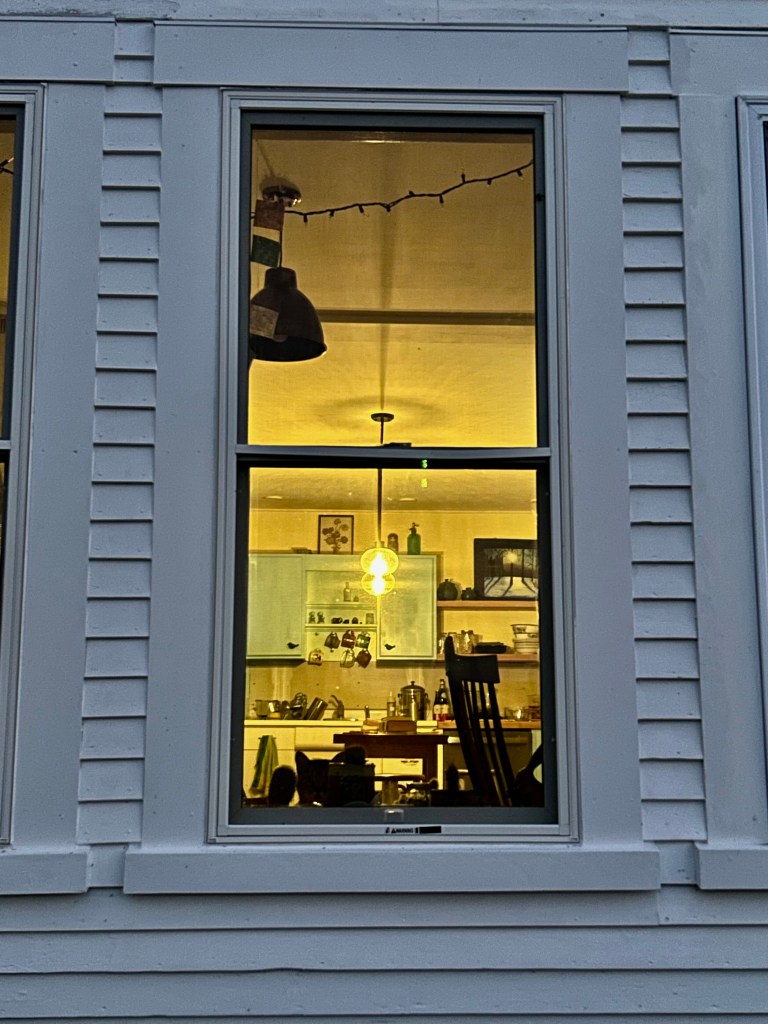
Yet here I am, lucky enough to have another act of my life unfolding. The daffodils I planted last October are blooming, brilliant yellow against the row of lilacs that are just beginning to bud. In my kitchen, I washed last night’s dishes, discovered a white quartz left as a gift on the table.

The First Green of Spring

Our walking in the swamp picking cowslip, marsh marigold,
this sweet first green of spring. Now sautéed in a pan melting
to a deeper green than ever they were alive, this green, this life,

harbinger of things to come. Now we sit at the table munching
on this message from the dawn which says we and the world
are alive again today, and this is the world’s birthday. And

even though we know we are growing old, we are dying, we
will never be young again, we also know we’re still right here
now, today, and, my oh my! don’t these greens taste good.

~ David Budbill

Map Revision

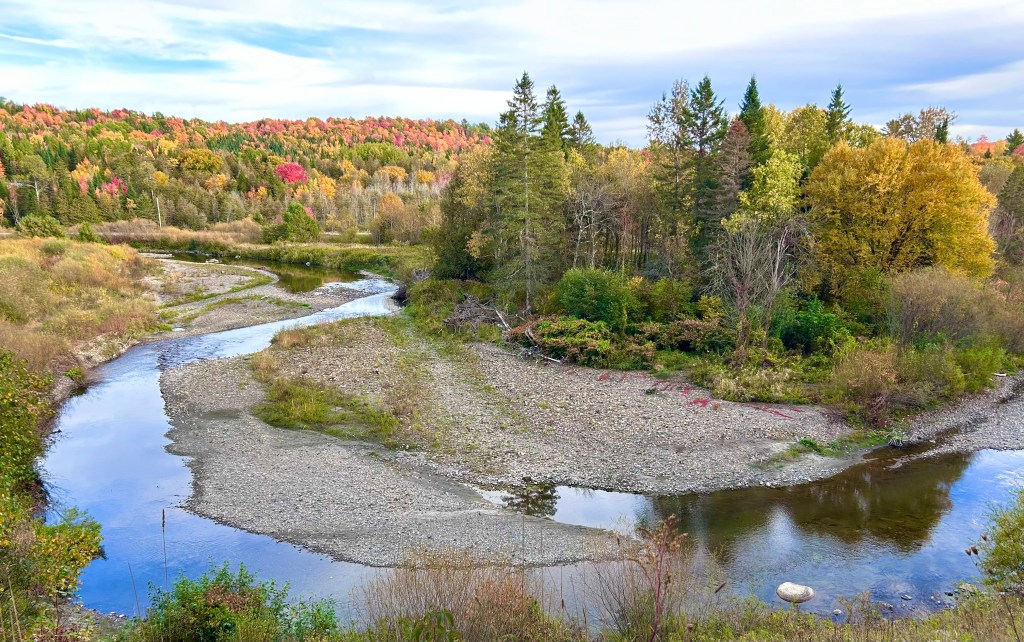
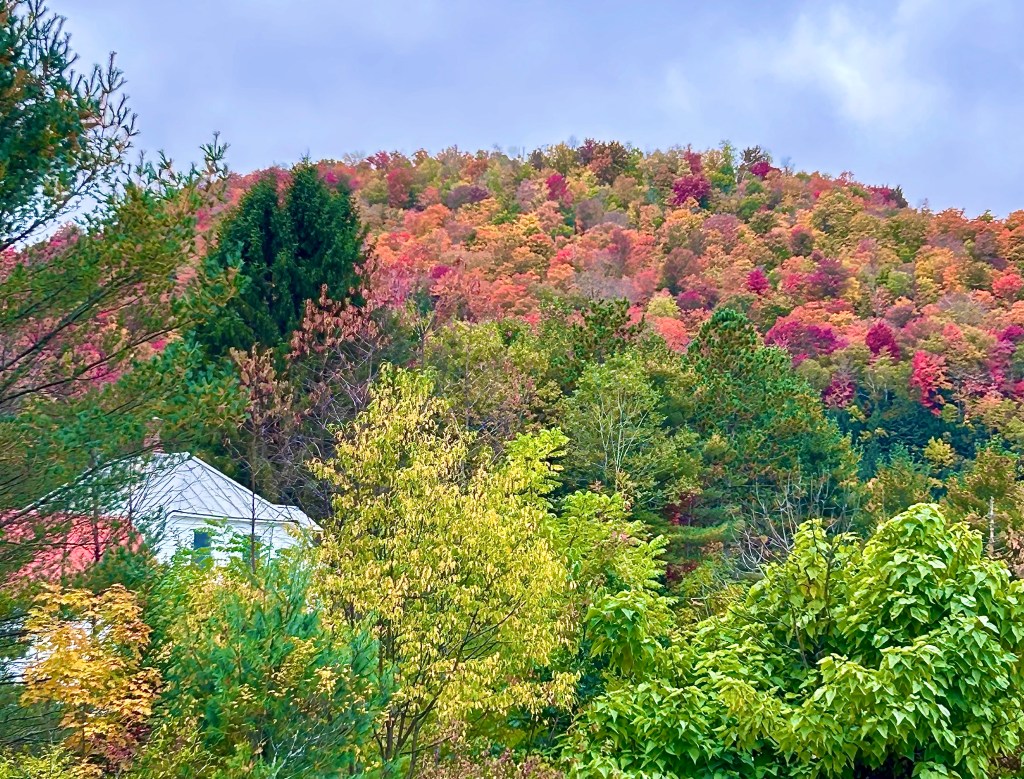
Fickle May, windy and wet, sweating and chilly, the green urgently shoving through last year’s dead brown. Every day, a different pleasure: marsh marigold blooming in bracken water, violets sprinkled under the apple trees with their tiny tufts of leaves.

Nights and early mornings, I lie on the couch and read Arthur Frank’s The Wounded Storyteller, “The voices that speak to us at particular moments in our lives, especially during transitions or crises, imprint themselves with a force that later voices never quite displace.”

Oh, the imprint of life.

A year ago, in yet another Dartmouth-Hitchcock hospital room—fourth floor, the best of the ten rooms where I stayed that winter, with a sunset view of the mountains and such a kind nursing staff—the surgeons stopped in yet again, the pack of them, head surgeon to med students. Listening, I stared through the window at the walking path that wraps around the medical complex. I supposed I could keep arguing against surgery, get someone to push me in a wheelchair to the elevator, hobble outside, and then return via the Emergency Entry. My daughters and I were pretty darn familiar with that entry by then. There was no other option; I said, okay, signed the consent, phoned my siblings and pleaded for fresh horses to arrive, to get me through.

On this dawn-rosy May morning, no fresh horses needed today. A year ago, my daughters arrived for Mother’s Day, and walked me outside beneath the just-opening apple blossoms. We visited the courtyard gardens that we had stared at through the winter of chemotherapy, snow blowing. The cherry trees were profusions of pink. I salvaged books from free carts, novels and histories that I would stock up, like pain meds, to ferry me through the next round of recovery.

This morning, the daylight flooding in, a year later, a wall’s been removed in my kitchen. The dishes and baking pans are piled in cardboard boxes, a sole knife and cutting board in my sink. Will this chaos keep me in the world? Will messiness root me here? Or is this simply my lifelong patterns of creation-destruction-creation, life’s paddlewheel, that I lean on now? Er, maybe that I’ve always stood upon?

“Stories have to repair the damage that illness has done to the ill person’s sense of where she is in life, and where she may be going. Stories are a way of redrawing maps and finding new destinations.” — Arthur Frank

Harrowed Up Heart.

As part of the 2050 project, I’m asked to read at Newbury’s Tenney Library, surely one of the prettiest Vermont libraries, and Vermont has plenty of these. The crowd is full and cheery, the snacks are sweet, the librarian gives me a tour of this enchanted place, built inside as a series of arches. The original gas lamps have been converted to electricity, and I ponder what it was like in 1910 or so, coming in from a slushy afternoon to a warm and glowing library.

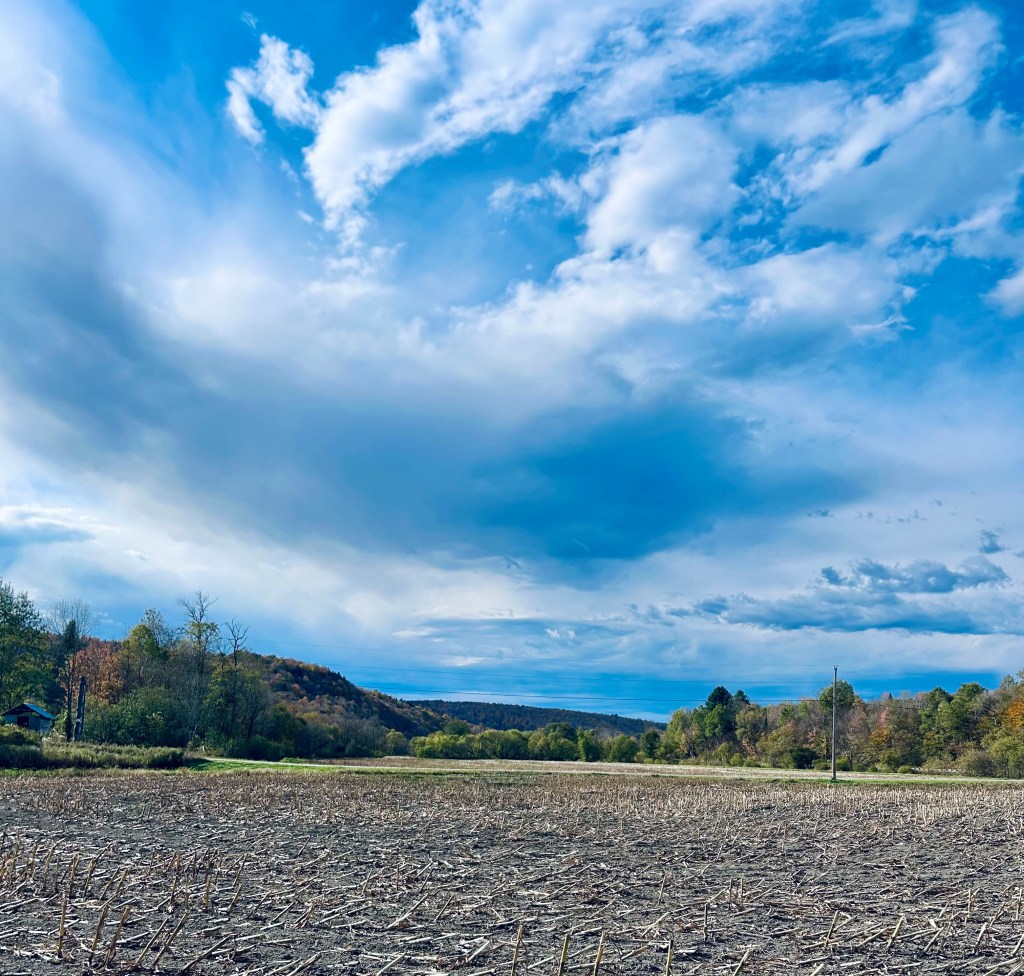
Newbury is a town on the Connecticut River, the village high on a bluff. Before I head out, I walk across the street and behind a church. Through the trees and brambles that are just tufting with green, enormous fields stretch along the river, long rectangles of emerald, others black earth harrowed up for planting.

I linger, shivering a little in my wool sweater, hands jammed in my jeans pockets. Early May, spring season of promise. That plowed-up land, the blue swoop of the river, the invincible thrust of spring pushing mightily through the chill — such happiness here. I head not back to the interstate, but up a mountain’s dirt road, to a house surrounded by green and blooming daffodils and a tangle of apple trees. A lovely couple invited the readers to dinner. The couple is both humorous and gracious, the conversation full of the idiosyncrasies of local talk and global concerns. The pleasant evening drifts into night, from eggplant to lemon tart. Exhaustion, my now familiar, weighs my bones. After thankyous, I stand outstanding in the cold wet, breathing what might be the spicy scent of daffodils growing, threading through in my mind the unfamiliar roads I’ll follow home. Then I let that worry go and simply breathe, damp spring holding me, as if I’m a daffodil, too.


“Like daffodils in the early days of spring, my neurons were resprouting receptors as the winter of the illness ebbed.”
― Susannah Cahalan, Brain on Fire

Risking Delight with the Lion

Precisely a year ago, to the day, Isele Magazine published my essay “Red Devil, Survivor Herself.” I had written all through the godawful cancer treatments, AKA chemotherapy, and publishing this essay marked my tenacious determination to remain among the living—and to remain a fierce writer, too.

Over the summer and autumn, “Red Devil” morphed into a manuscript-in-process. Recently, three more chapters were picked up. The kind folks at Isele Magazine published “Risking Delight with the Lion.” The following two will be published in different journals later this spring.

Here’s the opening of “Risking Delight.”

In my winter of chemotherapy, I woke at night, quivering. Where was I? What was happening? Gasping, I reminded myself that I was in bed, I was okay, that whatever demons had sought me in sleep had been banished by my waking. I didn’t blink my eyes open into peace. My breathing never eased into contentment.

Cancer-and-chemotherapy is a path of suffering, an involuntary hairshirt. The first morning I met my oncologist Dr. Valera in that Dartmouth-Hitchcock hospital room, I was surfacing, bleary and exhausted after an emergency admission and an exploratory surgery that verged on plunging me into a sedated coma. My daughters had been summoned through a snowstorm. What remained of my vitality was vanishing. Me or the lymphoma would triumph. There was no middle ground. Yet, that first morning, Valera assured me, “I can cure you.” Not cocky, not boastful, merely stripped down to facts: the lay of my body and disease, his skill and treatment course.

I clutched his words desperately, but I never repeated aloud, “This physician makes a claim that I will live.”

What was the levy I would pay for remission?…

Last… with the 2050: Vermonters Take a Swipe at the Future project, I’ll be reading at the Tenney Memorial Library in Newbury, Vermont, this Saturday, 4 p.m. Come!

Bear, darker than midnight.

I’m walking up a fourth-class road when I spy a black shape moving along the upper end of the nearby hayfield. Vermont divides its roads into categories, from the interstates to dirt roads to the little-used former farm or forest roads that are snowed-cover in winter, mud-rutted in spring. I stand beside a wild apple tree, the blue view of the Worcester Mountains over my shoulder, and admire this bear, darker than midnight against the field’s glossy emerald. When green kindles in Vermont spring, it flourishes.

This place I’ve never walked, although I’ve seen maps and heard stories. The road treks uphill through the forest and dips down where Caspian Lake gleams, realm of summer visitors, but for the time, still the territory of the locals.

I find what I’m seeking and also what I’m not: the labor-dense stone walls whose once-upon-a-time fields are gone to forest, moss-covered cellar holes, twisted rusty remains of farm equipment. Peepers chorus. An old farmhouse with an enormous veranda on a hill must have once had a royal view of the lake, and endured bitter winter winds. Someone has tried to cut the wild reclamation from the house and mostly failed.

In the sunlight, I linger, wondering who lived here, their stories silent. The two-story house has large dormers and many windows; it’s not a fly-by-night, tossed-up structure. On my way home, I pause where I saw the bear, searching, but of course the bear has moved on. Three ducks fly low over my head. The earth exhales its sweetness of thawing mud, the turning-over of last autumn’s leaves, this summer’s great promise.

“Deep in the forest a call was sounding, and as often as he heard this call, mysteriously thrilling and luring, he felt compelled to turn his back upon the fire and the beaten earth around it, and to plunge into the forest, and on and on, he knew not where or why; nor did he wonder where or why, the call sounding imperiously, deep in the forest.” — Jack London

Tick-Tock, Cooper’s Hawk.

At the local general store, I buy an analog clock for twelve dollars, find a single AA battery in my desk drawer, and, tick tock, done. The clock is the kind my parents always had in their kitchen, pre-digital craze, where you’d watch the minute hands while, say, boiling an egg.

The clock reminds me of those countless hours in a hospital bed, pondering not a baking apple pie but the length of a minute. How long that minute hand needed to click around a circle.

Late Saturday afternoon, a friend and I walk through the woods towards Stannard Pond, in search of ramps and something else more elusive, lung-fulls of serenity, perhaps, in this forest where the autumn sunlight falls down, the branches unleaved in April, the cedars silvery. We find patches of those wild leeks, carpets of trout lily leaves, two spring beauties that have not yet opened. My friend spies these; I crouched and gently cup one folded blossom in my hand, gentle with its thread of a stalk. Soon, the forest floors will be covered with these gems. For now, I contemplate this white-and-pink loveliness, wrapped in emerald.

Driving down that mountain’s back road, I spy a Cooper’s hawk on a wire. This steep road was ravaged by flood a few years back, and folks are rebuilding, small boxes of dwellings without siding. Persistent. In my bones, I’m both worn and enlivened, the road dust and sunlight billowing in through the open car windows. Tick-tock, the slowness of a moment.

“Things take the time they take.” ~ Mary Oliver