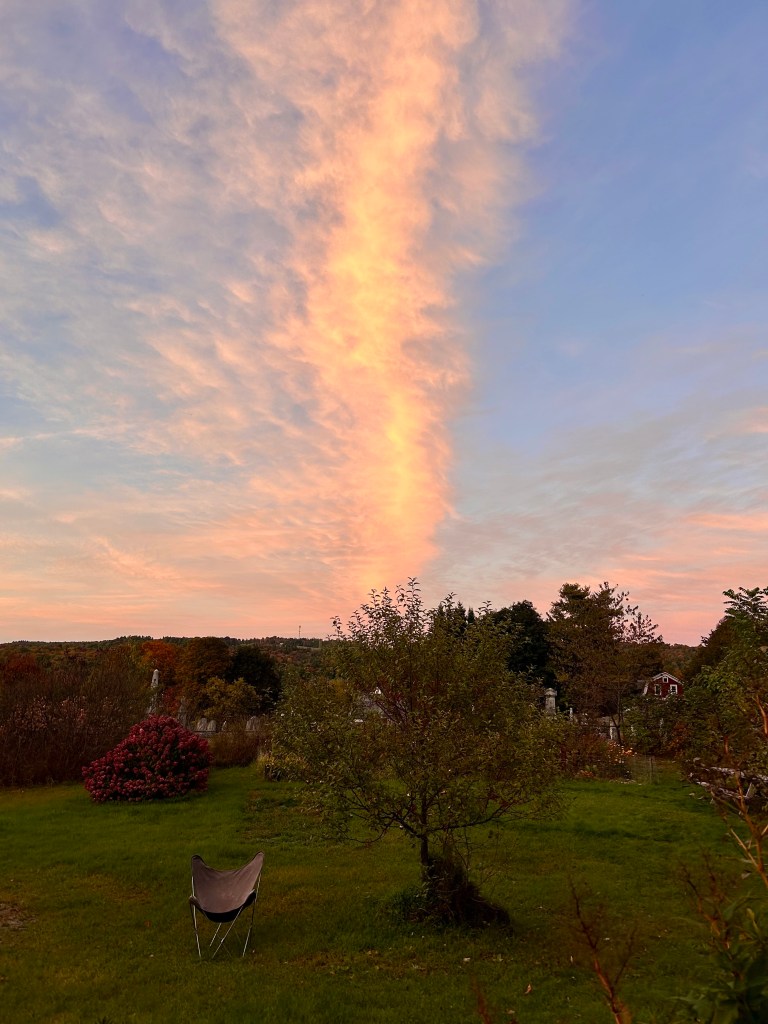
Late autumn means shortening days which means a reacquaintance with darkness. In sooty twilight, I slip through the narrow path in the pines and into the cemetery, a letter in my hand. Quickly, night settles in.
At the bottom of the hill where this back street joins Main Street, an elderly man leans against the railings on a second-floor landing. The storefront has six apartments above it, and the tenants linger on the covered back stairs in all weather, all times of the year. I pause, and we talk about the balmy fall, the fattening half moon. Then I wish him a good evening and head along.
In the way of small towns, I know pieces of his story—he’s a veteran who served in a war that may seem forever ago, or perhaps just a few breathfuls of air in the past—and he may know snippets of my life, too. I drop my letter in the mailbox and circle through the village. Darkness settles in, and I follow the sidewalk home, not tromping through the woods and the cemetery. Save for passing cars, there’s no one out, house windows filled with people moving about their chores. Ordinary evening under the splendid night sky.
“To have faith is to trust yourself to the water. When you swim you don’t grab hold of the water, because if you do you will sink and drown. Instead you relax, and float.”
― Alan Watts