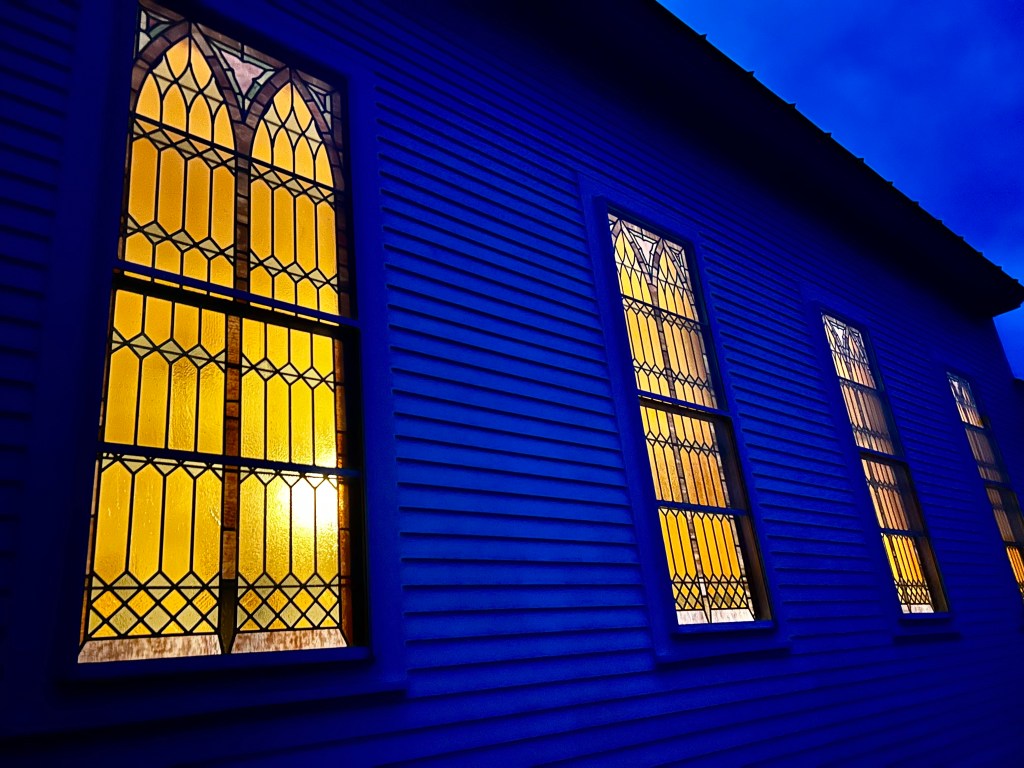
November, sunlight drains away like bathwater, less and less each day. On a walk, I pause and admire the rare lingering flowers: a Johnny-Jump-Up beneath a blueberry bush, a folded calendula against a kale plant. A friend and I mutually agree to a November strategy: go out everyday. The damp chill gnaws, and then there’s the darkness. Unbreakable. We pierce it with lights, but the darkness is unfathomable, profound, holy.
Late afternoon, the cats mewl at me to close my book and get up from the couch and feed these domestic creatures. One of the great pleasures of late autumn and winter into more winter is lying on the couch before the hot woodstove and reading—no need to be pressured by the garden’s weeds and am I ever going to reseal the back porch? But who am I kidding? I’ve sprawled for endless hours on the back porch or under the butternut tree this summer, happily reading, too.
My neighbor who lives on the other side of the cemetery texts. It’s the day’s most magical moment, the afternoon’s somber gray a mellifluous blue just before the night swallows us whole. I walk around my garden, through the short passage of pines, and she’s in the cemetery. The village lights gleam like stars on the land.
Talking, we walk downtown to the community dinner. There, we sit with women I don’t know, and the conversation quickly moves into yarn and Thoreau and menopause. We talk knitting patterns and cable stitches and the deaths of our mothers. Community dinner is not always so warm. I’ve left before, overwhelmed with too many people and too many voices, or my ex lurks around the edges, but the room tonight is full tonight in exactly the right way. The teenagers play pool, and the musicians sing bows over strings.
The tables are Durgin-Park style, egalitarian, and I swap chairs at some point for a conversation about free will. That human conundrum. So much of our lives move through days and years, propelled by happenstance of birth and chance: opinions, economics, work. Sure, we choose, but less, much less I venture, than we might readily acknowledge. In the most piercing moments of my life—and we all have these—I could feel that cosmic void, the limitless darkness of the universe, roaring its mighty silence. Our lives are consumed with our interior thoughts and desires, but in these keen moments, the world banged on my door. The January afternoon of a man’s suicide; the morning my husband boxed up the oatmeal pan and his t-shirts, said good luck and walked through the kitchen door; two nights in the ER when I thought I might shortly die and leave my daughters. The universe waited for my return action. So I chose.
Later, I walk the last stretch through the woods alone, darkness running over me like a waterfall. My coat pockets fill with pebbles of night. My cat waits in the kitchen window, pondering not free will, metaphor, lyricism, but dried minnows. When I open the door, he makes this need known.
We die. That may be the meaning of life. But we do language. That may be the measure of our lives.
― Brian Greene

