“The world is a complex fatigue.”

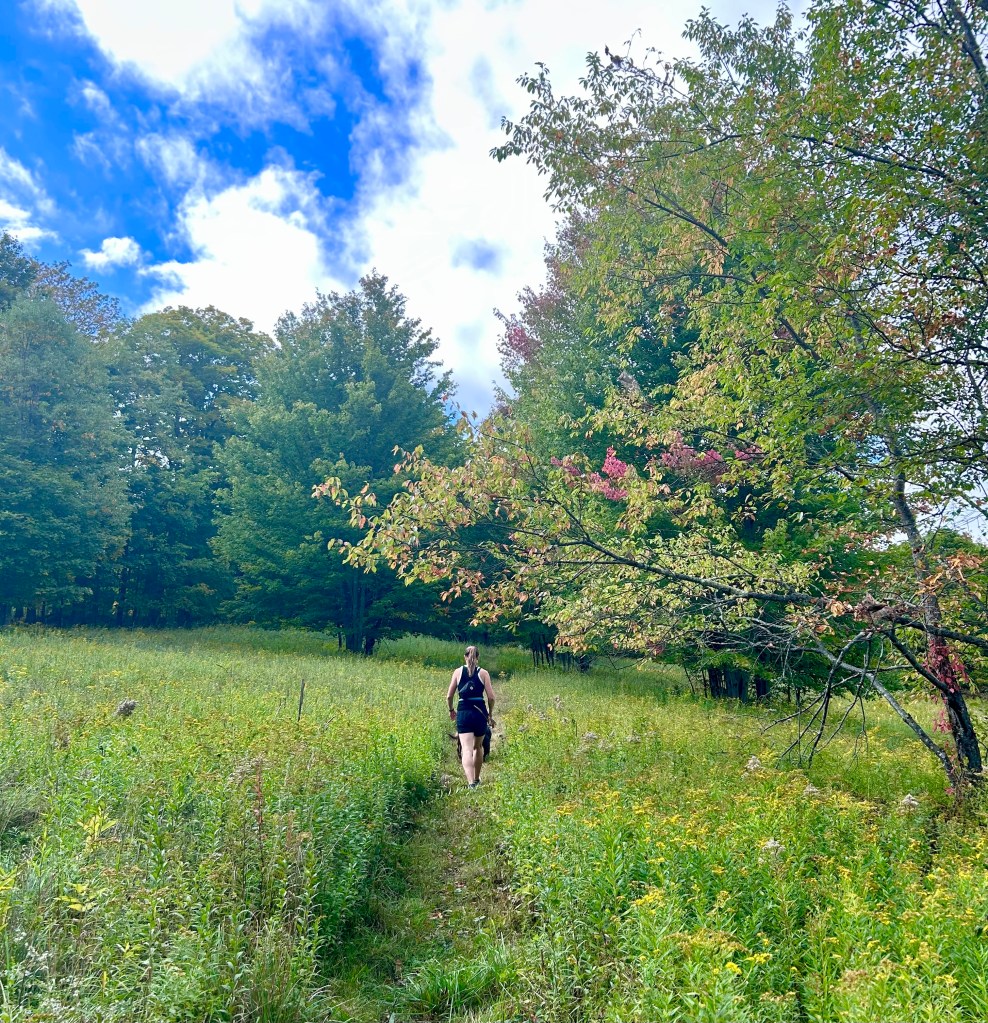
August appears, and I’m at work Saturday morning, trudging around a lake in a thickety forest with some of my favorite people in town, talking work and books and the edginess of this fleeting life, the puzzling conundrums of what people do.

Below, the Hayden Carruth poem I’ve posted before around August 1, during the years I’ve written in this space. Every year, when I read this poem again, different lines pop out. Here, “The world is a complex fatigue.” If I began a list of things I learned in my year (now, year and some) of surviving cancer and cancer treatments, gracious, I would keep writing and writing. The cats would not be fed this morning. The blueberries would not be picked.

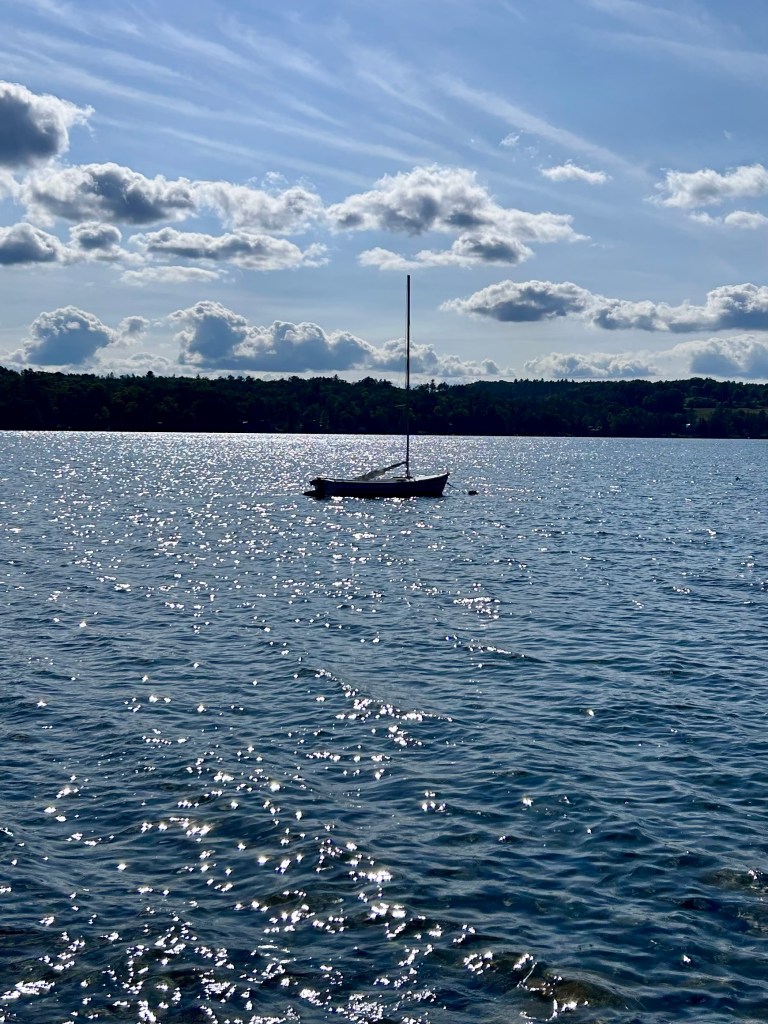
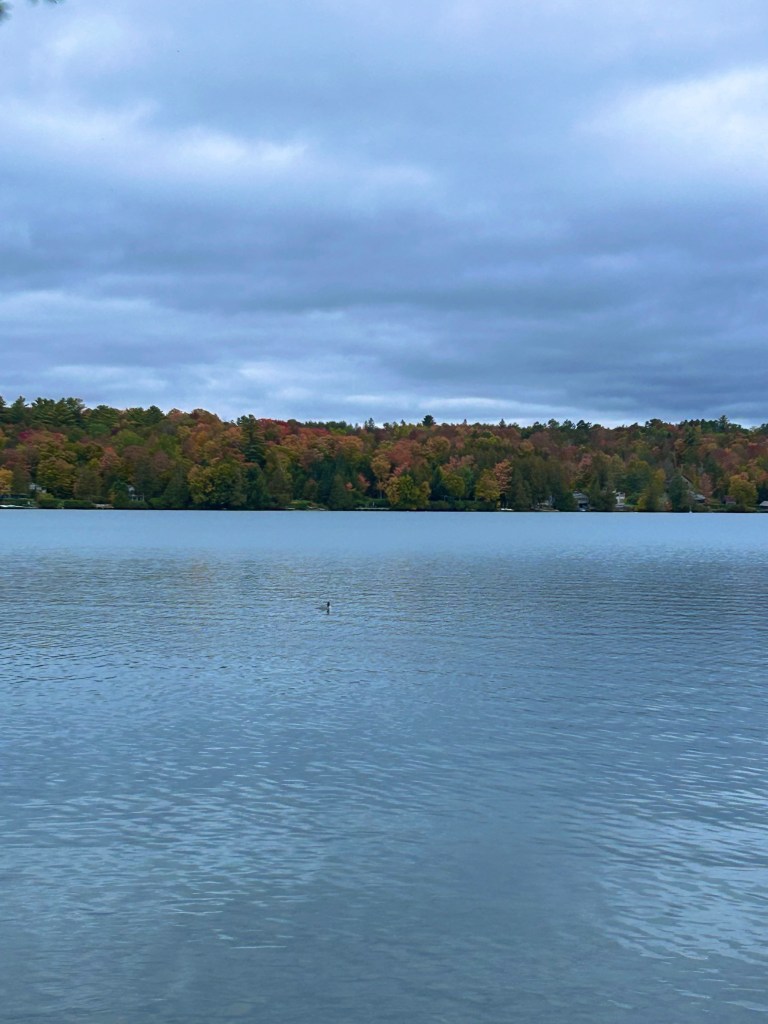
But to return to August…. June, July, August, in my way of reckoning, these are Vermont’s high holy months, the long days of sweet roses and waving rudbeckia, the welcomeness of ice on your tongue, walking in twilight, the loveliness of sunlight chips and loons on pond water. Those worn clichés — savor every day, know your luck — are true of course, in the way that truth is multitudinous — in the way that Mac Barnett notes that Be Kind might be a given starting place, but not a plot. And human life, of course, is plot, plot, plot. Often, not of our own making.

Story, of course, is where I’m headed. These midsummer days, the glossiest greens already fading. As I’ve done for years, I hold to the strands that keep me sane in this world illusory and fragile and heartstoppingly thrumming with might far beyond any one or two or few of us… the chords of this mortal life. The gritty and sometimes joyous labor of writing, of walking in the world, the domesticity of family and friends. Brew coffee, weed the garden, ponder the sky.

AUGUST FIRST
by Hayden Carruth

Late night on the porch, thinking
of old poems. Another day’s
work, another evening’s,
done. A large moth, probably
Catocala, batters the screen,
but lazily, its strength spent,
its wings tattered. It perches
trembling on the sill. The sky
is hot dark summer, neither
moon nor stars, air unstirring,
darkness complete; and the brook
sounds low, a discourse fumbling
among obstinate stones. I
remember a poem I wrote
years ago when my wife and
I had been married twenty-
two days, an exuberant
poem of love, death, the white
snow, personal purity. now
I look without seeing at
a geranium on the sill;
and, still full of day and evening,
of what to do for money,
I wonder what became of
purity. The world is a
complex fatigue. The moth tries
once more, wavering desperately
up the screen, beating, insane,
behind the geranium. It is an
immense geranium,
the biggest I’ve ever seen,
with a stem like a small tree
branching, so that the two thick arms
rise against the blackness of
this summer sky, and hold up
ten blossom clusters, bright bursts
of color. What is it — coral,
mallow? Isn’t there a color
called “geranium”? No matter.
They are clusters of richness
held against the night in quiet
exultation, five on each branch,
upraised. I bought it myself
and gave it to my young wife
years ago, in a plastic cup
with a 19cent seedling
from the supermarket, now
so thick, leathery-stemmed,
and bountiful with blossom.
The moth rests again, clinging.
The brook talks. The night listens.

Singing a Love Song, Swimming.

It’s nearly 8 in the evening by the time I step into #10 Pond, the sun slipped down around this narrow pond surrounded by mountains, my only company two teenage girls who stand on the shore talking about a mother’s car—these girls and a loon calling.

I part the still waters and swim out. Despite raging heat elsewhere on the globe, Vermont’s summer holds a chill, and by the time I swim back, I’m cold. On the shore, the girls have disappeared, and under the twilight sky it’s just shivering me toweling off water, pulling on a sweatshirt. All afternoon, I’ve thought of this water, of the sky turning from blue to black, of the mud beneath my bare feet, the loon chorus. It’s been a day of work and laughter, nothing rotten that I’d like to leave at the bottom of the pond; nonetheless, July moves along, the relentlessness of time. I crave these moments of water and sky, of reading beneath the apple tree’s shade, dinner near the garden, as much sun and wind and, yes, cold water as I can bear. Sustenance.

“But some nights, I must tell you,
I go down there after everyone has fallen asleep.
I swim back and forth in the echoing blackness.
I sing a love song as well as I can,
lost for a while in the home of the rain. ”
― Billy Collins

On the Road…

My twenties were years of road tripping, Vermont to Washington state, lots of New Mexico, sleeping in the back of our black diesel VW Rabbit, 55 mpg, our Rand McNally shedding pages. Thirties were babies and learning to garden, raising high the roof beams, forties the scrambling decade of parenting alone and keeping kids shod and fed. Fifties, kids are paddling their own lives, and yet we’re tight, tight; cancer survivorship schooled us rapidly in what’s dear and what’s so easily lost.

Among these decades, my own unbroken thread of writing. Road trip with a self-made atlas.

A beloved friend hops into my car. We lived on the same dirt road for years. I would phone and say, It’s sleeting. Come walk with me. She was always game. This late afternoon, I drive south, that too familiar journey of Route 15 and I-91, heading towards Dartmouth-Hitchcock, but I park in pretty Hanover, NH, where I’ve been invited to read from Call It Madness — a title that reflects my own life — madness, madness, everywhere — both the crazy-making of divorce and cancer but also my own fierceness for my dear ones, for literature and the roses blooming around my house and the precipice I tread between ebullience and the frigid teeth of despair.

The loveliest of evenings at Still North Books. My reading companion, Shasta Grant, is true and gifted, the bookstore staff warm, the audience curious and kind. My friend and I are the last to leave, save for the cheery folks folding the chairs and emptying our water cups. I drive north into the night. The sun dwindles into gold and pink. We talk about cars and money, kids of course, drinking and books and death.

She gives me her apple. I eat and drive. Thirty years into our friendship, as the darkness folds around us, I think, What a long way we have come. In my driveway, we linger, the car’s engine clicking as it cools, the fireflies flickering. How happy I am to begin my own hand-crafted book tour for Call It Madness. In my youth, those decades when I leaned so hard into my life I hardly brushed my hair, I believed my life would flatten, temper into quietness. Oh friends, the world’s depths are revealed as bottomless crevasses and immense peaks, largely unknowable. What’s knowable is the stickiness of that apple’s juice on my fingers, the darting fireflies, the answer I gave to a stranger’s question at the end of the Still North Books reading: “My real flaw was cowardice.” I’ve long ago abandoned the flimsiness of that forgiveness concept, for myself or others. Life propels onward, word by word, sunset to sunrise, companionship in all weather.

A few things…. I’ll be on Bon Mot on Central Vermont Radio, Sunday, June 21, 5 p.m. Call It Madness book launch Tuesday, June 30, 7 p.m., at the Jeudevine Memorial Library in Hardwick, Vermont, sponsored of course by the hometown and most stellar Galaxy Bookshop.

Survive, professor! That’s all you really have to do. Keep the grass from creeping into eh carrots, deal with the woodchuck stealing the apples, patch up the pipes! — Makenna Goodman

Always, the question, which way?

For readers who haven’t lived in northern Vermont, here’s a keyhole view of June: heat and humidity move in, and the earth thrusts out into leaf and bloom. Overnight, the loosestrife blooms yellow, the chard gains an inch in leaf. The lilacs fade. The Siberian irises spread purple.

In the heat, listening to terrible news of the American Empire’s spread, I finish stacking next winter’s firewood. Sweaty and dirty, the cats and I admire my work, contemplating the frosty fall evenings. The cats, perhaps, are merely curious about my labor, or the next meal’s arrival, or perhaps a cat calculus I don’t imagine.

June, the songbirds serenade exquisitely. I mow the grass around the woodpile, the pink roses beginning to bloom, the brushy compass flowers that are now knee-high. Will the ancient mock orange leaf and bloom? Will the woodchuck devour the sunflower seedlings? Will I unclench my knotted heart and let myself fall in love, tumble into the next phase of whatever I may have in this lifetime?

Rain falls and the heat breaks as I finish mowing. I wander around, drinking a glass of water, the rain running through salt and chaff on my cheeks and biceps. 21 years ago, a friend labored to bring her baby into the world. I sat in her kitchen while our six-year-olds played under her front yard maples. Her mother-in-law made chicken soup that I ate while I nursed my own wee infant.

The world isn’t filled with ten thousand things. In the June afternoon’s rain, a rainbow elusive, math welds no teeth. A hopping robin in search of sustenance, unfolding hydrangea leaves, the bounce of a child’s basketball, the scent of sap bleeding from winter’s firewood.

For local folks…. I’ll be reading at Still North Books in Hanover, NH, Wednesday, June 17, 7 p.m. Yes — a lovely bookstore — and yes, a non-cancer visit to this lovely village.

Is not all the summer akin to a paradise? — Henry David Thoreau

June Love.

First copies of Call It Madness in the Galaxy Bookshop.

After my long trip to northern New Mexico — sand and yucca, family in all its myriadness, green chili, and the sweet juniper breath of the desert night — I lean into Vermont’s lush early summer. Mostly, I keep to myself, planting my garden before this morning’s warm rain, stacking wood piece by piece, savoring the forget-me-nots that have appeared this year beneath the dwarf apple tree that is no longer any small thing. These days are a living Impressionist painting, lilac-scented pastels. In the night, my bones worn satisfyingly with hours of labor in the sun, I lie on my weather-splintered picnic table, the frogs singing, the Milky Way a celestial arc. I am not a piece in this puzzle, but a strand in the tapestry.

“Go down through the garden, dig up the radishes! Root up everything! Eat grass! Look for corn! Look for oats! Run all over! Skip and dance, jump and prance! Go down through the orchard and stroll in the woods! The world is a wonderful place.” E. B. White

Visitors from the Animal Realm.

A yearling bear, black as country midnight, appears through the hostas and checks out my back porch. The bear and I appraise each other through the glass door. Then the bear slips over the porch into the raspberry canes and heads off. My little street, with not even a handful of houses, quickens in the texting world. I am not the only one awake this early.

Later, midday, on the Dartmouth College campus for a lit mag launch, I’m standing on a street corner, talking with a woman I’ve just met, and a deer walks by. It’s Hanover, a New Hampshire town, and students raise their phones to record. The deer runs across the road, its heels click-clicking on the pavement.

Early June, a heady time in northern New England, the lilacs as dense and profuse as I’ve ever seen these beauties. My neighbor and I walk along these fragrant blossoms, then head into town for the community meal where, in the noisy space, the group of old and new friends that I join put our heads near, the conversation rising and twirling with that spring ebullience.

As the evening cools but doesn’t cloud, my neighbor and I walk home and linger on her veranda. Hummingbirds sip at her feeders. I’ve been moving the remainder of this year’s firewood, readying to stack next year’s wood, and the weight of this work lies in my shoulders, exhausting and yet welcome. This moving of firewood may take me weeks. We talk about phlox and columbine, about sex and money and house painting. These days are long. I slip off my sandals and wander home in my bare feet.