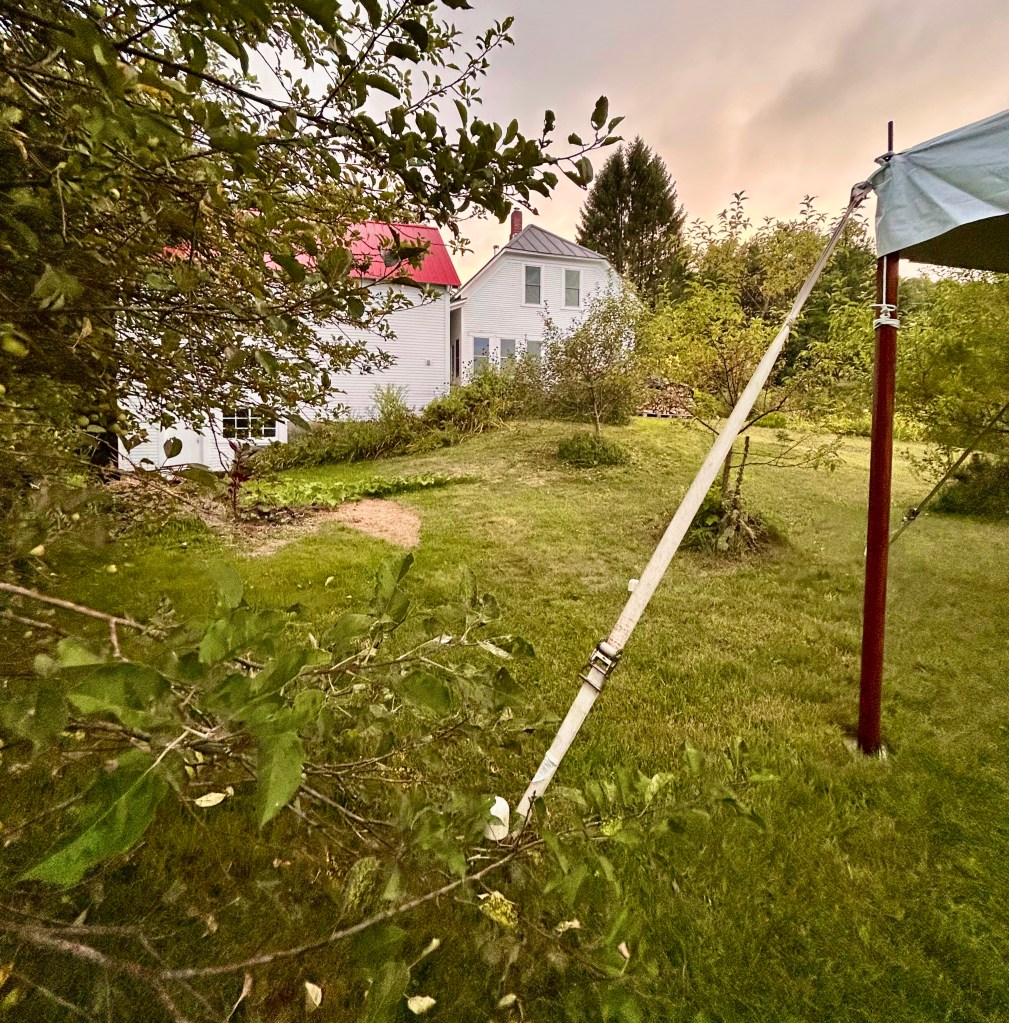
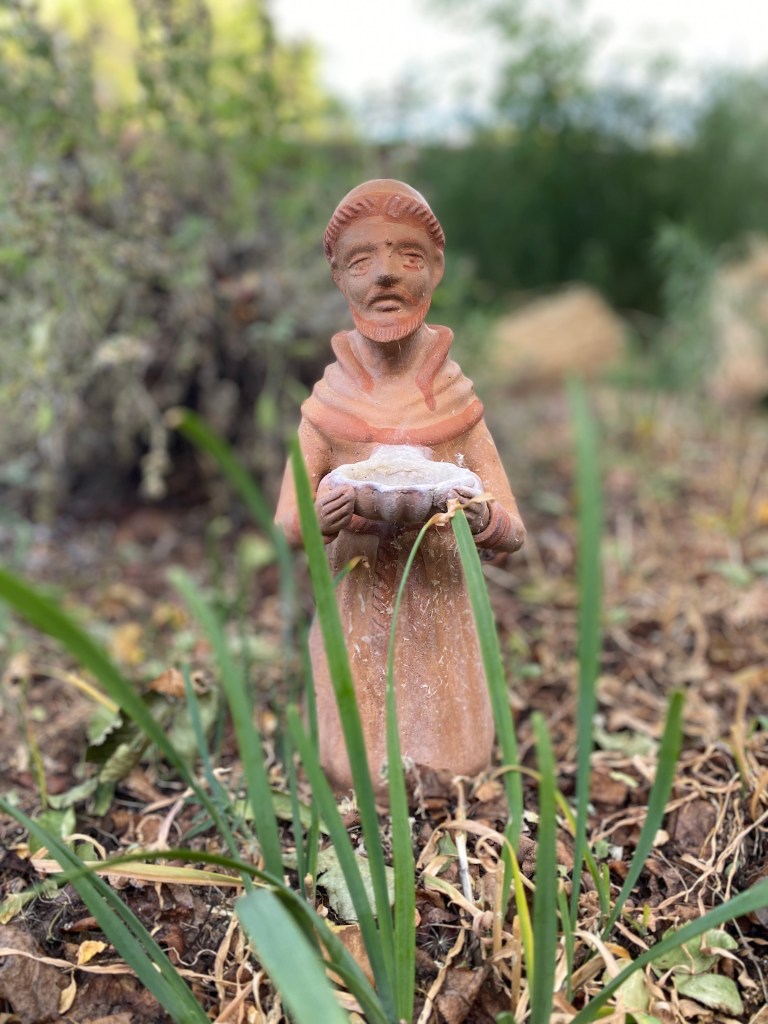
“…living according to the rhythms of others…”

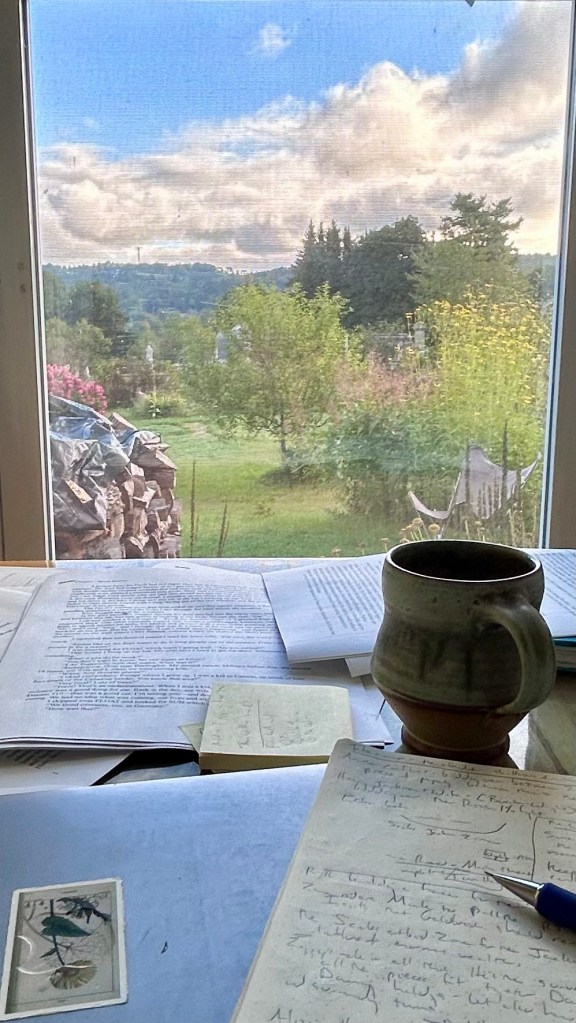
My ex and I were remarkably unsuited for each other in many ways; in particular was his ability to live without plans. I—in what’s surely irritating, too—lean into rhythms and patterns. This long holiday weekend, I wake hours before dawn, busily tearing apart a manuscript draft and rearranging, stitching, adding, cutting, cutting, cutting…

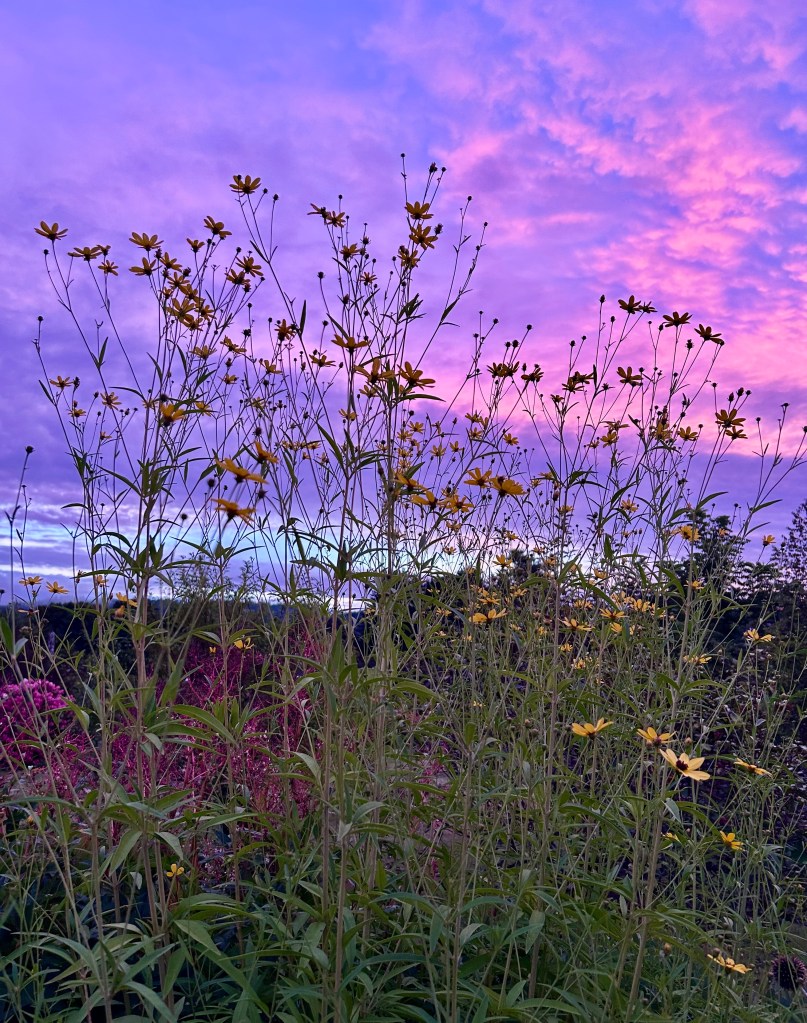
These early autumn days are sunny, with real heat yet. Afternoons, I park at the rail trail, stretch, and run. In the parking lot, there’s always that SUV with a youngster who’s on a different economic path, and an assortment of Subarus and Volvos with bike racks. These runs are short, a few miles perhaps. Sometimes, I make the four-mile loop. Ending, I often leave the path for the pasture along the river, the Joe Pye weed and purple asters and goldenrod dense. The pollinators eat hungrily.

An orderly life depends on a tenor of privilege, a gift I didn’t have in those years of in-the-thick mothering. Tillie Olsen in Tell Me a Riddle wrote about “living according to the rhythms of others”—a line I’ve considered for years. Nearly all my life I’ve lived in the sway of family, gleaning writing time where I could. Now, just a few years into the children-are-adults phase of my life, my companions are sweet fat housecats but also the unremitting remains of cancer and treatment: the mighty beast of fatigue. I lean into it and push; the fatigue pushes back. As in any family, you make your agreements. You learn to get on.

Late afternoon, we build a fire and linger. Long past dark, we huddle around the flames, the cold nipping in. I tilt my head back. Overhead, stars appear between patches of clouds. From the trees, apples have already fallen into the long grass, sweetly rotting from the day’s heat. I’ve left the kitchen light glowing over the table spread with pages and my scrawled notes. Tomorrow’s labor.

Blackberry Eating

I love to go out in late September
among the fat, overripe, icy, black blackberries
to eat blackberries for breakfast,
the stalks very prickly, a penalty
they earn for knowing the black art
of blackberry-making; and as I stand among them
lifting the stalks to my mouth, the ripest berries
fall almost unbidden to my tongue,
as words sometimes do, certain peculiar words
like strengths or squinched,
many-lettered, one-syllabled lumps,
which I squeeze, squinch open, and splurge well
in the silent, startled, icy, black language
of blackberry-eating in late September.

— Galway Kinnell

Little and Great Things.

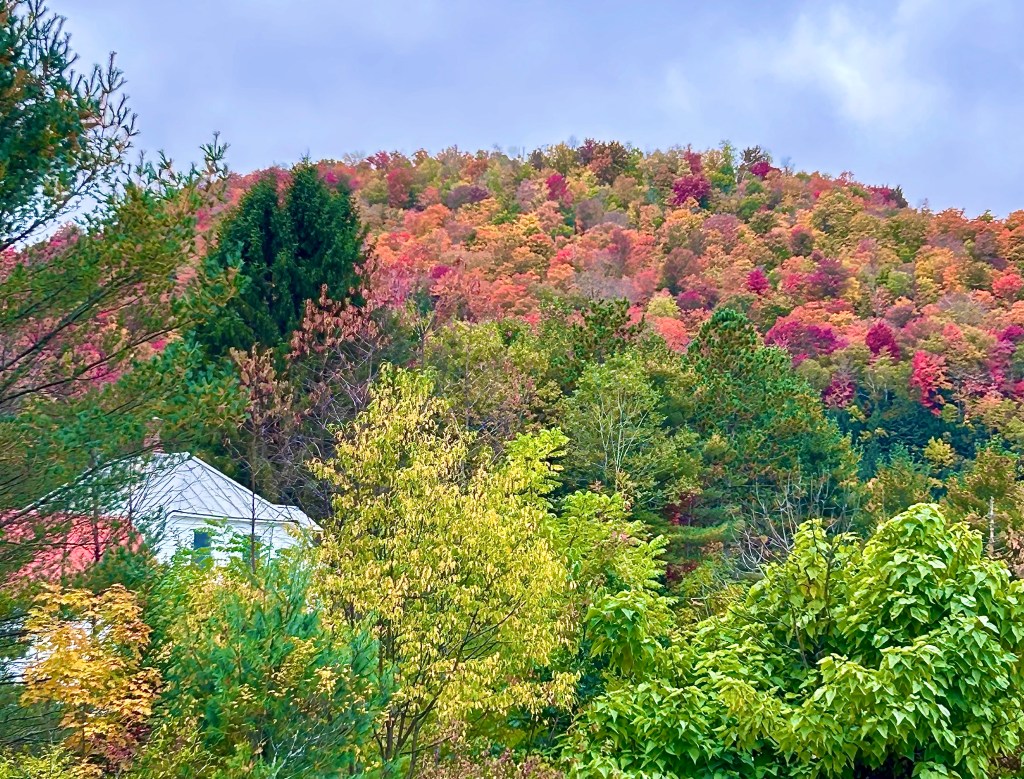
September 1, and the sudden gush of changing seasons, which is never simply a matter of weather and light, but habit and soul. After a summer of book tour and work, of road trips and hikes, swimming, of reconciliation and division, too, seed sowing and blackberry gathering, of the sweet satisfaction of a family marriage, now early autumn nibbles in these early mornings. All summer, I struggled writing, but the vision forward for this manuscript abruptly opens. I lean hungrily into the work.

On a recent evening, we visit an open studio evening, a dirt road site of a long-ago hill farm with a queenly view of the valley, a righteous post-and-beam structure with a stunningly opulent garden. The art ranges from sculpture to two charcoal drawings commissioned by Bob Dylan where I linger; the studio and gardens comprise a whole. Slowly, the rooms fill with people I’ve known for years and strangers, too, all curious. How much my mother, long passed from the earth, would have loved this evening. How implicitly she would have understood the present of art, its underpinning in the past. She would have noticed the old millstone now relegated beneath a young apple tree.

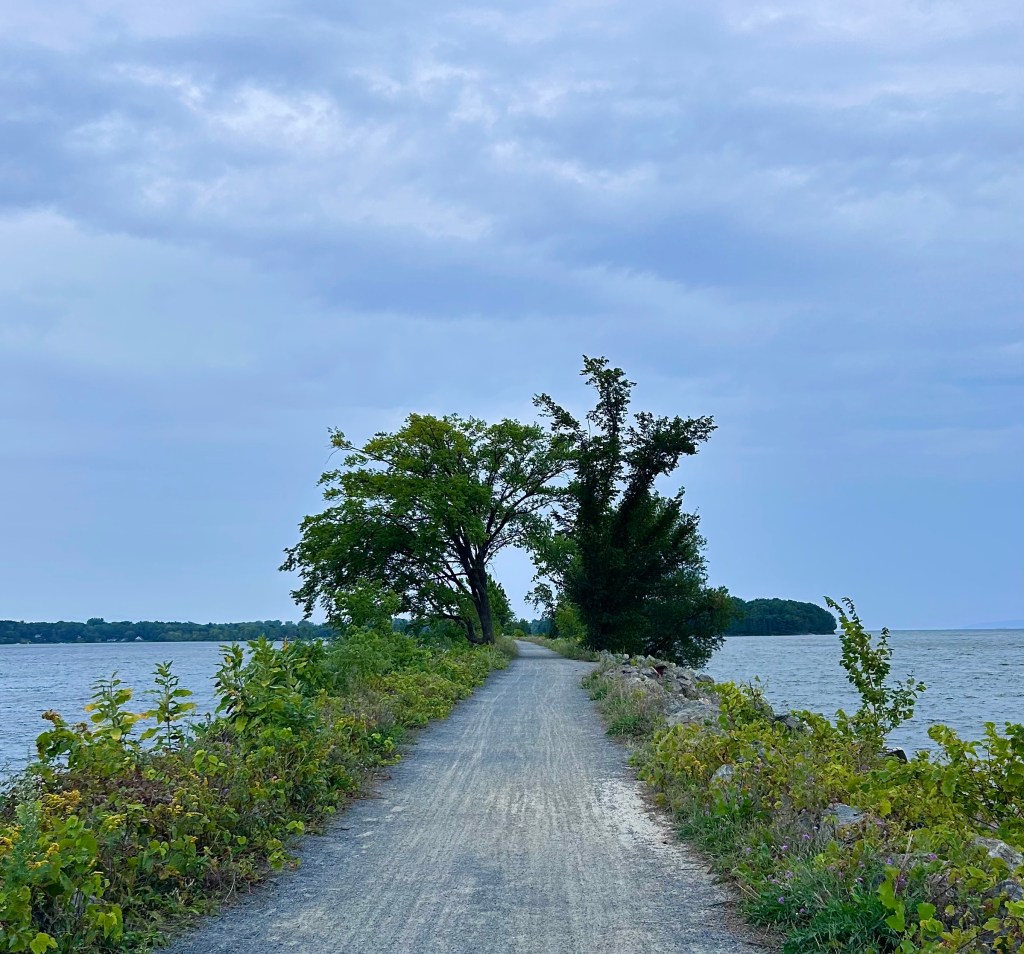
We drive home around the lake, then down the hills into Hardwick village, the sunset crimson and gold along the darkening horizon. Always, we’re plunging forward, into the night and sleep, into the morning. The next day’s noon, I walk with my daughter along a causeway far into Lake Champlain, balmy wind on our faces, small spits of rain in our hair. The good luck omen of white egrets.

All these are great and little things. The profound pleasure of pouring boiling water into a French press in my rosy dawn kitchen. Soon enough, the monotone of snow and ash and road sand, the immense might of winter, will settle here. For now, the bittersweet profusion of late summer—sunflowers and goldenrod, basil and tomatoes.

As it’s September 1, here’s W. H. Auden

There is no such thing as the State
And no one exists alone;
Hunger allows no choice
To the citizen or the police;
We must love one another or die.

Wedding Bells: Chop Wood, Carry Water.

Van Morrison’s Enlightenment begins with a riff on the Buddha’s Before enlightenment, chop wood, carry water. After enlightenment, chop wood, carry water. Didn’t I first stumble into that koan in Salinger’s Franny and Zooey, that little white paperback my sister and I checked out of the public library and handed back and forth between us? Those were the adolescent years when I devoured literature — Dostoyevsky, James Joyce, Sylvia Plath — so hungry, those years of amazement, at how literature could sing. So hungry I was in those years that merged into that Vermont mountainside college where I often stayed up most of the night, talking, drinking, often sleeping under the dazzling constellations. In the mornings, we trekked to seminars in the former cow barn and debated Plato and Kant.

Those years, I believed I could wrap my mind around life, that understanding was possible in more than ragged snippets. All my adult life I’ve leaned into a daily version of chop wood, carry water, that three-legged stool of raising children, writing books, earning a livelihood to keep shelter and home whole for my tiny family. An insanely complex equation.

With great merriment, my oldest daughter marries, we host a party, folks arrive, cake is eaten. The night before, we stay up late, the girls decorating the cake, my brother on a kitchen stool, shaking out the stories of our memories together. Such happiness to have a full house of youth and laughter. Monday morning, awake long before dawn, I labor at my version of carrying wood, those Van Morrison lines humming through my mind. Illusion? Nonattachment? Perhaps all my life I’ve thought about this koan in the wrong Western way, an either/or. Cold dew washes my bare feet.

As for the cake…. I’m still handing around leftovers, sweet luck.

the leaves believe
such letting go is love
such love is faith
such faith is grace
such grace is god
i agree with the leaves
― Lucille Clifton

Dad, at 89.

In the summer of 1980, my parents had the summer off. Dad was a college teacher, and my mother, an RN, was encouraged to take unpaid time as the hospital census was low. My parents owned a Jeep, and my dad loaded sleeping bags and two tents in an oilskin on the luggage rack, and secured the bulk with bungee cords. From New Hampshire, my parents headed west with their three kids.

Now, older than my parents were at that time, I wonder what the heck my parents were searching for. As a kid, of course, you simply go with the family flow, show up at the picnic table and eat chili from a plastic bowl. As a writer, I know that all life is propelled by desire, for that bowl of chili, for the wilderness my parents loved, for the far murkier desires that lurk in a human heart. We were never a Bobbsey Twin family (although good lord how I longed for that, a long-quelled desire), but three of us grew up and created our own complicated lives, never far from the wilderness.

Today, my old man is 89, a remarkable age. I woke thinking of him on one of those summer trips, back in the world before cell phones and internet, when no one knew where the five of us were, just us—dad, mom, the three kids—rattling around in that Jeep. Dad always packed tools, and he fixed our vehicle along the way. High up in the Wyoming mountains one summer, it was cold as heck. He got up before any of us, brewed coffee on the Coleman stove and made buttered toast. He unzipped the tent and handed in toast and hot coffee. Stay in your sleeping bags until it warms, he said. We’d been on the road for weeks by then. He was unshaven, bundled in a jacket, and he kept that makeshift hearth of the Coleman stove burning, feeding us toast. Happy birthday, dad. ❤️

And the Hayden Carruth poem that reminds me of my parents…

Birthday Cake

For breakfast I have eaten the last of your birthday cake that you
had left uneaten for five days
and would have left five more before throwing it away.
It is early March now. The winter of illness
is ending. Across the valley
patches of remaining snow make patterns among the hill farms,
among fields and knolls and woodlots,
like forms in a painting, as sure and significant as forms
in a painting. The cake was stale.
But I like stale cake, I even prefer it, which you don’t
understand, as I don’t understand how you can open
a new box of cereal when the old one is still unfinished.
So many differences. You a woman, I a man,
you still young at forty-two and I growing old at seventy.
Yet how much we love one another.
It seems a miracle. Not mystical, nothing occult,
just the ordinary improbability that occurs
over and over, the stupendousness
of life. Out on the highway on the pavement wet
with snow-melt, cars go whistling past. 
And our poetry, yours short-lined and sounding
beautifully vulgar and bluesy
in your woman’s bitterness, and mine almost 
anything, unpredictable, though people say
too ready a harkening back
to the useless expressiveness and ardor of another
era. But how lovely it was, that time
in my restless memory.
This is the season of mud and thrash, broken limbs and crushed briers
from the winter storms, wetness and rust,
the season of differences, articulable differences that signify
deeper and inarticulable and almost paleolithic
perplexities in our lives, and still
we love one another. We love this house
and this hillside by the highway in upstate New York.
I am too old to write love songs now. I no longer
assert that I love you, but that you love me,
confident in my amazement. The spring
will come soon. We will have more birthdays
with cakes and wine. This valley
will be full of flowers and birds.
There is No Such Thing as Atheism.

One of my favorite parts of our house is the small glassed-in porch at the bottom of the stairs, just large enough for two small loveseats. In this high school graduation weekend, we’ve spent a lot of time hanging out, talking, talking, the weather alternately switching from cold rain to sparkling sun. The cats sequestered themselves on the stairs while my daughter’s dog lingers around her feet. The dog wants to play. The cats cherish their dignity. The humans hover around this heartfelt drama.

Graduation and its platitudes… and yet the moment is such a pivot point, a marker between childhood and what will (god willing) be a very long haul of adulthood. Unplanned, the day spans the present, old friends I haven’t seen in years, and ends with a chess game with my brother at the kitchen table. Graduation isn’t weekend to solve anything, fix out the phone bill or shore up the back deck.

On this graduation weekend… the best commencement speech I’ve ever read is David Foster Wallace’s “This is Water,” gritty, savvy, and full of heart….

Because here’s something else that’s weird but true: in the day-to day trenches of adult life, there is actually no such thing as atheism. There is no such thing as not worshipping. Everybody worships. The only choice we get is what to worship. And the compelling reason for maybe choosing some sort of god or spiritual-type thing to worship—be it JC or Allah, be it YHWH or the Wiccan Mother Goddess, or the Four Noble Truths, or some inviolable set of ethical principles—is that pretty much anything else you worship will eat you alive….

— David Foster Wallace

Fox Running Down the Road…

Midday, driving from here to there, a fox runs across a field towards me, its jaws clamped around what appears to be a yearling groundhog. I immediately slow my Subaru. The fox runs quickly, darting across the road. I pull over and jump out, watching the fox run along the shoulder. It’s backwoods Vermont, and no one’s around but me and this fox intent on carrying home its slain prey.

Surely the fox knows the road is empty of humans but for me, and I am no threat. Running, running, the fox disappears into the hayfield. In no great rush, I admire the lake through the trees. It may rain, or not. The hazy swimming weather has been usurped by cold, by the strange smoke from the Canadian wildfires so far from us. Here, this midday, it’s just me and the fox and the groundhog turning doubtlessly into fox kits.

Eventually, a pickup appears and stops. The driver’s an acquaintance, and he rolls down the window and asks what’s up. I lean against the door. He and I grouse for a bit about town business and human chaos. When he’s gone, I linger just a little longer, remembering the rushing fox, those moments of human and wild.

“It would have been better to come back at the same hour,” said the fox. “If, for example, you come at four o’clock in the afternoon, then at three o’clock I shall begin to be happy. I shall feel happier and happier as the hour advances. At four o’clock, I shall already be worrying and jumping about. I shall show you how happy I am! But if you come at just any time, I shall never know at what hour my heart is to be ready to greet you…” 

— Antoine de Saint-Exupéry, The Little Prince