Myself, the Householder.

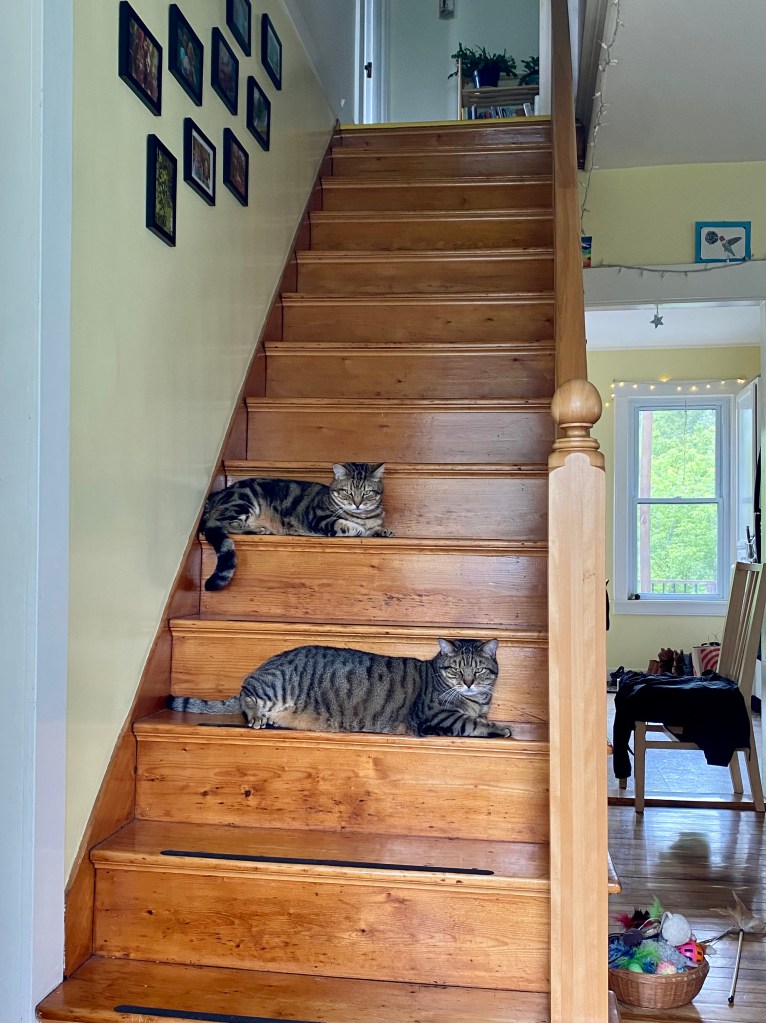
Furious, long before four this morning I’m at my desk with coffee and manuscript and my needy cat who must have his nose rubbed. A few months ago I asked a neighbor to knock off his cash carpentry payments to my ex-husband, a father who’s never made a child support payment. The neighbor brusquely told me I didn’t understand the complexity of the situation and walked out.

Now, he’s sent word that I made him and his wife feel unsafe. Oh Lord…. me and my 4’9″ stature and my insistence that I do know the complexity of my story and my uncomfortable female rage. I’ve doubtlessly repeated this, but his is a Kafka-esque flip of the word unsafe. And since when are other people’s children negligible?

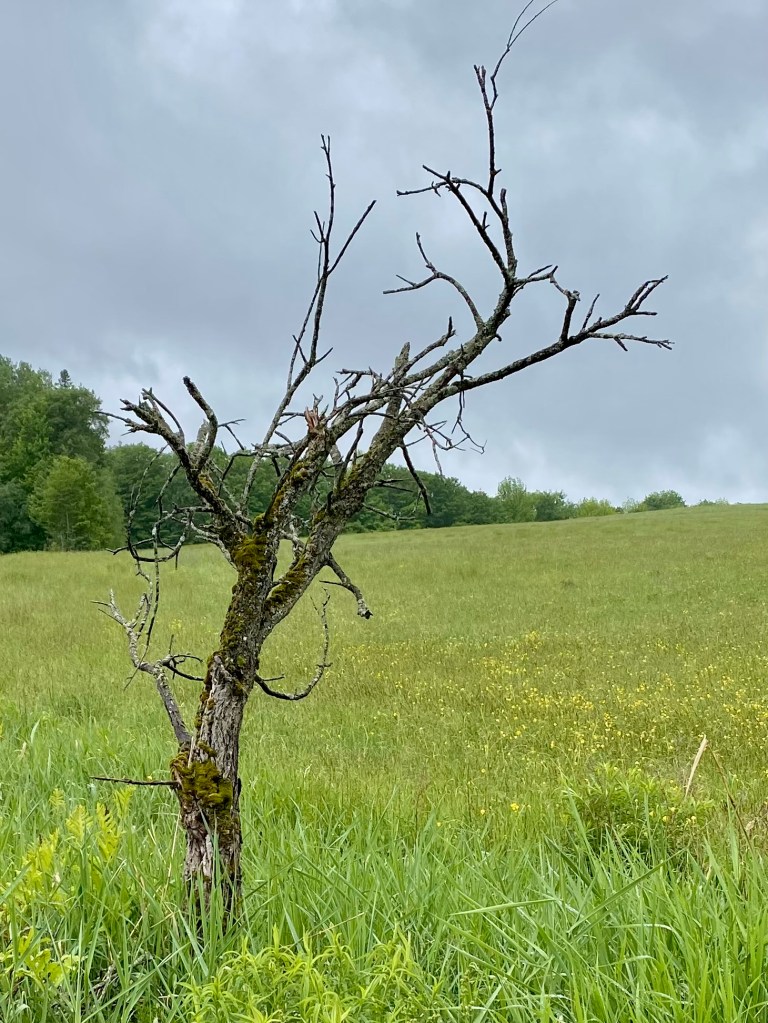
I’ve been here before — like too many others, as this is hardly my unique problem — and I do what seems sensible to me. I tell no one where I’m headed and hike through the forest and up along a ridgeline. The hike cools my head. I discover white trilliums and wash my face in a low-running stream. The woods are hurting for rain, thirsty, thirsty.

I left with a question — what will I do? — and returned with my answer. Out of chaos, always, springs the pulsing might of creativity. At home, I hole up with Joanna Biggs’ A Life of One’s Own: Nine Women Writers Begin Again, and Biggs points me to Toni Morrison. In the evening, I pull a few weeds from the lily-of-the-valley that guard my house’s foundation. Such a delicate, pure, tiny flower.

 Q. You don’t feel that these girls (of teenage mothers) will never know whether they could have been teachers, or whatever?

A: They can be teachers. They can be brain surgeons. We have to help them become brain surgeons. That’s my job. I want to take them all in my arms and say, “Your baby is beautiful and so are you and, honey, you can do it. And when you want to be a brain surgeon, call me — I will take care of your baby.” That’s the attitude you have to have about human life.

— Toni Morrison, Time Magazine

‘In sorrow, pretend to be fearless.’

In Praise of Coldness

“If you wish to move your reader,”
Chekhov said, “you must write more coldly.”

Herakleitos recommended, “A dry soul is best.”

And so at the center of many great works
is found a preserving dispassion,
like the vanishing point of quattrocentro perspective,
or tiny packets of desiccant enclosed
in a box of new shoes or seeds.

But still the vanishing point
is not the painting,
the silica is not the blossoming plant.

Chekhov, dying, read the timetables of trains.
To what more earthly thing could he have been faithful?—
Scent of rocking distances,
smoke of blue trees out the window,
hampers of bread, pickled cabbage, boiled meat.

Scent of a knowable journey.

Neither a person entirely broken
nor one entirely whole can speak.

In sorrow, pretend to be fearless. In happiness, tremble.

— Jane Hirshfield

Last Moments.

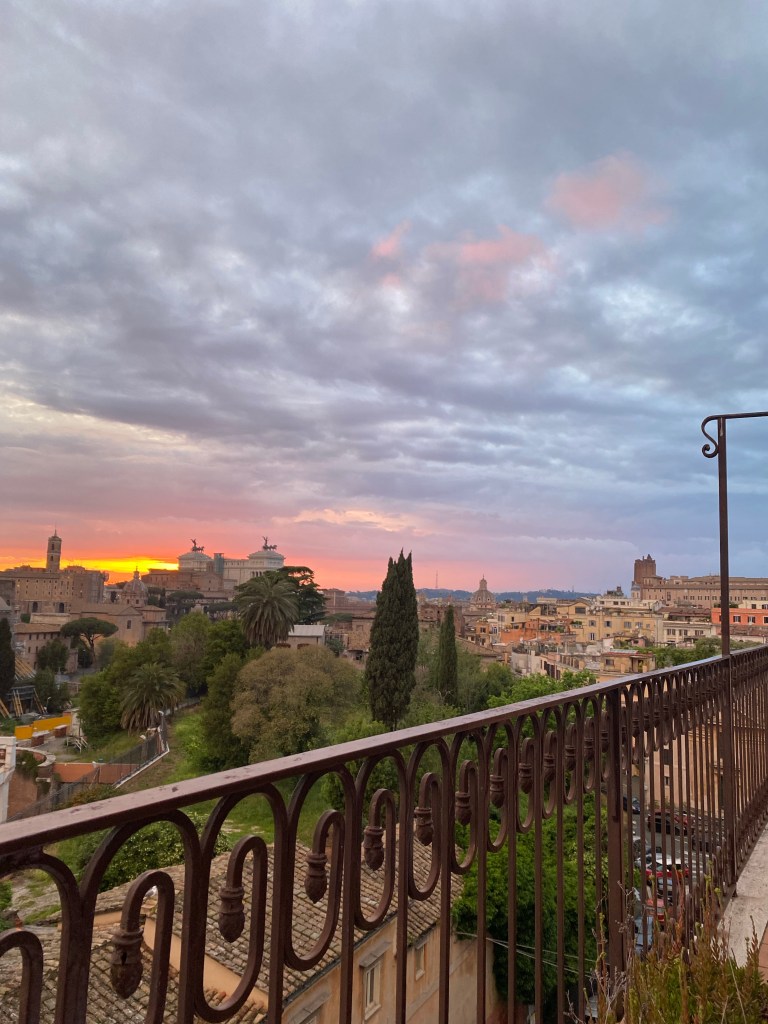
4 a.m., I’m drinking espresso on a balcony in Rome. Our tickets home have been cancelled. (Hello, strikers.) After a scramble, I’m hoping my patch-up fix will hold.

The morning is cool with a promise of sultry heat. Birds serenade in treetops and fly among ruins from an ancient world.

At the metro, my daughter and I are separated on opposite sides of a turnstile. I throw her my wallet over the gate. Her ticket won’t work, nor the second. A man appears, opens the gate on my end, and speaks to me in Italian. My daughter hurries through. I say thank you, thank you, thank you, to the stranger disappearing into the crowd.

Talking.

Old friends/neighbors appear on the other side of the cemetery fence. She’s wearing shoes with a hole in one heel and steps carefully through the patchy snow that remains. In the thin late afternoon sunlight, I’m in the brown garden, searching for nubs of green, an elbow of garlic, a toe of daffodil. It’s been so long since I’ve seen these people, in that long ago time known forever now to us as pre-pandemic, that I need a moment to determine, yes, yes.

We are all three of us worse for wear, but they dive right in, talking about my house and the wood piles, the forsythia I planted that’s sprung crazy, the picnic table beside the apple tree. Things have happened here. Life has gone on.

He leans on the fence where my youngest tied a pink strip of old t-shirt years ago, marking where she and a friend planted a time capsule. What’s in there I can no longer recall, and likely she can’t, either.

Six years ago, in April, I decided to move into this house. No one was living here then. I leaped over the fence and tore a hole in the back of my leggings. I headed to work afterwards, and the kids teased me. What have you been doing? That April was a warm one, too. I leaned against the house and studied the declination of sunlight as I guessed it would rise.

As we talk, the wind picks up. The robins are ecstatic in the neighbors’ maples, really belting out their songs. Overhead, the turkey vultures float, eyeing us. We keep talking, tossing at each other, “remember this? remember this?” Oh laughter….

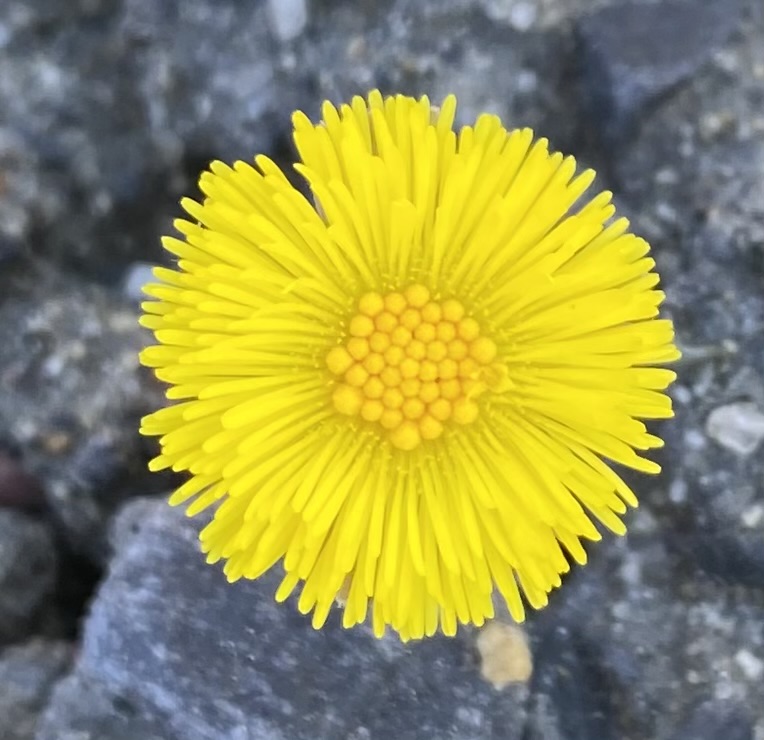
The bud
stands for all things,
even for those things that don’t flower,
for everything flowers, from within, of self-blessing…
— Galway Kinnell

At 86.

I grew up in a family nearly devoid of grown men. No grandfathers, no uncles save one uncle by marriage I met once in California and never saw again. Like any kid, how I grew up seemed just the way of the world.

Every summer, we saw my grandmother and wacky and wonderful aunts and female cousins. In those weeks, the ordinary rules were suspended. We kids lived in our realm, quite happily, while the adults did their endless talking and laughing. In all this, my father headed our rambling crew, whether we were swimming in Maine’s icy Atlantic or visiting a Shaker village. My father taught his three kids to love E. B. White and Shakespeare, to fly a kite and cross country ski. The original YouTuber before YouTube was a thing, my father is a lifelong library aficionado. He taught himself — and so taught us — to paint a house and repair a leaking washing machine, to write a clear sentence, play Hearts, understand mathematics is exquisite, and lean into the happiness of lying on your back under the summer constellations. The list is eternal: use a sharp pencil to solve algebra; chop garlic fine; Plato is sublime; be polite to cashiers; work hard; pay your bills; hike.

If you couldn’t figure out an answer, keep thinking. My god, that’s useful.

I inherited his nose and his utterly irreverent sense of humor. He never indulged his children in the illusion that the world is easy or kind. The summer I was ten, we drove from New Hampshire to Wyoming to Colorado to New Mexico, living out of our green Comanche Jeep and careening back into New England two days before school started. By that time, my sister and I had read his copy of Huck Finn at least twice over and thoroughly kicked around Huck’s aversion to civilization. 86 today, my father is still modeling Thoreau’s behavior of sucking the life’s marrow, grit and all, while savoring espresso.

Sundays too my father got up early
and put his clothes on in the blueblack cold,
then with cracked hands that ached
from labor in the weekday weather made
banked fires blaze. No one ever thanked him.

I’d wake and hear the cold splintering, breaking.
When the rooms were warm, he’d call,
and slowly I would rise and dress,
fearing the chronic angers of that house,

Speaking indifferently to him,
who had driven out the cold
and polished my good shoes as well.
What did I know, what did I know
of love’s austere and lonely offices?

— Robert Hayden, “Those Winter Sundays”