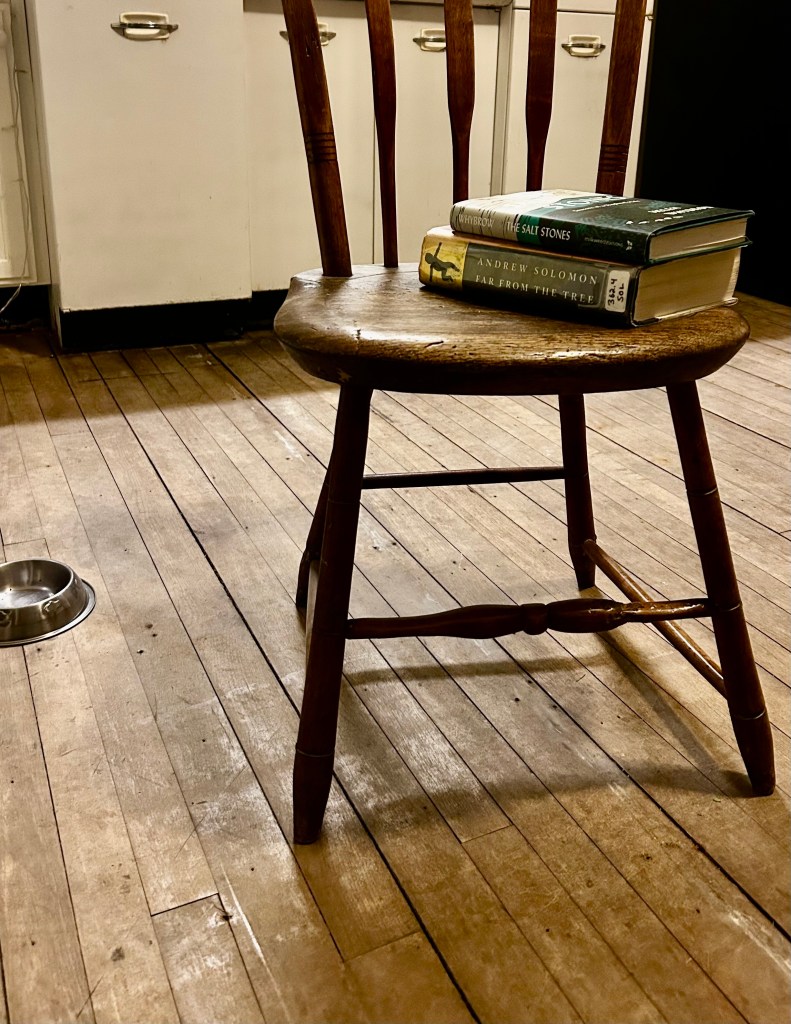
While the radio carries in terrible news, the carpenter tears off the vinyl on my kitchen floor. I run my hands over the worn maple boards that are revealed to the daylight again. In one corner, a rotten board where perhaps the sink leaked. The carpenter cut out those pieces, and I look down at the basement’s graveled floor. In another corner, there’s a blackened place where perhaps a woodstove once charred the flooring. He and I stand there, considering, wondering about who once lived in this house. I wonder about their patterns of heat and sustenance, these people who passed from this world, decades ago.
When the carpenter leaves, I vacuum, then sit on the cold floor while the cats sniff curiously. I rub my hands over these boards bruised from living and speculate that I can sand and polish this small space, quicken it again.
I began this project with a desire to take down a wall, open a room, and chase away the dismal memories of illness, to acknowledge that, indeed, this is the house where cancer devoured my body, tore at my flesh and mind. I survived. To continue surviving, I must revise my life, change my patterns of living.
I know a few of the names of the people who lived in this house on a village hillside. Now, barefoot on these cold hard-worn floorboards, I sense the mysterious stream of connection that runs between the dead and myself and those who will someday live here, when I have moved on myself, to other earthly or unearthly places. Who laid this floor I’ll never know, but I’ll put my hands and my muscle to it, lend my energy towards restorative beauty, towards the scantness I can do.
I am beginning to understand that healing is not about returning to what was, but about accepting the change and adapting to the brokenness. This is happening all around us, for people, for the land. People have done damage to the earth and to each other that can’t be undone. We can lament what was, but that won’t help us take care of what we still have. In fact, it might just hold us back. Nature herself keeps giving and never giving up. ~ Helen Whybrow. The Salt Stones
 Stony Soil Vermont
Brett Ann, we also live in an old house, built in 1859, and I too think about the women especially who have come before me and who will live here when my time in the house is over! And loved the quote. Millicent Flakehttp://www.maflake.com 706-260-8665
What an interesting house you must live in. Reminds me of the Jane Kenyon poem about finding another woman’s long gray hair on her kitchen floor.
I would love to see the finished product! I love houses, especially old ones with character and stories.
At Goddard I had some old maple flooring sanded and refinished with tinted oil. They were beautiful!
You’ll definitely have to come see! Such an interesting project. Let’s walk soon!
I also live in an old house, circa 1900. So many times I have wondered about the people and women here before me. For certain there were babies born and others died. It still has the original heart pine wood floors made from long leaf pine trees. Please do post after pictures as you bring yours back to life.
The quote from Helen Whybrow is so appropriate it really hit home for me. I saved it.
1900 is such a good era for old houses, old but not too old. A different period of materials and craft. Yes, I’ll post photos when I’m not vacuuming dust. Helen’s book is so worth a read….