Singing and Writing: a Small Blue Book

The other morning, between errands, I stopped in at Bear Pond Books in Montpelier, and found a small novel by Tomas Gonzalez, a Columbian, In the Beginning was the Sea. The book is beautifully crafted and fit just about in the palm of my hand, yet with a real heft and weight. And – it was my favorite color: blue.

These past few days I’ve swum down into the sea of this book. I’m not at all likely to head south to Columbia, and the book itself is not gleaming feel-good read. But it’s writing with a depth that goes down and down, and is as true and real to me as drinking a glass of my own well water.

As a Vermont writer, I’m often asked about sense of place and its importance in my writing. Yes, of course, place-centered geography centers in my writing. But equally, I know, the beauty of  a tropical paradise can also drive an inhabitant over the edge, and to write with a sentiment that place is only holy seems false to me. Surely, the yingyang flip of holy is unholiness. While this short novel holds the beauty of human life and the moonlit sea, the writing also contains the deeper elements of all the vagaries of human existence.

“So WHY does our writing matter again?” (my students) ask.

Because of the spirit, I say. Because of the heart. Writing and reading decrease our sense of isolation. They deepen and widen and expand our sense of life: they feed the soul… We are given a shot at dancing with, or at least clapping along with, the absurdity of life, instead of being squashed by it over and over again. It’s like singing on a boat during a terrible storm at sea. You can’t stop the raging storm, but singing can change the hearts and spirits of the people who are together on that ship.

— Anne Lamott, Bird By Bird
IMG_0124

The Fourth Cottage

Here’s a story from Timothy Snyder’s recent book Black Earth. During World War II, a young Lithuanian woman tumbled into a pit of corpses during a mass execution. When the killing was finished, earth was thrown over the grave. Somehow, buried beneath the dead, she managed to survive. Naked, shot in the hand, covered in her own blood and the blood of others, she managed to claw herself free of the pestilent trench. Terrified beyond what is imaginable, she sought help at a cottage. She was turned away. She found a second cottage, and was turned away again. At a third cottage, she again pleaded for help and was refused. At the fourth cottage, she was given succor, and she survived.

Snyder writers,

Who lives in the fourth cottage?…. When the outside world offered threats but no promises, the few people who acted to rescue Jews often did so because they could imagine how their own lives might be different. The risk to self was compensated by a vision of love, of marriage, of children, of enduring the war into peace and into some more tranquil time.

As a writer, I keep thinking of that fourth cottage, its habitants long-lost in the horrifically bloodied past. And yet:  whose hand opened the door in the fourth cottage? And who dwelled in cottages one, two, and three?

IMG_9341

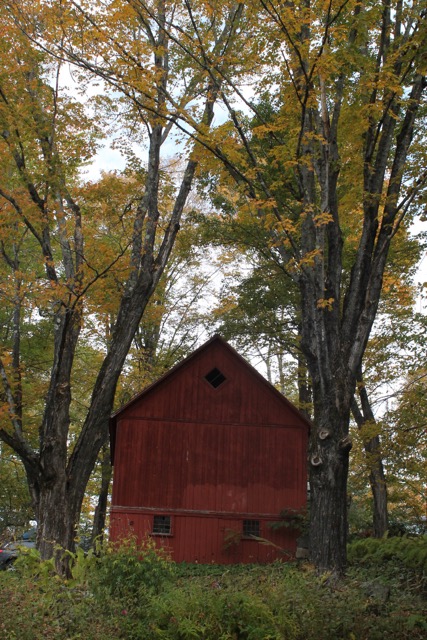
East Calais, Vermont/Photo by Molly S.

Enjoying the Digital Age

While I frequently rail against the digital age, the nefariousness of video games — while I believe children should play outside in apple trees and ride bikes, and read real books — while I am the champion of the world made by hand and do-it-yourself ad nauseum — the truth is, I find the digital world just plain fun at times.

My dad sent me a power point presentation he made for his class, and I watched it with my older daughter. At one point, she started exclaiming, Did grandpa photoshop that? I had no idea; I was too busy reading the words. God, she said, of a monastery in Bhutan, I’d like to be there.

At the end, she said, Cool beans to grandpa — that’s high accolades from a teenager.

This past day, I’ve been sending text back and forth to my publisher, making the very last changes on my novel before it heads, digitally of course, to the printers. An s was dropped here; I added acknowledgments, a dedication, and permissions. It’s all email, back and forth, with notes and exclamations, and phone calls of course, too. But truly, having read these 278 pages over and over, in the end, it all comes down to the writing. To story, craft, beauty, and meaning.

But the digital realm offers much to us in rural Vermont. I remember some winters standing outside the co-op with a baby on my back, reading the posters as cultural infusion. Here’s a paragraph I filched from that bounty of my dad’s material:

Like anything that one makes well with one’s own hands, writing good nonfiction prose can be profoundly satisfying. Yet after a day of arranging my research, my set of facts, I feel stale and drained, whereas I am energized by fiction. Deep in a novel, one scarcely knows what may surface next, let alone where it comes from. In abandoning oneself to the free creation of something never beheld on earth, one feels almost delirious with a strange joy.

“The Craft of Fiction in Far Tortuga”
Interview of Peter Matthiessen
The Paris Review 60 (winter 1974)

IMG_9111

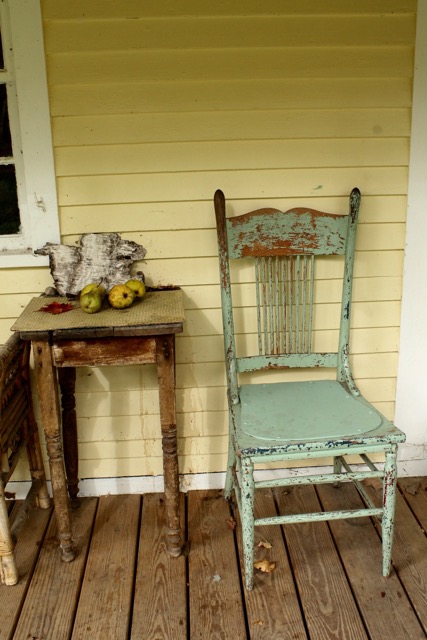
East Calais, Vermont/Photo by Molly S.

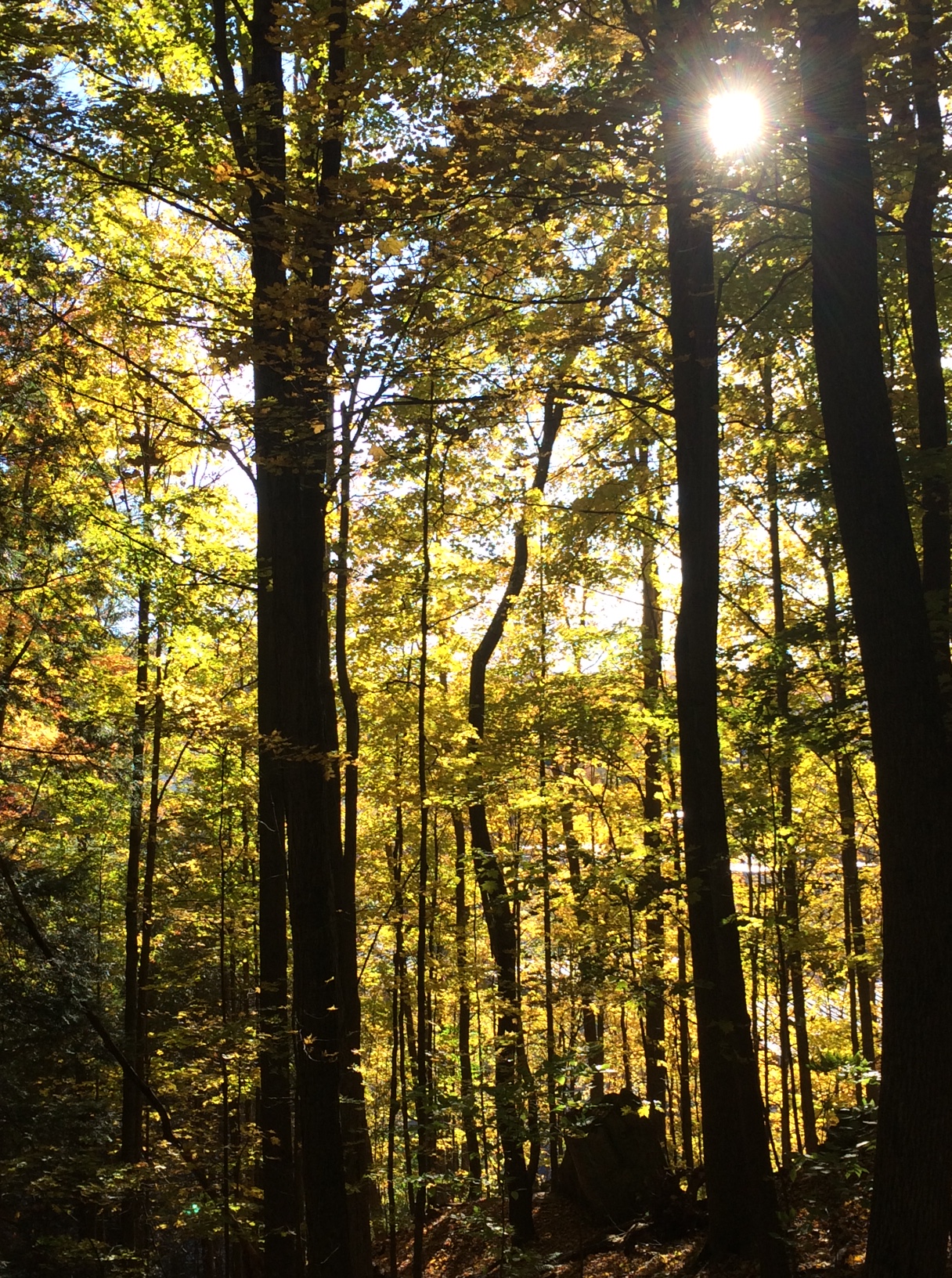
Autumn Light: Painting and Writing

When my sister was at Williams College, I used to take the Greyhound to stay with her, and while she was in class, I walked to the Clark Art Museum. The museum admission was free, and you could walk in and stay as long as you liked. The museum wasn’t enormous, but it was sizable enough that you could begin with the Remingtons and head up to the Impressionists. On the second floor was a large light-filled room filled with Monet and Cassatt and Degas and Pissarro.

Every fall, I remember Monet’s The Duck Pond, and how I could stand in front of that painting, age seventeen, and gaze at all those golden hues of oil paint.

These paintings were portals opening my eyes to looking at the world, just at the time when I discovered James Joyce. Thinking back now, I realize visiting these paintings repeatedly contributed to who I am as a writer. If there’s one thing we need in this country, surely more art would rank near the top, and free art at that, where a girl from a small New Hampshire town can walk through a museum’s open door, over and over, and begin to know a handful of paintings.

(In a Vermeer painting)… scattered flakes of gold…. are strewn lavishly through shadows and luminous areas alike, and the eye simply accepts their presence. Vermeer’s most penetrating critic, Lawrence Gowing, describes this phenomenon as a glittering “commentary of light.”

— Michael White, Travels in Vermeer

IMG_0085

Montpelier, Vermont/Photo by Molly S.

Book in the Hand

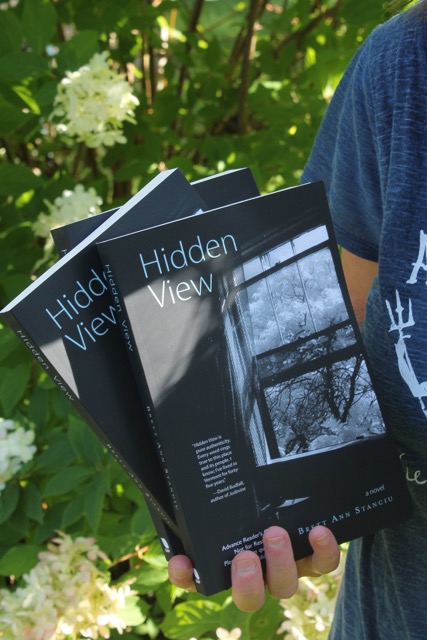
A cardboard box of advance reader copies of my book–my first book–appeared in the mail. Returning home from work and school, my daughters and I had gone in through the kitchen door, and it wasn’t until I was at the kitchen counter slicing tomatoes for dinner that through the window I saw the box on the stone step at the back door.

It was the most curious feeling to pull out crumpled paper and find my bound  books, so beautifully designed, crafted with such care and attention–this novel I have spun from nothing but my own experience and language, through all those hours scavenged, often late at night, early in the morning, during child naptimes. Like nothing else, this book in my hand is a bridge between the mysterious well of my working imagination and the world, a tangible here I am.

Whenever we give our pen some free will, we may surprise ourselves. All that wanting to seem normal in regular life, all that fitting in falls away in the face of one’s own strange self on the page. […] Writing or making anything — a poem, a bird feeder, a chocolate cake — has self-respect in it. You’re working. You’re trying. You’re not lying down on the ground, having given up.

–– Sharon Olds

IMG_8841

Chimney Sweeps

Until recently, I never really thought all that much about cleaning. A chore, an activity, play some music and make some headway. I’ve been in filthy houses, spick ‘n span abodes, the whole gray gamut of in-between. I once participated in an extremely late night board meeting in a school my children never attended, and towards the end of the evening I looked around the room, noted the chaotic clutter, and wondered how anyone worked in that classroom.

Today, as the cold weather begins digging in, I swept the ashes from my wood stove and readied my beloved stove for the months ahead when I will never allow the fire to burn out. The chimney, too–from basement to roof over three stories tall–needs cleaning. I pulled out the stovepipe and thrust my arm into its chimney’s cold center. I found thick layers of creosote, crumbly and pitch-sticky, two strange opposite and simultaneous qualities.

In the sooty, dirty basement I’ve knelt before the opened clean-out door and shoveled bucket after bucket of creosote scabs, then held a mirror flat in my hand and showed my little child the daytime stars in the heavens, visible only through that extended canal of darkness.

I’ve never cleaned this chimney before, but I feel certain my teenage daughter and I, with our strong backs and gritty muscles, could force that sharp-edged wire brush down that channel, scrape free the debris of last year’s long winter’s cold, and shove that brush, pole length by pole length, down to the chimney’s very root. This chimney is the lungs of our house, the passage of air and smoke that allows our hearth to burn, hot and truly. My teenage daughter is determined to begin this heating season with a scrubbed right chimney, and no fears of our house engulfed in nighttime flames.

Writing is a kind of revenge against circumstance too: bad luck, loss, pain. If you make something out of it, then you’ve no longer been bested by these events.

–– Louise Gluck

IMG_2434 copy

Woodbury, Vermont