Reading Aloud.

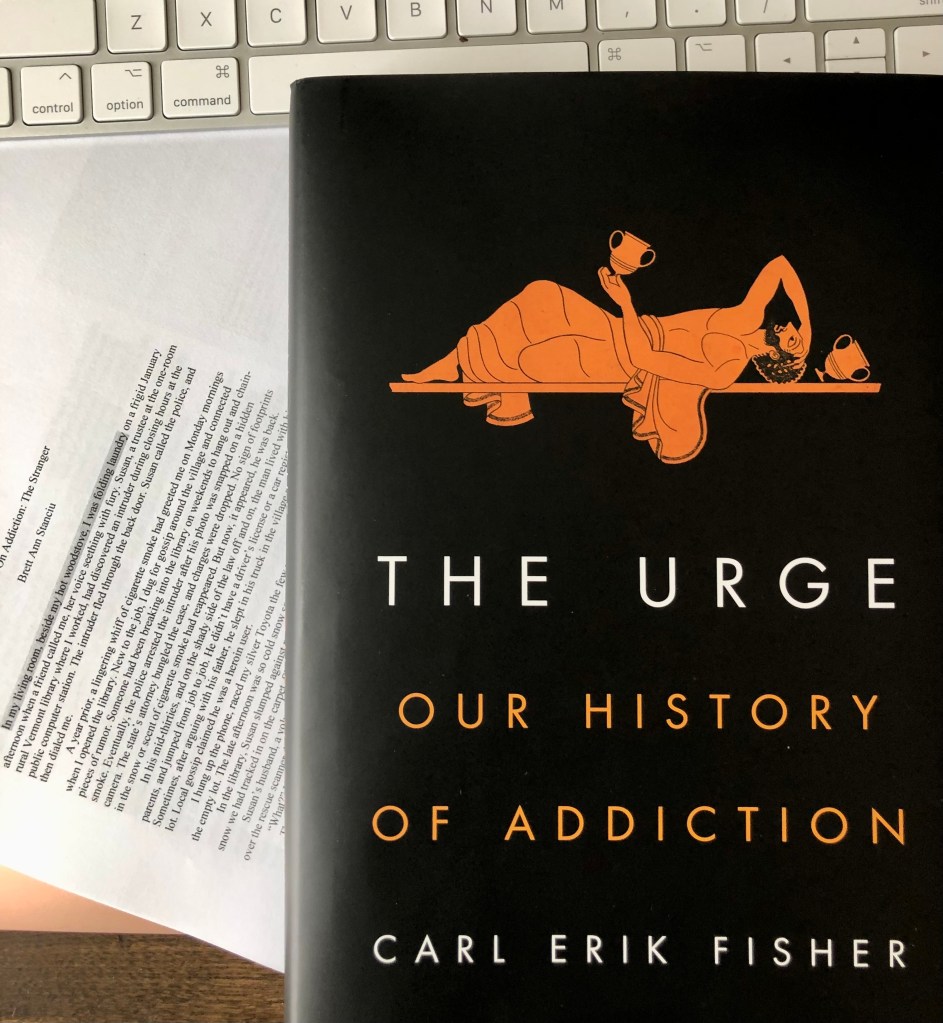
Steerforth Press asked me to read the audiobook version of my book, Unstitched. I’ve never recorded a whole book before, so it’s been an intense experience to read the entire book, word by word, just a few feet from a stranger. The book blends both nonfiction and intensely personal memoir. I’m not talking about writing about memories of weeding a garden, either.

Now, in the last phase, while I’m listening to the final version, it’s a fascinatingly educational experience to hear this book I wrote read aloud to me, in my own voice.

One thing that jumped out immediately at me is that much of this book is about being a single woman with two teenage daughters, and how much I’ve figured out in my life without a man. I wouldn’t categorize this as a triumphant, let’s banish the men story (my God, I feel like I can and do whine like there’s no tomorrow), but that theme of woman threads all through this book.

Here’s a snippet of a review in the Deerfield Valley News by Laura Stevenson:

The book’s title comes from the conversation between Stanciu and the father of the girl who overdosed. Looking at the church that will become a social center not just for those in recovery but for everybody in town, Stanciu remarks “everyone’s so busy working that no one seems to have time or energy to put into groups … that used to keep people connected.” He replies, “We’ve come unstitched, … We’ve got to stitch the darn thing back together.” … This is a deeply compassionate and extremely important book. Every Vermonter should read it.”

A Little Meal

A 13-year-old or so boy is fishing at the edge of the pond when my friend and I walk down in the evening to swim. He nicely shuffles to one side, and then we’re off.

The evening sky this summer has been especially enchanting — muted in color, pale peach sky with gentle blue.When we’re finished swimming and laughing, we stand for a moment on the weedy shore, and I point out a luna moth dipping and rising — part of the evening charm, like an Impressionist painting. Suddenly, a bird pursues the moth, then swallows it. A ragged wing falls.

And so much for the make-believe world.

The Giving Closet

In the town building where I work, there’s a room upstairs called The Giving Closet, jammed with the town’s cast-offs and free for the taking. Clothing, dishes, puzzles, books (from self-help to Isabelle Wilkinson’s brand-new Caste that I snapped up.

The space is infinitely fascinating — who gives, who gives what, and who takes. The wealthy who donate boxes of never-worn clothes. A widow who wept when she dropped off her husband’s suits. Those who leave handmade quilts or winter boots, to empty their house, but also hope that someone else might use these things. One woman handed over a pair of child’s boots, saying, But there’s so much use left in these…

The takers (mostly women) form an unending stream. In an unintentional way, The Giving Closet bucks capitalism. Need a coffee pot? A packet of seeds? A child’s snowsuit? This is the place.

It’s a place without policies, cobbled together, that moves along the uniquely local story of humanity — a solid plan.

Thorns.

In one Tolstoy novel (where, I can’t remember), the characters sat down for a moment in their house before they undertook a journey. It’s a Russian tradition that seems incredibly wise.

Yesterday, before my daughters set off on a journey — short but intense — we paused in the kitchen while my oldest zipped up her high heel boots. My youngest and I checked the oil in her car. I repeated the directions and route numbers of their journey.

Later that afternoon, I paused my work and listen to the sentencing for Derek Chauvin for the murder of George Floyd. How much more evident could it be that our world must change, and maybe is changing? How hard, how utterly painful, this is.

My daughters call in the early evening when I’m clipping dead ends from the roses in our front yard. No one has tended these beauties for years. While our society’s drama unfolds, our own family craziness unfolds — as does the complicated story of everyone else’s family.

I drop a thorny twig in my bucket and imagine my daughters driving along the interstate with their sunglasses and summer shirts, the sunroof open, eating French fries. Sisters on the open road.

“Real power doesn’t come from having a million followers, good hair, a Louis Vuitton purse, a new car, a new home, a title, a partner, or anything that can be weighed, measured, or acquired. Real power is the thing you’ve always had inside you… Real power can never be taken away from you and never lost once it’s found.” 

— Holly Whitaker, Quit Like A Woman

Face From the Past

Every bird around us is singing this morning. The garden luxuriates in a clinging dew.

Unexpectedly, a woman I worked with for a number of years texts me with news she’s in town for a few days. We had last in early March, just before our world shut down.

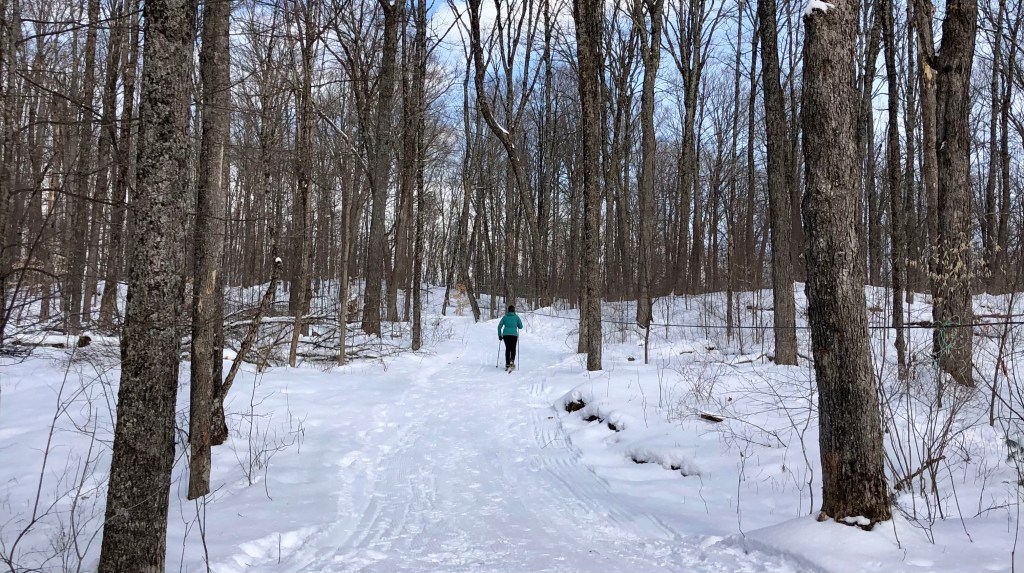
We take a walk through the town forest and catch up on kids and work. Then, for a few minutes we stand in the parking lot, and our conversation branches a different way.

She asks about when my daughter and I were quarantining after my daughter contracted Covid. In those long days, waiting to see whether I (who wasn’t yet vaccinated) would contract Covid, too, I painted the window trim in our front porches, a blue light blue color called Innocence. While painting, I listened to hours of Derek Chauvin’s homicide trial.

So much of our lives, I muse, is simply circumstance — we’re white women, living in Vermont, with particular backgrounds and education. How much of our lives do we choose, and how smartly do we make decisions of what we do choose? It’s a question that’s been asked myriad ways in the past year, in innumerable ways.

Driving home, I keep wondering, what do we do with this now?

Ceremony.

High school graduation this year is under an enormous white tent, surrounded by the community. Not everyone is pleased with the arrangement — that’s pretty much a given — but the tent looks regal, the weather is magnificent, and, well, we’re still pulling out of a pandemic.

I chose a seat in the sun just under the edge of the tent. The principal’s speech goes on and on, and I begin to wonder, where are you headed with this, David, when suddenly I begin to guess. He’s facing the sixty or so graduates, speaking directly to them, about the hard year and a half they’ve endured. A few months before the pandemic, a member of their class committed suicide. Shortly afternoon, the pandemic shut down our world.

Looking through the tent and over the soccer field, I see people I know in one way or another, and many more I don’t know at all. Listening, I feel the principal’s speech pulling us together, acknowledging the difficulty of these past 15 months without bitterness or regret, the layers of isolation and anxiety, of political division, of frustration with a world turned awry.

He asks us to breathe in deeply, collectively.

Around us, the sunlight sparkles on the grass. A tiny girl stands outside the tent, her long hair unbrushed, staring in.

The strange thing is, I can’t breathe in deeply; I’ve been holding my breath for so long. But looking around, I realize these friends and acquaintances and strangers are collectively here for one reason — to champion our youth forward — and for the first time, I begin to feel (not think, not believe, but feel) that the way forward is indeed opening.