Happenstance. Here.

Greensboro, Vermont

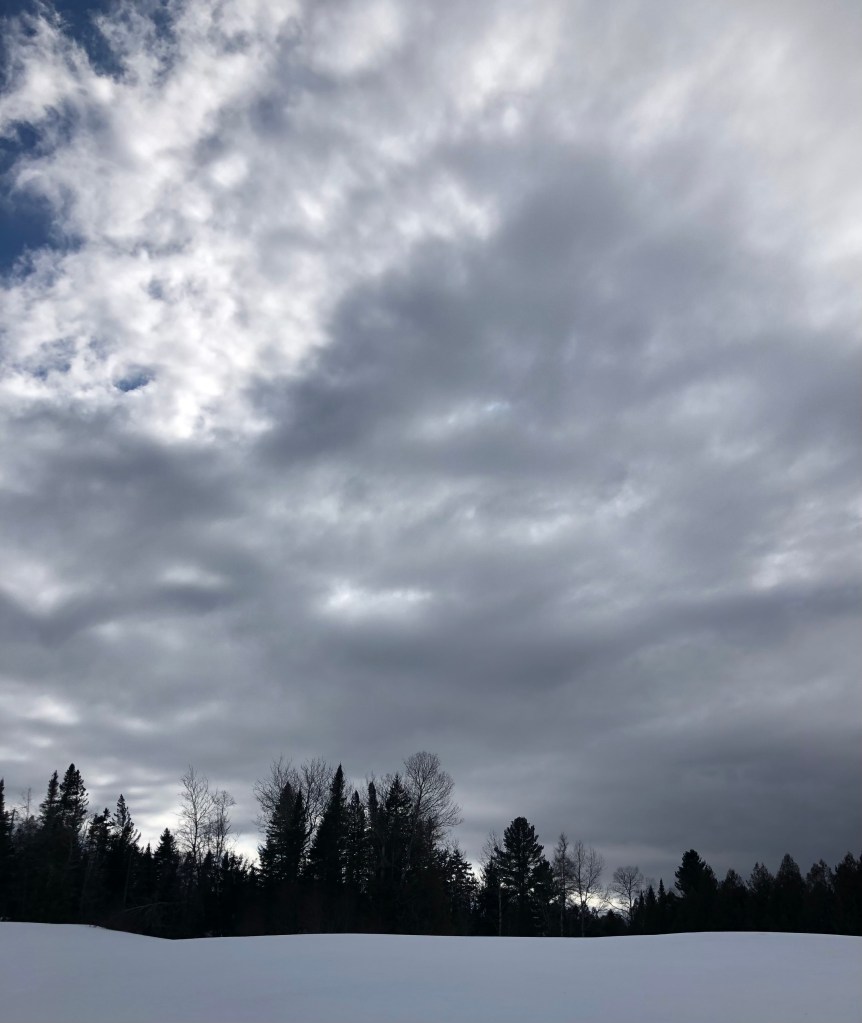
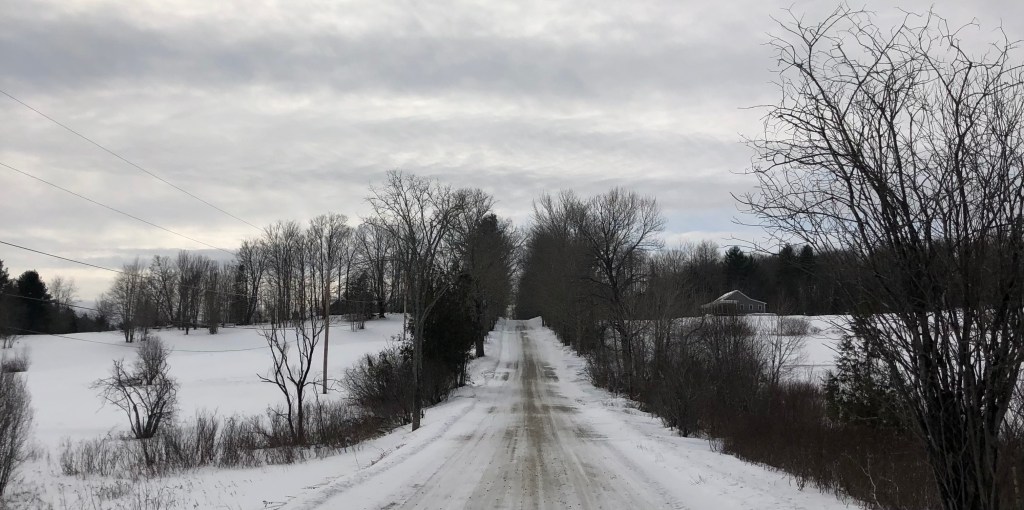
Christmas Day, in a light, almost-a-cold-mist rain over a few inches of old snow, we took one of our favorite walks in Greensboro, on Nature Conservancy Land at Barr Hill. Flanked by old sugar maples, the path goes through former farm fields and among 19th century stone walls. So this walk feeds my desire for history and also for the cold rawness of today in our faces. We meet not a single soul, not even a crow.

At the top, the view is obscured by clouds, the lake with its summer pleasures of kayaking and swimming occluded by winter.

We may be at the edge of the world, but what does that mean anymore? In our family, we’ve had both wonderful and terrible Christmases. As we drive, we say, remember the time…?

On Christmas evening, we drive, my teenager at the wheel, in search of colored lights. I keep my own entirely adult cynicism to myself, my snarky thoughts about the crumbling American Empire and how long will the boondoggle of electricity keep flowing for us. Instead, I tease my oldest daughter about her headlights. Are the headlights even on? I ask.

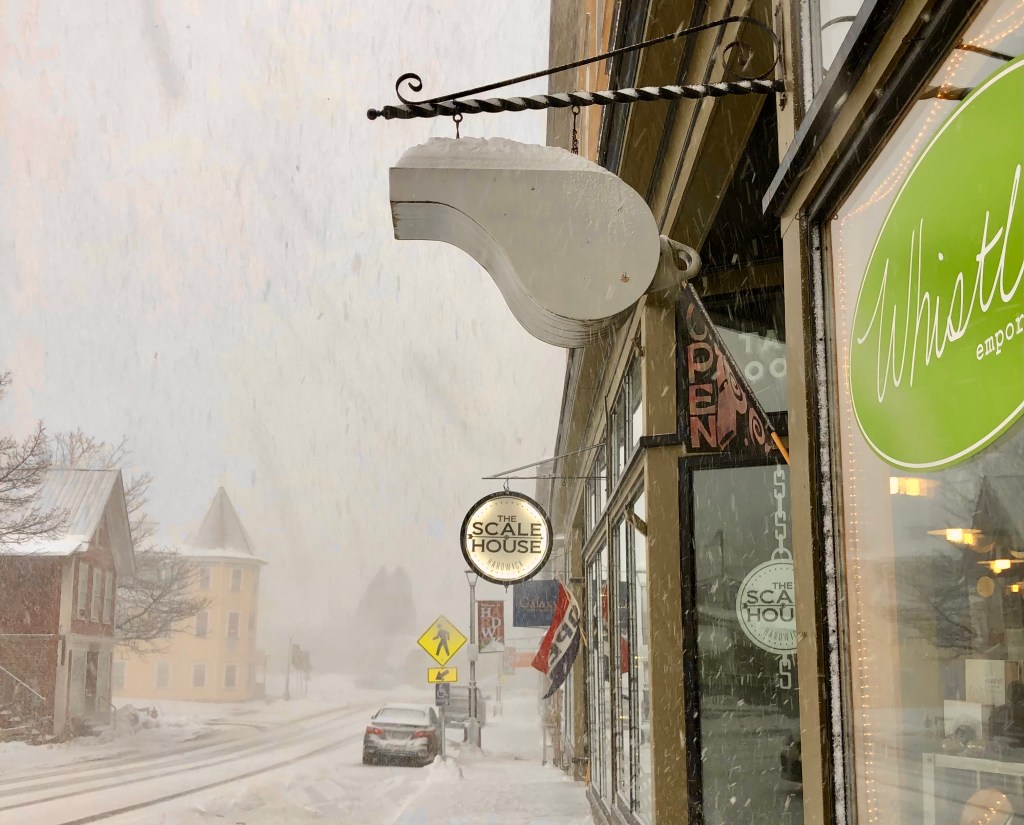
In my book interviews, this fall and winter, I’ve repeated over and over, that, by happenstance, each of us arrive in a time and place. The few us walk a downtown street, beneath glowing lights. We pass a gleaming white BMW, its engine running, no sign of a driver. A little further, I stop and read a sign at a creche, acknowledging the small figurines are on unceded Abenaki land.

The rain keeps falling in little bits. The youngest navigates us home, through mist and darkness, despite the poor headlights.

(And thank you, Barre Montpelier Times Argus, for the great interview.)

The night is so cold

even in bed it keeps me

wide awake.”

— Buson

Light a Candle. Keep It Alive.

Mt. Mansfield, Vermont

My daughters’ preschools had a sweet November festival called the Lantern Walk. The little kids each made their own lantern, from a mason jar or metal or wax, and strung it through with a wire. On a dark November evening, always right about now, the families arrived, and everyone took a walk through the woods with these candlelit lanterns, singing. The metaphor was, and is, immensely appealing.

In all my daughters’ lantern walks, the route often changed. One year, the teacher led the families down a steep hill. Rural Vermont is dark, dark, dark, on these November nights. The parents whispered to each other, fence here, and watch the big root.

These November days and nights, the wood stove is again glowing in our house and the wind blows over our hillside. Like Shakespeare’s play within a play, I remember those walks as Lantern Walk within a Long Lantern Walk.

On another note, State 14 ran an excerpt of Unstitched. It’s always such a pleasure to appear in this Vermont publication.

Late Fall Mud.

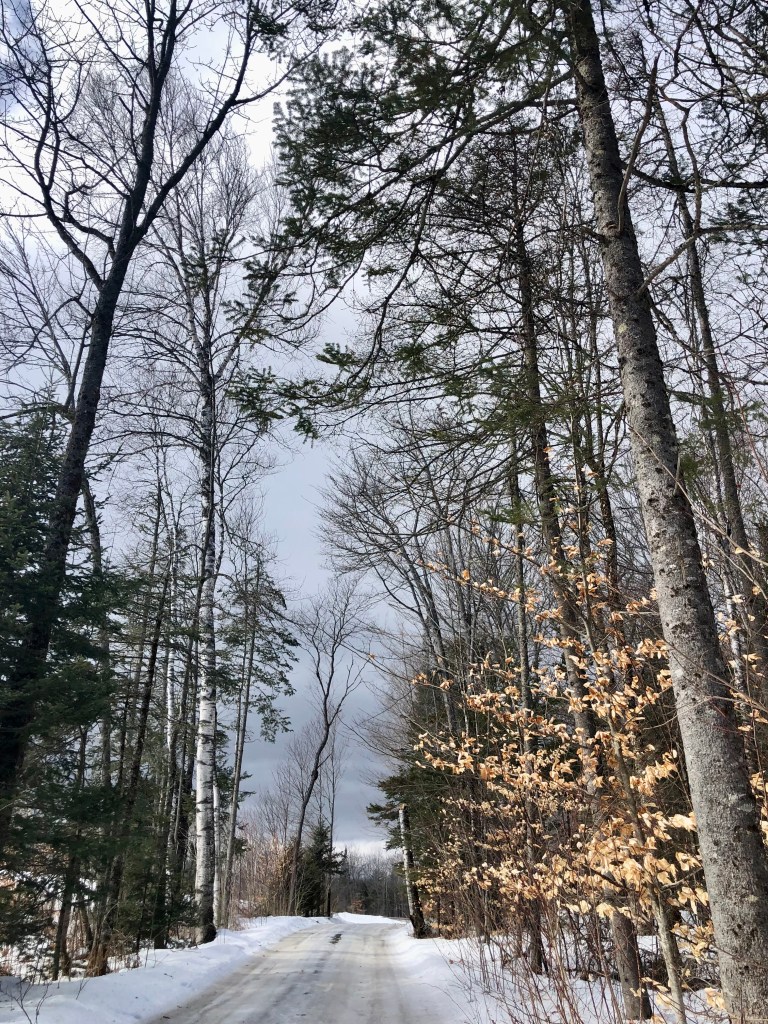
This photo sums up November — little remainders of green, intermittent mud, and a long road ahead. It’s not all bad news, for sure. November twilights are the loveliest — pale blue and blood red.

On Anne Sexton’s birthday, a line from this poet: “Put your ear down close to your soul and listen hard.” 

What could be better advice for November?

Brief Pause. Sunrise.

Driving into Greensboro this morning, I pull over at the lake. The mist is suffused with crimson from the rising sun. I have the odd sensation I’m walking in an Impressionist painting, shot-through with sunlight and wet, rising dew. A pink bird dips into the water, and I hurry along the frozen shore, wondering at this odd creature.

The bird is a common, ordinary seagull, floating along in this morning, just like me. Thursday morning.

The bottoms of my shoes

are clean

from walking in the rain.”

— Jack Kerouac

Late Autumn. Tamarack Gold. Rain.

Here’s where we are in the world of tender gold tamarack needles and cold mud.

For two nights, I got up and read Andrea Elliott’s Invisible Child, unable to leave that world, needing to know how Elliott ended her book. I won’t reveal that. But here’s a few lines worth an extra mention:

“The world ‘understand’ comes from Old English — understandan. Literally, it means ‘to stand in the midst of.’ It does not mean we have reached some ultimate truth. It means, to my mind, that we have experienced enough of something new, something formerly unseen, to be provoked, humbled, awakened, or even changed by it.”

These words ring true for me in my own writing and, I’ll add, my experience of parenting. Elliott goes on to write, “Almost nothing counts more than the person who shows up.”

Here’s hoping you’re all weathering the weather wherever you are.

‘This is what you shall do…’

Planting rudbeckia this afternoon, my shovel hits something hard in the sandy soil. I scrape and unearth a brick and then several pieces, all in surprisingly good shape. How useful, I think.

I dig harder, wondering, who buries bricks? and then discover a drill bit, too.

With my fingers, I unearth that and ponder. I know a carpenter who worked here a number of years ago, and I wonder if the tool is his.

For a moment, my eyes sweep the perennials in the front yard — forsythia and roses and lilies and peonies — and wonder what else lies buried in all that soil.

I plant the rudbeckia, stack the bricks in the barn, and hide the drill bit in a secret place.

Oh, sweet July and all your forty shades of green. Keep on surprising me.

This is what you shall do; Love the earth and sun and the animals, despise riches, give alms to every one that asks, stand up for the stupid and crazy, devote your income and labor to others, hate tyrants, argue not concerning God, have patience and indulgence toward the people, take off your hat to nothing known or unknown or to any man or number of men, go freely with powerful uneducated persons and with the young and with the mothers of families…”

— Walt Whitman