I’m at the dentist for an X-ray of a front tooth that’s gone sour three times before — two failed root canals and one beastly apico — which also equals pain, more pain, and so many dollars. We compare the X-ray to the one taken six years ago, just before the pandemic, around the time when my brother and I were marveling at drone footage of empty cities in China. The tooth looks pretty darn fine. I explain that I recently endured chemo, and I’m off every which way. I no longer seem to know this body. Plus, the added layer of paranoia.
He says simply, Chemo will do that. He offers me antibiotics. I’ve had enough antibiotics in the past year to reasonably heal a village, or at least a hamlet, and I pass.
The very last day of December, the day is cold and sparklingly sunny. I work at my kitchen table for a bit, and when the sun shifts around, I drive to a nearby town to return library books. It’s the holiday season yet, and the library is nearly empty and quiet. The librarian and I have known each other for years now. We were once farmers market colleagues. Eventually, I buckle down and work hard for a good long while. When I leave, twilight is just beginning to settle in. The library is warm, and the staff is setting up chairs and cushions. Parents and little kids troupe in, their cheeks glowing with the afternoon cold.
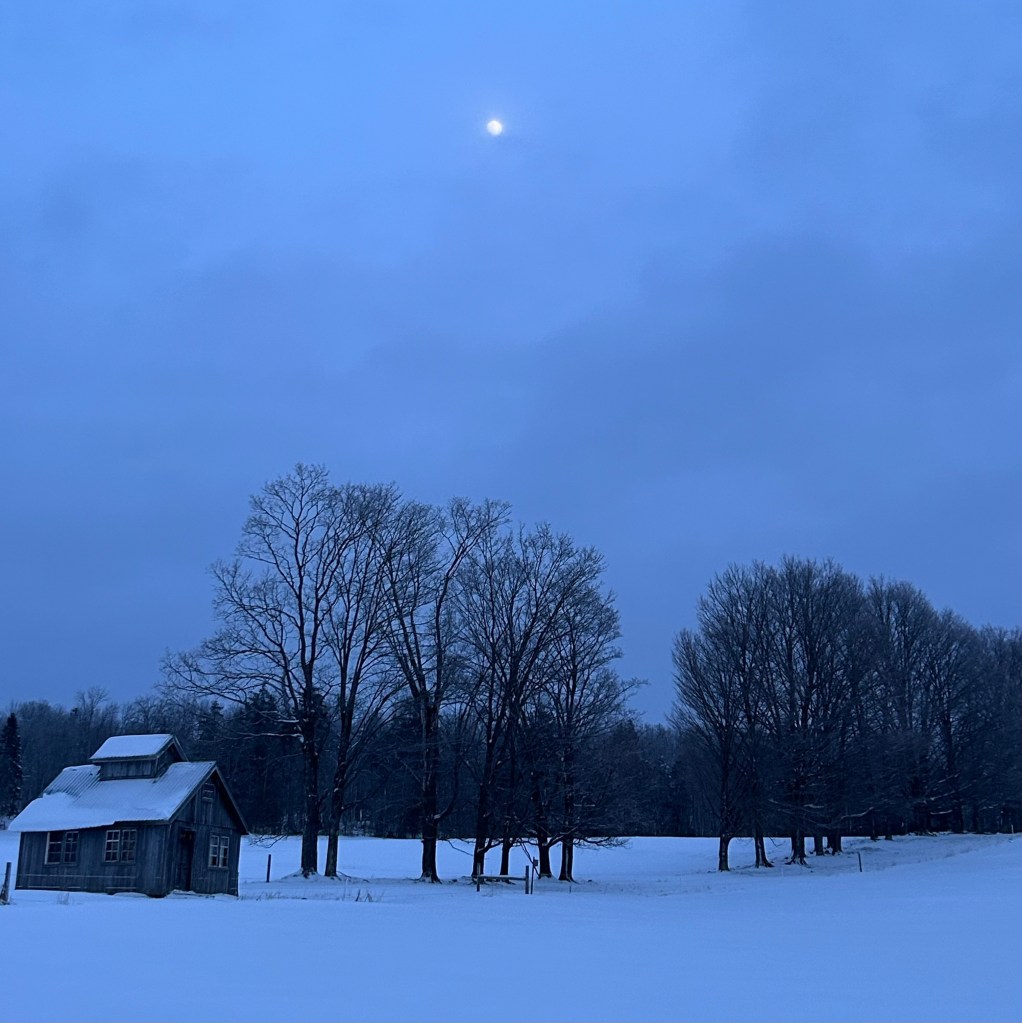
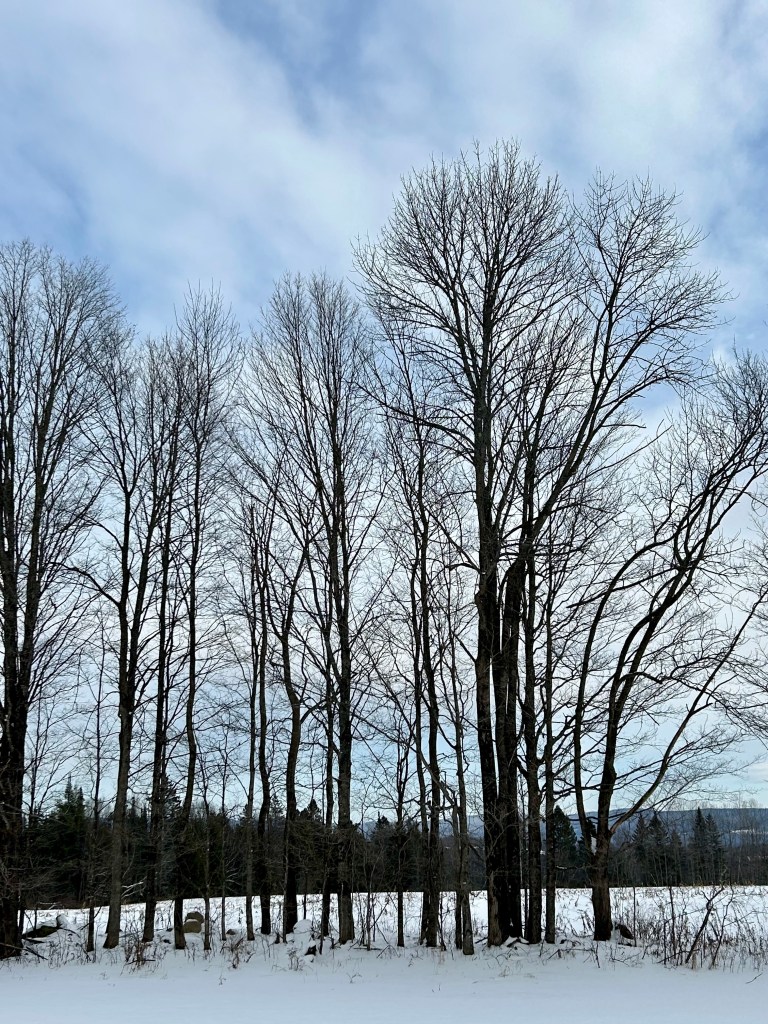
On my way home, I drive up to the ridgeline and take the walk I learned from my poet friend Mary. The cold sinks its teeth into me as I hurry along. The gibbous moon appears and vanishes in the scrim of clouds. All summer and far into the autumn I felt surrounded by a holy veil, a phosphorescence, trial by devastating disease and the violence of chemo and surgery, a trial I survived. I counted each moment as a lucky gem. Slowly, my pockets began to fill with the world’s detritus, with those nagging financial fears, the inevitable disappointment of relationships, the ever-present terror of relapse a knife against my gullet. In plain words, the stuff of living.
Walking, I studied the horizon as the blue deepened, pure ineffable winter, and the night cloaked me. I passed a few farmhouses with little twinkling lights. I was so cold and yet I did not turn back. Instead, the winter night flooded into my heart. My whole adult life I’ve been a crepuscular woman, seeking the radiant edge of sunrise and sunset, reveling in twilight, the majesty of the starry heavens. I’ve transformed grit and solitude into books. Enduring lymphoma made me wary of those recesses in my soul. I relied on others for sustenance and heat, for clean clothes, for glasses of water, in the way of very young children. Both my beloveds and strangers kept me alive. But slowly I’m beginning to admit that the coarser and rougher shades in my soul kept my body alive, too.
All of this is to say that a heartfelt seemingly casual chat and a walk into the cold night quelled my uncertainty, steadied me again. At home, I’d let my woodstove fire burn dead so I could unscrew the back plate and clean the ash-choked metal filters. My ruined hands could not hold the wrench. So I shoveled out the coals, set a match to birchbark, and lit a fire. Good enough for now. Soon, I’ll summon the energy to ask for stronger hands…..
Last and certainly not least, you readers have poured such love towards me this year. I’ve been sparse in writing here as I struggle to find footing in my changed world. Thank you for your patience. Thank you for reading. And may this new year shine joy for all of us, in the universe’s mighty and myriad ways.
A dear poem from Lucille Clifton:
blessing the boats
may the tide
that is entering even now
the lip of our understanding
carry you out
beyond the face of fear
may you kiss
the wind then turn from it
certain that it will
love your back may you
open your eyes to water
water waving forever
and may you in your innocence
sail through this to that

 Stony Soil Vermont