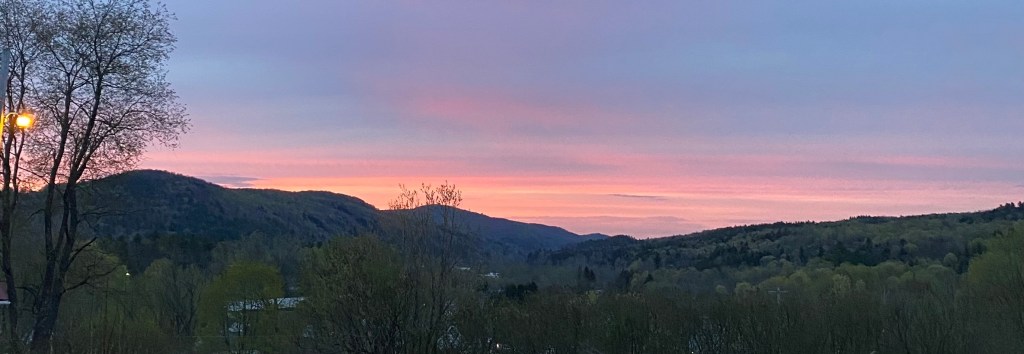
Pocket Treasures.

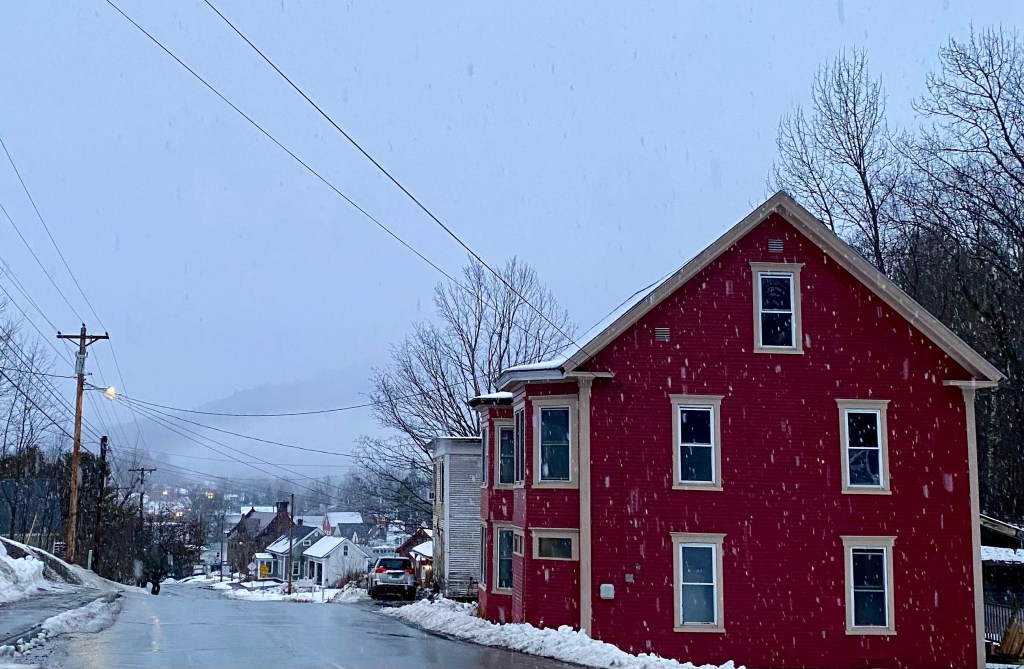
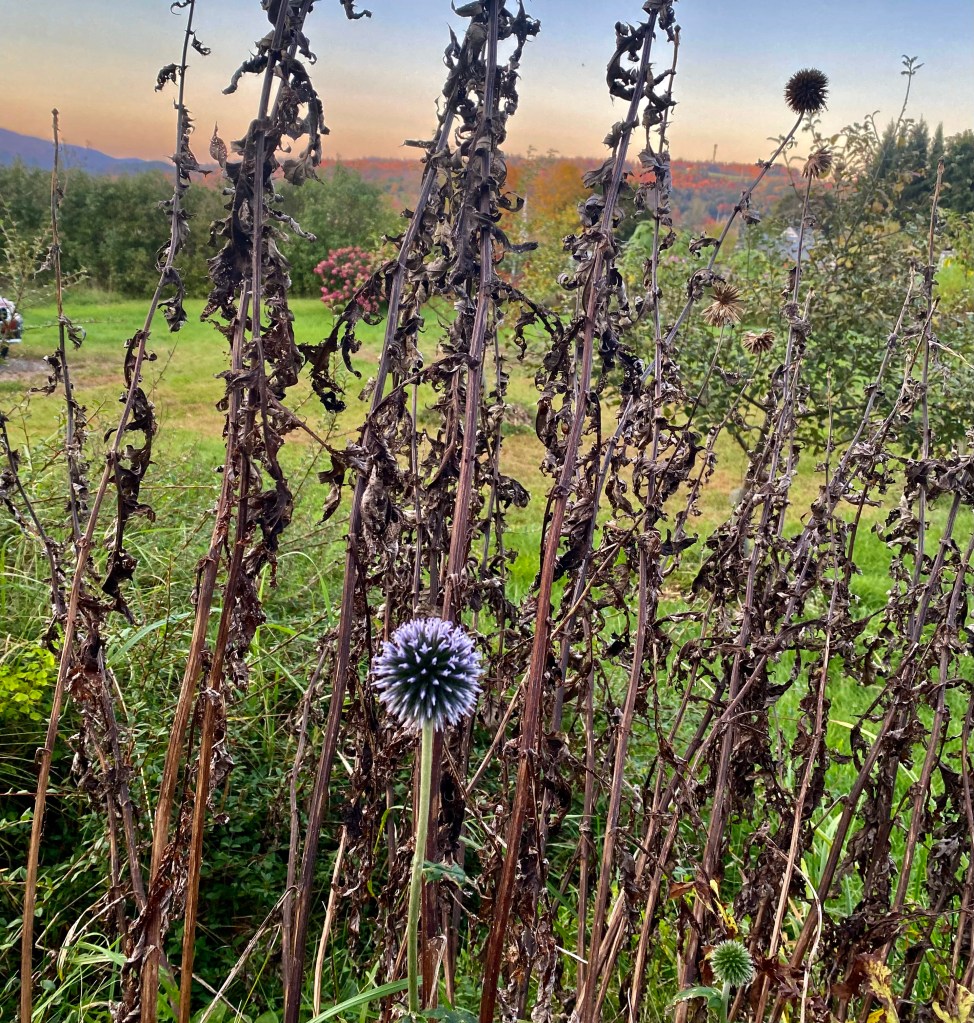
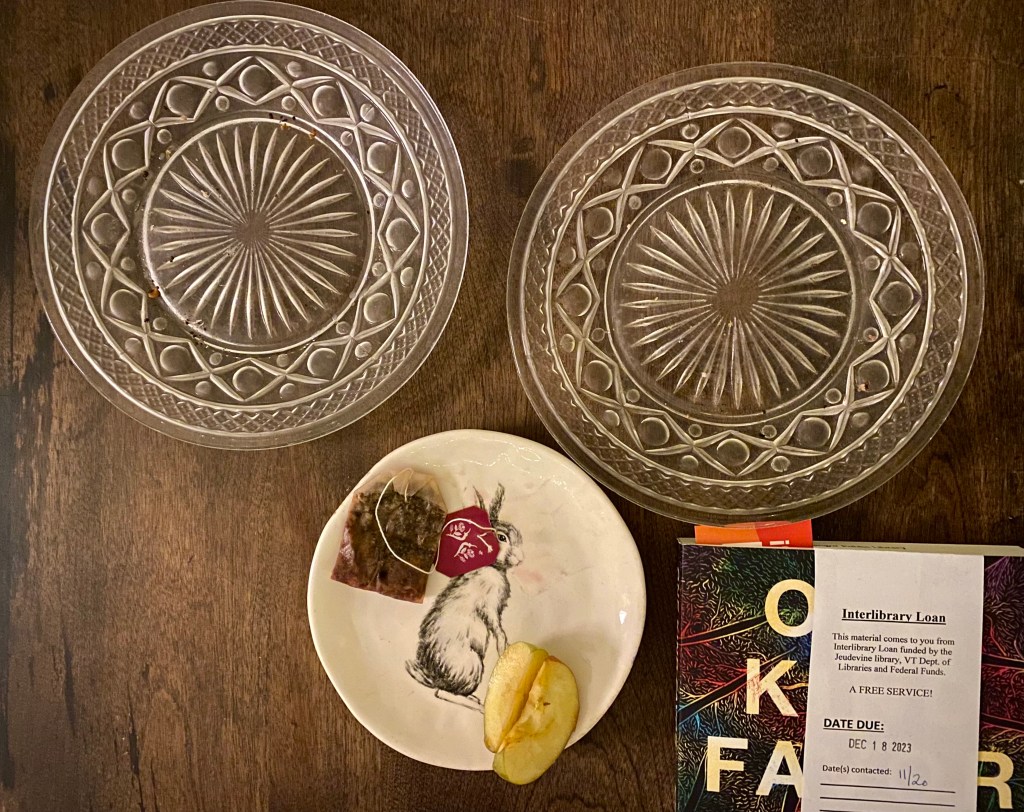
On this Sunday afternoon, my guest departs in the falling snow. When I head out for a walk, the cold has sunk in, deep enough that tendrils of snow cling to the grass and trees branches. The snow bends down last summer’s sunflowers in the garden. I leave my woodbox full, the cats sleeping, plates on the table. I intend only to return a handful of library books, but I head up the hill and around the high school and into the woods where the snow lies deeply and slows me down.

It’s December. Snow circles down, lovely and miraculous, this silent transformation.

Here’s a few lines for winter:

“Treasure what you find
already in your pocket, friend.”
― Ted Kooser

The Pleasures of Creation.

An old friend and I walk through the hilly town forest, sharing the tenor of stories that are manna for my soul: which ways our lives have turned and bent, what are the elements that shape us and our families. A little sleet or maybe rain patters down on what remains of the leaves.

On my way home, I stop at the coffee shop and drink espresso in my damp sweater smelling of sheep — a lovely barnyard smell or a repulsive one, depending on the person I suppose. I carry my laptop and my notebook back home to my wood stove and my cats who remind me their needs are few and the most reasonable constant in this house.

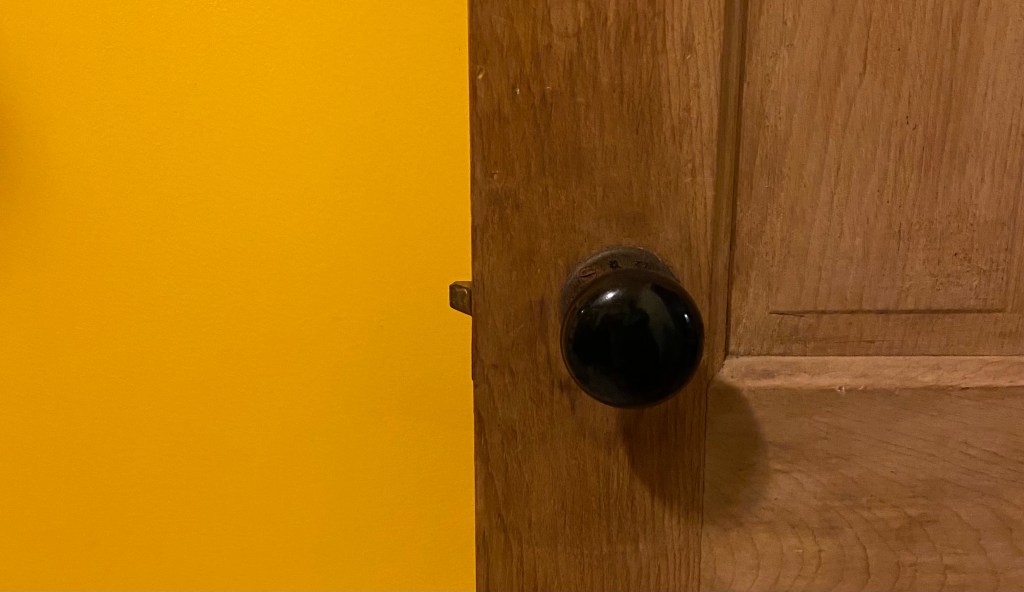
By five, it’s dark as the inside of a pocket. Public radio spins in the greater world. In my tiny dining room, I pull a book from shelf and set it on the table, then another and another. In an hour or so, by then listening to This American Life about rats, I’m in the basement searching for the half-full can of Sunshine paint I used in the bathroom last winter.

Three more walls await me. I’m out of paint and decide a lime-lemon will suffice. I’ll need to drive that half-mile to the hardware store, which annoys me as I have brand-new studs on my snow tires, and why waste those on dry pavement?

All this: it’s that old familiar question, that rub between creation and destruction. Espresso and sunshine-yellow paint have never cured the world’s ills, but a slice of pleasure can’t harm.

In my bookshelves, I find a poem I printed out shortly before the pandemic nailed shut Vermont, still utterly relevant today:

Blackbirds
by Julie Cadwallader Staub

I am 52 years old, and have spent
truly the better part
of my life out-of-doors
but yesterday I heard a new sound above my head
a rustling, ruffling quietness in the spring air

and when I turned my face upward
I saw a flock of blackbirds
rounding a curve I didn’t know was there
and the sound was simply all those wings,
all those feathers against air, against gravity
and such a beautiful winning:
the whole flock taking a long, wide turn
as if of one body and one mind.

How do they do that?

If we lived only in human society
what a puny existence that would be

but instead we live and move and have our being
here, in this curving and soaring world
that is not our own
so when mercy and tenderness triumph in our lives
and when, even more rarely, we unite and move together
toward a common good,

we can think to ourselves:

ah yes, this is how it’s meant to be.
Starlight Walking, a Pause, a Choice.

Walking back from a library program after dark, I cut through the cemetery. The cemetery is unlit, and I’m walking slowly, staring at the Milky Way sprawled overhead, the enormous immensity of the cosmos. In the dark, I hear a cough. I haven’t been paying attention. At first, I think the cough has come from the person smoking on the balcony not far from me, in the house chopped into apartments at the dead-end road, or the people coughing might be around the gap in the fence surrounding the cemetery. I’m headed that way; the gap leads to the woodsy path that will lead me home. That particular place in the path often has trash – Little Debbie’s wrappers and empty Twisted Tea cans.

So here’s the thing: I’m not at all afraid. Despite the village around me, the night is deep. I’m well-hidden, so concealed I stand there thinking, staring up and seeing a shooting star.

I’ve written a fair amount about being a single mother, a broken half, the jilted family, the rage of abandonment. But it’s equally true that I’ve been single for so long now in a society that seems so devoted to coupleness, that I rarely speak of my solitary life. I know very few single parents, at all, for whatever reason. So this night, I do what I’ve taught myself all these years: I drink in my fill of starlight, that piercing Ursa Major hung over the black horizon of the mountains, let her drench me with her power. I make my choice and retrace a few steps, see my friend and her partner on the street below driving along in the dark, friends who would have happily given me a ride, had I asked. But these nights are still balmy and the bitter cold hasn’t set in yet.

The Pleasurable Stink of Wet Wool.

Rain begins spitting midday. I’m on a clearing-my-head walk through the forest, and the songbirds are crazily lovely, singing mightily away, simultaneously solo and in concert, and the flowers — my goodness — the flowers. The forget-me-nots trail me like loving, silent cats.

There’s a thousand things going on — that thickening rain, the myriad leaves in ovals and spikes, the blooms and the seed heads. I take the long walk back to civilization, emptying my mind as I go. When I return to the human threshold, there’s a little reluctance to head on back in… I stink of wet wool, the better for these minutes.

Loons, Wiser Than Us.

Back when my girls were in the early sand bucket age, loons were a rare sight on the lake. The grownups would knock off whatever chat we had going when we spied those distinctive birds — spotted backs, red-eyed. I grew up in New Hampshire and never saw a loon as a girl.

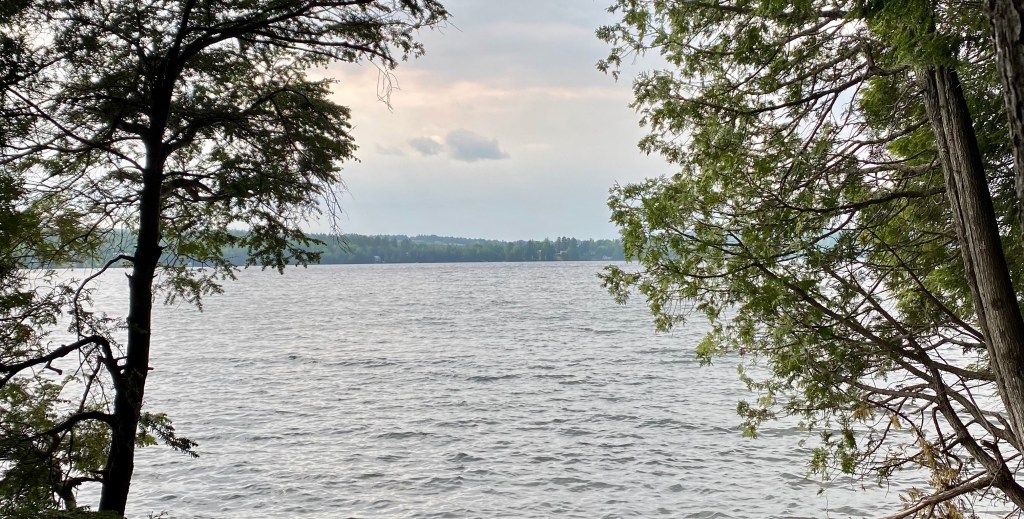
But even now, those calls — how eerie, how utterly mesmerizing, how definitively not of the human world. This afternoon, before a planning commission meeting and just as a little light rain begins, I walk over to that beach where we drank so much coffee. There’s two cars in the parking lot, people staring at the lake and the sky that’s bruised with storm. The loons holler across the rippling water. Vacation in Vermont and you might think summer is all sweetness and ice cream — but here’s a slice of cold rain, those two black-necked beauties, and an infinity of sky.

Language of Loons.

Midwinter, I was working in the coffeeshop a few minutes’ walk from our house when a woman I once knew fairly well came in. We had started a preschool together, been in and out of each other’s houses, seen each of the other through a pregnancy.

While waiting for her coffee, she sat beside me and said my name, Brett, and that she wanted to mend the falling out between us.

I folded my notebook closed. I had a few more minutes before I needed to leave, and I could see I wasn’t going to put my pen to paper again that morning. We compared notes about a house fire. Our memories lined up with surprising accuracy, all the way down to slight and little things. And then our memories diverged, abruptly. We’ve both divorced, both moved, and yet the ashes of that fire lay deeply in each of our lives.

Midday today, I hurried along one of my favorite walks around the lake. Me and the bright daffodils, the cheery trout lilies, the striking bloodroot. As I walked through the woods, the loons called around the lake. Once upon a time, I would have heard their language as decorative sound, sweet ambiance. Today, I stopped, alone in these woods where the leaves haven’t yet spread out for the season and the sunlight dropped on my face. I understood the loons as much as I understood my old acquaintance, maybe as much as I understand myself, as they sang across the water, their voices echoing against the mountains.

I hear

outside, over the actual waves, the small,

perfect voice of the loon.

— Mary Oliver