Language of Loons.

Midwinter, I was working in the coffeeshop a few minutes’ walk from our house when a woman I once knew fairly well came in. We had started a preschool together, been in and out of each other’s houses, seen each of the other through a pregnancy.

While waiting for her coffee, she sat beside me and said my name, Brett, and that she wanted to mend the falling out between us.

I folded my notebook closed. I had a few more minutes before I needed to leave, and I could see I wasn’t going to put my pen to paper again that morning. We compared notes about a house fire. Our memories lined up with surprising accuracy, all the way down to slight and little things. And then our memories diverged, abruptly. We’ve both divorced, both moved, and yet the ashes of that fire lay deeply in each of our lives.

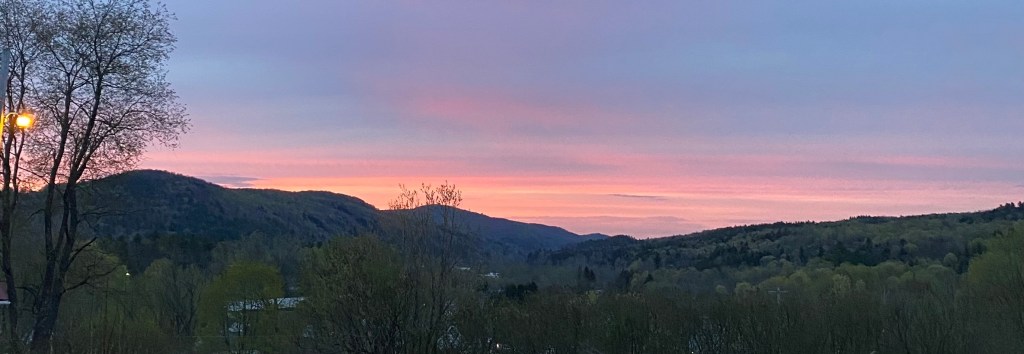
Midday today, I hurried along one of my favorite walks around the lake. Me and the bright daffodils, the cheery trout lilies, the striking bloodroot. As I walked through the woods, the loons called around the lake. Once upon a time, I would have heard their language as decorative sound, sweet ambiance. Today, I stopped, alone in these woods where the leaves haven’t yet spread out for the season and the sunlight dropped on my face. I understood the loons as much as I understood my old acquaintance, maybe as much as I understand myself, as they sang across the water, their voices echoing against the mountains.

I hear

outside, over the actual waves, the small,

perfect voice of the loon.

— Mary Oliver
Go Without Sight…

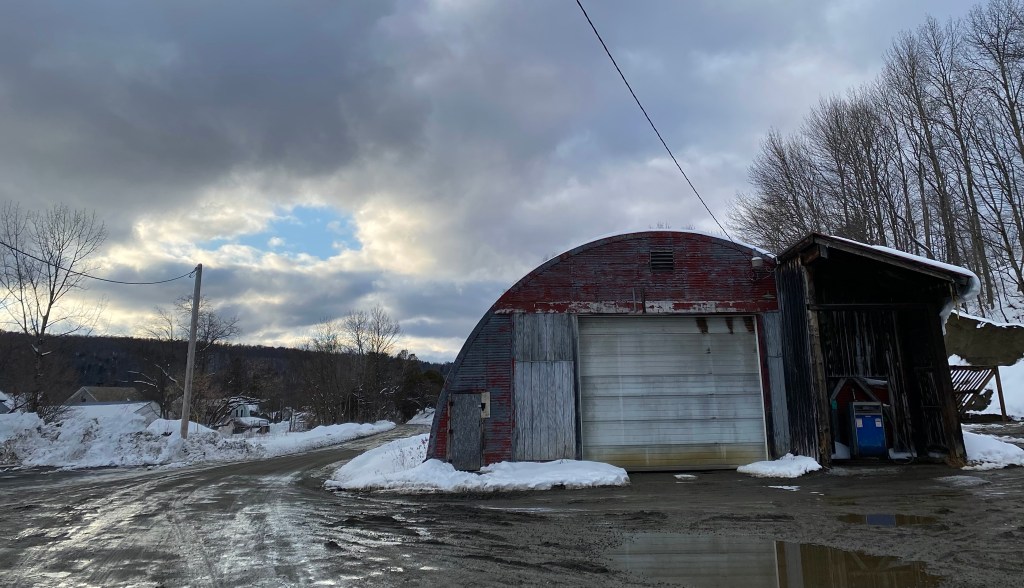
On this day of sunlight and chores, I end the afternoon walking through the back areas of town, behind the town garage and around this year’s dwindling sand pit. I turn around in the neighborhood with the scary unleashed dog, backing up slowly and doing, perhaps, exactly what should not be done.

Out of sheer carelessness, I never got the wood stove heated up to temp this morning, early at my desk, so intent, that I carelessly let the stove smolder low. In the day’s heat, I’ve let the stove dwindle further. That chore awaits me. My carelessness annoys my daughter, who’s afraid of burning the house down (what sane Vermonter isn’t at least slightly afraid of that?) and in love with the stove’s fierce heat. Two things at once. Which sums up March. Winter and spring. Breezy clean and ponderous with the thawing earth’s muck.

I pass hardly a soul on my walk and wonder if I should have made friends, or at least a kind of peace, with that snarling dog. As I walk, the air cools. The puddles are luminous with what remains of the day. I remember that beloved line from Wendell Berry — To know the dark, go dark — the line that’s driven so much of life. When I get home, I look it up.

To go in the dark with a light is to know the light.
To know the dark, go dark. Go without sight,
and find that the dark, too, blooms and sings,
and is traveled by dark feet and dark wings.

Winter.

This is: winter, not-winter, definitely-winter. Scattered, my thoughts fragmented, I wander down to the lake where the ice has set in now. The world is utterly still there save for a scattering of snowfall. The birds are silenced, and even the breeze has vanished. The profoundness of deep midwinter dwarfs the human world. I lean into it, letting the cold eat up my fury. On my way back, a squirrel runs across the road, calling back to me…

Sylvia Plath writes:

Winter is for women —

The woman still at her knitting,

At the cradle of Spanish walnut,

Her body a bulb in the cold and too dull to think…

Green and Brown.

Greensboro Grange, Vermont

A flock of singing red-winged blackbirds kept me company yesterday on my short walk from the village along the frozen lake. Summers, sprawling houses fill with people from other places, more urban areas, but in this nether zone of late winter/early spring — the mud realm — it’s just me and the rain and the birds.

Of all the seasons in Vermont, this odd one seems the most miraculous to me. Out of dull brown, last year’s frost-killed season, tiny nubs of green appear. So much promise. Every year, this surprises me.


Some springs, apples bloom too soon.

The trees have grown here for a hundred years, and are still quick

to trust that the frost has finished…

You could say, I have been foolish. You could say, I have been fooled.

You could say, Some years, there are apples.

~ “Gather” by Rose McLarney

Dirty Mud Puddle.

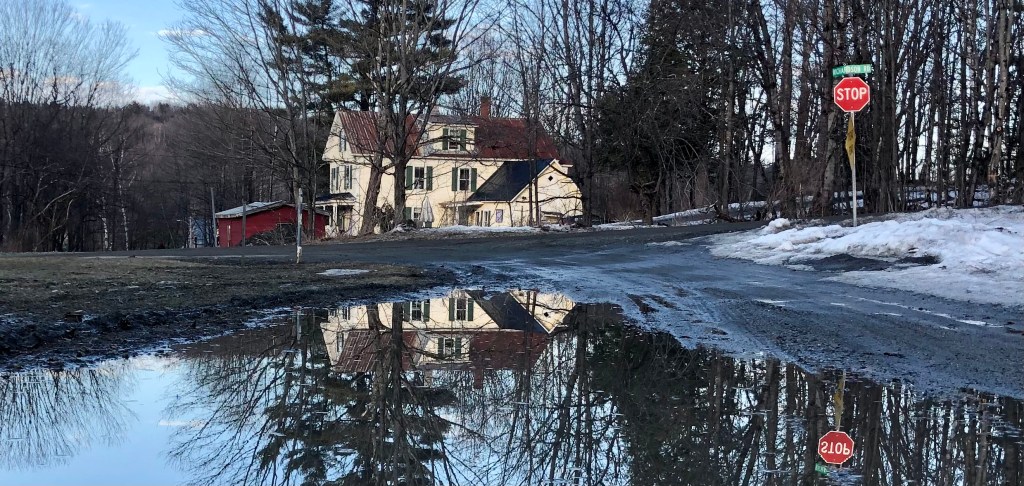
The old yellow house where my daughter attended preschool and, one afternoon, gave me a purple pansy she had potted herself. In the scheme of our lives, such a tiny sweet thing.

In the face of such hard news overseas, this splash of sky reflected in a dirty mud puddle is all I can offer. Be well, friends. Savor sweetness, where you stumble upon it.

Somewhere in February. Dirt Road Land.

Kents Corners, Calais, Vermont

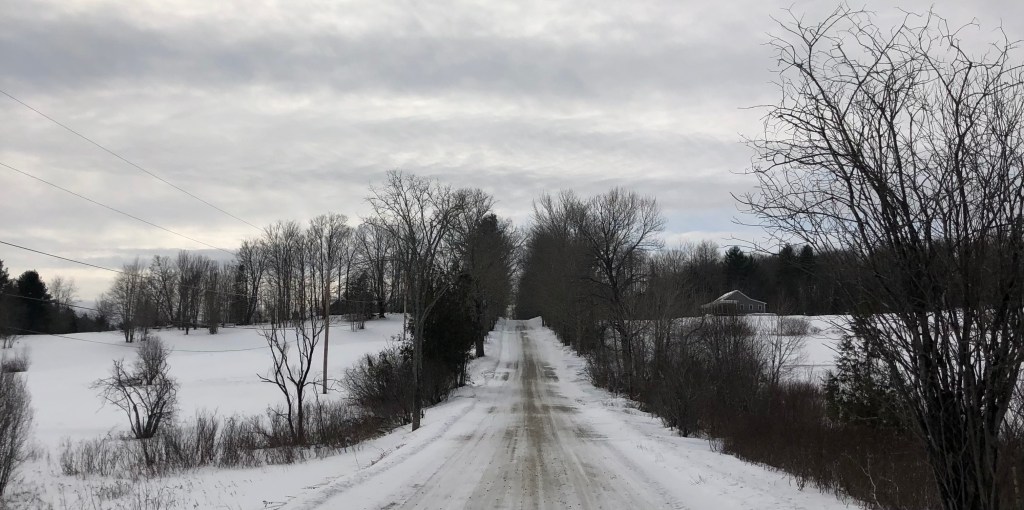
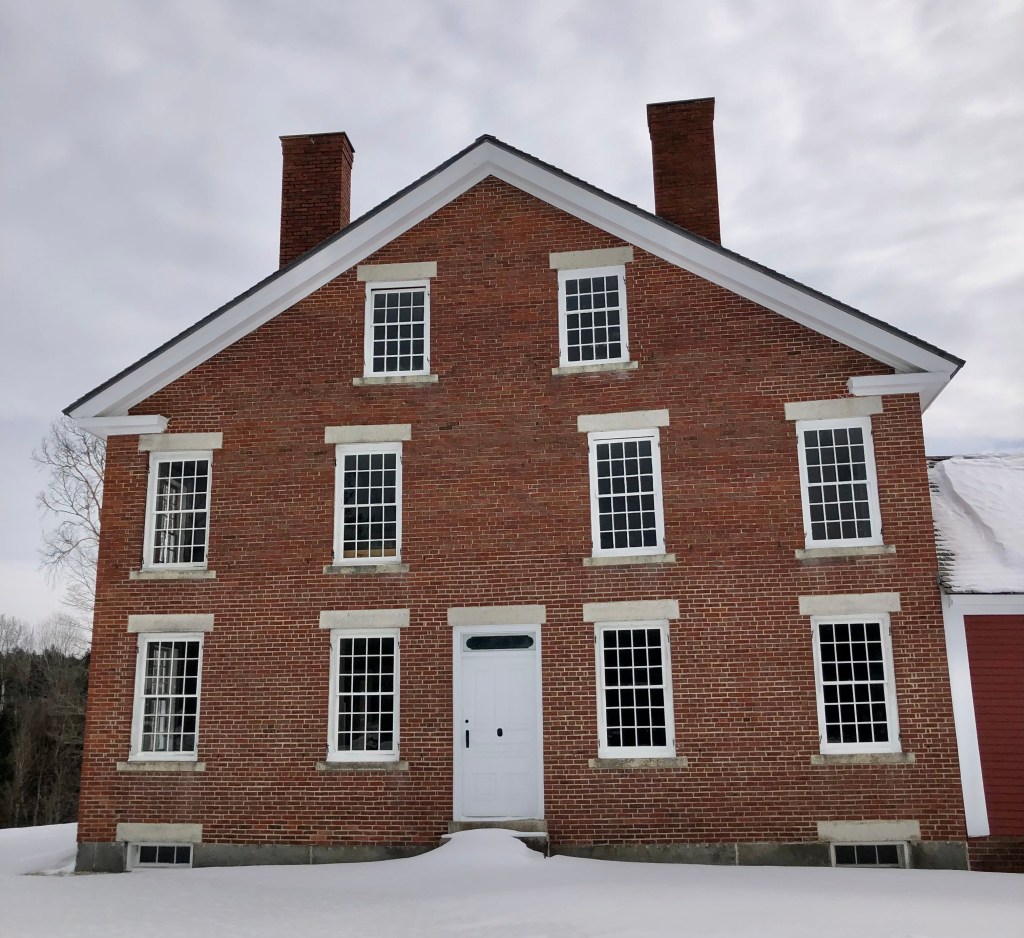
Every so often, a friend and I make plans to meet at a rural crossroads, at a brick inn that was once a stagecoach stop. I imagine in those days the crossroads was populated with chickens and horses, with people coming and going, not Priuses, but in wagons and on foot. My friend and I began this habit in the summer of 2020, and so the inn has been shuttered to the public all this time.

Walking, we pass a few other Sunday walkers bundled in coats and hats. But few people are out, and there’s scant traffic. In contrast, our conversation is packed — about raising kids and planning spring gardens, about relationships, about navigating the working world as a female in a patriarchy (why are these conversations still necessary, anyway??)

The thing about Vermont in midwinter is the stillness and what breaks that quiet. Icicles drip, freeze, and then thaw and drip again. Birds appear at our feeder in increasing numbers, then whisk away again. A rouge wind blows in a squall, soon chased away by the emerging sun.

Pandemic notwithstanding, robins return to our crabapple trees.

“Things are as they are. Looking out into the universe at night, we make no comparisons between right and wrong stars, nor between well and badly arranged constellations.” 

— Alan Watts

(And many thanks for Erika Nichols-Frazer for a review of Unstitched in the Valley Reporter.)