“The real, long history of this place…”

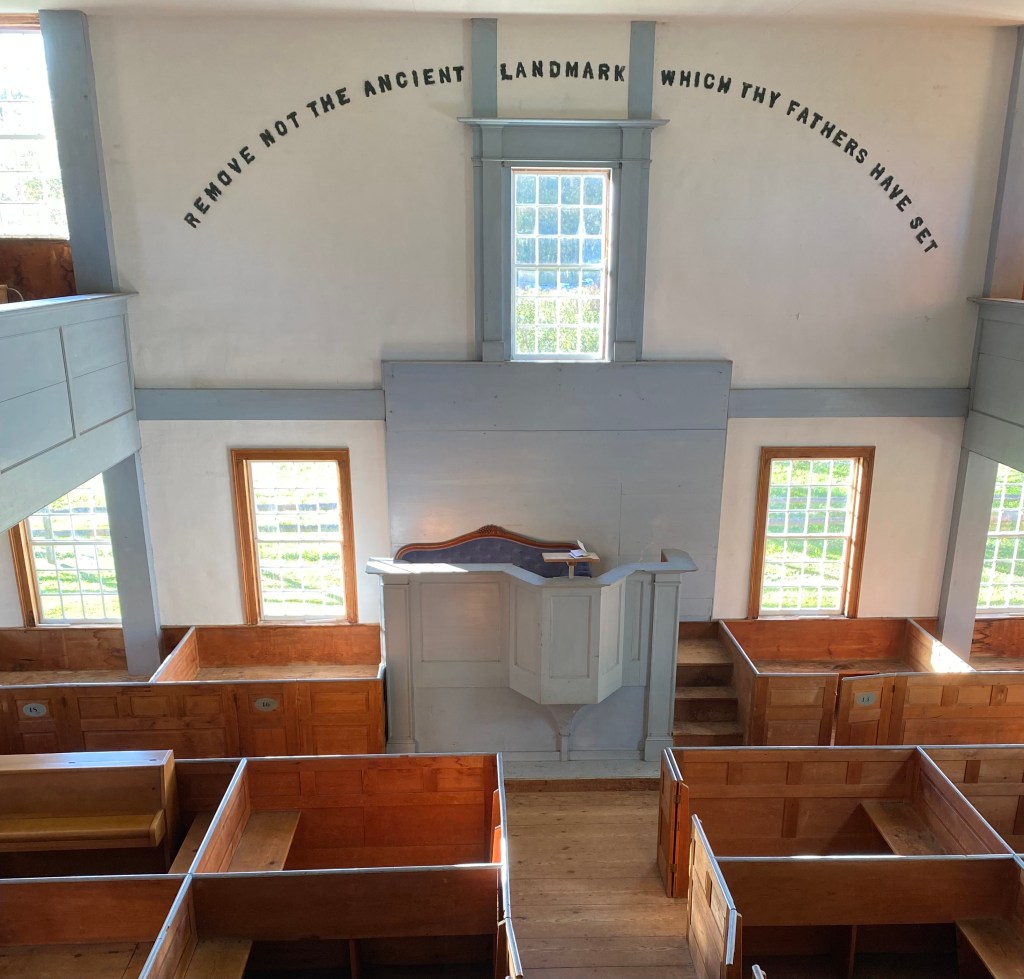
Old West Church, Calais, Vermont, 1823…. The fieldstone foundation was laid 200 years ago. I’ve been tossed a lucky bone, and I’m reading here this afternoon. Recently, I swung by with a friend to check out the acoustics and ended up sitting and watching the sunlight shift through the space. The structure remains in the 19th century with no electricity.

In an interesting way, it seems fitting to do these things in the autumn when the light in our northern realm is shifting so rapidly. On each side, the days shorten. What began in April as a sprinkling on the forest floor of hepatica and trillium and spring beauties has flourished all summer in such a lush and lovely summer. Strangers remark, “What a summer of growth!” as if to make up for these past few years of soddenness, of rain and wildfire smoke from faraway (but apparently not that faraway) places.

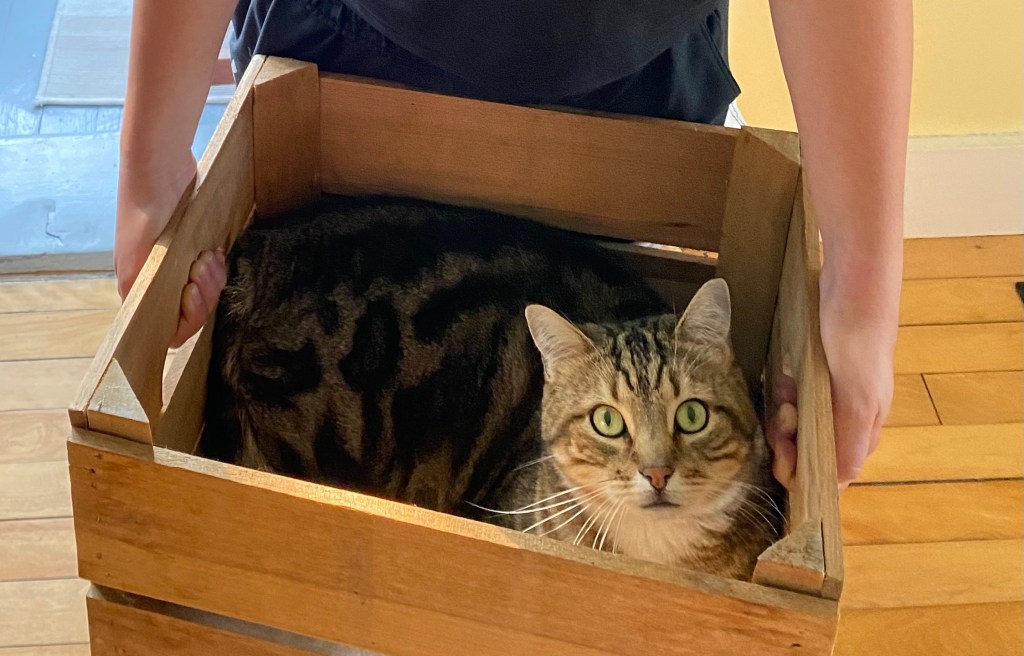
At the transfer station, I pull up with my hatchback crammed with that metal lidded can of cat food cans, my bins of used paper and things I no longer want in my house. I’ve been coming here for decades now. On this peach of a September afternoon, the owner and I stand outside his office, our faces up to the sunlight and a circling hawk. I mention that I’d take a month more of these days, but I don’t want to be greedy. He looks at me and says, Let’s just be greedy and want that, anyway.

Autumn is the long weeks of the growing season’s finale, the landscape gold and crimson. But within the landscape are the tiny places where we walk and live: my garden’s pink glads, the neighbor’s blooming roses, the gold flush of the butternut tree I planted as a bare root stick, seven years ago, and the girls laughed at me. The tree stretches far above our heads now, and my girls marvel. Have faith, I remind them; beauty thrives from where we least expect it….

From Carolyn Kuebler’s gorgeous essay about Vermont:

The real, long history of this place goes even further
back, to the beginning of this landform as we know it, about twelve
thousand years ago when the glaciers drew back from the land and
various species, including humans, eventually moved in.

Finding a Thread.

On my way home, I stop at Number Ten Pond. The water temperature is at that sweet spot, exactly perfect — and how often do you touch perfect? — and I wade right in. A woman stands in the pond, two children splashing around her. She laughs when the minnows bite her toes.

I swim far. In the pond’s center, I float on my back. With my eyes closed, my mind’s eye turns red, with blood or sunlight, who knows, and I’m no longer sure which way is up or down, water or sky. I’m distant enough from shore that only the loon call reaches me. By the summer’s end, these swims will add up to an invisible chain of experience: of water and weather, of whatever language drifts my way. July here, just a handful of fleeting days.

"Everything Is Made Of Labor"
Farnaz Fatemi

The inchworm’s trajectory:
pulse of impulse. The worm
is tender. It won’t live
long. Its green glows.
It found a place to go.
Arrange us with meaning,
the words plead. Find the thread
through the dark.

The limits of what we do.

Friday night, driving home along a familiar road from visiting friends, I stop by the elementary school. Solstice, the Strawberry Moon, the daylight lingers, and the dusk is long, multiple hues of blue. No one’s there, of course. I follow the path along the wetlands. Shimmering with lilypads and twilight, the water chirrups, sings, buzzes. Fish leap and splash. I loiter, and the dusk closes in. Still, I keep walking, following the path through the brushy woods up a slight hill, so I can get to the other side.

In my twenties, I had a tendency to get lost in the night woods, stumbling off the path. Years before cell phones, we were always searching for flashlights with working batteries, to visit somebody in a remote cabin. But I’m in familiar territory, and I take my time, in this bowl of evening, letting the cacophony of the wild chorus diminish my stringy thoughts.

I haven’t been back here for a good long while, but this school and the town and the library where I worked was a warm place, with its own complicated stories, sure. Those were the years when my life fell apart. I pause, hoping to see the quicksilver flash of a fish. Across the wetlands, a single vehicle rolls along the road. Maybe it’s the passage of time, or the evening’s mellifuous beauty, but I see suddenly that I was following two strands of my story in those years. I was leaving my husband (and for months, I wasn’t at all certain how to do that), and I was also recreating my life (and how exhilarating and hard that was, too.) I’ve written about my struggle with addiction; when I began to lift that veil, my fierce hunger quickened for what I had wanted all along — to pursue my own creative and often dicey life. In this throbbing evening, I sense the limits of language, that words fail here, that to divide creation and destruction into two words, held in two hands, is illusory.

The fish I didn’t see smacked through the water. Fireflies winked around me as I threaded my way back to civilization in the dark.

“Train Ride”

All things come to an end;
small calves in Arkansas,
the bend of the muddy river.
Do all things come to an end?
No, they go on forever.
They go on forever, the swamp,
the vine-choked cypress, the oaks
rattling last year’s leaves,
the thump of the rails, the kite,
the still white stilted heron.
All things come to an end.
The red clay bank, the spread hawk,
the bodies riding this train,
the stalled truck, pale sunlight, the talk;
the talk goes on forever,
the wide dry field of geese,
a man stopped near his porch
to watch. Release, release;
between cold death and a fever,
send what you will, I will listen.
All things come to an end.
No, they go on forever.

— RUTH STONE

“Everything blooming bows down in the rain…”

In the sultry dawn, I’m wandering barefoot in the garden, snatching the lingering strawberries before birds have nabbed the remainder. By late afternoon, thunderstorms have settled in. I’ve left a wooden chair on the porch, a throw rug over the railings, both sodden now. Book in my hand, I lean against our house’s dusty and pollen-layer clapboards, reading in the coolness that’s washed in. Our porch looks out over a bed of bleeding hearts, false Solomon’s seal, hostas. Beyond that, the cemetery, the river valley below. Behind our house, the wild presses in. Ferns tall as my shoulders, goldenseal, the groundhogs, thrush, chittering sparrows, the cut of ravine and the great life there.

Equinox; the lushness burgeons. Bring it on. The rain blows through the bedroom screens whose windows we left open all day. The box elder shoves between the porch railings. The grapes rise hungrily against the barn. All night our rooms are filled with moonbeams, the blowing dew, the mixture of milk trucks rattling down the road and the calling frogs.

Everything blooming bows down in the rain:

white irises, red peonies; and the poppies

with their black and secret centers

lie shattered on the lawn.

~Jane Kenyon

Old cheese, new peonies.

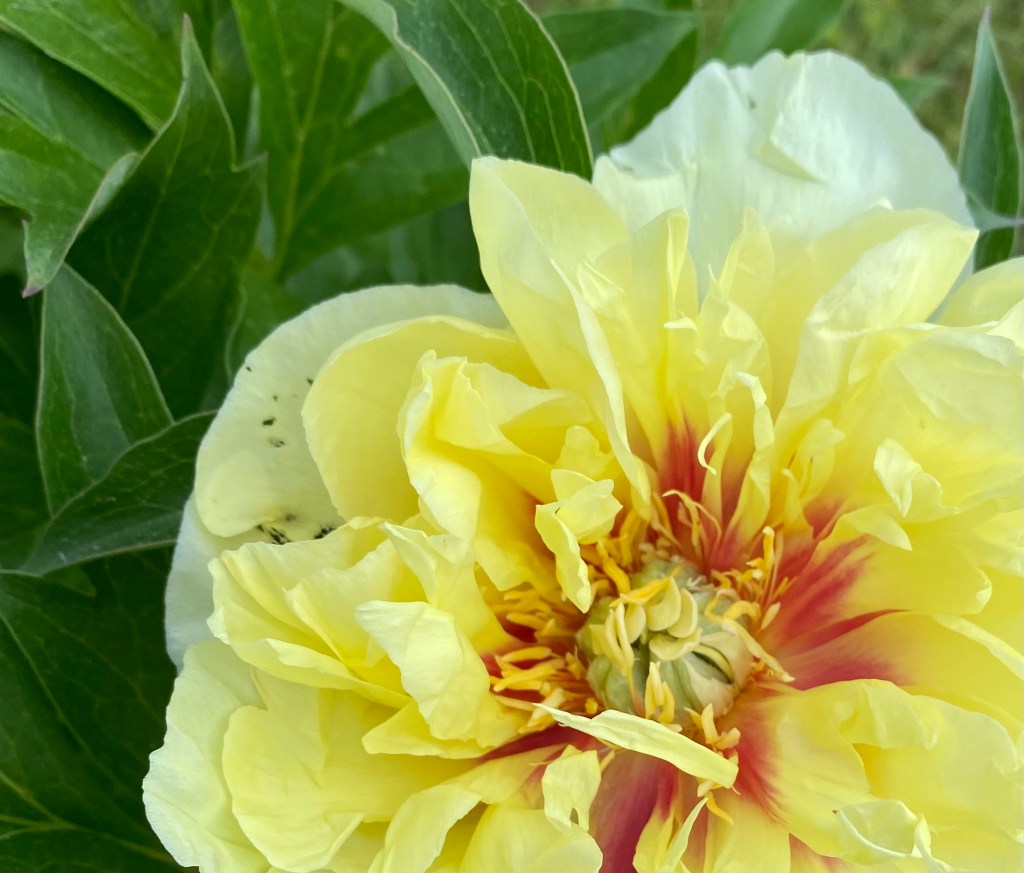
The girls come find me where I’m swimming, the water brackish, strewn with pollen. A blackbird keeps me company. The girls have snagged out-of-date cheese that’s perfectly fine and a tomato that’s sweetly ripe. At home, I dice last year’s garlic. I insist the girls admire the Bartzilla peony that’s blooming now, two blossoms and more fat buds of blossoms. The Bartzilla was a gift a number of autumns ago. My youngest planted the hairy root with me, skeptical. Now, for these few days, this peony’s a marvel.

All day, I’ve been thinking of this Mary Oliver poem. Well worth a share.

Peonies by Mary Oliver

This morning the green fists of the peonies are getting ready
to break my heart
as the sun rises, 
as the sun strokes them with his old, buttery fingers

and they open —
pools of lace, 
white and pink —
and all day the black ants climb over them, 

boring their deep and mysterious holes
into the curls, 
craving the sweet sap, 
taking it away

to their dark, underground cities —
and all day
under the shifty wind, 
as in a dance to the great wedding, 

the flowers bend their bright bodies, 
and tip their fragrance to the air, 
and rise, 
their red stems holding

all that dampness and recklessness 
gladly and lightly, 
and there it is again — 
beauty the brave, the exemplary, 

blazing open. 
Do you love this world? 
Do you cherish your humble and silky life? 
Do you adore the green grass, with its terror beneath? 

Do you also hurry, half-dressed and barefoot, into the garden, 
and softly, 
and exclaiming of their dearness, 
fill your arms with the white and pink flowers, 

with their honeyed heaviness, their lush trembling, 
their eagerness
to be wild and perfect for a moment, before they are
nothing, forever?

Unfathomable fortune.

In the late afternoon, I listen to public radio and move firewood from the outside stacks into the barn, where it will dry again all summer until the autumn nights when I gather my kindling and birchbark. On Monday, the wood delivery guy will come again, with a load of green wood to dry all summer in the open air. Lord, I think as I stack, let the sun shine this summer.

When my daughter appears, I pull off my leather gloves, and we sit on the steps, talking about the Trump verdict. A hummingbird darts between us, onyx and ruby. Later, I’m driving north in the narrow Black River valley to hear GennaRose Nethercott read in the gorgeous old East Craftsbury church. In the parking lot, I join a few friends, talking talking about the verdict, another of these moments with a historic tinge. Crows peck in the farm field behind the church freshly harrowed up. The end-of-May evening is rich with a mixture of cow manure and lilac. Vermont loveliness.

19 years ago, my youngest was born. She fit perfectly in my arm, snuggled from my elbow to fingertips. I kept thinking, How is this possible?

A few days after she was born, the season’s first nubs of corn emerged through farm fields. To bring this child into the world, I had been cut and sewn by strangers. Here we were, our tiny family, a few days later, passing these fields on our way home from the hospital, me marveling at the season already passing from spring into summer, this six-pound baby miraculously given to us. 19 years later, when I return home in the dusky evening, we drink tea and eat almonds, talking talking, this great big world crammed full with so many things…. Enough said. For this day, our immense unfathomable luck.