Small Soup Bowls. Quarantine. Icicles.

My brother returns home, and I immediately slip up, ignore a morphine dose, am unable to eat. A lesson in my own laziness or foolishness learned: keep to the path.

For days, he sets small bowls of heated soup on my kitchen table – chicken and dumplings, our childhood favorite of pea soup, lentils with savory carrots. One night, my daughter bakes biscuits, opens a gift jar of raspberry jam (July!), and we revel at a nameless soup from a woman we’ve never met. Potatoes with the skins left on, chicken and maybe tarragon, celery, onion. There is nothing we could imagine adding.

Like these soup bowls, my physical life has narrowed to these warm rooms with cats, hours unfurling patiently as I stop counting days and treatments. Each day unfolds. On Saturday, I sit on the couch and return a friend’s call. Sunday, I return another call, listening to my laughter, their laughter, these friends who have been down their own stony journeys.

Quarantined, I’m connected to the world in ways I didn’t anticipate – emails and calls, books, prayers– a rosy swaddling aura. An acquaintance phones me with her cancer story and describes her year so straightforwardly she buoys me with courage. A friend offers to plow our driveway all winter; perpetually on the skimp, I’ve shoveled for years, but it’s a great gift to my people who are anyways busily feeding my wood stove and picking up morphine and antibiotics and driving me to bloodwork and The Good Doctor — not to mention, working their own jobs and walking their dogs and generally going about their lives.

So much kindness has come my way. The night the sainted nurse sat with me for an hour and a half while the final chemo infusion ebbed, ebbed, into my chest beside my heart, she counseled me to cultivate patience, that I will be able to give again, that the world spins and shifts.

In a wind gust, the robins’ nest falls from our porch beam. Icicles hang from the roof, radiant swords of sunlight.

…. A few lines from Louise Dickinson Rich, courtesy of my sister-in-law:

“All ordinary people like us, everywhere, are trying to find the same things. It makes no difference whether they are New Englanders or Texans or Malayans or Finns. They all want to be left alone to conduct their own private search for a personal peace, a reasonable security, a little love, a chance to attain happiness through achievement.”

Hay strands for sheep, purring cat, Harry Potter chocolates for neighbors.

Now in my fifties, I’d lulled myself into believing my risk-taking days were sewed up: those early 20s of getting in the old Volkswagen for journeys of thousands of miles, buy a decrepit hunting shack and convert it into a home, severe a marriage soured terribly and fear he might take your life in retribution — all that time of selling the maple sugaring equipment (who to trust, how to cut a hard deal?). So jaywalking suited me just fine. Waking long before dawn to feed the cats and drink milky coffee, write and watch the sun rise, that streaming beet juice.

As if I held all the cards in the risk-taking plans, anyway. Now that thread of riskiness has spread to those beloved around me, too. More and more, I understand my learning to craft a honed a sentence or the deep pleasure of watching a cardinal pause on a branch, are my steadying rituals of rooting me meaningfully in this world. I have friends whose lives center around sheep and chores and woolly affection, in ways that transformed their lives. Chicken and horse lovers. My sister-in-law with her two goats.

As I write from Room 101, I haven’t forgotten that the world spins on. Last night, I listened to VTDigger’s Dave Goodman’s follow-up conversation with Elizabeth Price, mother of Hisahm Awartani, one of the three young Palestinian men who was shot in Burlington, Vermont, a year ago. The Gaza war reigns. The American presidency shifts.

In Room 101, so many stories of people come my way — the night nurse who studied for two years in England, near the beach, transcontinental; how transport folks and nurses made their to live in New Hamsphire and Vermont, often from places around the country. What do you like here? What have you found? I keep asking, curious to know what roots people in their lives.

The smaller world spins on, too, with its things both miserable, joyous, and pleasurably mundane. Your own rituals of offering hay to sheep, fingertips to a cat’s purring head.

Last day of November, the month of cancer in my world. A year ago I bought Harry Potter chocolates for the neighbors’ boys and waited in the dusk for the three laughing boys to appear around my woodpile. The Good Doctor tells me I will go down, down, soon, and then rise to where I once felt well. What would that mean? I’m hanging on to this unrealized promise.

I repeat. When I go down, I will re-emerge.

Cat justice, homestyle.

A friend stops by with a gift of a stunning orchid. My naughty cat, Acer, immediately jumps on the kitchen table, and I swat him away. He lies on the couch, glaring unhappily as we talk. Gorgeous flower bouquets have come my way, been lavishly admired, then sent home with others to enjoy without cat destruction.

But the orchid is so stunningly beautiful I want to keep her. Later, I set this flower on the bathroom counter and shut the door. Acer is still sulking on the couch, paws stretched out before him, the epitome of cat depression, really hamming it up for my youngest daughter who mollifies him with kitty treats.

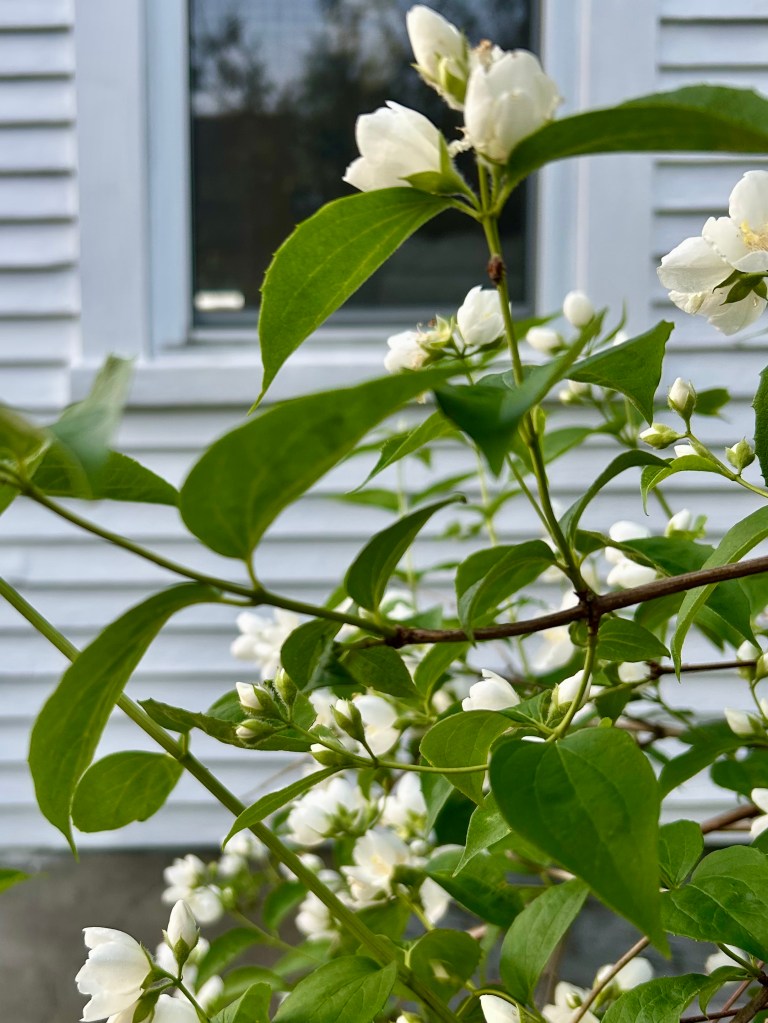
The cat and I: we are at odds. This morning, I let him into the bathroom. He sits on the counter, hungry to the core of his being to shred these velvety petals. In this new cancer world, my constant checking of time — my furious need to get stuff done — has instantly vanished. The mock orange outside the window sways in the breeze. Mid-November, this gloom is as much brightness as we’re going to get today.

Acer has no need to explain his position to me; his furriness is tense with desire. I pet his head and explain my infatuation with the orchid, which doubtlessly Acer dismisses as a weak case. And the orchid herself? Surely she wants to keep her own amazing life, both svelte and voluptuous.

The outcome is nearly certain. I’ll have to let her go. But for now, the house is warming with the wood stove, daughter sleeping upstairs, and — accusations of cat injustice be damned — just the right amount of ethical challenge and beauty, for ten minutes or so.

Abrupt turn in the story…

Photo credit Jo Dorr

For the past few months, I’ve wondered if I might want to take a different direction with my blog (head to Substack?, become more politically local?), but this blog will change, unbidden by me.

Monday, my daughter took me to the ER for severe abdominal pains. An elevated white blood cell count made the nurse reappear with bottles he filled with my blood and gave me the heads up that I might not be headed home that night. I was wearing my twenty year old Danskos and a wool sweater I’d knit years ago and have worn to felt. Slivers from the firewood I’d brought in were hooked on the sweater. My younger daughter and the older daughter’s boyfriend appeared. My girls texted my brother. The nurse kept coming and going, talking to me and my daughters.

I lay on my back for hours with very kind people around me, who gave me pain meds and noted a soaring fever. The ER doctor returned with the nurse who leaned against the cabinets. It was the briefest thing, but when the nurse walked in he looked deeply at my daughters and then at the floor. I knew then that I was not going to like what the ER doctor was about to tell me about that CT scan.

So, on election night, hospitalized with scepticemia from the cancer, a traveling nurse told me about the beaches in Alabama where he lives while he tidied up needles and tubes in my arm. We followed that up with a long conversation about housing costs. Home again on this frosty and promising-to-be-sunny morning, I’ve been humbled by the gifts of visitors and food and kindness that have poured into our little family house, which made me see what a shadowy unhappiness had been creeping into my being for these past few months.

With the hospital and my brother, a biopsy at Dartmouth was pushed. Things will change rapidly. In the meantime, I’m doing things like putting my electric bill on autopay and arranging immediate work leave. But more profoundly, this: this week centered me right back to who I am — mother/daughter/sister, friend, writer — and conversely narrowed and widened my lens, hammering home that day by day is where we are.

The other afternoon, my daughter Molly ran in the house and told us to hurry out to see a rainbow. November rainbows in Vermont are rare, indeed — rainbows in late fall of this glossiness and color even more so. I saw this as a harbinger.

Last, I was reminded of one of my favorite Jack Gilbert Poems, “A Brief for the Defense.” A few lines read:

… We must admit there will be music despite everything.
We stand at the prow again of a small ship
anchored late at night in the tiny port
looking over to the sleeping island: the waterfront
is three shuttered cafés and one naked light burning.
To hear the faint sound of oars in the silence as a rowboat
comes slowly out and then goes back is truly worth
all the years of sorrow that are to come.

Pre-Election, Pause.

In the late afternoon, I walk down to the post office and empty my box of election flyers, adding to the recycling boxes in the lobby. The lobby’s a shabby space, with a metal Christmas tree strung with pink lights for Breast Cancer Awareness month and a box on a counter for respectful flag disposal. A few summers ago, the postmaster planted a garden in the strip of soil outside the squat brick building. In a weird kind of way, this seems like a micro collage of this country. That midmorning, when I arrived at the town clerk’s office, she’d received FBI warnings about election security, so many concerns about the grid going down.

The season’s first snow layers in among the remains of frost-killed summer. The light now is late fall — unfiltered by leaves, without the warmth of summer, but clear, penetrating. One of the autumn’s beauties are lingering twilights, the slow unfolding of the day into night.

Recovering, bit by bit, from a summer mold toxicity, I walk home the longer way, through the neighborhoods where kids have decorated houses with orange lights and ghosts on broomsticks. I pass the Legion and the gun store, and then walk along the river for a bit. I stop to talk with a dog walker about the declination of light. Do people do this in other parts of the world? Surely they must. We muse about the summer and fall — like a rare gift this season has been, suffused with growth and sunlight, as if in defiance of the human world.

And a relevant line from Ben Shattuck’s The History of Sound: “History is personal, even when it isn’t.”

This precise moment… Now.

My daughter and I drink coffee at the kitchen table and talk about the election. Sun pours in through the glass doors. A cat lies on the table between us, purring, utterly blissful.

At 19, it’s her first presidential ballot. At 19, I was a different kind of young woman, holed up in a far-off-the-path cabin with a boyfriend, determined to forge my future in “the smithy of my soul….” My daughter’s generation was shaped in the smithy of the pandemic. Last week, I tore off the New Yorker cover and clipped the illustration of Harris to our kitchen calendar, a white star gleaming on her earlobe. My daughter and I wonder, if Harris, then what? If not, then what? There’s no answers, yet, to any of this, the future yet to be revealed. We fry eggs, butter toast, brew more coffee.

Later, in the night, I’m out in my fat wool sweater and Danskos, holding a cup of hot honey tea, looking for the northern lights. The stars are crystalline, swirled through with white. The wind soughs through the white pines in the ravine behind my house, and a creamy half-moon, like a luscious unworldly melon slice — so tantalizing I’d like to hold it with both hands — hangs over my house.

I’m at the edge of my garden, that familiar place where, if I smoked cigarettes or drank scotch, I’d linger, contemplating the sunflower stalks and the village lights below. The night pretties up the village, wraps it up, so I can see how small this place really is. In the night, my heart opens toward the village; in the daylight, not so much.

The light from my house illuminates stray leaves sailing through the darkness, the great shift of autumn. Like so many of my friends, I’m at that place in life, kids growing and grown, where creative possibilities unfurl. I’m doing the things I’ve done nearly all my life: drinking tea, staring up at the wonder of the night firmament, contemplating which way I’ll jump. In the meantime, I’ve been housekeeping: edge away from that negative snarl, lean into what and who I know is true, the wind and the stars, the moving moon, this swallow of tea, this precise moment. Now.

“Problems that remain persistently insoluble should always be suspected as questions asked in the wrong way.”

— Alan Watts