Pre-Election, Pause.

In the late afternoon, I walk down to the post office and empty my box of election flyers, adding to the recycling boxes in the lobby. The lobby’s a shabby space, with a metal Christmas tree strung with pink lights for Breast Cancer Awareness month and a box on a counter for respectful flag disposal. A few summers ago, the postmaster planted a garden in the strip of soil outside the squat brick building. In a weird kind of way, this seems like a micro collage of this country. That midmorning, when I arrived at the town clerk’s office, she’d received FBI warnings about election security, so many concerns about the grid going down.

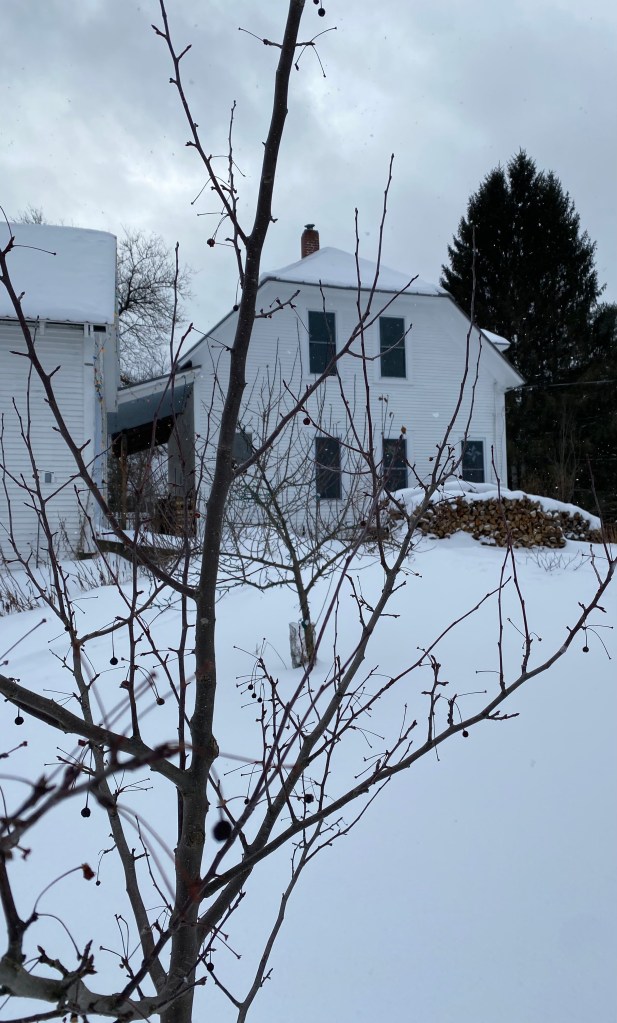
The season’s first snow layers in among the remains of frost-killed summer. The light now is late fall — unfiltered by leaves, without the warmth of summer, but clear, penetrating. One of the autumn’s beauties are lingering twilights, the slow unfolding of the day into night.

Recovering, bit by bit, from a summer mold toxicity, I walk home the longer way, through the neighborhoods where kids have decorated houses with orange lights and ghosts on broomsticks. I pass the Legion and the gun store, and then walk along the river for a bit. I stop to talk with a dog walker about the declination of light. Do people do this in other parts of the world? Surely they must. We muse about the summer and fall — like a rare gift this season has been, suffused with growth and sunlight, as if in defiance of the human world.

And a relevant line from Ben Shattuck’s The History of Sound: “History is personal, even when it isn’t.”

This precise moment… Now.

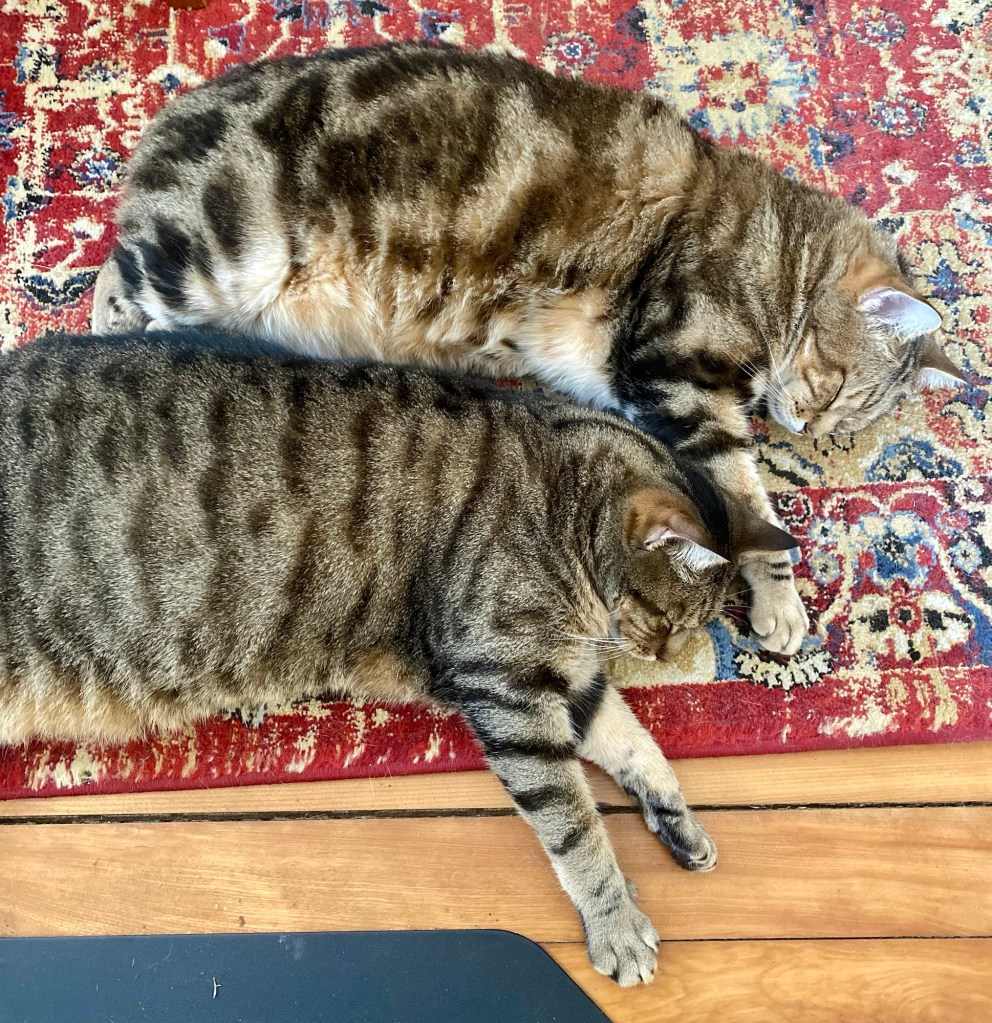
My daughter and I drink coffee at the kitchen table and talk about the election. Sun pours in through the glass doors. A cat lies on the table between us, purring, utterly blissful.

At 19, it’s her first presidential ballot. At 19, I was a different kind of young woman, holed up in a far-off-the-path cabin with a boyfriend, determined to forge my future in “the smithy of my soul….” My daughter’s generation was shaped in the smithy of the pandemic. Last week, I tore off the New Yorker cover and clipped the illustration of Harris to our kitchen calendar, a white star gleaming on her earlobe. My daughter and I wonder, if Harris, then what? If not, then what? There’s no answers, yet, to any of this, the future yet to be revealed. We fry eggs, butter toast, brew more coffee.

Later, in the night, I’m out in my fat wool sweater and Danskos, holding a cup of hot honey tea, looking for the northern lights. The stars are crystalline, swirled through with white. The wind soughs through the white pines in the ravine behind my house, and a creamy half-moon, like a luscious unworldly melon slice — so tantalizing I’d like to hold it with both hands — hangs over my house.

I’m at the edge of my garden, that familiar place where, if I smoked cigarettes or drank scotch, I’d linger, contemplating the sunflower stalks and the village lights below. The night pretties up the village, wraps it up, so I can see how small this place really is. In the night, my heart opens toward the village; in the daylight, not so much.

The light from my house illuminates stray leaves sailing through the darkness, the great shift of autumn. Like so many of my friends, I’m at that place in life, kids growing and grown, where creative possibilities unfurl. I’m doing the things I’ve done nearly all my life: drinking tea, staring up at the wonder of the night firmament, contemplating which way I’ll jump. In the meantime, I’ve been housekeeping: edge away from that negative snarl, lean into what and who I know is true, the wind and the stars, the moving moon, this swallow of tea, this precise moment. Now.

“Problems that remain persistently insoluble should always be suspected as questions asked in the wrong way.”

— Alan Watts

“The real, long history of this place…”

Old West Church, Calais, Vermont, 1823…. The fieldstone foundation was laid 200 years ago. I’ve been tossed a lucky bone, and I’m reading here this afternoon. Recently, I swung by with a friend to check out the acoustics and ended up sitting and watching the sunlight shift through the space. The structure remains in the 19th century with no electricity.

In an interesting way, it seems fitting to do these things in the autumn when the light in our northern realm is shifting so rapidly. On each side, the days shorten. What began in April as a sprinkling on the forest floor of hepatica and trillium and spring beauties has flourished all summer in such a lush and lovely summer. Strangers remark, “What a summer of growth!” as if to make up for these past few years of soddenness, of rain and wildfire smoke from faraway (but apparently not that faraway) places.

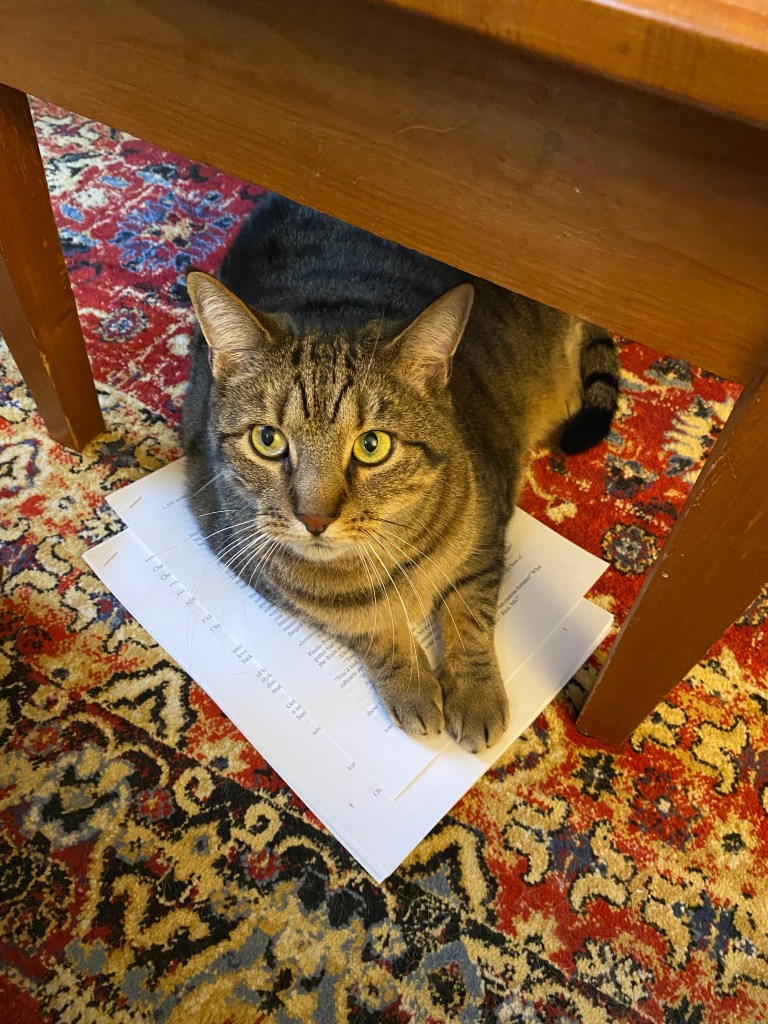
At the transfer station, I pull up with my hatchback crammed with that metal lidded can of cat food cans, my bins of used paper and things I no longer want in my house. I’ve been coming here for decades now. On this peach of a September afternoon, the owner and I stand outside his office, our faces up to the sunlight and a circling hawk. I mention that I’d take a month more of these days, but I don’t want to be greedy. He looks at me and says, Let’s just be greedy and want that, anyway.

Autumn is the long weeks of the growing season’s finale, the landscape gold and crimson. But within the landscape are the tiny places where we walk and live: my garden’s pink glads, the neighbor’s blooming roses, the gold flush of the butternut tree I planted as a bare root stick, seven years ago, and the girls laughed at me. The tree stretches far above our heads now, and my girls marvel. Have faith, I remind them; beauty thrives from where we least expect it….

From Carolyn Kuebler’s gorgeous essay about Vermont:

The real, long history of this place goes even further
back, to the beginning of this landform as we know it, about twelve
thousand years ago when the glaciers drew back from the land and
various species, including humans, eventually moved in.

Finding a Thread.

On my way home, I stop at Number Ten Pond. The water temperature is at that sweet spot, exactly perfect — and how often do you touch perfect? — and I wade right in. A woman stands in the pond, two children splashing around her. She laughs when the minnows bite her toes.

I swim far. In the pond’s center, I float on my back. With my eyes closed, my mind’s eye turns red, with blood or sunlight, who knows, and I’m no longer sure which way is up or down, water or sky. I’m distant enough from shore that only the loon call reaches me. By the summer’s end, these swims will add up to an invisible chain of experience: of water and weather, of whatever language drifts my way. July here, just a handful of fleeting days.

"Everything Is Made Of Labor"
Farnaz Fatemi

The inchworm’s trajectory:
pulse of impulse. The worm
is tender. It won’t live
long. Its green glows.
It found a place to go.
Arrange us with meaning,
the words plead. Find the thread
through the dark.

The limits of what we do.

Friday night, driving home along a familiar road from visiting friends, I stop by the elementary school. Solstice, the Strawberry Moon, the daylight lingers, and the dusk is long, multiple hues of blue. No one’s there, of course. I follow the path along the wetlands. Shimmering with lilypads and twilight, the water chirrups, sings, buzzes. Fish leap and splash. I loiter, and the dusk closes in. Still, I keep walking, following the path through the brushy woods up a slight hill, so I can get to the other side.

In my twenties, I had a tendency to get lost in the night woods, stumbling off the path. Years before cell phones, we were always searching for flashlights with working batteries, to visit somebody in a remote cabin. But I’m in familiar territory, and I take my time, in this bowl of evening, letting the cacophony of the wild chorus diminish my stringy thoughts.

I haven’t been back here for a good long while, but this school and the town and the library where I worked was a warm place, with its own complicated stories, sure. Those were the years when my life fell apart. I pause, hoping to see the quicksilver flash of a fish. Across the wetlands, a single vehicle rolls along the road. Maybe it’s the passage of time, or the evening’s mellifuous beauty, but I see suddenly that I was following two strands of my story in those years. I was leaving my husband (and for months, I wasn’t at all certain how to do that), and I was also recreating my life (and how exhilarating and hard that was, too.) I’ve written about my struggle with addiction; when I began to lift that veil, my fierce hunger quickened for what I had wanted all along — to pursue my own creative and often dicey life. In this throbbing evening, I sense the limits of language, that words fail here, that to divide creation and destruction into two words, held in two hands, is illusory.

The fish I didn’t see smacked through the water. Fireflies winked around me as I threaded my way back to civilization in the dark.

“Train Ride”

All things come to an end;
small calves in Arkansas,
the bend of the muddy river.
Do all things come to an end?
No, they go on forever.
They go on forever, the swamp,
the vine-choked cypress, the oaks
rattling last year’s leaves,
the thump of the rails, the kite,
the still white stilted heron.
All things come to an end.
The red clay bank, the spread hawk,
the bodies riding this train,
the stalled truck, pale sunlight, the talk;
the talk goes on forever,
the wide dry field of geese,
a man stopped near his porch
to watch. Release, release;
between cold death and a fever,
send what you will, I will listen.
All things come to an end.
No, they go on forever.

— RUTH STONE

“Everything blooming bows down in the rain…”

In the sultry dawn, I’m wandering barefoot in the garden, snatching the lingering strawberries before birds have nabbed the remainder. By late afternoon, thunderstorms have settled in. I’ve left a wooden chair on the porch, a throw rug over the railings, both sodden now. Book in my hand, I lean against our house’s dusty and pollen-layer clapboards, reading in the coolness that’s washed in. Our porch looks out over a bed of bleeding hearts, false Solomon’s seal, hostas. Beyond that, the cemetery, the river valley below. Behind our house, the wild presses in. Ferns tall as my shoulders, goldenseal, the groundhogs, thrush, chittering sparrows, the cut of ravine and the great life there.

Equinox; the lushness burgeons. Bring it on. The rain blows through the bedroom screens whose windows we left open all day. The box elder shoves between the porch railings. The grapes rise hungrily against the barn. All night our rooms are filled with moonbeams, the blowing dew, the mixture of milk trucks rattling down the road and the calling frogs.

Everything blooming bows down in the rain:

white irises, red peonies; and the poppies

with their black and secret centers

lie shattered on the lawn.

~Jane Kenyon