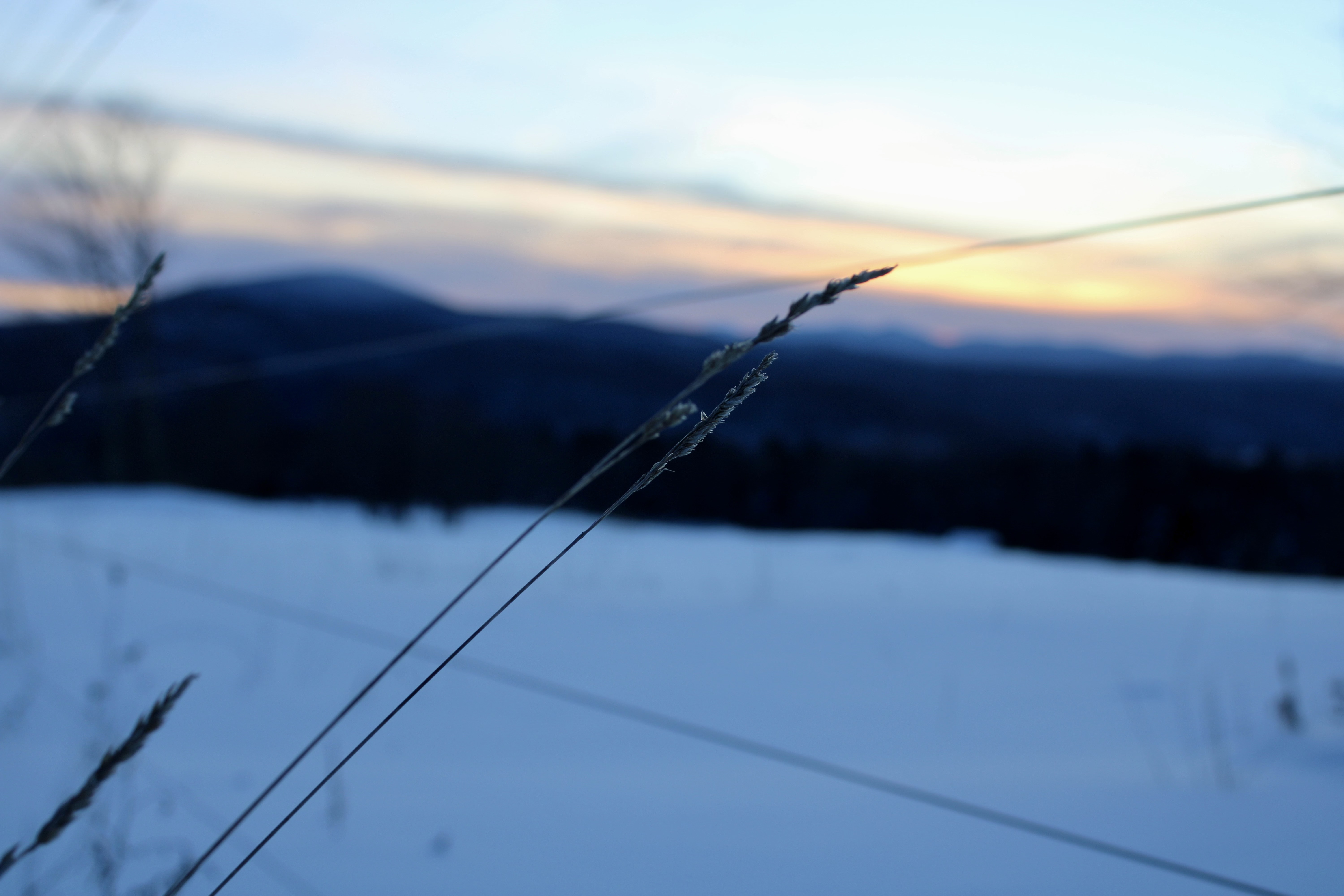
When I step out to start my daughter’s car before she heads to work this morning, a very light snow is falling, flakes drifting in the light from the kitchen window.
Last year, I would have been headed to Burlington through the snow, driving through whatever the weather might have tossed at me. This year, I’m headed a far shorter distance up a back road.
In my twenties, I lived in Washington state for a few years, on the western side, in the Cascade mountains. The mountains were beautiful, the people kind, but I missed the heart of winter, the drama of Vermont’s swinging seasons. On mornings like this, I sometimes wonder what the heck I was thinking. In February, so many Vermonters draw in — even pre-pandemic — hibernating at our hearths against the winter.
For a moment longer I stand shivering. In the village below, only a few lights glow. A milk truck drives along Route 14.
Then I head back in to make more coffee. My daughter yawns and packs her bag for work. She asks me, Remember the smell of rain?
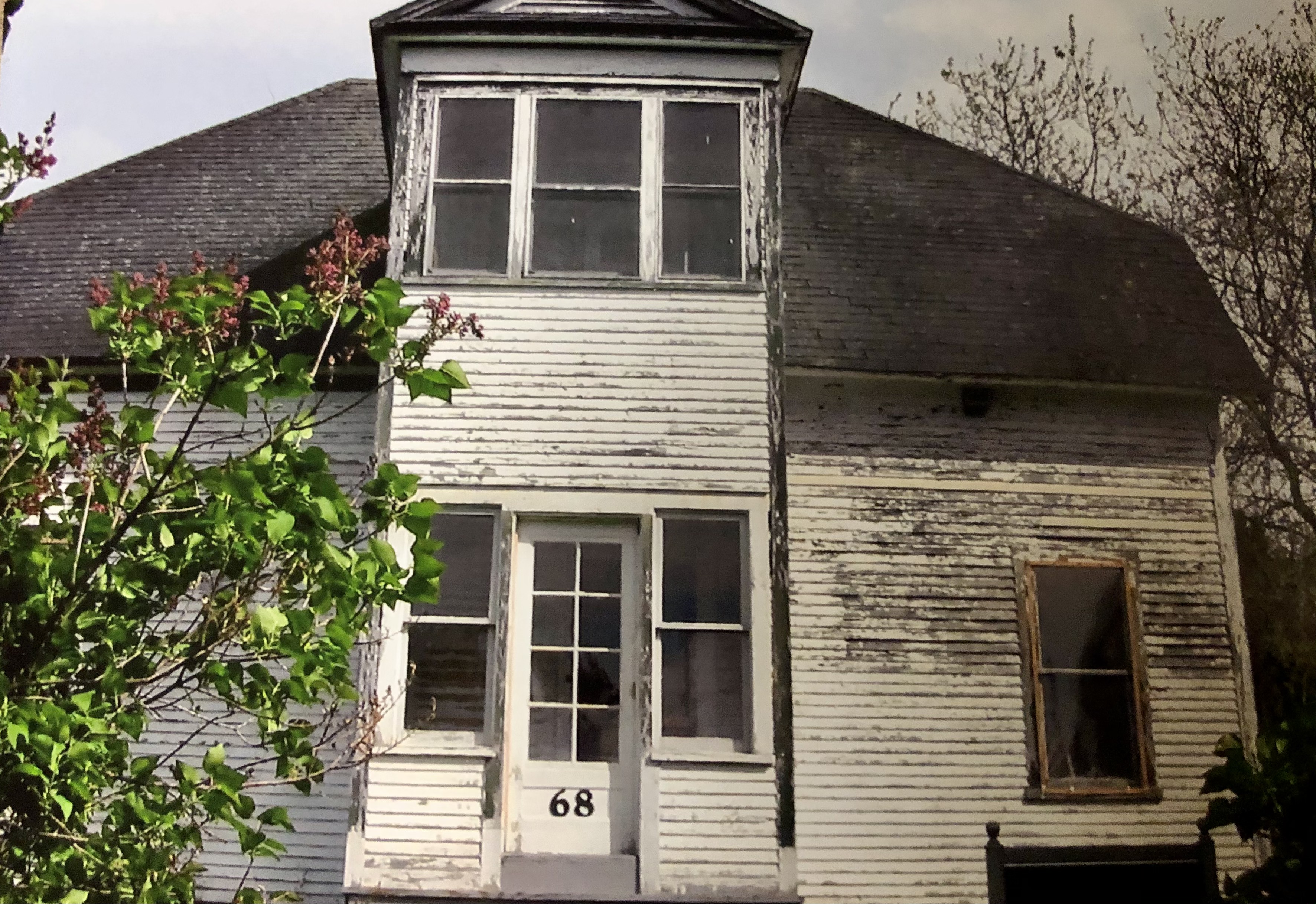
The couple who last owned our home mail us old photos. When they bought the house, the 100-year-old dwelling was in ragged shape. My daughters and I spend some time looking at how the house has changed, and how it hasn’t.
I bought the house in good shape, and now we’re wearing into it, scraping and chipping at its shininess with our use. In the spring, we’ll open all the windows and polish our house again. In the summer, I’ll paint, as paint perpetually falls off in New England.
Once, I had thought to sell and move when my youngest graduated from high school. Now, like everything else in our collective lives, the future is uncertain. Shelter in place — a phrase I once believed would never apply to our Vermont life — directs the shape of our lives.
In the afternoon, I ski through the woods on the nearby trails. Just as I click on my bindings, I remember last night’s dream of a snowy owl… and then I wonder, truth or reality? I stand there alone, in the cold and under the overcast sky, wondering. For just a moment, I’m not sure. Maybe I really did see that elusive owl. Then I push off into the woods, silent but for the sound of skis over snow.
All day on my oldest daughter’s birthday, I remember that this was the day I became a mother. The day is imbued with a rosy holiness, transforming the everyday world of mundane things — a laundry basket, a cheese grater, a dutch oven — into pieces of our miraculous life. Parenting is a long, long road — there’s no doubt about that — the world would be unimaginable without this road.
At the end of a very long labor with this baby, I saw myself descending deeper and deeper into a dark, stone-lined well, my arm outstretched, reaching for my baby who I knew was somewhere down at the well’s bottom.
This child was born at the very end of the 20th century, in contemporary Vermont. Modern medicine made her life possible, and certainly saved my own, too. Every year, when I’m grateful for this young woman’s life, I remember the strangers who brought her into the world.
On a whim, I bought three tickets to an outdoor light festival. Each ticket was cheaper than the price of a movie ticket, back when we once went to the movies.
It was below zero when we arrived, and the three of us stood very near a crackling fire watching the winter twilight sink through deepening shades of blue into dark. We were outside a theater where I attended a fantastic poetry reading just before our world shut up last March.
Eventually, my daughters and I, warmed enough by the fire and hot chocolate, wandered through the enchantingly lit grounds. Overhead, the stars shone. At the far end, two little kids played in the snow that was lit cobalt — laughing with great pleasure, The snow is blue!
Just before we left, my daughters started the car and the heat, and I ran back to the window for sweets to bring home. I guessed who was bundled under layers of bulky coats and scarves and balaclavas.
A stranger who was stamping his feet and waiting for drinks asked if I was from here. Our house with our cats was eight miles down the road, but he had driven well over an hour to come. We have to do something, he said, then we wished each other a lovely night, and then disappeared into the night.
I found a paper butterfly on my car windshield yesterday afternoon — a gift, I’m guessing, from a local child.
My youngest and her friend, dreaming of summer and drivers’ licenses, create a plan of mountains to hike. While a pizza bakes in the oven, she lists summits on their list: Pisgah, Hunger, Belvidere….
I love this. While I worry about these girls driving, about the two of them heading off without a parent or big sister, I love that their dreams involve tying on hiking boots and pushing for summits. I love that they love mountains.
My younger daughter drives the two of us on a cold January afternoon to Montpelier. I can’t remember the last time I’ve been to the state capital, although (pre-pandemic) I was in Montpelier at least once a week.
We’re in search of a birthday present for my oldest daughter — a single present, that’s all I’m looking for — and we go into only one store. At the register, the owner tells me how happy she is to see people; the city has been a ghost town for the last week.
In the downtown’s heart, we pass empty storefronts. I’ve never seen so many vacancies in Montpelier before. On one main corner, my daughter notices the bakery where I once bought her chocolate chip cookies is locked, too.
Where I can’t bear to pass by is the library, the beautiful stone building where a year ago I often spread out my laptop and papers and worked for hours. In the large reading room, the well-heeled snapped on lamps and read and wrote. There was a couple who always appeared who seemed to be gambling online. The homeless and college students filled chairs. After school, children ran through.
At my daughter’s request, we walk through Hubbard Park in the cold and up the stone tower to see the city surrounded by mountains.
When we walk down the snowy steps, a mother and her daughter are sitting on the tower’s stone floor. There’s only openings for windows and doors, and the girl is crying with cold. The mother struggles to tie an icy lace on the girl’s ski boot.
Been there, I think, done that.
I no longer have the keys to my own car. My daughter drives past the state house where no one is out. Not a single person on the granite steps. Driving home, she suddenly says, The good thing about living in Vermont is spring. Even if winter seems forever, there’s always spring.
[Kintsugi], the Japanese method of repairing broken pottery [uses] gold to bind the pieces together. In this way, the break becomes what is beautiful, what is valued. It is a way to embrace the flaw, the imperfect. In place of the break, there is now a vein of gold.
— Nick Flynn, This is the Night Our House Will Catch Fire