Sing, Robins

I lingered on our porch yesterday evening, gathering a few pieces of firewood. It’s warm enough now that the fire could stay out, but somehow letting the hearth go cold in March just doesn’t seem right.

There’s that worn-out cliche that the laughter of babies is one of the best sounds on this planet — and it’s not a cliche, because baby laughter is really dear.

But so is the songs of robins.

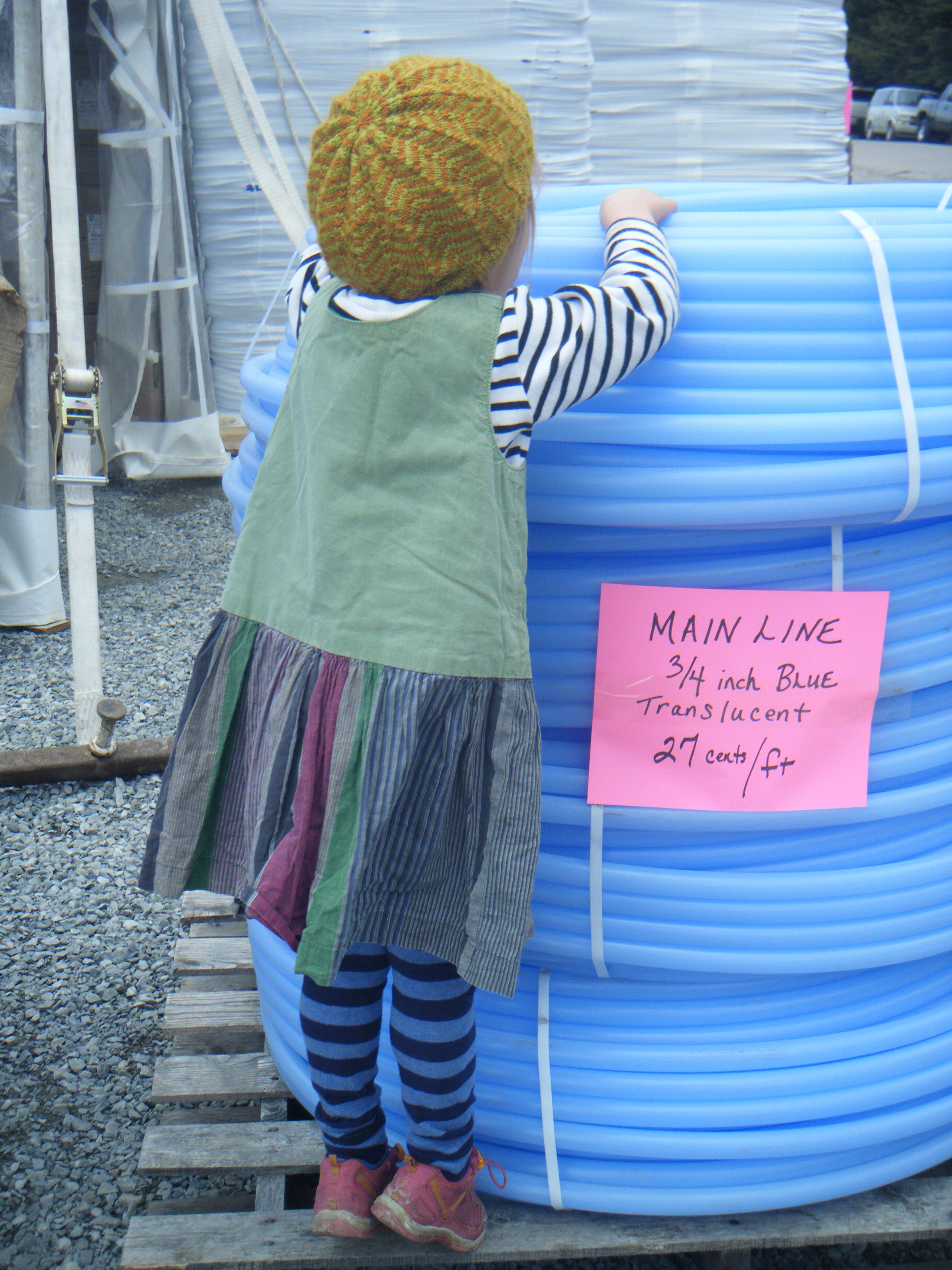
We’re back again in these melodies. Around us, mud and thaw pushing up the debris that’s hidden under the snow all winter. Pieces of cardboard and empty yogurt containers, the runny mess of my ash pile, my youngest’s holey (or is that holy) pink socks where she tossed them over the porch railings in a burst of spring enthusiasm.

Oh, robins, mud your nests, lay your eggs, raise your newborns. We need you!

Open a window. Rain falling
on good land is good for melancholy.

— Jody Gladding

Hardwick, Vermont

Thaw, Finally

Right at the equinox this year, spring cracks winter’s back in Vermont. The pavement buckles into frost heaves. The dirt roads mush and muddy. Sunday, I find the season’s first coltsfoot, the tiny gems of gold.

A Vermont spring is either a heartbeat — bang, done — or weeks of freeze and thaw, thaw and freeze. Although the days have hit 60 degrees, the nights are still cold, and our wood stove keeps our house warm.

Last evening, we walked by a sugarhouse, its cupola open and steam billowing. The air was tinged with the sweetness of maple, the slight rotting of thawing mud. Instinctively, my upper arms ached. Walking behind my daughters, listening to their chatter, my arms remembered those years when we sugared, and how my arms and gloved hands bent into the woodpile.

Spring is all those things: the radiance of the strengthening sun, the beauty of wildflowers, and how, when the earth thaws, our winter debris of ash pile and last year’s kale stalks emerge.

The bush warbler.
The rain wouldn’t let up.
The travel clothes.

— Mizuhara Shuoshi

Hands at Work

I’m working at home on a Friday afternoon when an email pops into my inbox from the librarian in town. He writes my interlibrary loan book is in, and would I like to come get it?

Indeed, I would. I pick up the book, wrapped nicely in a white paper bag, with my first name, Brett, written in black marker. I stand there in the sunshine, holding this book like some kind of present.

By randomness, I chose this book — Hammer Head: The Making of a Carpenter.

Go read it, too. The book embraces the hammer and chalk line, the beauty of wood, the functionality and satisfaction of making things with your hands, all antidotes to this virtual world. Even more, the book embraces being a woman and a working woman.

Me, the Mother, Grimacing

Sunday morning, my daughter drives on icy roads to meet a friend to ski. In the passenger seat, I grimace. There’s no more polite way to reveal my actions: I’m grimacing. My daughter — perfectly capable, but my God, she’s 15, driving on icy roads.

She intends to be driving thus for decades to come, without me, of course, grimacing away in the passenger seat.

We head over the mountain and down along the river where the roads improve. Driving, she talks to me, as if the steering wheel has loosened her natural reticence. She laughs and confides, there’s just so much you don’t need to know.

Oh, my Queen of Economy. Wise and experienced beyond your years.

On the way home, we stop for coffee, and I drive while she eats and talks and plays country music that, good lord again, I’m becoming quite fond of.

Who knows will happen next year, this summer, this spring, this very week — goodness, even this afternoon with so much yet spread out before us? For this moment, here we are.

On the way home, I pull over, hand her the keys, and knock off the grimacing.

Coyotes feed themselves on gaunt dreams of spring. 

— David Budbill, “March”

East Burke, Vermont

Cardinals — crimson and soft brown

Two cardinals perch in our mock orange bush, a brilliant flash of feather and beak, meeting and mating, much to the joy of our cats, who want to eat these these little creatures.

Around our Vermont house is yet an oasis of snow and ice, not a single sign of grass yet apparent. In the front yard, the rhododendron emerges stubbornly. I’m here! I’m here!

On this early morning that promises warmth, lines from poet Marie Howe.


Johnny, the kitchen sink has been clogged for days…

We want the spring to come and the winter to pass. We want
whoever to call or not call, a letter, a kiss–we want more and more and then more of it.

But there are moments, walking, when I catch a glimpse of myself in the window glass,
say, the window of the corner video store, and I’m gripped by a cherishing so deep

for my own blowing hair, chapped face, and unbuttoned coat that I’m speechless:
I am living. I remember you. 

— Marie Howe, from “What The Living Do”

Former Hospital Grounds, Lunch, March

My daughter signs up to give blood in Waterbury, about an hour away from us. The three of us decide to make a morning of the expedition, with the youngest driving, including the stretch of interstate.

After we drop her off, my youngest and I walk around town, and I buy her a watery hot chocolate in the one place that appears to be open that morning. It’s cold, and we end up back in the car, watching a few skiers on the town’s rec fields.

We talk about dogs and high school and how writers are the most annoying people on the planet, always peering into strangers’ lives, wondering. Even worse, writers write about their families.

True, I admit. It’s a burden.

It’s about 11 degrees. She orders sandwiches on her cell phone from a nearby bakery, and I tell her to add cheesecake to that digital order.

When my older daughter returns, we pick up that order at the bakery window — or, I pick it up. One person only, please. We eat falafel in my car in the enormous and utterly empty parking lot of the former Vermont State Hospital for the Insane. The extensive brick buildings are now state offices. Empty, now, too.

As we eat, we talk about the tall smokestack, crumbling and apparently unused, with VSH bricked near the crest. Two geese fly by, and I realize how near the river we are. So much has happened on these grounds, so many people, so much living, so many years.

It’s cold, cold, and we keep driving. March, my father’s birthday, a promise of spring in the offing.

But I’m beginning to understand this: We never know. Life is a foray into mystery.

— Suleika Jaouad, Between Two Kingdoms: A Memoir of a Life Interrupted