Wild Friends

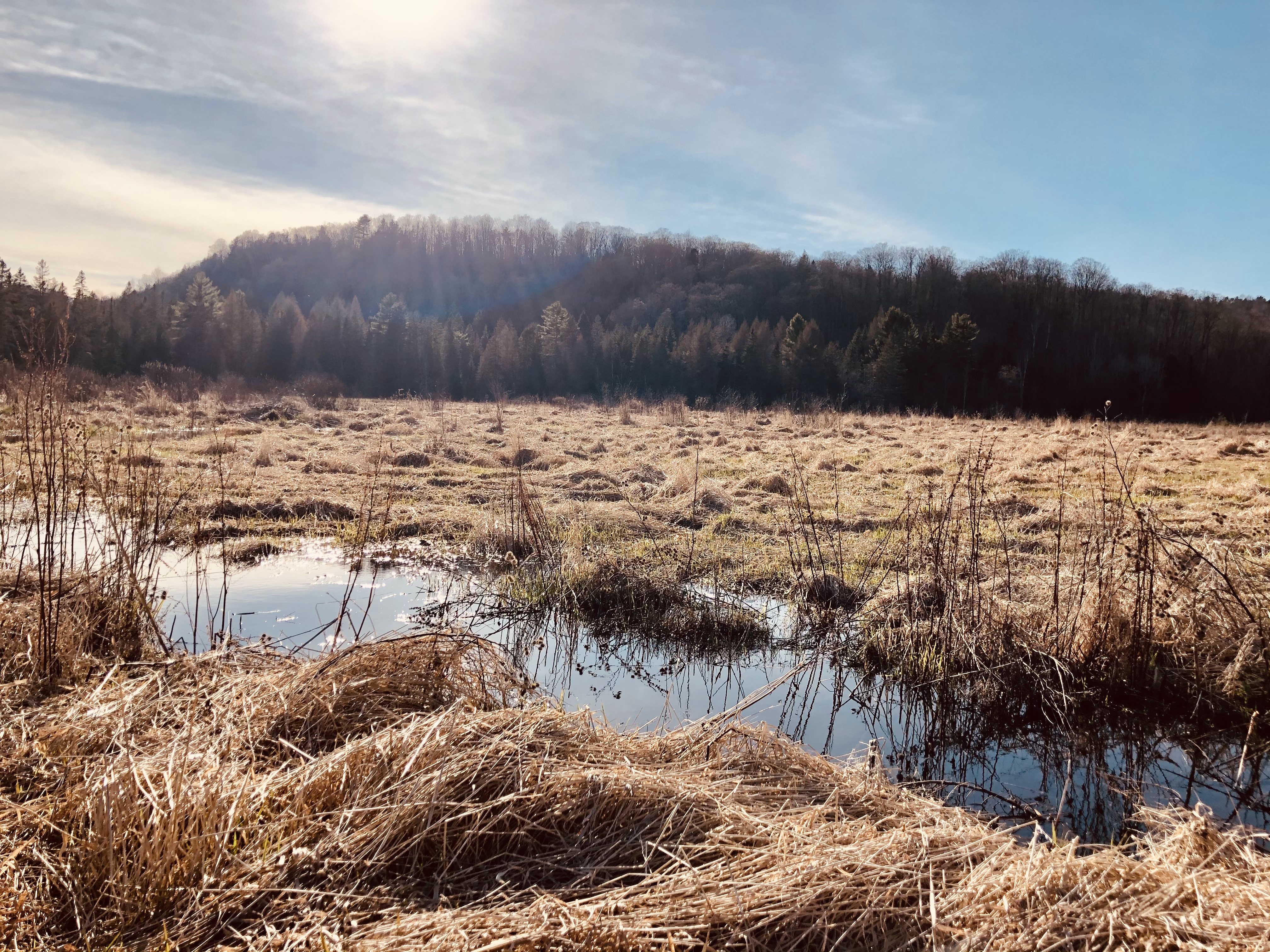
While waiting for my daughter to finish soccer practice, I wandered down the road and discovered three geese gliding through a wetland. I stood at the wetlands’ edge for the longest time, simply watching, as if by observing I can absorb some of their quiet certainty.

Everyday in Vermont, a few more strokes of green, a little more color.

“Empathy is more than putting yourself in someone else’s shoes; it’s using your power to fight for changes that don’t directly benefit you.”

— Tessa Miller, What Doesn’t Kill You: A Life With Chronic Illness — Lessons From a Body in Revolt

Signpost

Earth Day gives us snow in Vermont, that poor man’s fertilizer.

In a lightly falling snow, I lean against a school building, talking on the phone to my brother while my daughter plays soccer. Snow drifts in flakes about the size of a nickel, some melting on the pavement, others accumulating on tree branches and the toe of my boot.

The phone connection is stunningly clear — a surprise in rural Vermont.

As the snow falls, we wonder at the happenstance of circumstances — how the fall of a family member might have gone disastrously awry. Our conversation wanders beyond that, to the Chauvin trial, and the bystanders on that terrible day who, by happenstance, were present, and the teenage girl who pulled out her phone and shared her witness’s eyes with the world.

We’re in no hurry to hang up, and my brother suggests that, if Washington D. C. achieves statehood, the flag’s tidy stars will be kicked out of kilter. Vermont should succeed, he says.

After I hang up, I lean against that wooden wall. A fat robin lands in the snow, seeking a worm. My daughter and two friends walk across the parking lot, laughing, their braided hair damp with melted snow, their cheeks and bare knees bright red. It’s spring.

Somewhere in Snowy Spring….

Through a few inches of snow, I follow stone steps down to nearby Lake Caspian, winding around a cedar-shingled house, holding a railing someone has taken the care to build, baluster by baluster.

The homeowner wants to build a tiny boathouse by the shoreline. While I listen to his plans, I eye the lake visible beneath the bent that hang over the lake. Although I’m wearing my winter coat, I imagine wading in, sweeping my fingers in the cold water.

The few of us stand among white birches, sharing names and stories. Because this is Vermont, we talk about the weather, the need for precipitation, and how everyone’s wood pile is faring. We make our way back up the hill, still talking.

A robin, in a crazed songbird rush, swoops by, nearing clipping one woman’s ear. She laughs.

It’s Saturday. Later that afternoon, I’ll stand in my driveway, talking with my friend about the fat list of things that worry and stress us. But for this half hour or so, I visit with acquaintances and strangers, talking about the area’s barns, how these great structures were built with care. Some remain; some are simply memories.

For listening recommendations, my father passed along this link to This American Life‘s Three Miles.

Short Visit

A retired man shows up at my job, looking for a little info and then stays to talk, sitting in a chair while I lean against one of the cement posts that hold up the ceiling, and the building overhead.

A former landscaper, he’s survived numerous joint replacements, an overseas war as a young man, and he’s holding cancer at bay, for now. He’ll succumb to the cancer, he says, at some point. But for now, he tells me how much he savors that first slurp of hot tea every morning.

I have plenty to do, but for that time, I might as well, really, have nothing else to do. He tells me about a double blossom primrose flowering in his garden. Another spring, he says.

Snow expected today; that’s Vermont spring, too.

Mysterious Visitors

When my youngest daughter was four, she and one of her best four-year-old friends were playing outside and called me to come from the kitchen and, “See the bunnies, mama!”

This was right around Easter, when the yard was worn-down snowbanks interspersed with wet earth. Two enormous hares were hopping around the yard, their white winter fur turning brown in patches. Or maybe the hares looked so large because the girls in their boots were so small.

Our house was surrounded by thousands of wild acres. We had seen moose and deer and bear wander through, but never hares that came to visit for a morning. The girls had made an open air house beneath the branches of a spruce tree. All morning, the hares came and went, hopping through on their powerful legs, then disappeared and never returned to play.

This Easter arrives in a strange and disorienting period in our family life, of tests and quarantining, of worry and waiting, of days of eating take-out Japanese food sent from my parents and coconut birthday cake. We’ve abandoned the dining room for the living room, surrounded by piles of library books, cats sleeping on blankets, and my two knitting projects. I’ve begun to wonder if I might ever brush my hair again.

My youngster asks what’s this holiday about anyway, with the rock rolling away and the ascension? On the phone, my brother offers his own explanation that I’ll keep unrepeated, although I woke wondering if Jesus himself wouldn’t have objected. Jesus walked in the most profane of the human world and perhaps embodied the most holy, too.

On this spring morning, with the robins singing in the box elder outside our kitchen, I’m grateful for both the ineffable mystery of spring — thaw and crocuses — and the mundane chores of dish washing and a kitchen floor badly in need of a sweep. Or, maybe, as so often before, I’m utterly wrong, and there’s not two things, not a both, but one.