… two million naturally occurring sweet things…

On this last Wednesday in this August… a few lines from Ross Gay:

Sorrow Is Not My Name

—after Gwendolyn Brooks

No matter the pull toward brink. No

matter the florid, deep sleep awaits.

There is a time for everything. Look,

just this morning a vulture

nodded his red, grizzled head at me,

and I looked at him, admiring

the sickle of his beak.

Then the wind kicked up, and,

after arranging that good suit of feathers

he up and took off.

Just like that. And to boot,

there are, on this planet alone, something like two

million naturally occurring sweet things,

some with names so generous as to kick

the steel from my knees: agave, persimmon,

stick ball, the purple okra I bought for two bucks

at the market…

      —for Walter Aikens

Wild Strawberries under Wildfire Smoke.

In Willey’s — the rambling general store where you can buy electrical supplies, French wine, local produce, bananas and darn near everything else except cigarettes — I turn a corner and find an old friend. She has a sunburn and I think: where have you been? We are both in some kind of rush that we talk, separate, and then knock up against each other again and again. The store is jammed to the ceiling with stuff, but it’s not that large. At the register and then out into the street, we keep talking. She’ll filled with such good energy I want to pocket some of her joy.

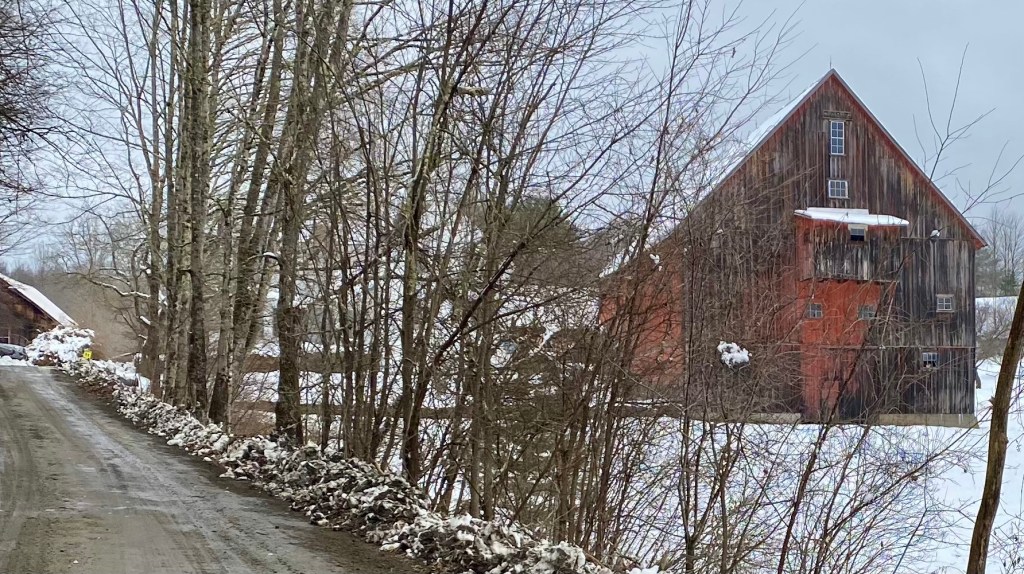
Every day, rain falls. Clotheslines droop. My feet are spongy in sandals. The Blundstones my daughter bought me a few years back split at the soles. It makes sense to wear these beloved shoes right down to wet scraps. I open and close the windows — is it hot? is it cold? The garden soaks up the water. The woods are lush and lovely, redolent with wet bark, the tanginess of split leaves.

The wild blackberries blossom profusely, the green berries now knotting. It’s nearly July, the season that means swimming and long lingering evenings watching the twilight drift down. Not so, this year. The pandemic made abundantly clear that we are connected to each other — both neighbors across the street and strangers around the globe — in ways that matter not one whit whether we like it, or not.

This summer breeds contemplation, more November than cusp of July. In that vein, here’s a few lines from the immortal T. S. Eliot in Four Quartets:

... The wild thyme unseen and the wild strawberry,
The laughter in the garden, echoed ecstasy
Not lost, but requiring, pointing to the agony
Of death and birth.

 You say I am repeating
Something I have said before.
 I shall say it again.

Shall I say it again? In order to arrive there,
To arrive where you are, to get from where you are not,
 You must go by a way wherein there is no ecstasy.

In order to arrive at what you do not know
 You must go by a way which is the way of ignorance.

In order to possess what you do not possess
 You must go by the way of dispossession.

In order to arrive at what you are not
 You must go through the way in which you are not.

And what you do not know is the only thing you know
And what you own is what you do not own
And where you are is where you are not...

Ordinary Contentment.

Standing on the street in Greensboro Village, a pickup truck with a trailer full of hay slowly passes by, creaking through the tight curve. In the sultry sunlight, I wait, a shower of chaff drifting over my face, blinding me for just a moment. As I close my eyes, I see one sunburned arm waving through the open pickup window at me.

June. There’s plenty adversity that happens in this month, I’m sure, but the roses are blooming, the fields freshly shorn and growing again, the fledgling robins already swooping from the nest.

Some lines from the incomparable Jane Kenyon this Friday afternoon:

High on Nardil and June light 
I wake at four, 
waiting greedily for the first
note of the wood thrush. Easeful air 
presses through the screen 
with the wild, complex song 
of the bird, and I am overcome

by ordinary contentment. 
What hurt me so terribly 
all my life until this moment? 
How I love the small, swiftly 
beating heart of the bird 
singing in the great maples; 
its bright, unequivocal eye.

‘In sorrow, pretend to be fearless.’

In Praise of Coldness

“If you wish to move your reader,”
Chekhov said, “you must write more coldly.”

Herakleitos recommended, “A dry soul is best.”

And so at the center of many great works
is found a preserving dispassion,
like the vanishing point of quattrocentro perspective,
or tiny packets of desiccant enclosed
in a box of new shoes or seeds.

But still the vanishing point
is not the painting,
the silica is not the blossoming plant.

Chekhov, dying, read the timetables of trains.
To what more earthly thing could he have been faithful?—
Scent of rocking distances,
smoke of blue trees out the window,
hampers of bread, pickled cabbage, boiled meat.

Scent of a knowable journey.

Neither a person entirely broken
nor one entirely whole can speak.

In sorrow, pretend to be fearless. In happiness, tremble.

— Jane Hirshfield

Our Moon Shone on Helen of Troy, Too.

Rain falls in the night, a pattering through the open window on the mock orange bush. The rain winds through my half-asleep dreams of different places I’ve lived with open windows and falling rain. I’ve often thought of the moon as my constant, my anchor in the arc of the universe. Moonbeams fell on Helen of Troy’s face, too. But spring’s gentle rainfall? Such a sweet sound.

A rouge frost browned pieces of our May world, and the rain promises deeper green. The morning after the frost, a man in line at the post office told me he’d lived in Vermont all his 63 years and had seen frost in July. I detailed the frost damage to my daffodils; he shared his apple blossom woes.

July? I asked, are you sure?

He laughed, quite sure indeed.

As I lay listening, the morning songbirds began, a snippet, then a rising thread of song, pushing away the night.

May, Fire, Frost.

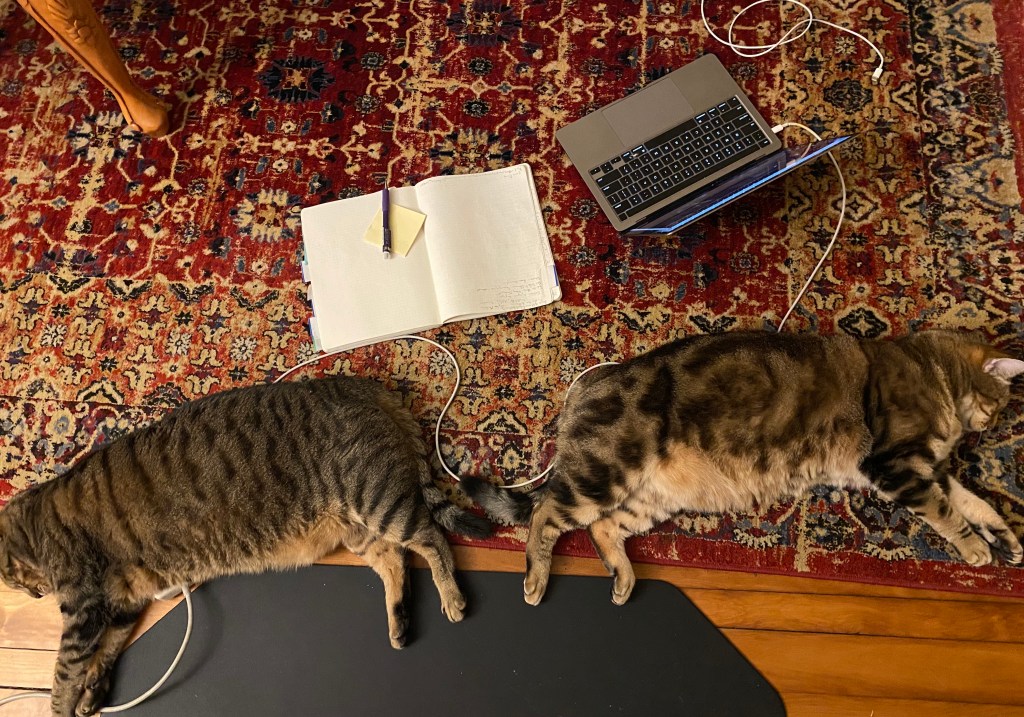
May, and I’m kicking a few pieces of firewood in my wood stove, pleasing the cats on the red rug, luxuriating in keeping the door to our glassed-in porch open, the heat pushing into this three-season (but really one-season) tiny room.

We are in the days of lengthening light, spring exuberance. The sun rises crimson. A young woodchuck grazes on the lawn, then wanders into our fire pit, curious perhaps about us humans, or simply searching.

I am a gardener; we are outright foes. But this morning, my cat Acer and I watch the woodchuck through the window beside my desk, the morning’s cool pushing in through the screen. Acer steps on my keyboard, rubs his head against my elbow, reminds me that I left him for a few weeks.

I’m still thinking of that window in the apartment where we stayed in Florence. On the tile floor, the tall window open, I watched dawn flow over the red roof tiles, the pigeons sweeping over the roofs. I live in the world of the hermit thrush, mewling catbirds, carmine cardinals. A friend tells me she plans to cover her apple tree with a bedsheet tonight, to ward off the frost. Huh, I think. May.

Consider your origin.

— Dante