‘In sorrow, pretend to be fearless.’

In Praise of Coldness

“If you wish to move your reader,”
Chekhov said, “you must write more coldly.”

Herakleitos recommended, “A dry soul is best.”

And so at the center of many great works
is found a preserving dispassion,
like the vanishing point of quattrocentro perspective,
or tiny packets of desiccant enclosed
in a box of new shoes or seeds.

But still the vanishing point
is not the painting,
the silica is not the blossoming plant.

Chekhov, dying, read the timetables of trains.
To what more earthly thing could he have been faithful?—
Scent of rocking distances,
smoke of blue trees out the window,
hampers of bread, pickled cabbage, boiled meat.

Scent of a knowable journey.

Neither a person entirely broken
nor one entirely whole can speak.

In sorrow, pretend to be fearless. In happiness, tremble.

— Jane Hirshfield
Our Moon Shone on Helen of Troy, Too.

Rain falls in the night, a pattering through the open window on the mock orange bush. The rain winds through my half-asleep dreams of different places I’ve lived with open windows and falling rain. I’ve often thought of the moon as my constant, my anchor in the arc of the universe. Moonbeams fell on Helen of Troy’s face, too. But spring’s gentle rainfall? Such a sweet sound.

A rouge frost browned pieces of our May world, and the rain promises deeper green. The morning after the frost, a man in line at the post office told me he’d lived in Vermont all his 63 years and had seen frost in July. I detailed the frost damage to my daffodils; he shared his apple blossom woes.

July? I asked, are you sure?

He laughed, quite sure indeed.

As I lay listening, the morning songbirds began, a snippet, then a rising thread of song, pushing away the night.

May, Fire, Frost.

May, and I’m kicking a few pieces of firewood in my wood stove, pleasing the cats on the red rug, luxuriating in keeping the door to our glassed-in porch open, the heat pushing into this three-season (but really one-season) tiny room.

We are in the days of lengthening light, spring exuberance. The sun rises crimson. A young woodchuck grazes on the lawn, then wanders into our fire pit, curious perhaps about us humans, or simply searching.

I am a gardener; we are outright foes. But this morning, my cat Acer and I watch the woodchuck through the window beside my desk, the morning’s cool pushing in through the screen. Acer steps on my keyboard, rubs his head against my elbow, reminds me that I left him for a few weeks.

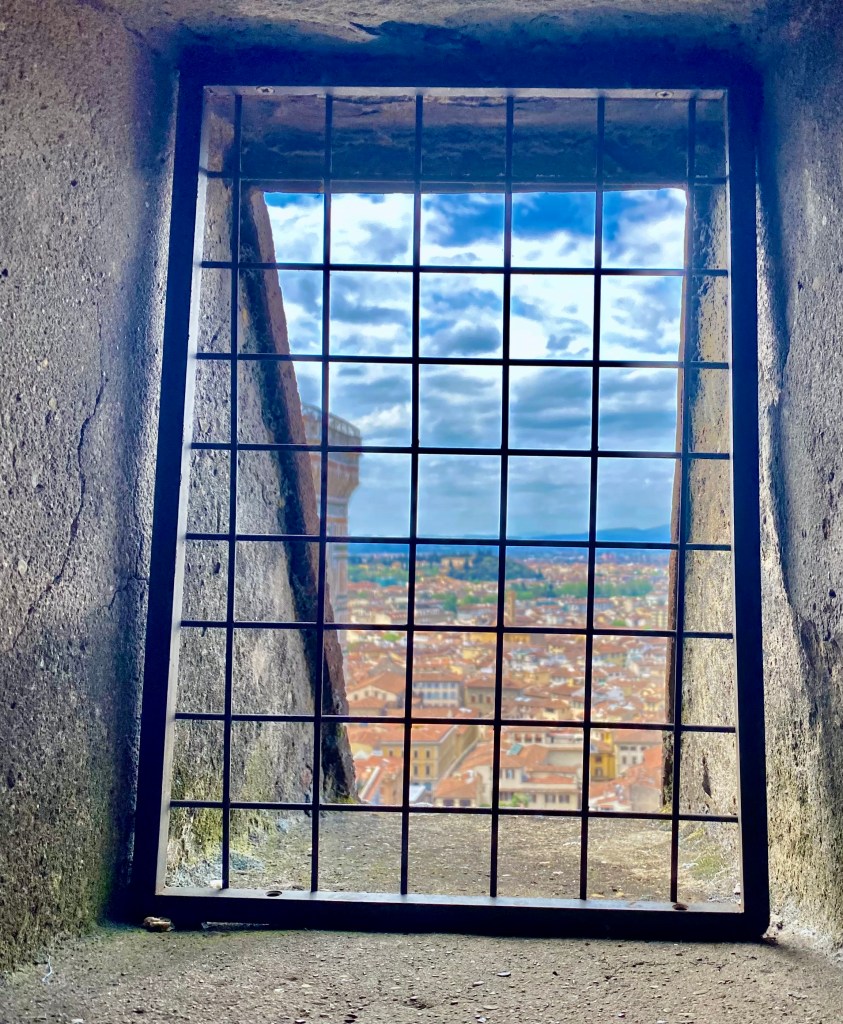
I’m still thinking of that window in the apartment where we stayed in Florence. On the tile floor, the tall window open, I watched dawn flow over the red roof tiles, the pigeons sweeping over the roofs. I live in the world of the hermit thrush, mewling catbirds, carmine cardinals. A friend tells me she plans to cover her apple tree with a bedsheet tonight, to ward off the frost. Huh, I think. May.

Consider your origin.

— Dante

Revision.

On the most perfect spring morning, I’m driving along route 107, a stretch of highway I’ve always loved that curves along the river. I’m listening to a This American Life story about two boys (and if you listen, listen all the way to the end, please), when the revision path for my novel abruptly unfolds before me, like a Jacob’s Ladder toy.

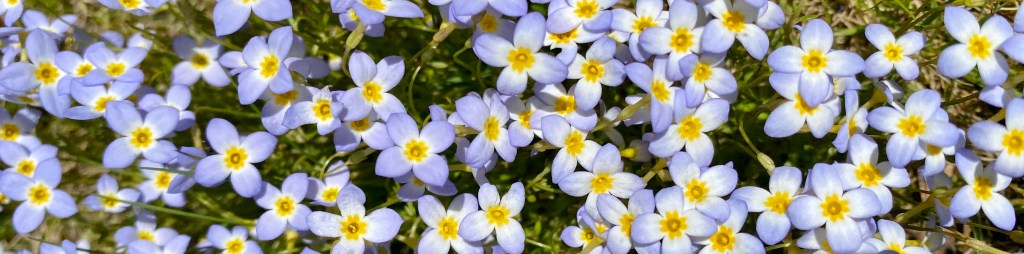
I’m in somewhat familiar territory, and so I pull over and scrawl down a few sentences. The day is suffused with dandelions and violets. I get a little lost to where I’m going, but not too lost. Later, I take a different road home, up route 100 along the White River Valley. Last year’s corn stubble patterns black fields that stretch to mountains where leaves freshen the gray with new green. The fruit trees are blossoming. I stop and finish the remains of my sandwich —pickles and sprouts and a coarse sharp mustard — keeping company with pink petals and pollinators.

My lunch companion remarked how a forest will do what a forest will. As I eat, I remember how poet David Budbill railed against writers taking themselves too seriously. He wrote, wrote hard, wrote productively, and revered the mystery of the imagination, the murkiness of creativity. His advice to writers, “Don’t think. Listen.”

On my way home, I listen to another This American Life story about a bird who sang to itself. I’m not making this up.

Snapper.

On the way to my oldest daughter’s apartment for dinner, cars stop in the highway. A woman waves frantically for us to slow, slow. A few years back, on a Monday morning, I had pulled over at nearly this precise place. A car was flipped upside down in a roadside ditch. A passing motorcyclist stopped, too, and we walked around the car, then up and down the road.

This afternoon, a man walks behind a snapping turtle, guarding it safely across the pavement.

I’ve been in Woodbury all afternoon, back at the school and the library where I once spent so many hours, so much of my life for a few years. Seeing the turtle, my daughter laughs. So much has happened to us in these past few weeks, these past few years. For now, though, this return to May and spring and turtles on the move. Merry month of May…

History says, Don’t hope
On this side of the grave,
But then, once in a lifetime
The longed-for tidal wave
Of justice can rise up,
And hope and history rhyme…

— Seamus Heaney

Cinque Terre, Italy

We leave our dear friends in Switzerland. That morning, we walked in the forest among mighty mountains with their cat.

In Italy, the trains are jammed. We enter the wrong car. In a mixture of languages, people pass luggage back and forth. Lemons bend down tree branches here. We eat creatures from the sea. Such a long way we have come, to this world of color and wisteria fragrance. Cats sun themselves on ancient stone walls.