Crossroads.

I park at a dirt crossroads this weekend beside a former tavern and walk up the hill to the Old West Church. The sunny afternoon speckles through the roadside maples, and I meet others doing what I am, in pairs or singly, and we greet each other, cheerily. At the Old West Church, I hear two terrific poets, but on my walk back to the tavern the line that runs through my head is from a Franz Wright poem, There is but one heart in my body, have mercy/on me, an incantation.

I keep thinking of my dead mother on this radiant Sunday, my mother who pulled her last breath a year and a half ago, hardly a hopscotch jump ago. In my mind, I’m building the architecture of what I’ve tagged as this Cancer Atlas I’m writing, scaffolding this book’s bones. The book is about the here-and-now, about living (at least for now) through a terrible disease, about walking along Vermont’s autumn-gold back roads, about pulling up this summer’s frost-killed pepper plants that produced so bountifully this summer. And my mother? As I work, I think so often of her, this woman both generous and mercurial, the double blade I harbor in my own heart. Gracious, how much she’d enjoy this picturesque walk. She was a woman who loved old churches, was fascinated by adjacent cemeteries, who would have relished the art in the tavern.

At the tavern, I linger in an open doorway, talking with a curator, drinking iced tea from a half-pint jar. My mother would have drunk the wine, feasted on the cured meat and seeded crackers. Dust kicks up in the road. Old friends appear, and we joke about winter’s ferocity. It’s always a crossroads, isn’t it?

“We are created by being destroyed.”
― Franz Wright

“Listen, no one signed up for this lullaby…”

Incantation of the First Order 

Listen, no one signed up for this lullaby.  
No bleeped sheep or rosebuds or twitching stars  
will diminish the fear or save you from waking  

into the same day you dreamed of leaving—
mockingbird on back order, morning bells 
stuck on snooze—so you might as well  

get up and at it, pestilence be damned.  
Peril and risk having become relative, 
I’ll try to couch this in positive terms: 

Never! is the word of last resorts, 
Always! the fanatic’s rallying cry.  
To those inclined toward kindness, I say 

Come out of your houses drumming. All others,  
beware: I have discarded my smile but not my teeth.

~ Rita Dove

Following the Bear.

Mid-August, the mornings are cool, the leaves of the pin cherry tree sparkling with dew. I find a bruise on my bicep; the cancer’s returned? But no. I remember I snagged my arm on the garden fence. Mid-August suddenly and the tomatoes are ripening. Last year, watching the full solar eclipse in our yard, the eclipse’s heart revealed this world’s ineffable beauty: such pure gold. Likewise, surviving cancer (thus far) revealed for me that knife of mortality within me, within all of us, hidden, ever-present.

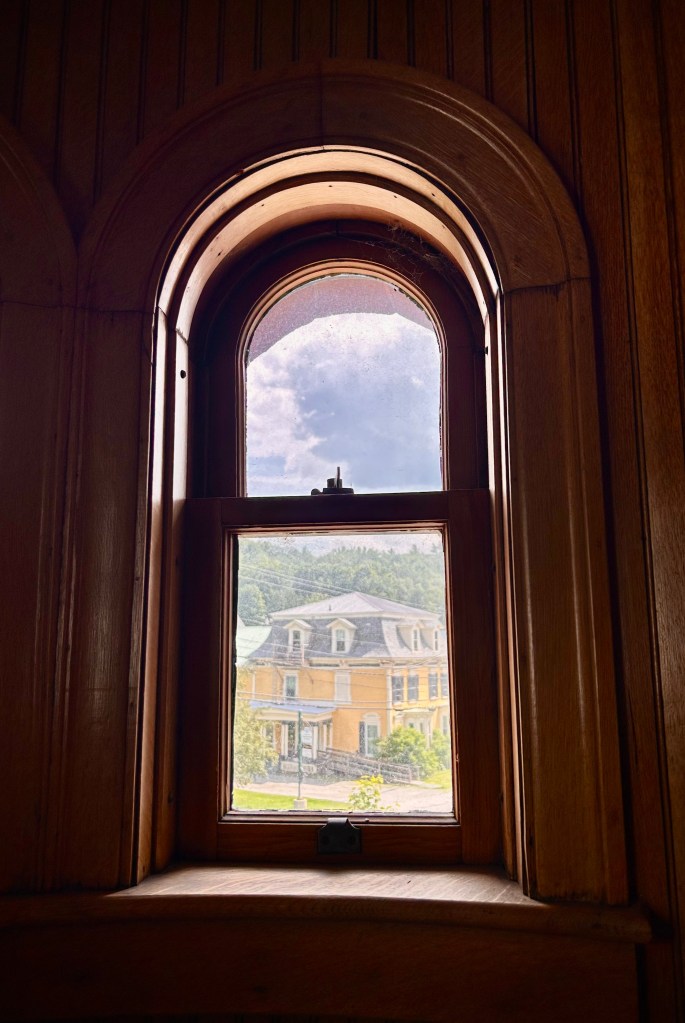
Mid-August, mid-afternoon I’m drinking lemonade on a bakery porch and staring across the street at a house nearly obscured by sunflowers and globe thistle. I’m curious as heck about this Italianate with ornate corner boards. Who built this and who lives here now, and is the yard’s intent to cultivate wildness, or is no one at home?

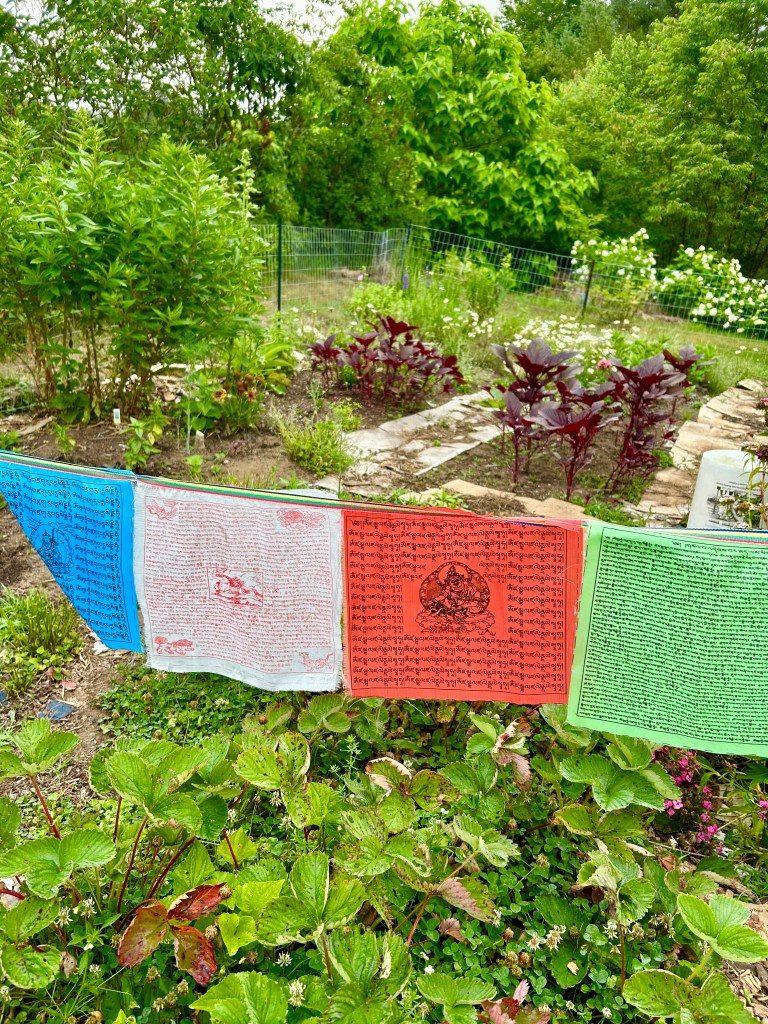
My companion and I are talking about hard stuff, a third novel I’ve sent off to my publisher, the book I’m drafting now, about disease and suffering and how to wring meaning from misery. I’m compelled to write this book; writing this book looms impossibly. The afternoon’s quite hot, but by late afternoon the air will settle and cool. Nights, I walk after sunset, the crickets and tree frogs clamorous. I keep thinking about that house (empty or not?) and the thin line between wild and domestic. Here, this border has blurred. Will I cut the pin cherries to widen the canopy of the walnut tree I planted? The rose bushes seek a crack in my house’s foundation.

Wiser now, or maybe simply tired, I care less about the wild honeysuckle and raspberry canes that fortress around my house. I’m no Rapunzel, squirreled away in a tower, waiting for her Prince Charming. The hungry bear tunnels through the undergrowth, showing me a way.

Summer night—
even the stars
are whispering

~ Issa

Our World for this Moment.

In the Heidi book that I read over and over as a girl, Heidi’s invalid friend Clara visits the Swiss Mountains and becomes healed. These days, hiking in the New Mexico mountains, I keep thinking of this child’s book. In the high desert country, hiking through an aspen forest, I forget I’m in recovery, forget that scar on my abdomen, forget everything but the breeze against my cheeks, the desert sand and stone beneath my soles.

This is a family trip to see my aging father, with all the sweet and bittersweetness of family. Here’s hoping all of you are enjoying July wherever you might be. For me, too, these trips make the journey home happy.

“If you take a flower in your hand and really look at it, it’s your world for a moment.”
― Georgia O’Keefe

In the great [and holy] darkness.

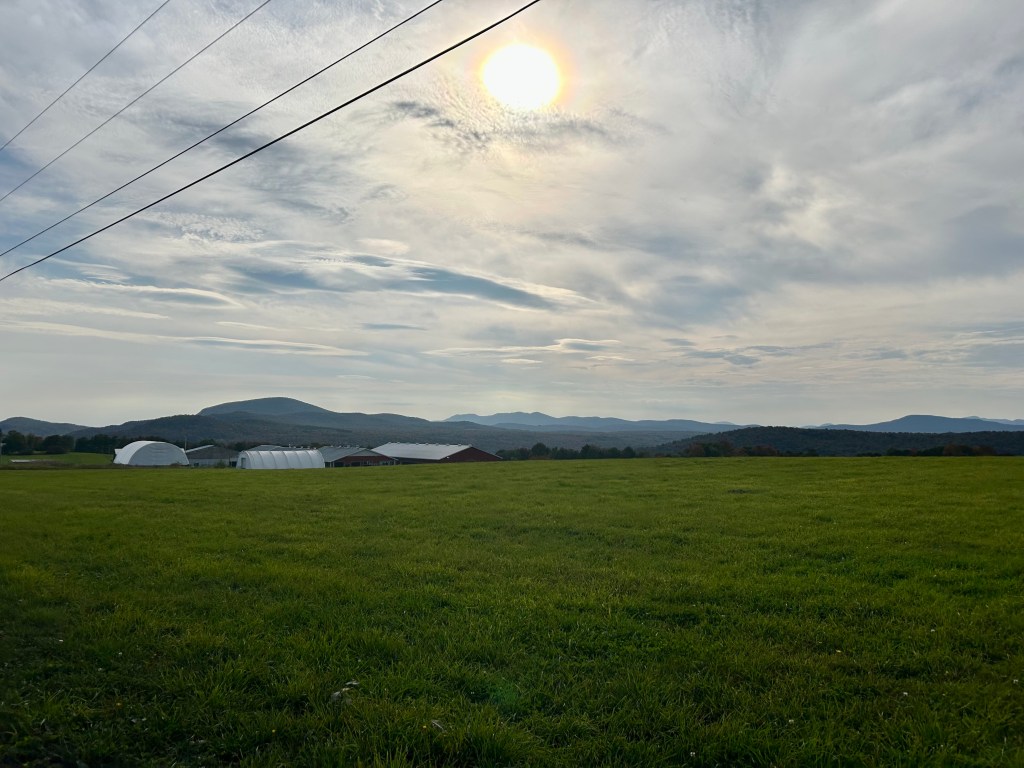
In these sultry July days which I love, I walk in the evenings. Wildfire smoke from Canada renders the sun bloody. In the heat, there’s few folks out. I often follow the trail along the river to the pastures where cows graze. The air, fat with humidity, is redolent with wet earth and cowshit. The smell reminds me of those childhood camping trips and those journeys in my twenties when we explored the West, driving around with Rand McNally and pitching a tent in a forest or farmer’s field.

The world indeed might be going mad, the planet hurtling into fire and heat. On these July evenings, though, it’s me and those cows and the wildflowers blooming rampantly. In the night, rain patters. I leave the cats sleeping in their hot fur and slip outside. It’s so far along in the night that this village is sleeping, too early yet for milk trucks, too late for teenagers. I sit on the steps in the tiny cool bits of raindrops, tree frogs and crickets chorusing.

I’ve posted this poem before, but Hayden Carruth is always worth reading again, and this remains one of my favorites.

The Cows at Night

The moon was like a full cup tonight,
too heavy, and sank in the mist
soon after dark, leaving for light

faint stars and the silver leaves
of milkweed beside the road,
gleaming before my car.

Yet I like driving at night
in summer and in Vermont:
the brown road through the mist

of mountain-dark, among farms
so quiet, and the roadside willows
opening out where I saw

the cows. Always a shock
to remember them there, those
great breathings close in the dark.

I stopped, and took my flashlight
to the pasture fence. They turned
to me where they lay, sad

and beautiful faces in the dark,
and I counted them–forty
near and far in the pasture,

turning to me, sad and beautiful
like girls very long ago
who were innocent, and sad

because they were innocent,
and beautiful because they were
sad. I switched off my light.

But I did not want to go,
not yet, nor knew what to do
if I should stay, for how

in that great darkness could I explain
anything, anything at all.
I stood by the fence. And then

very gently it began to rain.

Living in the Edge.

As part of my heal-from-cancer and keep-the-cancer-from-returning approach, I borrow my daughter’s yoga map on Thursday mornings and walk through the cemetery and along Little League field to the village. The studio is above the town’s coffee shop. The windows frame the town’s main intersection of routes 14 and 15, the Lamoille River, flanked by July’s burgeoning green.

As I lie on the polished maple floor, the sound of the traffic comes and goes. This calmness reminds me of those years I lived in Brattleboro, pre-internet, when the main source of my twenties’ activities was walking to the public library or a favorite bar, hiking, or hanging out with my roommates in the house we rented, running our mouths about the state of the world. There was a lot of laughter, a whole lot of discussion about morals and relativity.

This particular Thursday is the anniversary of the floods in 2023 and 2024, exactly a year apart. The class leader repeats a theme of in the edge, that fertile and sticky place between terrains. I think of this summer’s profuse wildflowers – trefoil and asters and Canada lilies – that spread between the river and the fields. Afterwards, I spread out my notebooks and papers and laptop in the coffee shop, plunge into a hard piece of work. I’ve no illusions that yoga will set me floating down any peaceful river. The edge, that complicated habitat, has long been my domain. Friends appear and tell me they’ve sold their house, are pulling up stakes and heading overseas. Around me, people come and go, talking and eating, figuring out or not figuring out parts of their lives.

Later, at home, the catbirds screech. A robin perches on the porch railing and studies me. The woodchucks scurry under the steps from den to woodpile, or have they slowed to a who-gives-a-damn saunter?

Winter, the edge terrain is a cold beast. July, I’m all in…

“Not so much a game
as a sphere,
a mystery.
Held up to light,
a small hole
into another dimension.” ~ Ruth Stone