Vermont’s Foundation: Freedom and Bread

A possum circles in the highway, no doubt startled by my headlights. It’s past midnight, and no soul’s around. I drift into the other lane and let the possum do what it wants to do.

I’m listening to the radio playing the Rolling Stones and thinking of a David Budbill poem I read that afternoon, about Vermont’s colonists and centuries of following folks, seeking freedom and bread. The possum is definitely seeking her or his own version of possum bread, but freedom…? The question looms large. I haven’t far to drive this night, but the words stick with me — bread and freedom — surely two of the main drivers in my life, likely in yours, too.

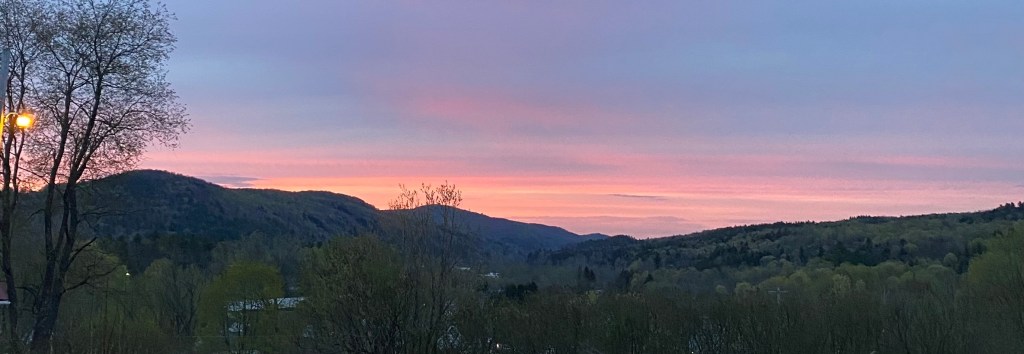
The peepers are lusty along the Lamoille. The air reeks of wet mud, of that sweet fecundity of spring.

At home again, we lie down with the windows open. I hear the teenagers talking and laughing before they slip into the thickness of young sleep. To ward off the night’s gloom and cold, I’d started a small fire in the wood stove. Through the open window now drifts smoke. In these May days — both hot and chilly — I’ve moved my wood piles, again, as I tend to do, raking the bark and broken bits to dry in the sun. Foolish, perhaps, to keep a fire smoldering while the bedroom windows are open. Or maybe simply a kind of freedom.

What Is June Anyway?

After three weeks of hot weather and drought,

           we’ve had a week of cold and rain,

just the way it ought to be here in the north,

            in June, a fire going in the woodstove

all day long, so you can go outside in the cold

            and rain anytime and smell

the wood smoke in the air.

This is the way I love it. This is why

           I came here almost

fifty years ago. What is June anyway

          without cold and rain

and a fire going in the stove all day?

— David Budbill
Our Moon Shone on Helen of Troy, Too.

Rain falls in the night, a pattering through the open window on the mock orange bush. The rain winds through my half-asleep dreams of different places I’ve lived with open windows and falling rain. I’ve often thought of the moon as my constant, my anchor in the arc of the universe. Moonbeams fell on Helen of Troy’s face, too. But spring’s gentle rainfall? Such a sweet sound.

A rouge frost browned pieces of our May world, and the rain promises deeper green. The morning after the frost, a man in line at the post office told me he’d lived in Vermont all his 63 years and had seen frost in July. I detailed the frost damage to my daffodils; he shared his apple blossom woes.

July? I asked, are you sure?

He laughed, quite sure indeed.

As I lay listening, the morning songbirds began, a snippet, then a rising thread of song, pushing away the night.

Random Spring Scrawlings.

Back about a hundred years ago when I started to read, my elementary school had these large books with colored pages. I read only on the right-hand pages, then flipped the book upside down, and read on the other side. The net effect was a perpetual mystery: I was reading forward, but there was always this tantalizing upside down text on the left-hand side. Could I dart my eyes there and jump ahead in the storyline?

The storyline had castles and princesses. I think of these books every spring, because Vermont spring colors are so darn brilliant — just like those colored pictures.

I’ve never seen those books again, although I searched for them for my own daughters.

May. Let’s never sugarcoat anything, never cheapen our world into an Instagram I’ve got more than you post. Snowflakes fell yesterday, even midday, swirling flakes. My daffodil petals were gnawed around the edges this morning. But it’s May. Spring alone: reason to live.

Language of Loons.

Midwinter, I was working in the coffeeshop a few minutes’ walk from our house when a woman I once knew fairly well came in. We had started a preschool together, been in and out of each other’s houses, seen each of the other through a pregnancy.

While waiting for her coffee, she sat beside me and said my name, Brett, and that she wanted to mend the falling out between us.

I folded my notebook closed. I had a few more minutes before I needed to leave, and I could see I wasn’t going to put my pen to paper again that morning. We compared notes about a house fire. Our memories lined up with surprising accuracy, all the way down to slight and little things. And then our memories diverged, abruptly. We’ve both divorced, both moved, and yet the ashes of that fire lay deeply in each of our lives.

Midday today, I hurried along one of my favorite walks around the lake. Me and the bright daffodils, the cheery trout lilies, the striking bloodroot. As I walked through the woods, the loons called around the lake. Once upon a time, I would have heard their language as decorative sound, sweet ambiance. Today, I stopped, alone in these woods where the leaves haven’t yet spread out for the season and the sunlight dropped on my face. I understood the loons as much as I understood my old acquaintance, maybe as much as I understand myself, as they sang across the water, their voices echoing against the mountains.

I hear

outside, over the actual waves, the small,

perfect voice of the loon.

— Mary Oliver

Remember.

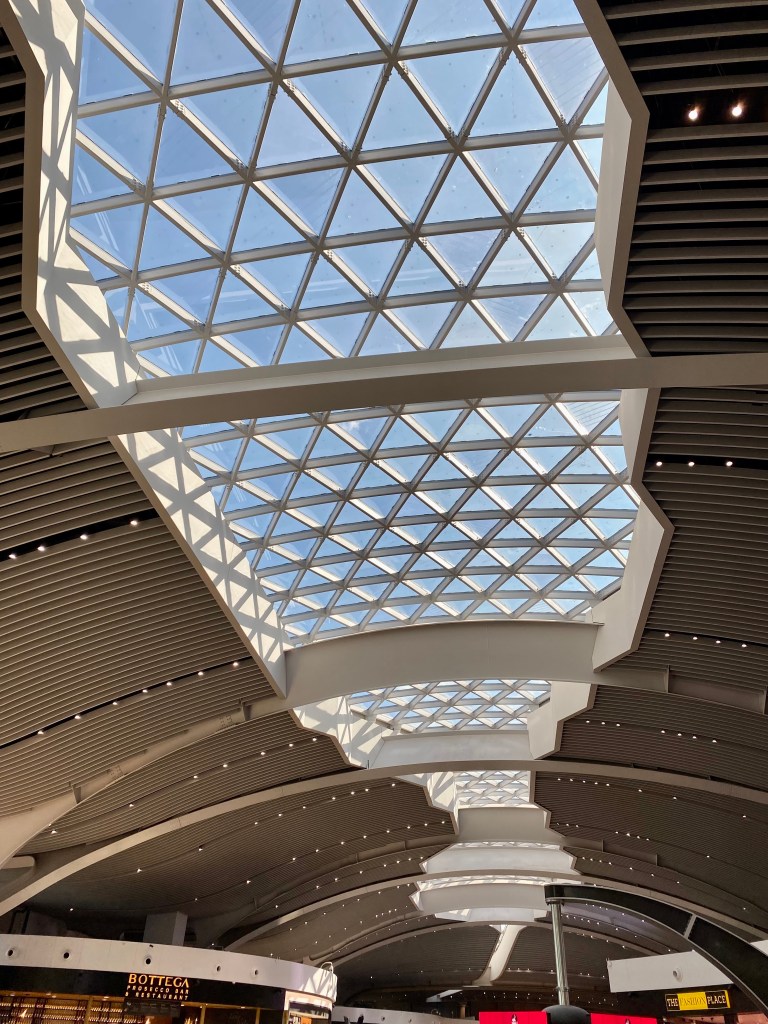
Not long after dawn, under circling pigeons, we get on a train to the Rome airport. I’m nearly certain our tickets aren’t valid. My phone’s app shows me a mixed message of a cheery You’re all set! and a stern Seats reservations required! I can’t figure out where the tacky-tacky box to check to shell out for reservations might hide. The train car is nearly empty. My daughter and I sprawl out with our suitcases and backpacks. In a luminous honeyed light, the train winds out of Rome. We pass immense apartment buildings with balconies crammed with tables and chairs, hanging plants, yesterday’s laundry.

A conductor walks by, returns and holds out his hand. He speaks to me in Italian. I answer in the one language I command and point to the cheery sentence on my phone. The train picks up speed.

“Remember,” he tells me and disappears into the next car.

Remembering has always been my strength and my weakness.

As a girl, my family used to take the train from New Hampshire to Boston for the day, excursions crammed with cobblestone streets, swans, pastries, history, the ocean’s salty breeze. On this Italian train, my daughter, 17-on-the-cusp-of-18, presses her suntanned face to the window. Crimson poppies bloom along the tracks. Before we left on this trip, a friend told me the adage about pedestrians in Rome — the quick and the dead. Quick we are this morning, on this train with our baggage of wrinkled clothes, a few gifts, those library books I finished reading. A man stands on a sidewalk, smoking a cigarette, studying the train as we sway along.

The next morning, not smoking a cigarette, I stand beside an apple tree in my yard, studying a woodchuck who’s set up housekeeping in a den, the creature returning my gaze, eyes glossy, inscrutable.

Espresso.

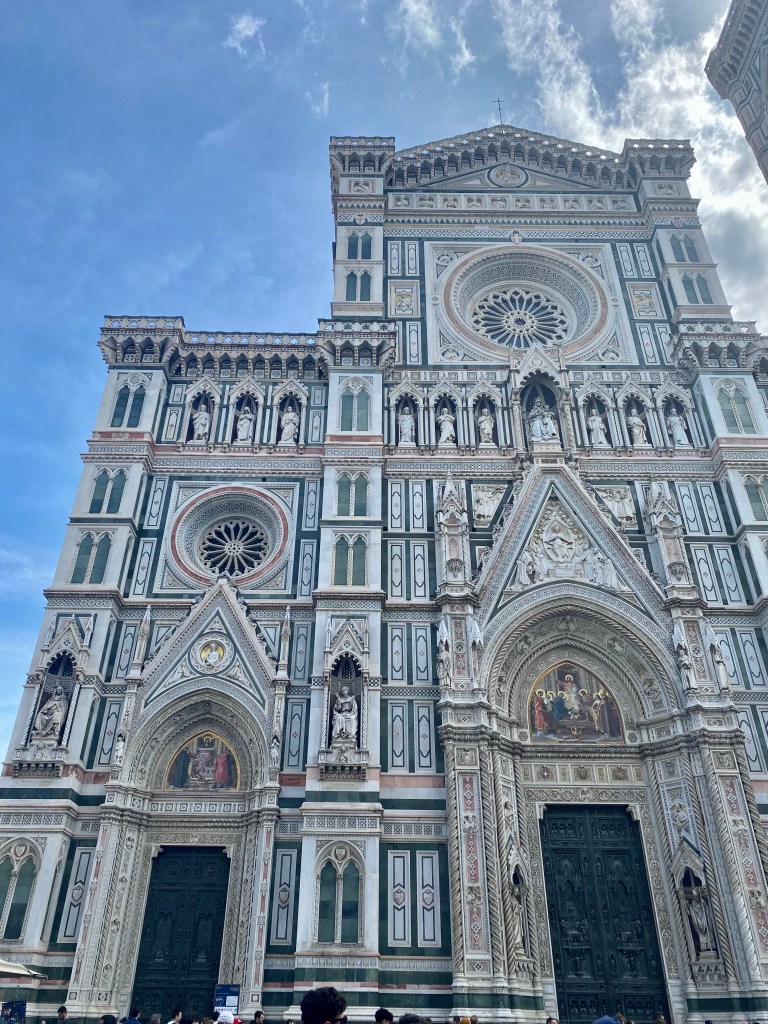
Florence is crammed with tourists. My daughter and I sit on a stone bench in the shade and watch pigeons and people. Midday, we climb stone stairs into the duomo while the organ plays. I’ve never been in a structure like this, such an awesome concert of art and size, art and music. My daughter whispers, You’re going to keep talking about the organ, aren’t you?

Later, we eat pizza. At our table, strangers strike up a conversation with us, give my daughter wine, offer shopping and college advice, and an espresso appears before me. I lift the tiny white cup and drink the brew.