Pigeons.

On the train to Florence, we strike up a conversation with a couple from Australia who are traveling with both their mothers. He’s interested in American universities and chats with my daughter about dorms and loans and degrees. He’s in banking. His wife works from home and hasn’t gone into the office in two and a half years. Sometimes, she says, she stands in the backyard and talks to the birds for company.

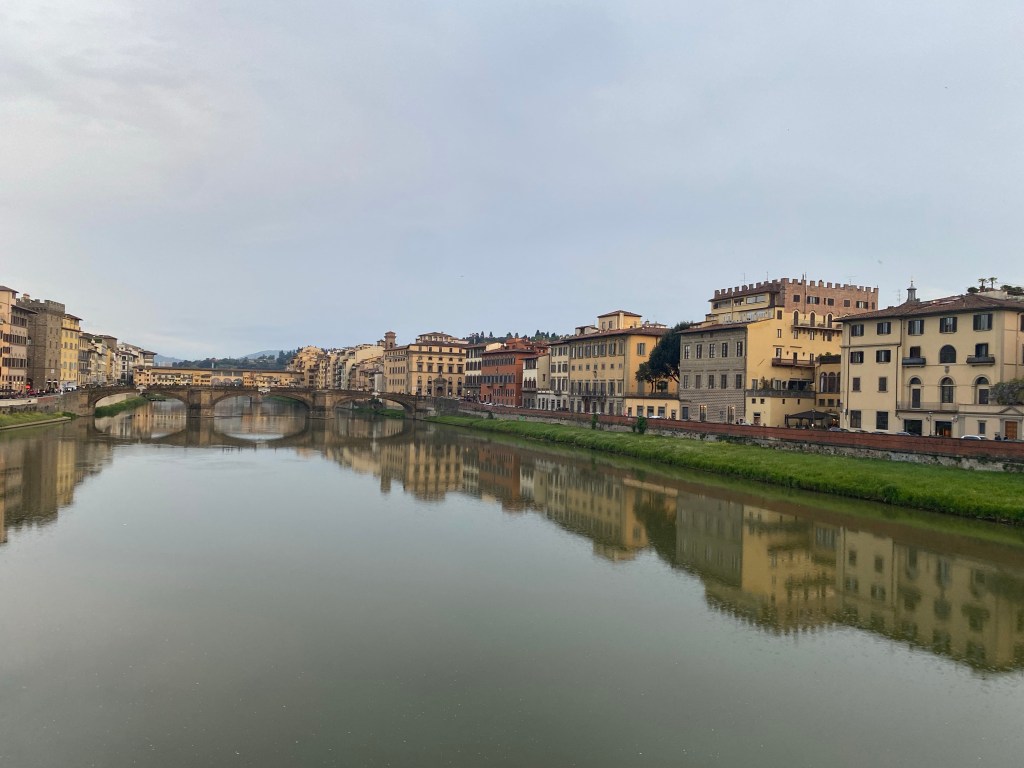
In Florence, our windows look over red roof tiles. Pigeons nestle in the ivy.

The Past, Rising, Falling.

The news here is that the peepers have returned. In the evening, I walk past the two ballfields where the little kids and then the big kids are playing baseball, and up the hill where pavement turns to dirt. Right at the edge of town, there’s a neighborhood where people are living rough. Along the roadside, I spy empty milk cartons and a clear plastic bag jammed with Christmas bows. There’s a swathe of hemlock and cedar, and then the fields and maples begin.

A few days before, I was writing in the local coffee shop when a woman I once knew fairly well stopped in. She sat down with her latte, and we talked for a little bit about the nursery school we once started and where our kids are now.

Then she turned the conversation and acknowledged that something lay between us. I closed my laptop and slid it in my backpack. We spoke about a fire, a burned construction site, a rekindling of the fire, and losses to both our families. It’s early morning yet. We’re in a corner by the window. The baristas are laughing at the counter, and no one can overhead our words. Quickly, we pair up our memories, and it’s shocking how our memories sync of that time. Until we diverge. We pause at the mention of the third family. I have about a 100 questions I want to ask. My shock appears mirrored in her eyes. She’s forgotten all about her coffee.

How do you ever understand the past? We’ve both divorced, moved houses and towns, raised children, created new working lives. And yet there it is, running like a subterranean stream, the past.

Her acquaintance walks in, and she stands up. I slip my notebook in my backpack, say goodbye, have a nice day to the barista, and walk down the sidewalk to the post office.

Talking.

Old friends/neighbors appear on the other side of the cemetery fence. She’s wearing shoes with a hole in one heel and steps carefully through the patchy snow that remains. In the thin late afternoon sunlight, I’m in the brown garden, searching for nubs of green, an elbow of garlic, a toe of daffodil. It’s been so long since I’ve seen these people, in that long ago time known forever now to us as pre-pandemic, that I need a moment to determine, yes, yes.

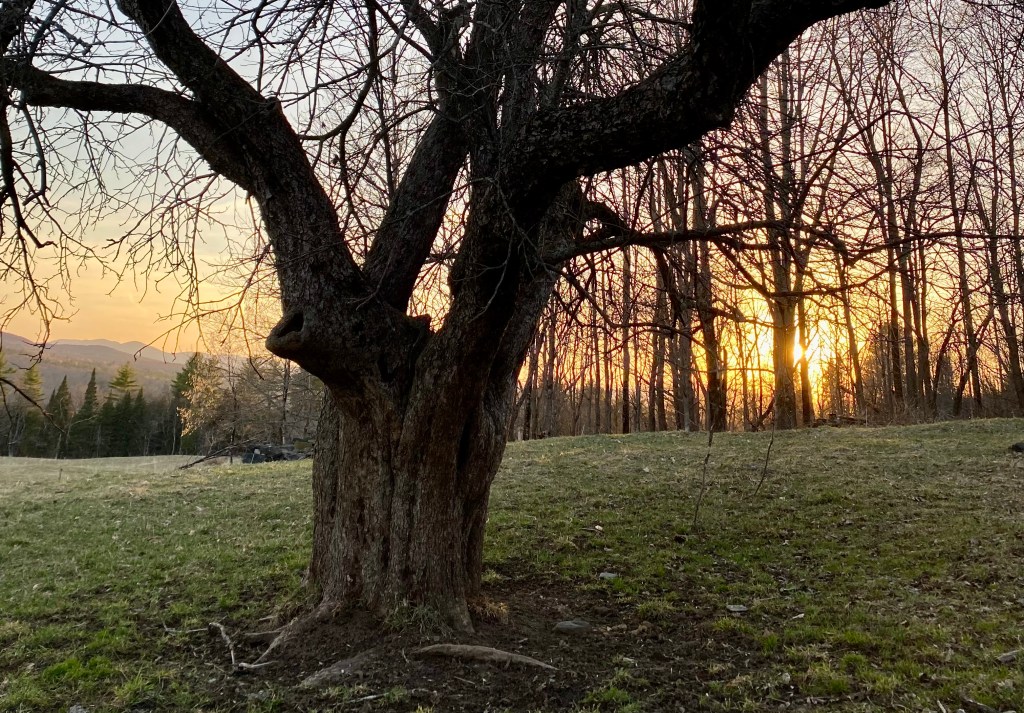
We are all three of us worse for wear, but they dive right in, talking about my house and the wood piles, the forsythia I planted that’s sprung crazy, the picnic table beside the apple tree. Things have happened here. Life has gone on.

He leans on the fence where my youngest tied a pink strip of old t-shirt years ago, marking where she and a friend planted a time capsule. What’s in there I can no longer recall, and likely she can’t, either.

Six years ago, in April, I decided to move into this house. No one was living here then. I leaped over the fence and tore a hole in the back of my leggings. I headed to work afterwards, and the kids teased me. What have you been doing? That April was a warm one, too. I leaned against the house and studied the declination of sunlight as I guessed it would rise.

As we talk, the wind picks up. The robins are ecstatic in the neighbors’ maples, really belting out their songs. Overhead, the turkey vultures float, eyeing us. We keep talking, tossing at each other, “remember this? remember this?” Oh laughter….

The bud
stands for all things,
even for those things that don’t flower,
for everything flowers, from within, of self-blessing…
— Galway Kinnell
Plot Point, Soul Journey.

My older daughter relays that she stopped for brand-new greasy donuts at 3 a.m. with her sister and a carful of teenagers headed to the airport. She parked beside a car with a man, she says, who must have lived through better moments.

We’re waiting for coffee on a Sunday morning jammed with people getting the Sunday vibe going. I make a vague comment about the soulful journey. Despite the eyerolling of my companion, I’m serious. Maybe the man was simply heading from home to work, or vice versa, but 3 a.m. in rural Vermont often means staring at a lonely emptiness where the way down leads to a few single dismal plot points, and the way up — imagination has plenty of material there. I don’t mean this in any jest, having hit a multitude of my own 3 a.m. moments; there’s a sizable respect between me and 3 a.m. Laughter and donuts, of course, are my preferred side of those moments.

April is the Vermont season of patience, of cold and thaw, and cold and more cold, of rain and the remembrance of November, the splendiferous muscle of crocuses. April is the long haul of spring, of faith in the green that tantalizes. Vonnegut writes, “The primary benefit of practicing any art, whether well or badly, is that it enables one’s soul to grow.”

No one owns the mud, either.

As the snow melts, the mud comes up. A friend says, But it’s so dirty. I think, Bring on the dirt.

On a sunny afternoon, I disappear early, head out to those secret places where I know the redwing blackbirds sing. There’s nothing I can hold in my hand, nothing I can pocket to bring home and leave on the kitchen table for my daughter, no sign of where I’ve been or what I’ve done, save for the mud that sheds from my boots on the door mat. That, too, is my affair. I sweep it up and empty the dustpan over the back deck.

“Advice from Rock Creek Park”

What will survive us
has already begun
 
Oak galls
Two termites’ curious
self-perpetuating bodies
 
Letting the light through the gaps
 
They lay out their allegiances
under the roots
of an overturned tree
 
Almost always better
to build than to wreck
 
You can build in a wreck
 
Under the roots
of an overturned tree
 
Consider the martin that hefts
herself over traffic cones
 
Consider her shadow
misaligned
over parking-lot cement
Saran Wrap scrap in her beak
 
Nothing lasts
forever not even
the future we want
 
The President has never
owned the rain

— By Stephanie Burt

A Whole Person.

Everyone has their own familiar paths and places. This empty stretch of interstate in the Netherlands between Vermont and New Hampshire my daughters and I have traveled countless times now, in all varieties of weather and moods. Now, so many years into this, one daughter is grown, the other on the cusp. My daughters look at my brother and me with a mixture of so many things — what, precisely, neither he nor I need to speculate. Laughing, he suggest to them that he and I equal a full person, our meager strengths and copious broken places complementary. I suggest, Maybe even a little more than one person….

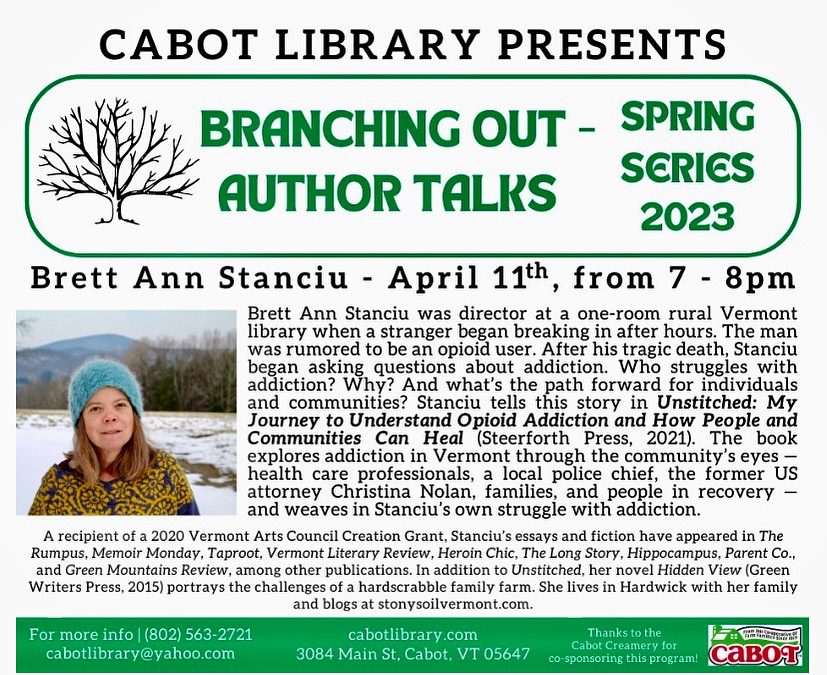
I’m grateful to be invited to read and speak at the Cabot Public Library Tuesday, April 11, 7 p.m. in a real-life deal. Come if you can.

And — definitely worth a read — Matthew Desmond’s Poverty, By America.

Poverty was a relationship, I thought, involving poor and rich people alike. To understand poverty, I needed to understand that relationship. This sent me searching for a process that bound poor and rich people together in mutual dependence and struggle. Eviction was such a process.