Breaking Ice.

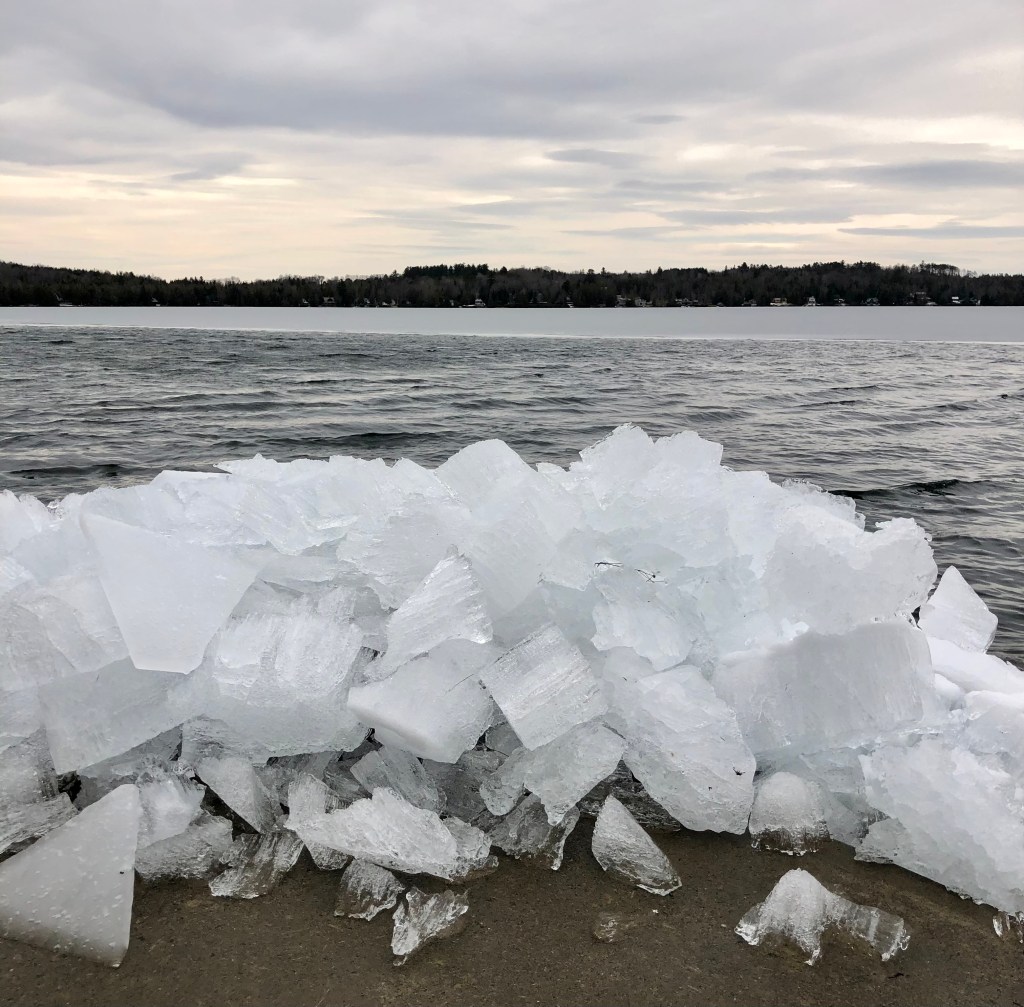
On a midday walk around the lake, I hear bits of breaking-up ice crash against a cement pier. Vermont spring — ice and green shoots, rain and rouge snow and sometimes sun.

This time of year — school break and tail-end-of-winter doldrums — many folks have flown to warmer and sunnier climates, seeking the old stand-by of the geographical cure. Around the lakes where summer folks own the large houses, hardly anyone is there, save for carpenters and roofers and painters, their pickup trucks clustered in driveways.

But the lake keeps on with its own steady world, the fierce ice gradually giving up its ghost. By the time these summer folks return, the water will have warmed again. For now, though, ice clinks as it breaks apart.

I tie my long hair back with a rubber band I found in my coat pocket. The breeze carries the damp scent of the earth, the dream of unfurling leaves, the memory of children crouched among the cedar tree roots, playing.

“The sun was warm but the wind was chill. You know how it is with an April day.”

~ Robert Frost

Not Rabbits, Hares.

Robin songs come through my open window this morning. Although I’m still keeping the wood stove at least tepidly warm, we leave the bedroom windows open all night. In this corner of Vermont, we’ve had Easters of snow, others of hot sun.

After dinner last night, we started talking about what this holiday is about anyway. My teenager pulled her sweatshirt hood over her head and scooted down on the couch. Unintentionally, she looked like a little kid again, listening to the chat around her and diving in at times.

I remembered the Easter she was four or so, and her friend from down the road came to play. The girls ran around under the giant spruce tree in our scrappy yard. When I stepped out of the kitchen to sit on the porch and talk to the girls, the little children were running around with two large snowshoe hares that were molting to brown. The girls asked me what was wrong with their fur; it was so patchy and strange. They were worried the hares were injured.

Our house was surrounded by thousands of acres of wilderness, but we had never seen hares, only their tracks all through the woods. The hares stayed for a visit that morning, running between the girls. Delighted, the girls kept calling, “rabbits! rabbits!” I moved on, distracted by whatever chore I was sure I needed to do. When I returned, the hares had disappeared. We never saw them again.

This morning, my alarm buzzed before dawn, and I lay there, wondering if I really needed to keep on with what I’m doing. Indeed, apparently, I do, although I often feel like a molting hare. The robins sang sweetly, actually for dear life. I got up to feed the cats and make coffee.

It’s been a very long two years. Savor whatever birdsongs or sweetness or coffee comes your way.

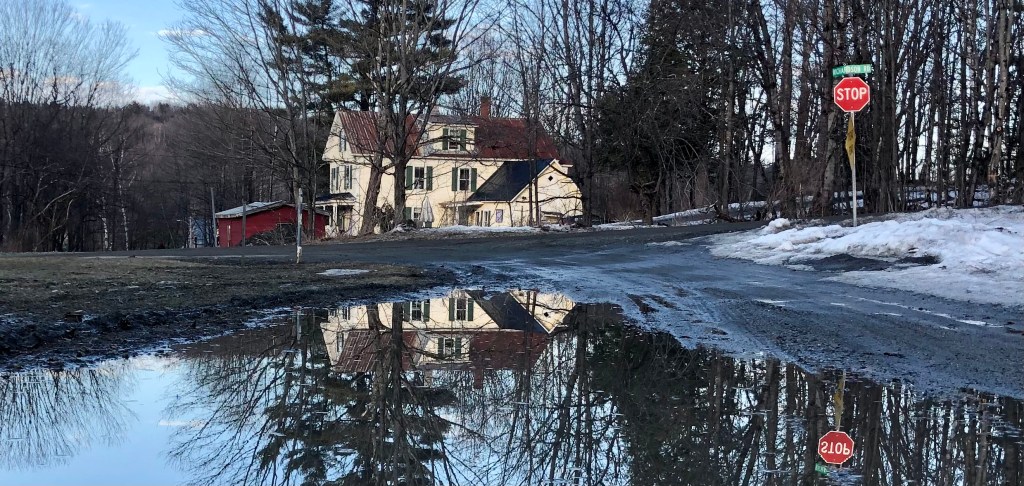
Dirty Mud Puddle.

The old yellow house where my daughter attended preschool and, one afternoon, gave me a purple pansy she had potted herself. In the scheme of our lives, such a tiny sweet thing.

In the face of such hard news overseas, this splash of sky reflected in a dirty mud puddle is all I can offer. Be well, friends. Savor sweetness, where you stumble upon it.

Ordinariness.

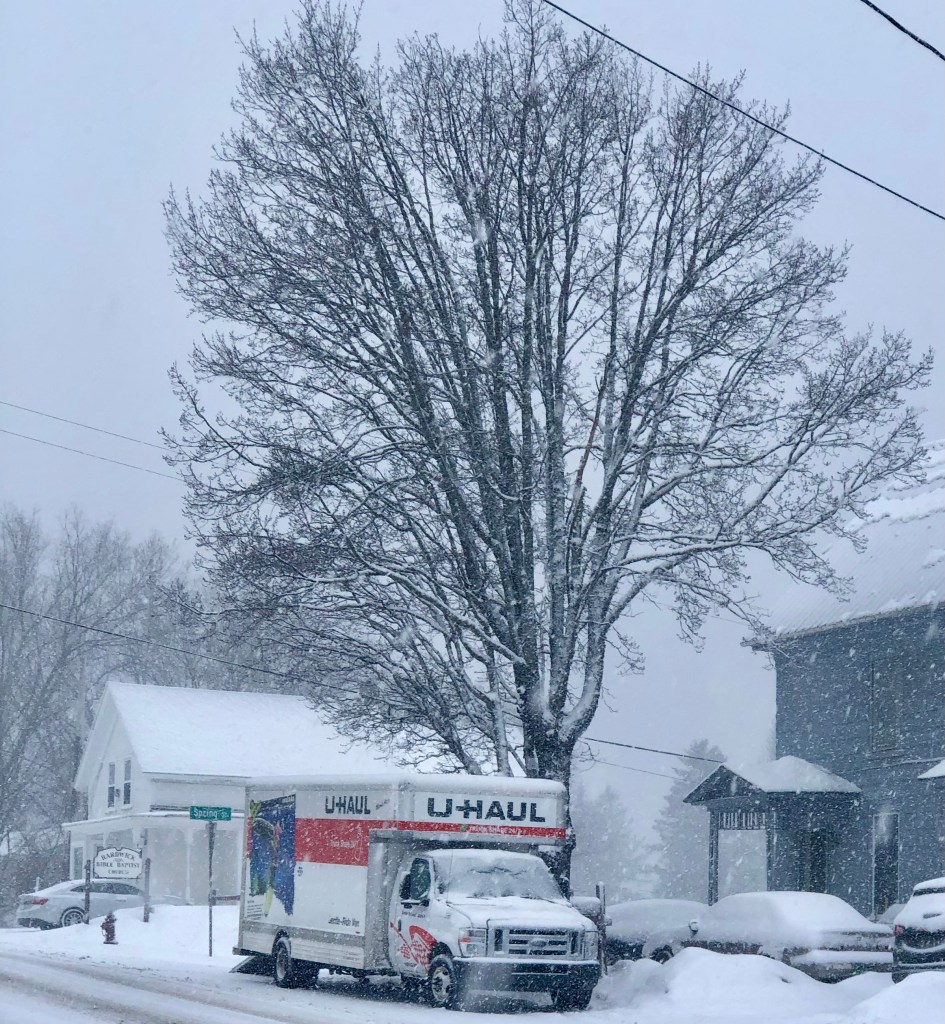
On a day of yet more snow, of wind and cold, I’m reminded that people still keep on with their lives. Living doesn’t wait for convenience.

At the post office, I mail off a copy of my book. The woman who weighs my small package insists this is “sugar snow,” an early spring snowfall that will lengthen the maple syrup season. We sugared for years, and this kind of snow always meant a break in boiling and a chance to wash filthy snowsuits. The upcoming forecast is for as near-perfect sugaring weather as possible. Sugaring is the epitome of day-to-dayness — be smart, keep your eyes open, do the best you can — with no guarantees of a good or even decent season.

We talk for a few more minutes about shoveling snow, and then I head back out into the town’s Saturday morning. On my walk home, I stop in at the coffee shop and stand in the window drinking an espresso and staring out at the traffic struggling on snowy Main Street. There’s the usual confusion of the three-way intersection so many don’t understand — two stop signs and a blinking yellow light — as if the calculus of two stops and one yield doesn’t make sense. Standing there, I wonder if it makes sense mostly to those who use these streets day after day.

A year ago, the coffee shop’s tables and chairs were closed for seating, and I wondered if I would ever bring my laptop back here, to my favorite table where I once wrote a book. A year later, here I am, drinking coffee, surrounded by maskless people laughing and talking, writing notecards, going on about their lives. On this inclement Saturday morning, that seems nothing shy of a miracle.

“The answer must be, I think, that beauty and grace are performed whether or not we will or sense them. The least we can do is try to be there.” 

~ Annie Dillard

Q&A.

My teen and I are in an office filling out paperwork and the last question asks her how apprehensive she is about dental work.

She stares at me. “Why on earth,” she asks me in her reasonable way, “would I reveal anything like that?”

I note it’s a standard question. Her answer: that’s a ridiculous question.

It’s another cold afternoon — a mostly sunny day in Northern Vermont — in a winter where cold has now dragged on well beyond its welcome. We’ve driven a little distance and taken a detour along a river whose middle has thawed. Only its shores are frozen.

A couple of decades now into parenting, I’ve observed children are formed by their parents’ lives — and not, too. She’s driving, and I seem to have taken up residence permanently in her passenger seat — a place I inhabit uneasily and definitely gracelessly. We drive and talk. Youth, I think, repeating the word soundlessly, like a mantra; I’m drawn to its utter ebullience and brashness, like the sunlight we all desperately need.

We remark on the price of gas. Our sheer luck at the happenstance of living in the Shire of Vermont right now. Of the war in cities and villages and homes on the other side of the globe.

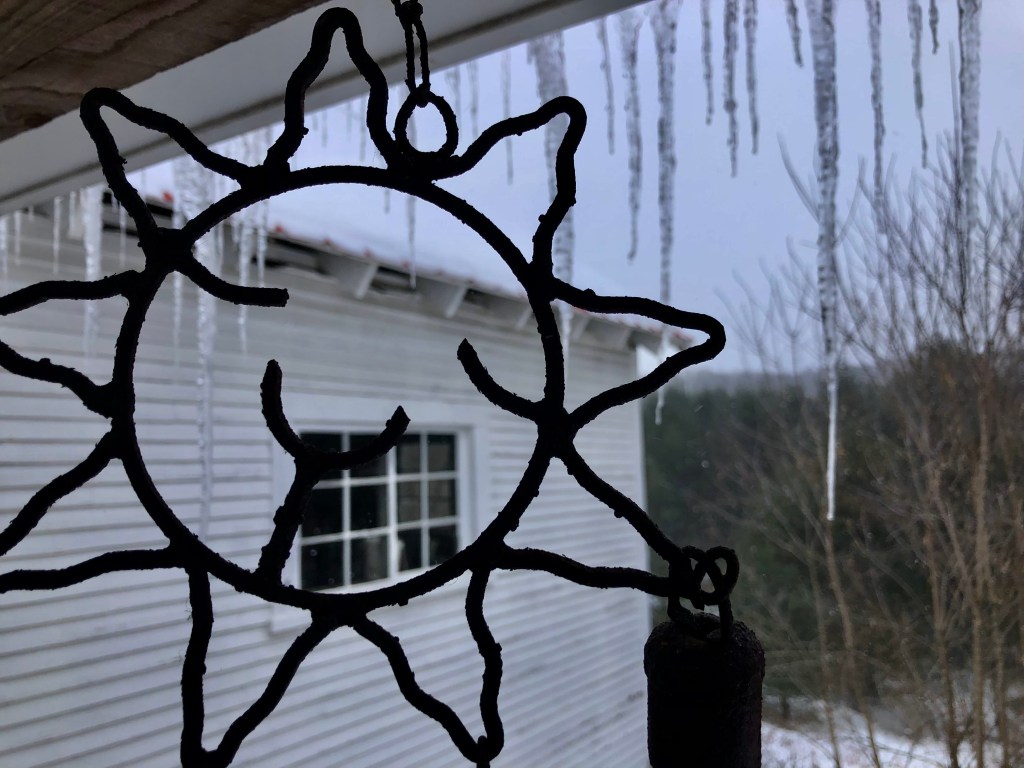
At our house, the icicles on our covered porch are exceptionally skinny and long this year. In the early morning, the ice begins falling in spires that break on the wooden porch. So many questions, and my answers are so poor. Keep asking.

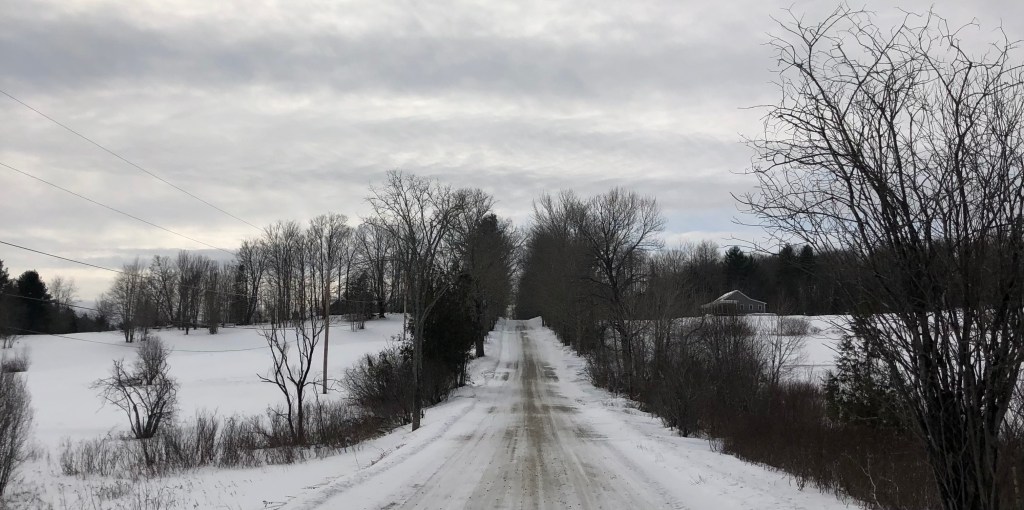
Somewhere in February. Dirt Road Land.

Kents Corners, Calais, Vermont

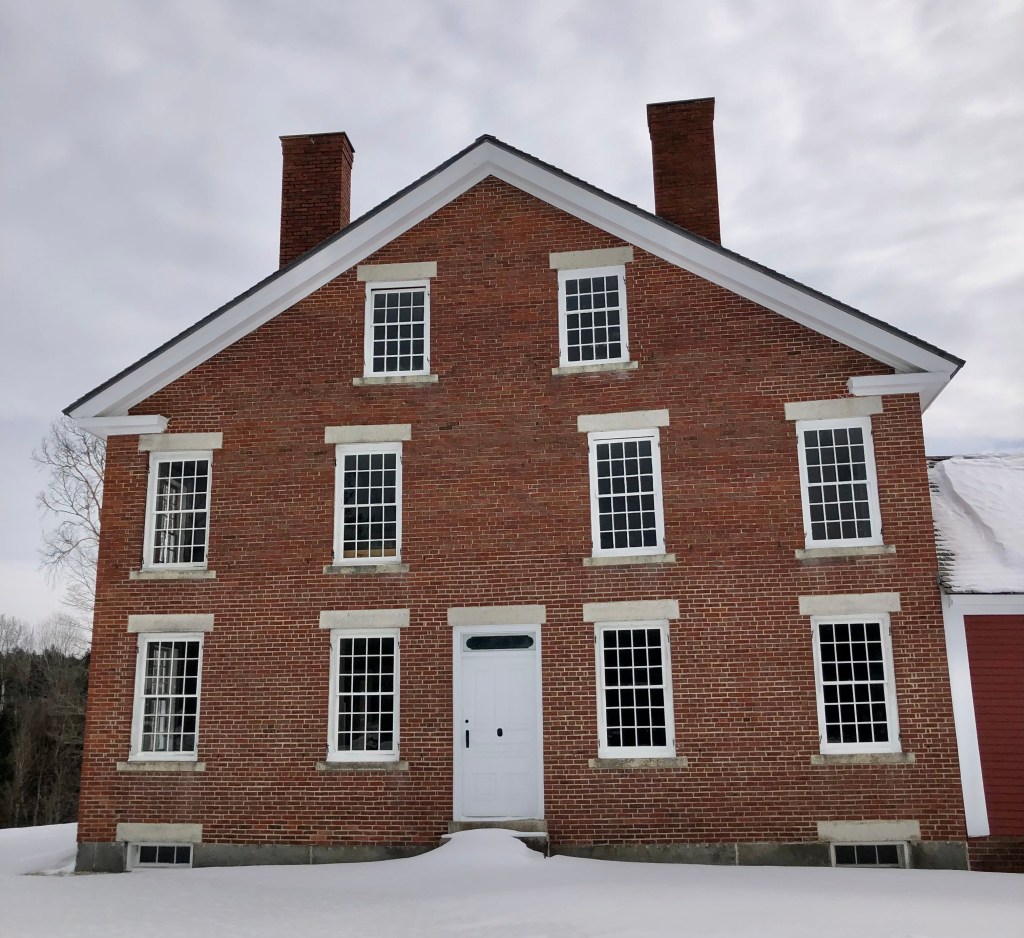
Every so often, a friend and I make plans to meet at a rural crossroads, at a brick inn that was once a stagecoach stop. I imagine in those days the crossroads was populated with chickens and horses, with people coming and going, not Priuses, but in wagons and on foot. My friend and I began this habit in the summer of 2020, and so the inn has been shuttered to the public all this time.

Walking, we pass a few other Sunday walkers bundled in coats and hats. But few people are out, and there’s scant traffic. In contrast, our conversation is packed — about raising kids and planning spring gardens, about relationships, about navigating the working world as a female in a patriarchy (why are these conversations still necessary, anyway??)

The thing about Vermont in midwinter is the stillness and what breaks that quiet. Icicles drip, freeze, and then thaw and drip again. Birds appear at our feeder in increasing numbers, then whisk away again. A rouge wind blows in a squall, soon chased away by the emerging sun.

Pandemic notwithstanding, robins return to our crabapple trees.

“Things are as they are. Looking out into the universe at night, we make no comparisons between right and wrong stars, nor between well and badly arranged constellations.” 

— Alan Watts

(And many thanks for Erika Nichols-Frazer for a review of Unstitched in the Valley Reporter.)