One Rainy Day

One of the interesting things about having kids is you get to listen to music you would otherwise ignore. Would I have realized there’s a whole world of music out there, further down the dial, if I didn’t have daughters?  Not likely…..

Some of this music is just darn hot, some not so.  But if you’re driving around with the radio on to the general pop station, one thing you quickly realize is just how blasé a lot of this stuff is.  The dynamic range doesn’t exactly knock your flip-flops off.

Without trying to be what the younger members of my household would call “a complete dork,” I’d like to single out a currently very popular song that exhorts girls not to try particularly hard to prettify themselves for the male gender.  Obviously, I agree in spades on that one (hair brushing has never been my forte); however, I can’t help but object to the flip side of this advice, which encourages a kind of passivity for girls.

One thing Maureen Corrigan’s Gatsy book illuminated for me was just how darn hard Fitzgerald worked at his craft.  Perhaps because I’m a rural Vermont mother, I’m not a Tiger Mother who’s determined to get her children to succeed at mathematics and writing, Latin, violin, the breaststroke, classical piano, ballet, tap, drama…… with the unshakeable goal of attending Harvard Law School and presumably buying an island or two in the Mediterranean, or something along those lines.  That aspiration is commerce driven.

While Fitzgerald undoubtedly wanted to keep feeding a bank account that persistently slipped through his hands, and he certainly wanted to sell books and garnish accolades, his sense of craft must have been an entirely different passion.  To write that hard and that beautifully can surely only spring from a passion for writing in itself.  Poor Fitzgerald, whose life didn’t end very well; a life, admittedly, that traversed the whole dynamic spectrum.

About a hundred years ago, my undergraduate thesis advisor, when I complained that I couldn’t possibly work on the darn thesis anymore, ever again, told me to go back and work some more.  Someday, he told me, you will write a book, and you’ll believe you can’t  keep writing it, and yet you will.  That piece of advice has stuck with me like a piercing all these years.  That admonition contradicts our often far-too-Hallmark-card culture, where tepidness and blandness predominate, spiced up with a little bit of sex, a little bit of anger, but not too much.  Pursuing creativity will inevitably land the pursuer in the realm of too much or too little, out of the median and out of the norm.  Yet, what’s the trade off?  Is the middle a vacuum?  Or, to arrive at the middle and remain there with happiness, is it necessary to schlep up some mountains, and stumble through some soggy valleys?

On that wet note, it’s been a cold rain here for two days.  In “Home Burial,” Robert Frost remarked on human creation:  Three foggy mornings and one rainy day/will rot the best birch fence a man can build.

DSCF9928

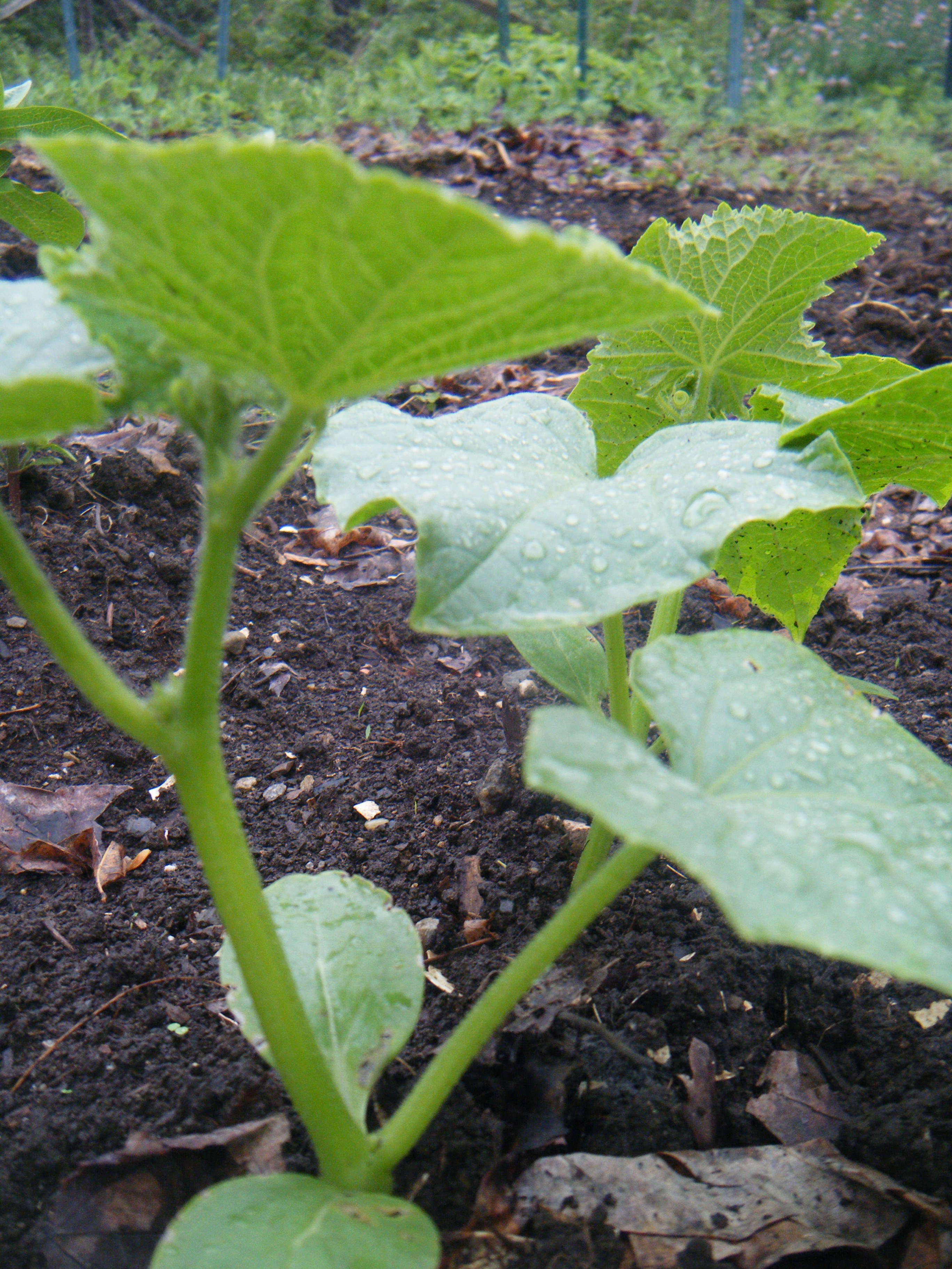
Watering in the Rain? What?

This cold and rainy Sunday morning, I was in the hoop house watering tomato plants when I saw a wild turkey picking its way across our small field.  The field, recently harrowed and seeded with peas, was mucky from a deluge the night before, so the turkey lifted its feet in the turkey’s funny variation of high-stepping.  With its long neck and tail, it’s a lot of bird.  After a few seeds, the bird, apparently alone, disappeared into the woods with its already lush fern undergrowth.

While the turkey was going about its meal gathering, I appeared to be doing an essentially crazy thing — watering in wet weather.  And yet, I’ll continue to do so, for reasons that partly make sense to me.  It’s that “partly make sense” aspect that often seems to jam up human life.  On the one hand, I want the tomatoes, and this is my experience of how most effectively grow tomatoes in my patch of Vermont; on the other hand, watering in the rain is just plain nuts.

While I would never describe myself as a relativist, one of the greatest appeals of literature is the way writing explores that edge, that nether realm between the hard shores of certainty.

My ten-year-old recently determined, with the assistance of a teacher, that she is precisely the right height for her age.  She informed me of this conclusion while brushing her teeth that night, in her practical and pragmatic way of looking at the world:  here I am, exactly where I want to be.  Her sister scoffs at this kind of knowledge — why would you believe numbers? you’ll either grow or not — but my younger child sees a validity in numbers her sister does not.  My older daughter tends to view the world as wildly awry with the vagaries of fate, but to my younger daughter, the world is dictated by precision and certainty, and I could see the succor she justly took from that knowledge.   Her fears that she will be very small (like me) were mitigated by this calculation.  Each of my two children, blood sisters, has a radically different method of mapping and understanding the world.  Neither of these would I at all disparage; they are both genuine ways of understanding, albeit diametrically opposed.

Yet — can I generalize? — by adulthood those shores of certainty are often shaken, if not downright abandoned.  In what way will we know the world?  What will serve as our compass in troubled weather?  I see literature as precisely that compass, a complex and sometimes incomprehensible tool, a map, convoluted at times, to get us out of Tom Sawyer’s cave.

… the evening the kingfisher fell… I held
(it) in my hands,
I touched its blue power.
That may be the only time
I ever do so.

What I held was more precious
than handfuls of money.
If I could have restored it
to wind, I would have.

What to do
with the wild pain?

…Give it back,
all of it, and go home.

“Kingfisher” in A House of Branches, Janisse Ray

DSCF9927

Early Corn

When I left the hospital ten years ago with my newborn daughter, June had arrived while I spent those days in the birthing center.  Every day that May, it had rained, cold rain and humid sticky rain, all day rain and brief passing showers.  Every variety of Vermont rain had stormed that month:  a rainy season to cap a pregnancy that, by its end, I felt near to drowning with its effort.  Walking up the stairs, I had to linger on the landing and gasp for breath.  Sleeping, I startled wake, choking for air.

But when we left, we drove past black-soil farm fields freshly plowed.  In regular furrows, early corn had sprouted during those few days of my confinement.  The pregnancy over, my healthy and whole infant in my arms, I was jubilant, and the earth herself appeared rapturous.  That summer proved especially dry and hot.

On this Memorial Day, May 30th, a day of sadness beyond sadness, here’s a David Budbill poem from Happy Life:

Early June

Hard rain all night
morning rags of mist
hang scattered
between the
blue-green hills.

photo by Molly S.

photo by Molly S.

Sailing

Just about ten years ago, I gave birth to my second child.  Like I imagine death, birth is a sacred space, and by that I mean nothing with a blue aura and a mandala on the wall, but a space that is wholly out of secular time.  When I labored with my first child, I had to travel so far to get her.  The geographical map of her birth was only a few rooms, but the journey for her to arrive in my arms, squalling and ruby-lipped, was beyond measure.

As my daughter begins traversing her own female journey, I tucked in a poem among her treasured birthday cards.  This poem has the quickness of a child, coupled with maternal blessings.  Poetry, in its own sacred territory, is a litany to murmur in the soul’s dark night, a comfort and conjoining between people, a radiant gift to offer a beloved child. Here’s Lucille Clifton:

blessing the boats
(at saint mary’s)

may the tide
that is entering even now
the lip of our understanding
carry you out
beyond the face of fear
may you kiss
the wind then turn from it
certain that it will
love your back
may you open your eyes to water
water waving forever
and may you in your innocence
sail through this to that

DSCF9904

Salt, Not Sentimentality

Every afternoon, I drive to pick up my younger daughter at school, and just as I leave the small town of Hardwick, right where the wetlands begin, I pass the construction site of a Dollar General store.  Apparently, the presiding view is that the town needs more cheap stuff.  I wouldn’t presume to criticize what people are or are not buying, but it’s worth noting that the outer landscape of Hardwick has appreciably changed.

In Vermont, landscape is a word often bandied about as if landscape is background for work or play — the landscape with Jersey cows mentality — but landscape is the point, as the cows, and the maples along the dirt roads, and the ridge lines, are actually inseparable from who we are.

This Dollar General feeds a real appetite in our society, this need to consume stuff, a great deal of it, and preferably as cheaply and abundantly as we can.  It’s an ugly aspect of our society, disguised and ameliorated somewhat by its genericness.  Richard Yates, in one of my most favorite novels, Revolutionary Road, wrote “this whole country’s rotten with sentimentality” — this notion of flatlining the culture under the Almighty General of the Dollar.  Writing — art — by and large pursues the antithesis of what capitalism champions, which is perhaps why art and literature are so belittled and disparaged in our society.  But to adhere to this generic status quo, to feed ourselves commercial products from boxes and cans rather than what grows in the farm down the road or in your own window boxes, to judge ourselves in terms of tax brackets, or nourish our inner lives with dullness, diminishes us.  Revolutionary Road epitomizes the longing of Frank and April Wheeler to break out of the constraints of upwardly middle class American life — to follow their hearts’ desires in opposition to everyone around them — and depicts the Wheelers’ crushing failure to achieve this.

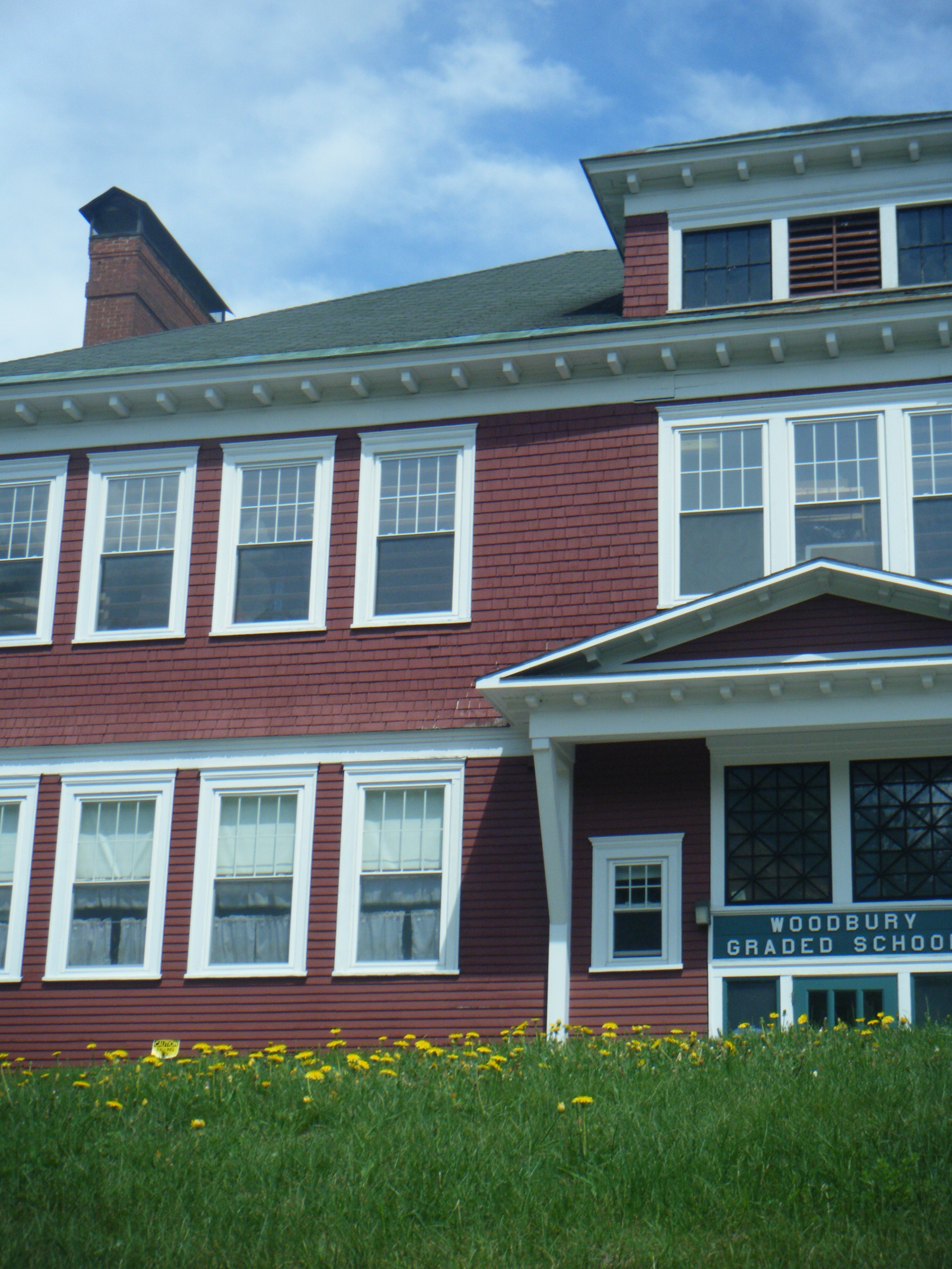
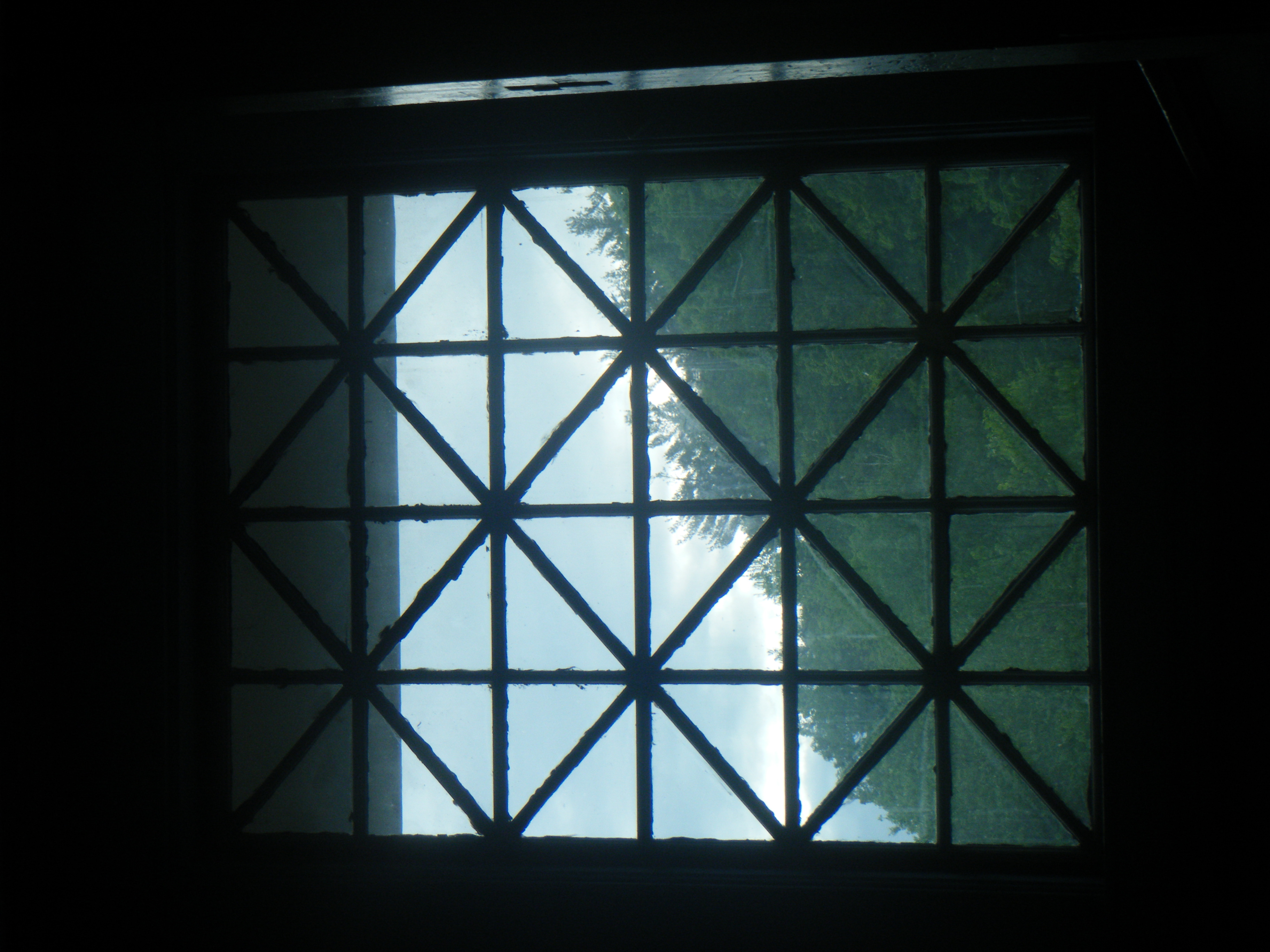
But, unlike the suburban Wheelers, I luckily live in Vermont.  I drive up the narrow, shaded gulch, pass two slivers of lakes, and then I’m in the little village of my town. Architecturally, the elementary school is a far distance from the dollar store.  Over a hundred years old, no public elementary school would be built like this today, all wood and windows, with two enormous brick chimneys, and pressed tin interior walls.  The schoolhouse is dropdead gorgeous, built with craft and care.

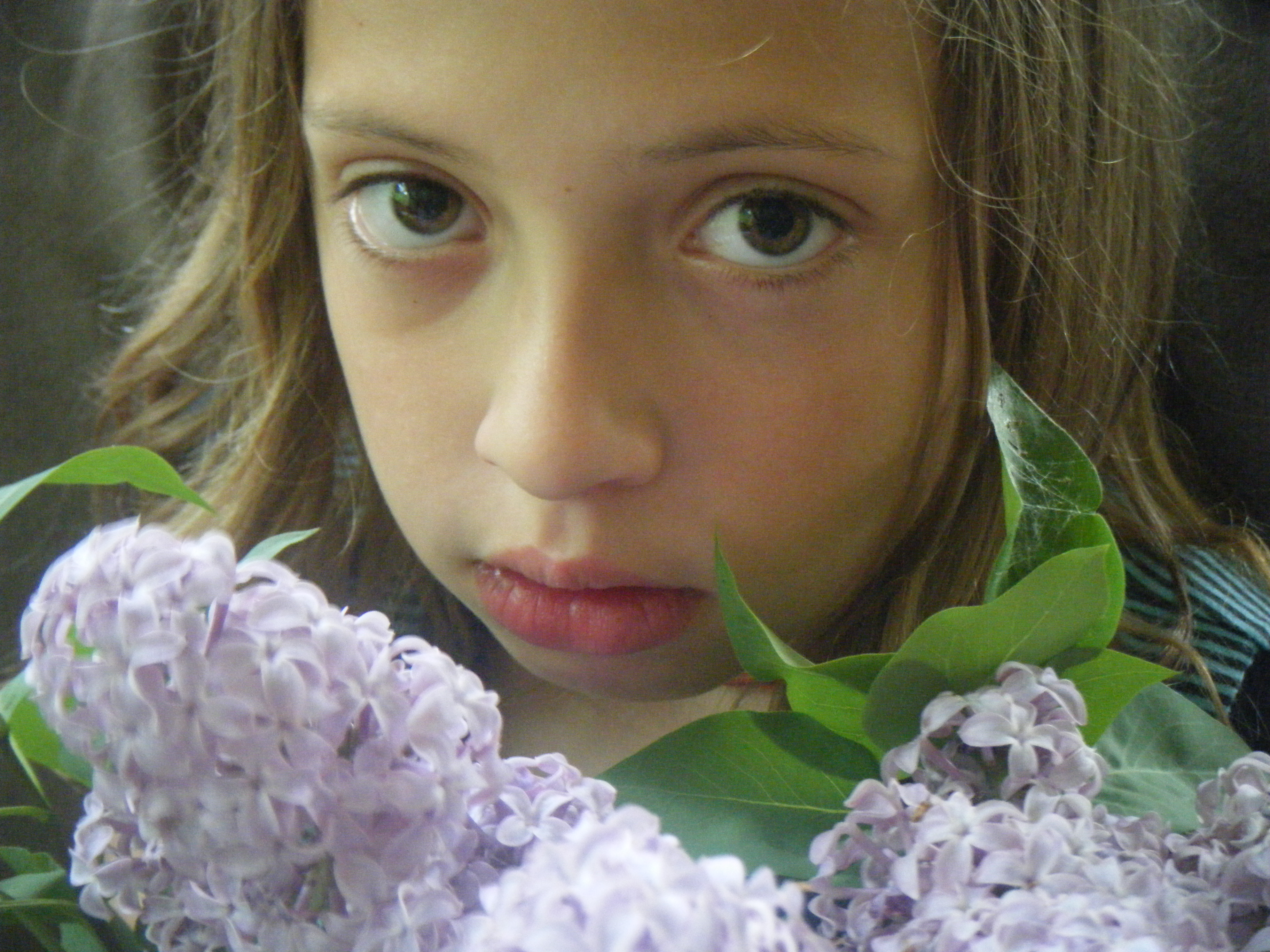
All buildings, in their own ways, have resonance and depth, holding the stories of their people within them.  But this lovely schoolhouse hums with beauty, too.  Does this landscape of light and wood matter to my child?  This setting in a literary world?  Here’s how deeply this landscape presses into my child:  when I see my girl at the end of her school day, I often touch my face to the top of her head and kiss her.  All day we’ve been apart, she to fourth grade, and I at my work.  My daughter’s hair has the colors of a wheatfield, myriad and rich, lighter with sun strands in these warming days.  All afternoon and into the evening, her hair has one distinctive scent.  My older daughter says, Crayons, mom, it’s crayons.  All elementary schools smell like that.  But it’s not crayons.  In my kitchen I have a mason jar of good salt, pink-hued, and every night, cooking dinner, I unscrew that jar and add salt.  Salt:  the mineral Gandhi used to launch a revolution.  The mineral vital to human life. When I kiss my daughter’s hair, breathing in her day, that’s what I smell:  salt.

DSCF9894

Of the Green Light and One Pig

My younger daughter had a concert at her elementary school tonight, and I made the older daughter attend, too, which made her complain, as she has pages upon pages of The Great Gatsby to read.  How could I argue against reading Gatsby, one of my most favorite books (and hers, too), and yet I insisted.  Music and literature, I argued in one of my most annoying mother versions.

I’m reading Maureen Corrigan’s So We Read On:  How the Great Gatsby Came to be and Why It Endures.  (Yes, it’s true, I confess I hear Maureen Corrigan’s NPR voice as I read this book.  You will, too.)  She writes:  “… during the years he was living in Hollywood, Fitzgerald would try to buy it (Gatsby) as a gift for friends, but when he went into bookstores and asked for The Great Gatsby, he’d be greeted by blank looks.”  Imagine that, a novel now ubiquitous in American literature courses — if you’ve read nothing else, you’ve likely read The Great Gatsby — and yet the author in his own lifetime often couldn’t purchase his own novel.

Which leads me back again to all that we see is but a portion of our reality.  What is inherently true and fine in Fitzgerald’s book was lost for a bit in the shuffling scrim of a society plummeting from the Jazz Age into the dusty Depression, and yet this book, American to the core, devoid of sentimentality, surfaced.

I first read Gatsby at the same adolescent age, and what fun it is to talk with my daughter about that novel, the green light, and Daisy — whom my daughter has far more sympathy for than I do — and the watchful eyes of Dr. Eckleburg.  As a teenager, I read this book more as a puzzle, how to fit images with characters, match them up with themes, and write an essay.  As an adult, I love the language’s beauty; I’m mystified by its marvelous craft; and yet I read a genuine ugliness in Fitzgerald’s American landscape I wholly missed as a teenager.  These layers upon layers:  writing reflecting life.  Parenting a teenager pushes you into those depths, makes you head out into the cooler part of the lake, and give what you thought was solid ground a second, third, even a fourth look. Socrates, after all, wouldn’t have abided with the status quo.

And yet…. our world really is often a mystifying realm.  Think of Fitzgerald and the booksellers’ blank looks.  This book, so labored upon, came upward again.  In contrast, my younger daughter, after she read a chapter in Charlotte’s Web tonight, leaned her cheek on the book and remarked, I hope this isn’t a sad book.  I like that pig.  To this, at least, I could honestly say, I think the pig’s going to be just fine.  Gatsby’s green light will forever hover terribly out of reach, but Wilbur at least will still be standing by his trough, nose up to the wind, happy.

DSCF9897