Why Read Literature, Anyway?

For my seventeenth birthday, my dad gave me a slim copy of Point of Departure, a slim collection of nineteen stories of adolescence.  That was back when you could buy a paperback for a buck and a half, read the book over and over, and the pages wouldn’t fall out.  Thirty years later, I still have this book.  Some of these stories I read over so many times, I could reiterate passages.  “A Summer’s Reading” pointed me to Bernard Malamud.  Even though I didn’t grow up in a city, I could envision myself, like the main character, George, skulking around the nighttime summer streets.  Updike’s “A&P”? What I wouldn’t have given to have sashayed through those aisles.

At seventeen, I was fortunate to have the world seem so inherently possible.  The options for my life were so manifold and mysterious, and, frankly, much like my own adolescent daughter now, I couldn’t wait to step into my future.

But two scenes in these stories resonated most powerfully, and tonight I found them immediately.  One was in a Saroyan story, “Seventeen.”  At the story’s end, the mother calls to the father that their son is crying.  The boy had a profound experience of grief and uncertainty — “the impossibility of laughter” — and the mother realizes their son is entering adulthood.  The second scene concludes the Nadine Gordimer story, “A Company of Laughing Faces.”

The girl heard, but felt no impulse to tell her mother — knew, in fact, that she would never have the need to tell anyone the knowledge that had held her secure since the moment she looked down into the lagoon:  the sight, there, was the one real happening of the holiday, the one truth and the one beauty.  

This one truth and one beauty, assuredly, is not a photo-opt view of the Grand Canyon or a rosy sunset; the girl discovers a drowned boy in a lagoon.  These stories center on adolescents who experience a complex shift in paradigm, from childhood’s relatively cosseted innocence to the substantially more dynamic range of adulthood.  Yet, in each of these nineteen stories thrums the heartthrob of beauty.

That’s my two cents on the appeal of literature:  relentless quest for wisdom suffused all the way through — even when it aches — with beauty.

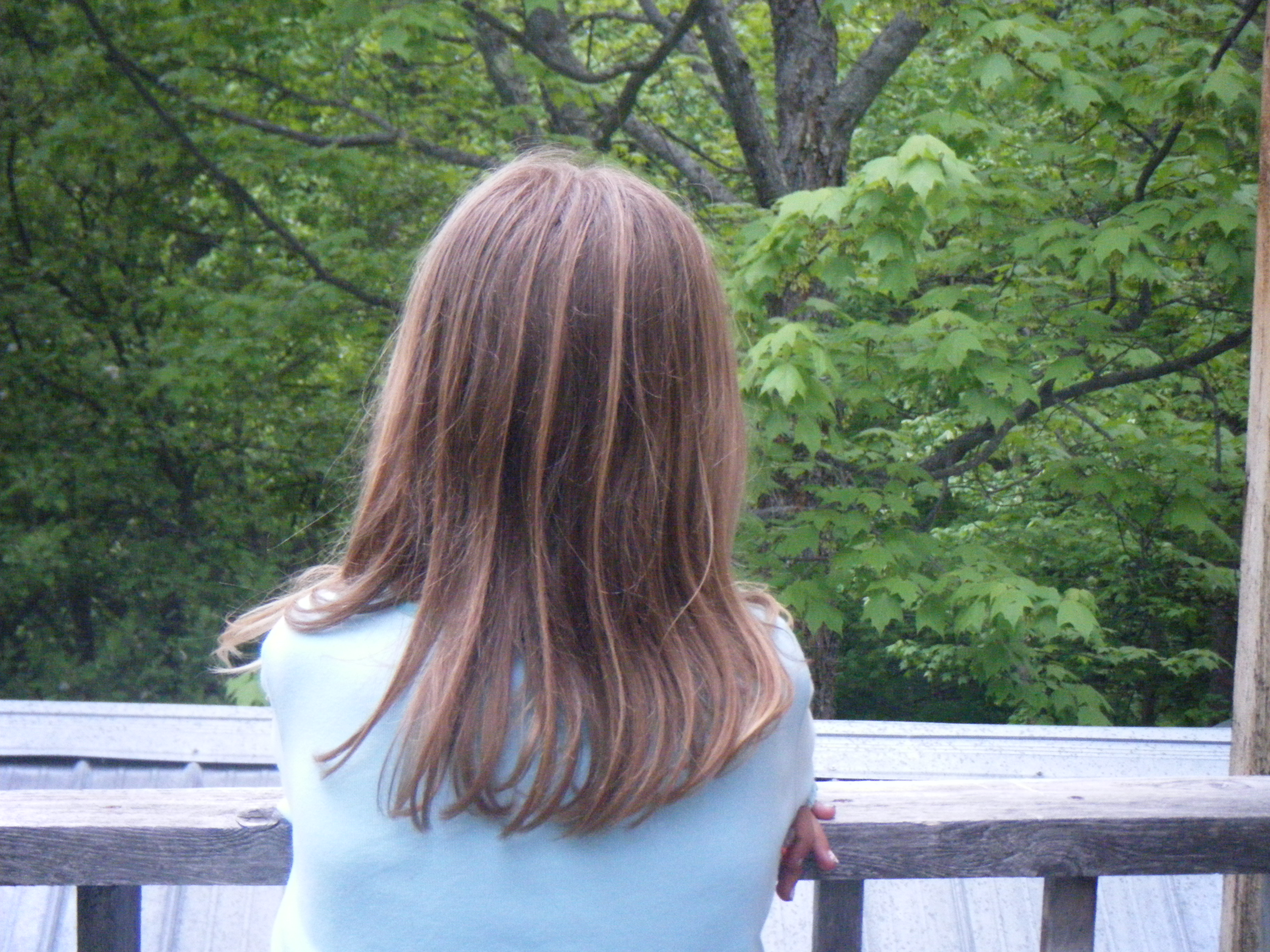
DSCF9880

Becoming

This clayey soil, so poorly suited to vegetable farming, and yet:  here I live.  Just a few years back, this was a forest of mixed hardwoods, an understory of ferns and trilliums and trout lilies.  We cleared this patch, picked a mountain of stones, pulled roots that fiercely clung to their ground.  This patch of earth has endured six consecutive seasons of lime, manure, alternating cover crops of peas, oats, buckwheat.  My efforts with shovel and compost yield good results, but this will never be the midwest’s fabled topsoil.

Our guests on this Memorial Day, first time visitors to our house, were gracious, companionable, and — best of all — engagingly funny.  Fine croquet players, too.  Walking through the garden and its evening black flies, they said they could see how beautiful the garden could be.  Listening, I realized how all in my head my garden currently lies.  These early leaves of broccoli plants, these carrot seeds, the pea fences, the bean poles, the tomato plants just nestled in their beds, the basil hardly more than scraps of green debris.  A month along, and this story will be wholly different.  Knee high much of the garden will be, the peas beyond my waist.

But for now, this is all rough potential, a lumpy pile of manure, the arch of the sunflower house not yet sown, the sweet peas that by July will trail fragrantly over this half circle not yet germinated.  Faith is in the potential, sown in the experience that becoming will persevere in becoming.

Gardening, nothing is as simple as bury a seed in the soil and gather a handful of sweet peas X number of days hence.  Too much or too little rain, weeds, insects, animals, a running toddler, all create havoc with this orderly plan.  Or, my orderly plan.  The universe has perhaps an entirely different notion altogether.  Which made me think of this line:

…. emotions are essentially physical forces, and if they seem to express themselves at the strangest moments, it is because, like physical forces, they must sooner or later emerge….  (Allen Shawn, Twin)

In this spring season of raw, harrowed up earth, what will emerge from my garden soil? In writing, what will emerge from a rough draft, if I sow seeds and step back to appraise? What’s different from what I had intended?  Have pumpkin seeds from the compost volunteered into the brassica, determined to take root?  I opened my garden gates for these new neighbors, the youngest of this family a little boy who repeated one of his few words over and over tonight:  look, look, look.  Look, I whispered to my daughter tonight, brushing my finger over the line on her upper arm where her skin turns from white to nut-brown from her playing hours in the sun.   In what ways will these newly-met people shape and turn our lives?

What is essential is invisible to the eye.  This piece of Vermont earth has thawed.  A gentle rain falls on the tin roof outside my opened window.  The universe, seen and unseen, shifts.

DSCF9871

Fishing My Place in the River

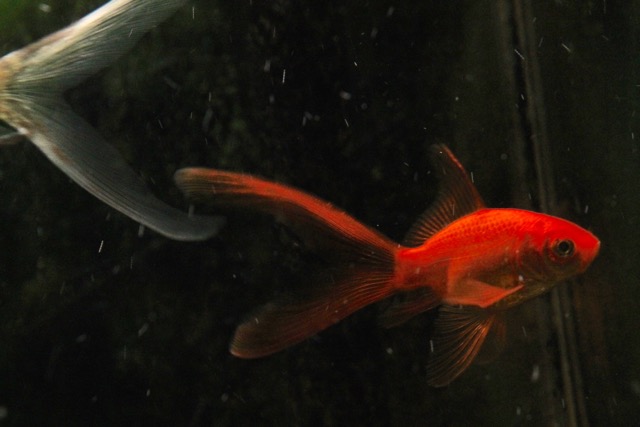
This morning, my daughter’s friend tapped the fishtank and remarked, “Fish are like birds.”

Busy picking up stray socks or something, I nodded and said, “Right, yeah, they’re all in the animal kingdom.”

But something made me turn and look and forget those socks for a moment.  Kneeling beside the tank, the girl’s face stared upward at the water, mesmerized by the gray and bright copper fish a neighbor had gleaned from his pond a few years back.  “Birds are up in the trees.  Fish are in the water.”  This could have been one of those well, duh moments, but the girl was so transfixed.  Maybe what she was seeing was fish hovering in the water, birds fluttering through the air, and us — the human world — plodding along earthbound.

In a recent New Yorker, Sharon Olds writes of her friend Galway Kinnell’s death:

… you fish your side

of the river, I’ll fish mine, you said

it meant – and I can see us, decades,

fishing both sides of the river,

together, sharing the catch.

Writing, as John Cheever famously said, is not a competitive sport.  Where I fish in my shallow part of the river shouldn’t impinge on your territory.  Why not eat each other’s fish and poems?  This girl reminded me that I should push the map of my world deeper and wider, beyond my daily geography.  The natural venue for birds is air, for fish water. Sharon Olds and Galway Kinnell knew a territory where a river of poetry looped through, a wild terrain where they worked separately and yet together partook of the river’s bounty.

All this poetry aside, the girl also remarked, “This fish tank really needs to be cleaned.” On that, too, I concur.

Photo by Molly S.

Photo by Molly S.

Routine Message of Survival

Flowering Plum

In spring from the black branches of the flowering plum tree

the woodthrush issues its routine

message of survival. Where does such happiness come from

as the neighbors’ daughter reads into that singing,

and matches? All afternoon she sits

in the partial shade of the plum tree, as the mild wind

floods her immaculate lap with blossoms, greenish white

and white, leaving no mark, unlike

the fruit that will inscribe

unraveling dark stains in heavier winds, in summer.

— Louise Gluck

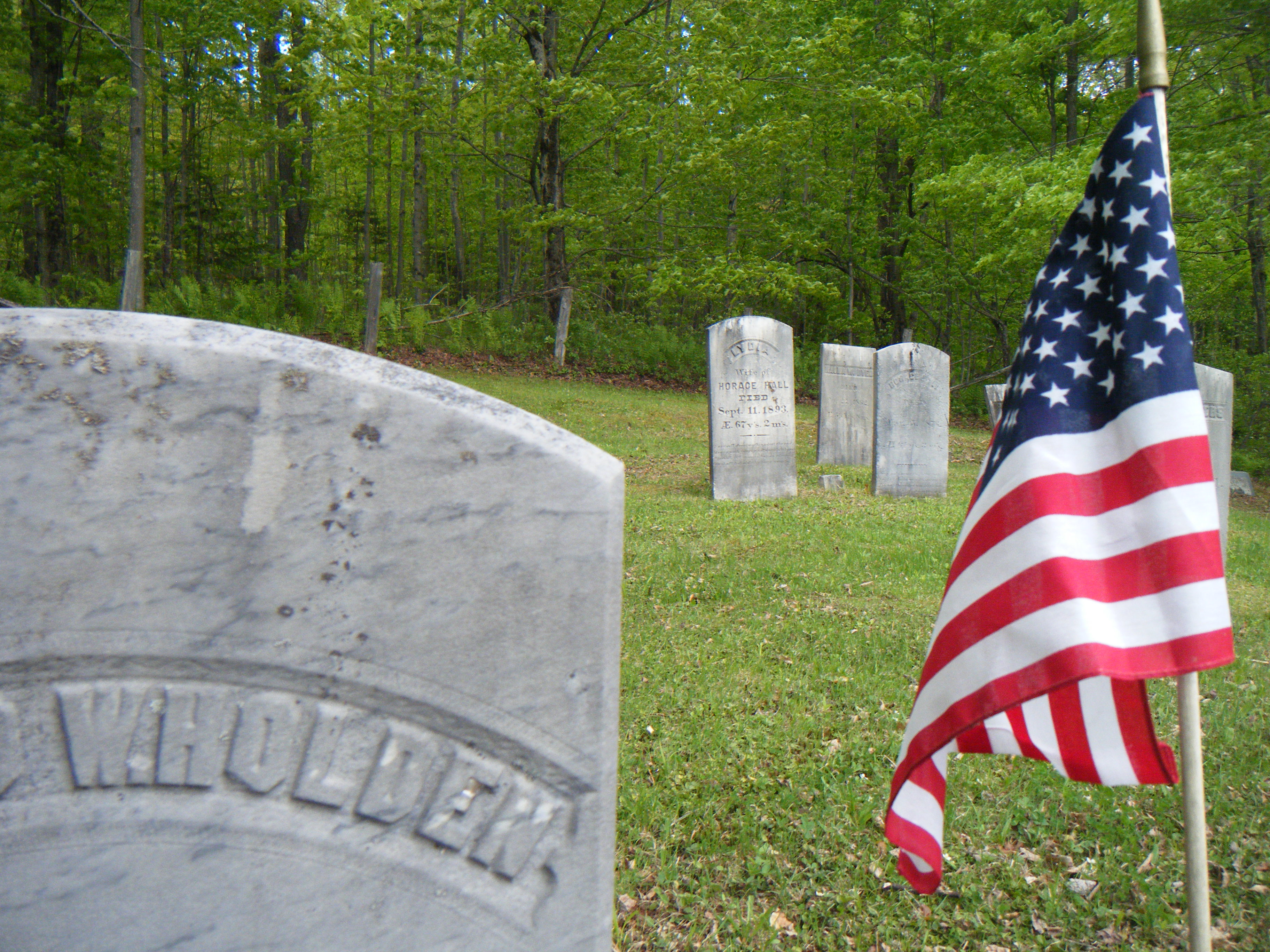
Memorial Day weekend might as well be Hardwick Vermont Day.  Parade, fair, concessions.  My daughters were introduced to fried dough this afternoon, by a friend of my Older Daughter.  “Let me introduce you to a fine part of the world……”

The little, exquisite Jeudevine Library had a book sale, where I spent $1.50, rounded up to $2.00, and then released a few more dollars in the bake sale and coffee urn.  My own childhood library, the Goffstown Public Library, and the children’s librarian, Betsy Elliott (now long crossed over), are a place and a person prominent among my treasured memories.   I could go to the library everyday on the way home from school, check out books, read and return them, and check out more.  Some lucky days, Mrs. Elliott had even put aside new books for me!

Courtesy the book sale, here’s a Louise Gluck poem from The House on Marshland.  The woodthrush and I will be out in the garden early tomorrow morning, working on our routine message of survival: tomato plants, basil, cosmos and sweet peas, and that interior life.

IMG_1278

Photo by Molly S.

Rough Voice

Driving back from Burlington this afternoon, I listened to a CD my father had made and mailed me, of Peter Matthiessen reading The Snow Leopard.  Matthiessen’s voice is deep-hued and burled at the edges, reminding me not of a smoker’s rasp but of hands gnarled and split from hard physical work.  The passage he read had such sorrow, describing lying awake in a muddy and manure-filled hut in the rain, thinking of his eight-year-old son halfway around the world, a child who had lost his mother to cancer the previous year.  Matthiessen read a letter his boy had sent him, asking him please to return by Thanksgiving.  Matthiessen believes he will not be able to fulfill his son’s request.

Against this personal grief, Matthiessen contextualizes the abysmal poverty of India, the great and unmitigated human suffering of Calcutta, while he also sees a land saturated in hundreds of years of religion.  With his immense skill, Matthiessen writes with a profundity that neither glorifies his own misery, nor is abashed by the sheer scale of impoverishment.  His writing examines both his grief and a nation’s misery by keen attentiveness, and then he steps back, removes himself just one pace.

A few weeks ago, when I spoke with another adult about an occurrence in my younger daughter’s life, I felt a presence in my chest, a pressure against my ribs, real as flesh. Walking up the staircase in that old building, I thought, This is grief.  This is how it feels to hold grief in my body.  That same afternoon, driving through Hardwick, I passed a woman I knew by acquaintance.  She sat in her car, windows rolled up, one hand clenched over her lower jaw, her face contorted in grievous weeping.  I stopped for an errand in town and then walked back along the street, with no particular plan, only the mere thought to tap on her window and say, I know you.  You and I, we are much the same.  But I found only the empty space on the pavement and a smear of rain and split oil, with its dirty stamp of a rainbow.

Listening to Matthiessen read, I saw how he took his particular misfortune and, through writing, opened it up to the human arena of loss and desire, against a background of the beauty inherent in this transient world.

DSCF9853

The Mighty Asparagus

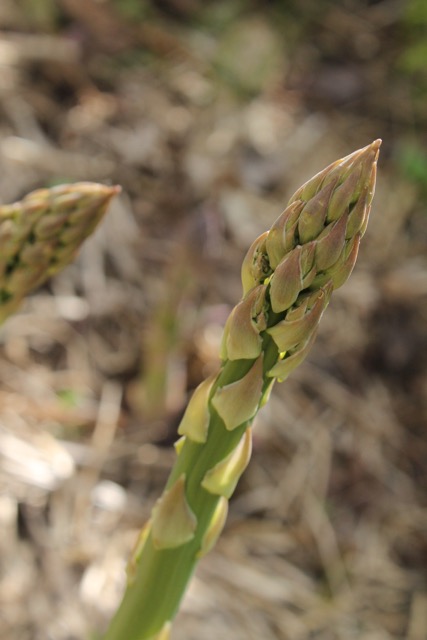
May is the season of asparagus in Vermont, the first of my garden to push up through the mulch straw, pointy green gems, the succulent stems.  The first of the garden’s offerings, and likely the most delicious.  Like everything else, the strength of the asparagus beds comes and goes.  A friend of mine remarked at a school board meeting the other night her asparagus beds were on the wane.  Mine, more recently sowed, are producing bountifully.

Our perfect handful of May days are now encroached by black flies, by either too much sun or cold rain:  but isn’t that the way of the world?  Mary Oliver in “Wild Geese” writes:

Meanwhile the world goes on.

Meanwhile the sun and the clear pebbles of the rain

are moving across the landscapes,

over the prairies and the deep trees,

the mountains and the rivers.

Writing is like my asparagus beds, rich under the surface, nourishing and sweet, and yet tensile with organic strength, able to thrust through my poor and clayey soil to the world above of sunlight and rain, and my fingers, eager for a dinner harvest.

Every year, I forget just how good asparagus is.  Aim for that in writing, I think:  better than I might imagine.  How easily we get caught in the details of our lives — important and dear to us — and yet, overhead, all that sun and those clear pebbles of sun, if only we would lift our eyes.

IMG_6001