Under the kitchen vinyl.

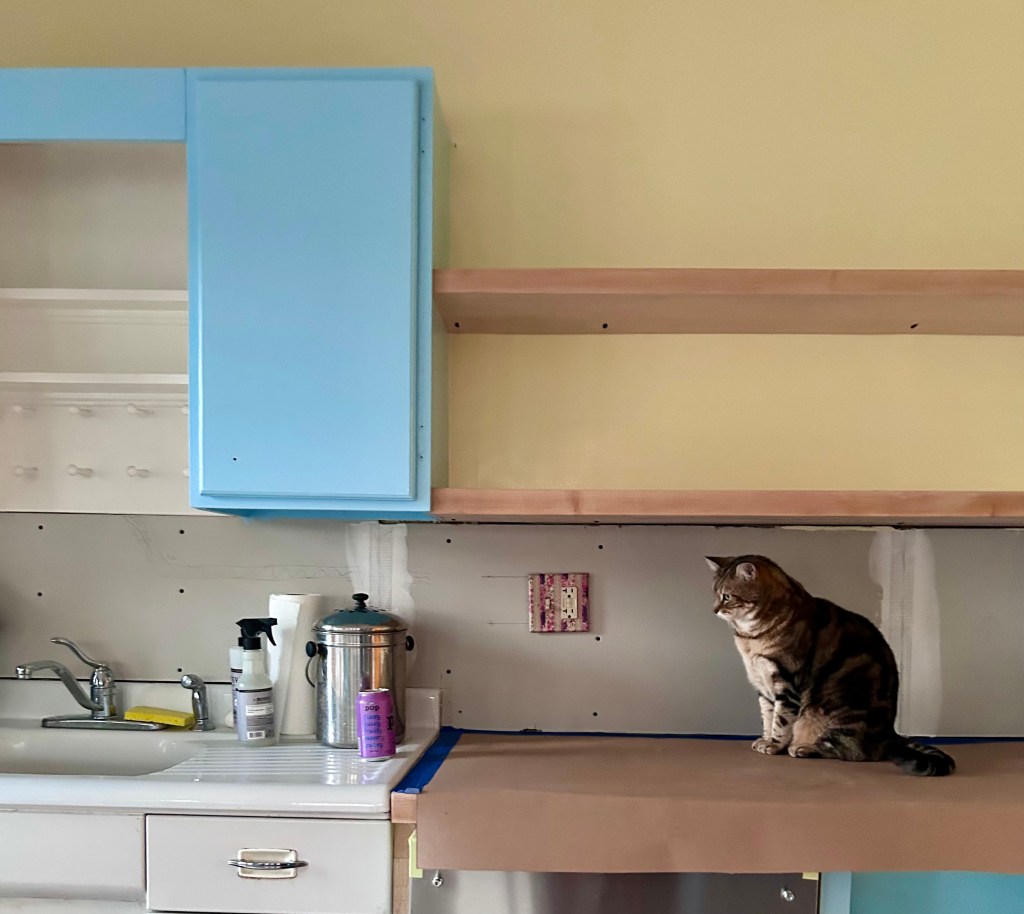
While the radio carries in terrible news, the carpenter tears off the vinyl on my kitchen floor. I run my hands over the worn maple boards that are revealed to the daylight again. In one corner, a rotten board where perhaps the sink leaked. The carpenter cut out those pieces, and I look down at the basement’s graveled floor. In another corner, there’s a blackened place where perhaps a woodstove once charred the flooring. He and I stand there, considering, wondering about who once lived in this house. I wonder about their patterns of heat and sustenance, these people who passed from this world, decades ago.

When the carpenter leaves, I vacuum, then sit on the cold floor while the cats sniff curiously. I rub my hands over these boards bruised from living and speculate that I can sand and polish this small space, quicken it again.

I began this project with a desire to take down a wall, open a room, and chase away the dismal memories of illness, to acknowledge that, indeed, this is the house where cancer devoured my body, tore at my flesh and mind. I survived. To continue surviving, I must revise my life, change my patterns of living.

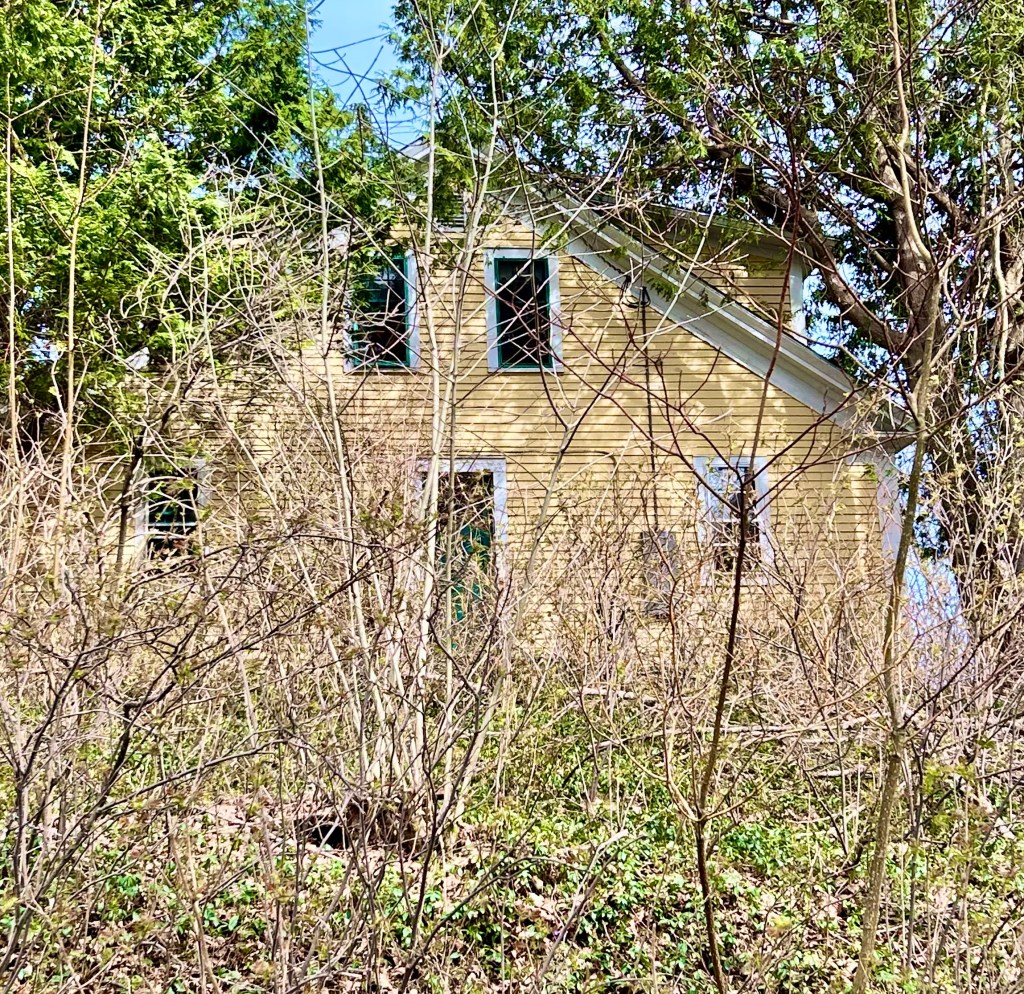
I know a few of the names of the people who lived in this house on a village hillside. Now, barefoot on these cold hard-worn floorboards, I sense the mysterious stream of connection that runs between the dead and myself and those who will someday live here, when I have moved on myself, to other earthly or unearthly places. Who laid this floor I’ll never know, but I’ll put my hands and my muscle to it, lend my energy towards restorative beauty, towards the scantness I can do.

I am beginning to understand that healing is not about returning to what was, but about accepting the change and adapting to the brokenness. This is happening all around us, for people, for the land. People have done damage to the earth and to each other that can’t be undone. We can lament what was, but that won’t help us take care of what we still have. In fact, it might just hold us back. Nature herself keeps giving and never giving up. ~ Helen Whybrow. The Salt Stones

Mired in fog.

I hole up for the weekend reading Wallace Stegner, a pastoral novel about friendship and mortality, about the pre-internet world when complicated events unraveled perhaps not more kindly but more slowly. Vermont March is the season of live-or-die, the fits and starts of spring, jagged with driving ice, whirling snow, delirious sun.

I drive home from a dinner out in a fog so thick that the car before me pulls off, turns on flashers, and maybe simply intends to wait it out. It’s not late, but there’s no one else out, the wind throwing twigs at my windshield, the radio jingling Lou Reed. I’ve not driven in a fog so profound since I was in my twenties, living in the wooded spine of the Green Mountains, in the years when I was brash with youth and amor. The edges of the road vanish. I pull over at the spring with its pipe where people gather water, and I stand just outside the beam of my headlights, the nearby stream gushing against what remains of its winter ice. I surely can’t stay here for the night, shivering, on the edge of my own mad solitude. The way back, the way forward, all around: pathless, and surely a metaphor for this time.

I’m still shaken to the core by lymphoma, by chemo, by the surgeons who sliced me open and removed those physical scars so I might live. I’m here for this moment, flesh over my slender shoulders, my now bony hips that once carried two babies, and flesh—well, so easily ruined. I spent most of last March in one ED or hospital room or another. While the world spun on, I leaned into treatment, propped up by dear ones, who ferried me to remission.

Now, shivering, nearly blind with fog, I turn off my car and the headlights. The fog wraps around me. I drink it in.

“In the gnostic gospel of St. Thomas, Jesus says, “If you bring forth what is within you, what is within you will save you. If you do not bring forth what is within you, what is within you will destroy you.” — Andrew Solomon

Knock down a wall, survive for a bit

The advance copies of my novel that will be published at the end of June, Call It Madness, sprinkle out into the world. I print postcards and mail those, too. Email me your mailing address (brettstanciu@gmail.com), and I’ll drop a postcard. The novel will be published June 30, and summer events slowly add up. I imagine sultry July, steamy August, spaghetti strip sundress, tumblers of ice water.

The novel is divided into sections of place: an apartment, a pantry where the protagonist Avah hides, the roadside Blue Lion Motel where Avah tracks down her mother, and Echo Lake—a great gossamer spill, a fat layer of ice…

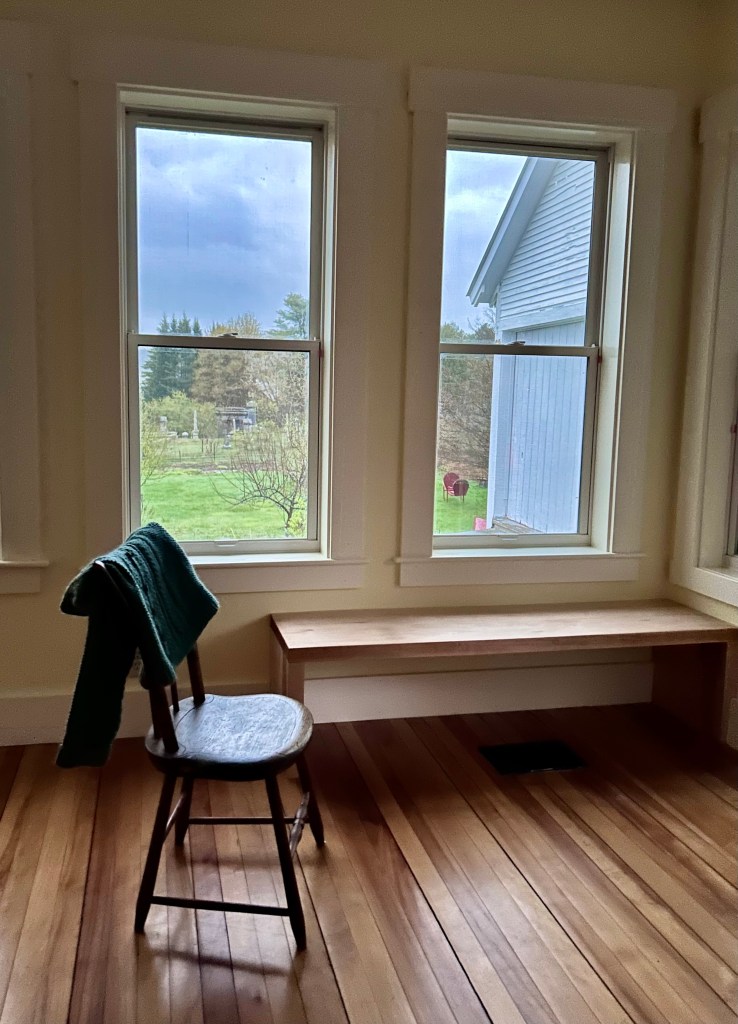
Places define us. Unbelievably, I am now nearly a year out from chemo. All that long last winter I huddled on my couch, too sick to feed my own woodstove, I kept thinking, I think the kitchen wall removed. I want the small rooms of this old house opened. Now, a year later, holding what will be forever-fatigue in one hand and my strengthening return to health and merriment in the other, I hire a carpenter to remove a wall of early 20th century two by fours and lathe. I return to my dusty and torn-up house in the late afternoon, step in, and think, This is how the house is meant to be.

With the mind of a novelist, I wonder at the calculus of human decision-making: the mixture of numbers, of cost and house value, a stacked rationality. Take that arithmetic, and add to it my fierce desire to re-imagine my future where my garden bounty of jalapeños and garlic meets kitchen cleaver, where I revise another book at my kitchen table, where illness is swept from my house by the spring wind rushing through the open windows, smudging my rooms with the fecund scent of mud, the castanet jingles of mating frogs.

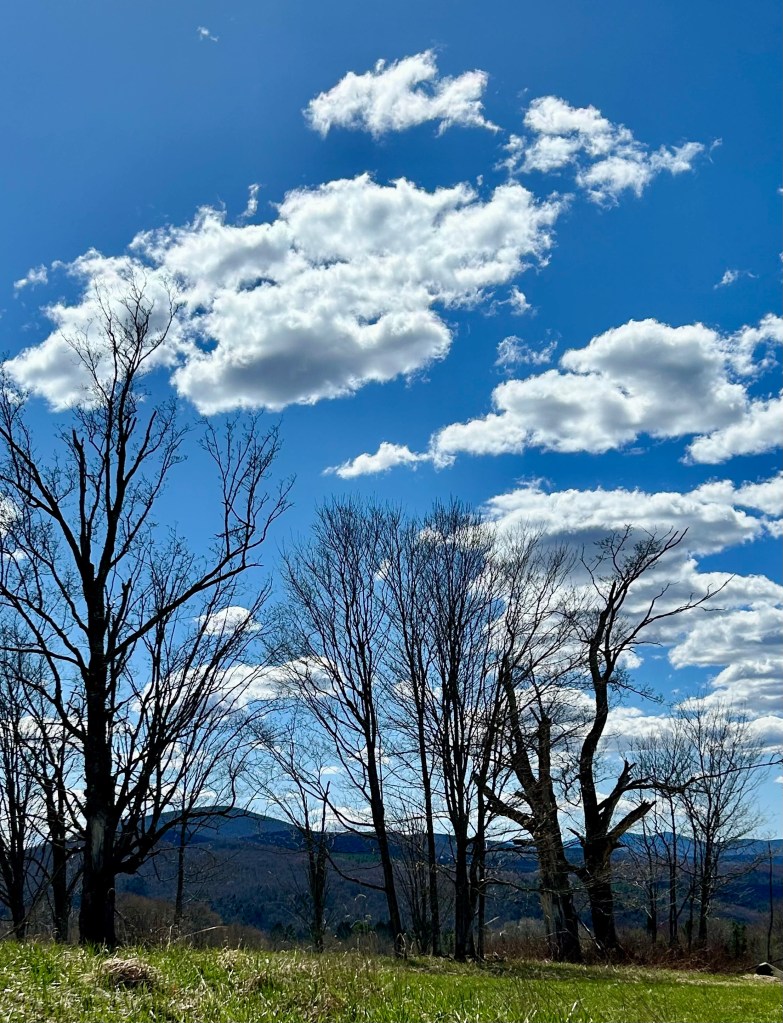
Vermont spring: thaw, fresh snow this morning, stove ashes sprinkled on the icy paths, robins. All the things.

“Survival, it is called. Often it is accidental, sometimes it is engineered by creatures or forces that we have no conception of, always it is temporary.” — Wallace Stegner, Crossing to Safety

Vermont Town Meeting Day, Mud.

I live in a village with a single blinking yellow light at its intersection. In all those multiple trips to Dartmouth for consultation, treatment, medication, we drove out of town, over the hills, along the Connecticut River, all the way to the Hanover, New Hampshire exit. There, a traffic light greeted us.

For a few months, the village will be rerouted through temporary lights while a crew rebuilds walls to keep the town out of the river and replace a footbridge over the river. For drivers, something to complain about. For walkers, a point of interest.

On town meeting day, in the historic town house, a day of voting, hot emotions, decisions of material import. A school budget voted down.

March is the season of fluctuation between mud and ice. One afternoon, the blowing snow drives bitterly into my eyes; I huddle in my coat. The next afternoon, I tie my coat around my waist, let the breeze push through my hair.

The sun beams with real heat. The earth reveals her immense size. Meanwhile, the humans, with all our passion and fury. I seek both the companionship of people around me — how dearly I treasure this, more and more — and seek solace in solitude, in the chitter of chickadees, the clouds rushing over the sky, the full moon hung over a forested ridgeline, gleaming.

“What I like most about Buddhism really is its fearlessness. So much of what warps people is fear of death and fear of impermanence. So much of what we do is simply strategies to try and hold back death, trying to buy time with material things. So at its best Buddhism provides people with a way of seeing their own frailty: you need less in the way of material objects and fortresses around yourself.”
― Gary Snyder

Holy Nightsky.

10 degrees on a starry night, my daughter phones me while I’m cramming more wood in the stove. She’s on a dark-soaked back road, the northern lights resplendent, and urges me to go in search. Up Bridgeman Hill, she tells me, with the ridgeline view.

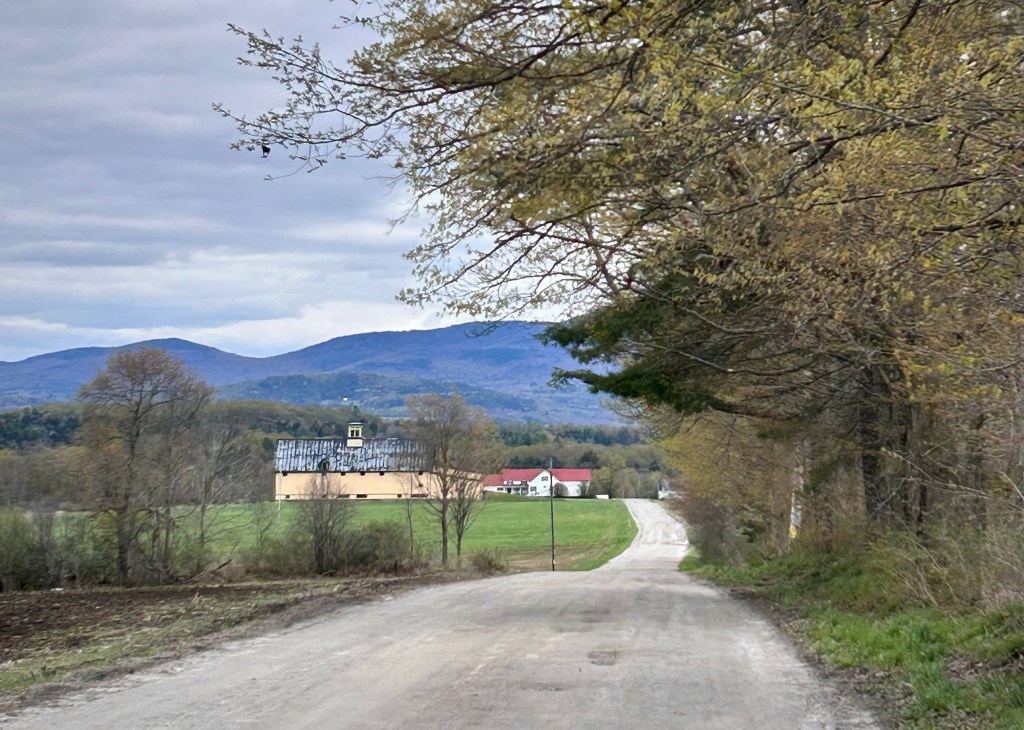
So, bundled in coat and hat, I drive through the little village and up the hill where the town lights cannot touch. In my headlights, wind scatters snow gathered from the wide hayfields, winter dormant. I pull over at the hill’s crest where two farms join. I get out of my car and walk down the road. The limitless sky gleams ruby and emerald, an immense shaft of white light luminescent. In the east, the black spreads profoundly, the stars so radiant I imagine I could reach out and grasp these gems.

John Donne wrote that illness is a “holy room.” My oncologist taught me that we are all the ailing; if not now, to come. Mortality’s cut makes zero discrimination. A cancer diagnosis gained me admission to inner chambers. Unwanted—let me reiterate again, I did not request admission. But I hung up my coat in the anteroom and set my hiking boots against the wall, and I walked barefoot and thirsty into the nexus, me and that fiercely multiplying lymphoma. The lymphoma and me — one of us was not going to survive this go-round.

In the night’s darkness, the rushing wind tore at my cheeks and hurled ice in my eyes. In the distance, a cow barn glowed with light, a scatter of houses in the valley. Around me, that immense and mysterious beauty over small human beings, at whatever mundane chore or decency or devilment we conjure, be it the evening milking or washing supper dishes or plotting a wrong against another.

The sharp-clawed cold shoves me back towards my car, back towards the village and my hot woodstove, my little house in the great holy room of this planet, this universe, this precise moment.

“It seemed like I was doing something ludicrous, trying to build a permanent work of literature out of broken little whimpering bits about the most ephemeral experiences when I was still mostly broken and half-ephemeral myself.”
― Anne Boyer

Call It Madness

My newest novel’s advance copies arrived in a great big box at the post office that I hefted on my shoulder. The postmistress said, “You wrote another book? How cool is that.” Indeed. Then she wondered if I could carry out this box that she described as nearly large as myself. I laid the box on the passenger seat and then walked across the street to the co-op where I bought an orange and peeled it and ate the sweet sticky fruit in a drippy wet snow.

Call It Madness? A novel about a young woman who realizes her mother had spun lies all her life—a grandfather who hadn’t died, a beloved house that hadn’t sold, only tumbled apart with rot and rodents. How does she get out of the madness-making of family and salvage some shreds of happiness?

June 30 the book will be released from Regal House Publishing. You can find it at my beloved local bookstore, the Galaxy Bookshop, or from the big A here.

Here’s the opening page….

White Quartz

2016

I didn’t know what made my parents drive from Bellingham to faraway Vermont the summer I turned four. I had never met my great-grand-father Opa until that afternoon my mother rolled our station wagon down Breadseed Lane. Earlier that day, a stranger had helped my parents change a flat tire on the New York turnpike, but the spare was a misfit. For hours, our car had been thumping while I stared through the backseat windows at the trees and fields passing by, pondering the puzzle of that strange word breadseed. Could seeds blossom into loaves?

We hadn’t stopped for lunch, and I was hungry. Was this Opa character cooking us dinner? Turned out, he was not.

In a rain that was just beginning to let up, the old man stooped in his yard beneath an enormous pine tree, fists curled behind his suspender buckles. I was not quite yet four, remember, and I knew suspenders only from picture books. In a strange coincidence, I had asked my mother for a pair the last Christmas. She had laughed and said suspenders only existed in fairy tales about grandfathers who were woodcutters and chased away starving wolves.

I loved that trip so much that the next summer I begged to return to Opa and his house that smelled of sugary rotting apples. I whined, Please, Mama, please. Which apartment we lived in then I’ve long forgot-ten, but in my memory, I’m sitting on the floor. At the end of the galley kitchen, a glass door streams in cloudy light. I’m watching the hem of my mother’s skirt graze her bare knees. The polyester skirt is one she wore for years, zigzag black lines over white. The hem has opened and hangs down, its frayed edge unraveling into threads. She’s smoking, the cigarette held impatiently in her teeth, and ashes drift down in the murky light. That morning, my mother tells me that Opa died soon after we left. The house was sold.