White Rags or Gulls?

Across the road, I chat with my neighbor in mid-afternoon about the general weirdness of this time.

She says it’s like the country has no president now, and in a weird way that seems true, as though in Vermont we’re in our own sovereign world, under our earnest governor and his team. Of course, we’re not, as she knows and we all know. Among the endless lessons the pandemic has taught us is how our planet is connected. The governor pleads, Stay home for the holidays. Think of not just your wants, but the needs of others around you.

Pre-holiday, we’re again waiting: what way will our collective behavior push us? Will the virus surge again, or will the bulk of us concede and stay home?

My neighbor and I linger, talking. Her little boy pretends to be his younger brother, giggling under our conversation. He shouts with happiness when I call him by his brother’s name, ecstatic that I’ve fallen for his role change.

The pandemic has opened our eyes, too, to see what was always there. The Hardwick dam recently lowered the Black River to a trickle. On Saturday afternoon, we walked through the muddy bed.

Gulls flew overhead, pure white in a November landscape of gray and black, steadily flying into the wind.

“Throughout history, women have too often been seen as subjects of art, rather than artists… As a woman painter, one needs to work out a strategy.”

— Celia Paul, Self-Portrait

Friday Run

Just before dusk, I’m running along the rail trail, where train tracks once lay, when a woman steps out of the brushy woods, puts her hand over her chest, and gasps.

I’ve frightened her. She’s dressed in hunter’s orange and holds a rifle pressed against her body.

I stop. There’s no one else around, and I have the sudden terrible feeling that I’m in the wrong place at the wrong time. I’m wearing the ripped blue sweatshirt and knitted cap I always wear.

It’s hunting season, and I should be wearing orange. She looks angrily at me. I nod, edge away, and then keep on with my run. On this run, I’m mostly worried about a skinny dog at the one house I pass — a creature who doubtlessly is harmless. I run through the thick woods between the highway and the Lamoille River, snaking through its bends. It hasn’t escaped me how the wilderness presses right up against the village where I live, in acres upon acres of woods where I hardly ever see anyone.

On my way back, I again meet this woman with a florescent pink mask over her lower face. I’ve seen no one else, save the dog, and I slow to a walk again and apologize for not wearing brighter colors.

Jesus, she says and keeps walking.

Not long after, back in the village, the twilight drifts down like a gray snowstorm. My daughter’s school is closing again, perhaps opening in December, but maybe not. All around us, the pandemic continues to upend lives, through loss of in-person schooling, jobs and childcare, and the widening gulfs of isolation.

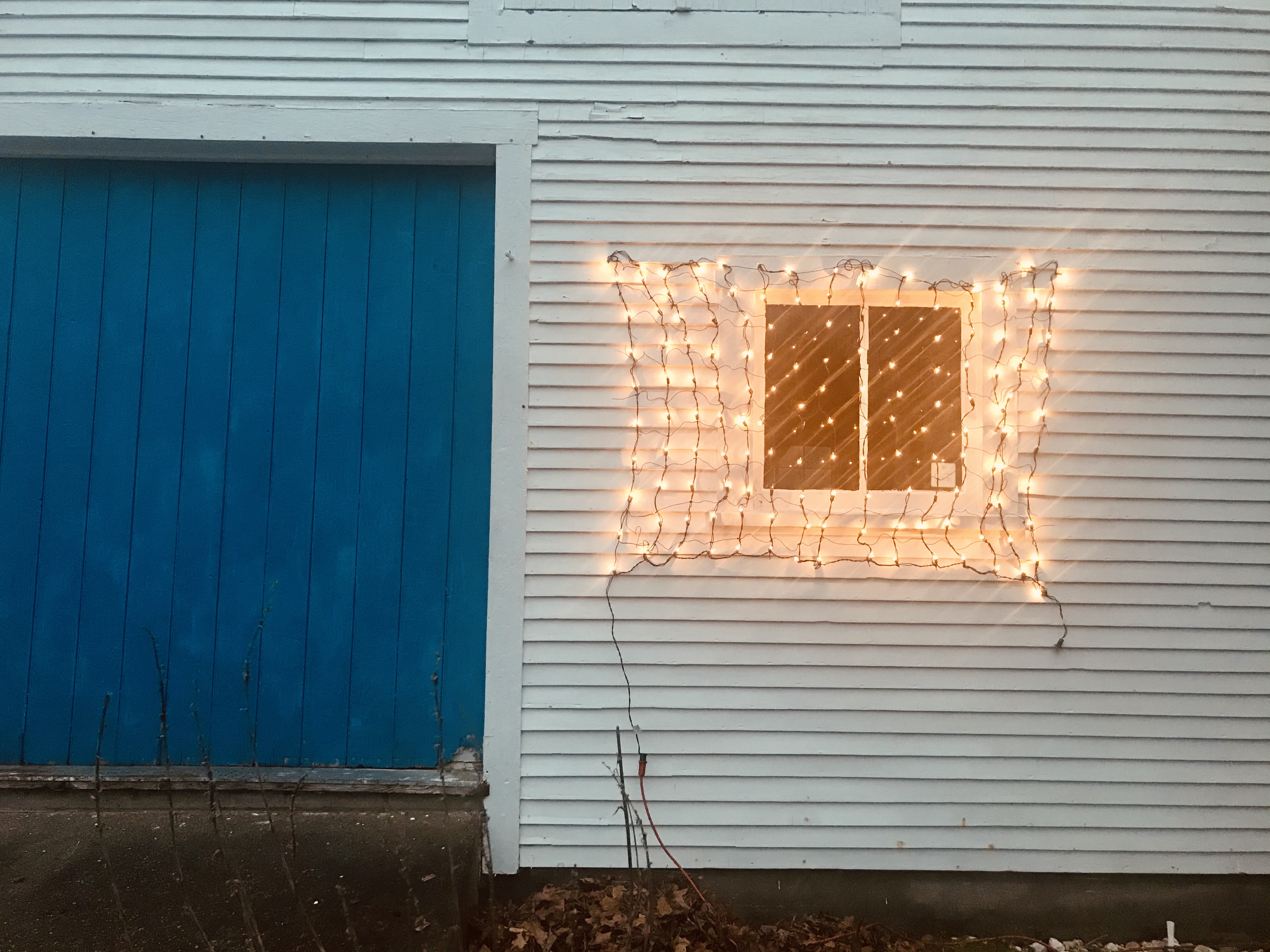
Walking back through town, I admire the holiday lights turning on as the darkness filters down — lights of all colors and blown-up snowmen and reindeer. The day has been unseasonably warm for November. Take this in, I think. And next time, bring a mask and wear orange, too.

“Writing often reveals us to ourselves, lets us name what’s important to us and what has been silent or silenced inside us.”


― Gregory Orr

Pandemic Pause

When I was a young newlywed, I read Green Mountain Farm by Elliot Merrick — a nonfiction account of a Quaker family. At the very end, Merrick ends with a short section saying that World War II changed their lives, as it changed so many lives.

Last evening, after supper and dishes, I was outside, moving stacks of library books from one car to another, waiting for my daughters. Although it wasn’t late, the stars were already spread across the sky. I was waiting for my daughters to come out and join me for a walk.

Finished, I leaned against my car, waiting, remembering how I had walked around this house before I bought it. I had wanted to see how bright the stars were, and if the property had a good view of the moonrise.

My daughters came out. Lit by the porch light, I saw they were both wearing black jackets and scarves. Watching them, I realized my oldest daughter was all grown up. And my youngest? Rapidly heading there.

Tuesday

… one can either choose to live, or not. We have to tell ourselves a story that makes living possible.

— Katherine E. Standefer, Lightning Flowers: My Journey to Uncover the Cost of Saving a Life

And so we go on, telling our stories. My daughter returns from her one high school class on Monday morning, and tells me so many teachers were out.

I head to work, leaving her in front of the wood stove with her chrome book, the cats sprawled on either side of her.

At the library, a teen comes in and tells me he thinks the school will close soon. The teen lives on a back road and can’t drive yet. He’s a voracious reader. In the spring, he told me, he read everything in the house, then everything again and again, and finally resorted to Netflix. I tell him to take as many books as he wants. He fills a bag. When he leaves, I wonder when I’ll see him again. Maybe Wednesday. Maybe not.

And so we go on. I name our little wood stove Jenny.

Okay, my daughter says. She is part of our family.

Stay well.

Warmth

When I return home from work in the evening, one cat is stretched on the rug before the wood stove, the other lies on the coffee table, front paws draped over the table’s edge. It’s a scene of utter cat joy.

My daughters are laughing on the couch about something foreign to me — some kind of iPhone. I pull over a chair and sit down with a bowl of potatoes and vegetables and meat.

While they share a story about their negotiations over dinner dishes and compost and wood chores, I soak in the warmth of our living room.

All around us rages the virus, a rising irritability, utter uncertainty over the future. For years, I’ve relied on my ability to figure out a plan. Listening to my girls, I decide this is the heart of my plan: be like the cats. Drink in where we are now. Let that nourish us. And, for God’s sake, laugh at the jokes the kids tell.

“Perhaps home is not a place but simply an irrevocable condition.” 

— James Baldwin

Sticky Notes

A week of chaos, a jumble of days.

By yesterday afternoon, my desk was littered with multiple sizes and colors of sticky notes, scrawled in my lousy handwriting. Before I headed home, I stood staring at this mosaic and considered chucking the lot in the recycling bin.

Instead, I decided to let that wait until next week.

Despite all this, we’re headed to the state championships for a soccer game — socially distanced, with masks, in the brilliant sunlight. At the beginning of soccer season, in September, my daughter’s high school team wasn’t even sure they would be able to play a game, but it was enough to practice together. Then they lost the first five games. Now, apparently beating bad odds, they’ve progressed to the state championships.

In this midst of utter adult chaos, what a pleasure to see radiant teen joy. Here’s hoping that joy is a harbinger of better days, all around, for all of us.