“Dear March—Come in—”

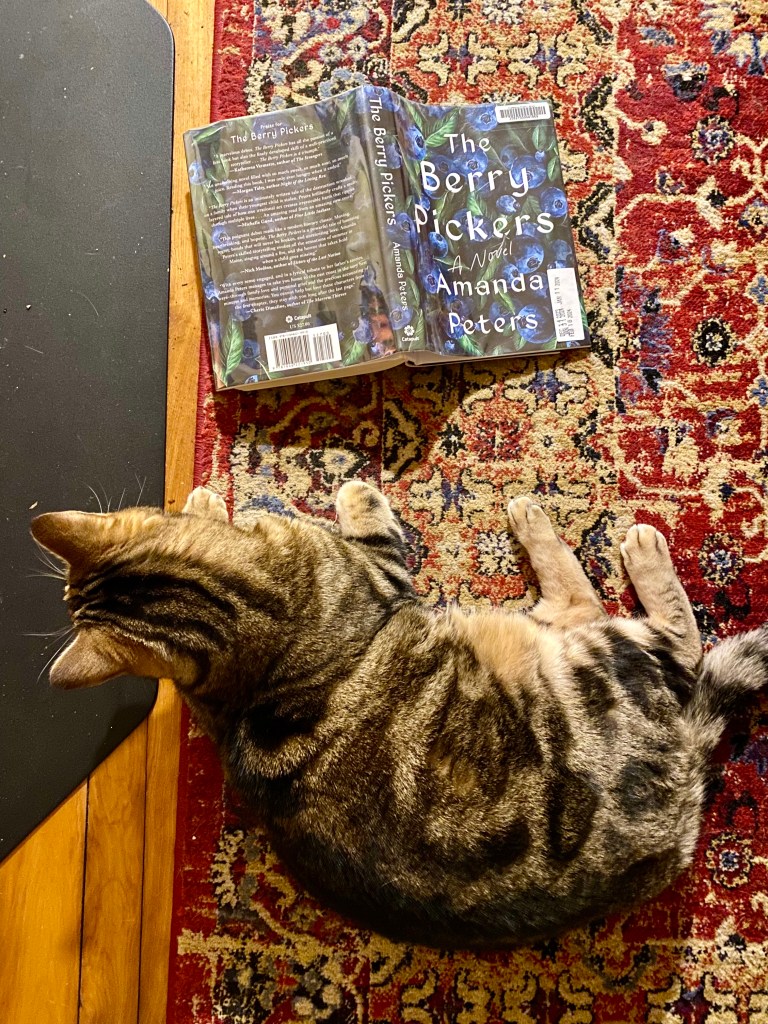
I stand outside eating a cheese sandwich stuffed with a handful of the lettuce I bought for my cat Acer. The trees across the road shake furiously in a wind as if outraged. What’s your complaint, I wonder.

Such a strange winter: a handful of skiing days, no ice skating, the hard cold a distant memory. The yuck of this winter has been the lack of sunlight, the sodden clouds that have lingered from last year’s rainy summer through January’s gloom. We kvetch. My own antidote is the early morning, my insistence that writing, that order and beauty, are a transformative might. There’s nothing new in that approach; it’s the ancient path of seeking luminosity, of Rumi’s words that the wound is where the light comes in.

In March, of course, sudden sunlight in your living room is apt to reveal the dirty cat hair clusters balled beneath your couch, the cobwebs trailing from the ceiling corner, drenched in dust. Make of it what you will.

Oh March, my long-time friend, giver of fine weather, betrayer with your miserable cold snowstorms. In the lengthening days, the sun returns like a long-ago lover. My friend the sun and I take long walks, my sunny friend whispering in my ear that brighter lovelier days are already here.

A few lines from Emily Dickinson:

Dear March—Come in—
How glad I am—
I hoped for you before—
Put down your Hat—
You must have walked—
How out of Breath you are—
Dear March, how are you, and the Rest—
Did you leave Nature well—
Oh March, Come right upstairs with me—
I have so much to tell—

Vermont Town Meeting Day.

Here’s Vermont Town Meeting Day in a nutshell: lousy coffee for a buck, the cash box in the hands of sweet kids who are raising money for field trips the school board quit funding years ago.

My father calls Town Meeting Day the purest form of democracy. And democracy, hoo boy, what a fascinating creature this is.

On this Town Meeting Day in Greensboro, the moderator drank water from a Daffy Duck glass that he said he’d used for the past thirty town meetings (not a tall tale). Knitting and side conversations, Presidential primary voting, school budget voting, knitting and more knitting, talk about housing and logging and, inevitably, taxes and delinquent taxes.

Late afternoon, a cold drizzle fell. On the playground, the kids had left a bucket of stick stew. I had about a hundred things yet to do that afternoon, but I squatted beneath the white pine and checked out the lean-to the kids had built from branches that had fallen in a winter storm. As we head into this election year, let’s remember the kids keep the world real. Savor some spring stick stew.

Democracy is not something you believe in or a place to hang your hat, but it’s something you do. You participate. If you stop doing it, democracy crumbles.

— Abbie Hoffman

March 1: Cabin Fever, the Impossibility of Spring.

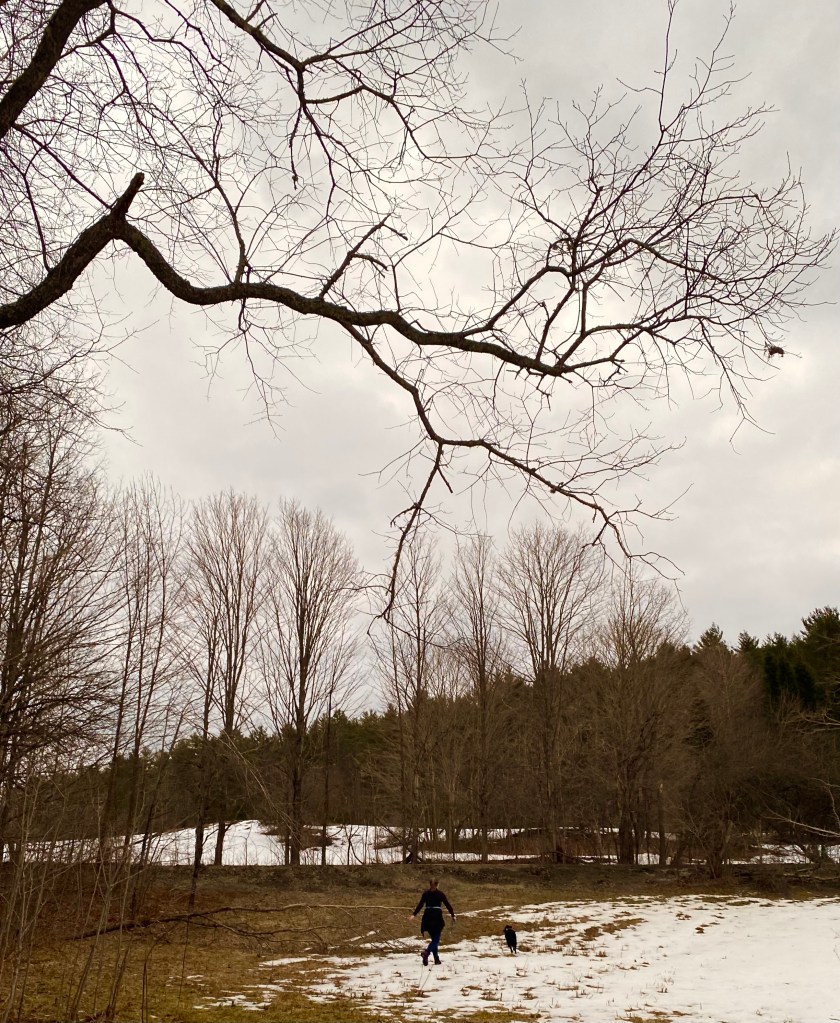
March: a day of singing chickadees, mushy ice, all the little paths running with thaw, twinkling in the sunlight with the promise of what I cheerily call early spring! The next morning, the temperature pegs itself solidly at 15 degrees and refuses to budge. I walk down to the post office, the wind scraping my cheeks. What grit of sandpaper is this? 80? 60?

Vermont late winter/spring is the season of vehement vacillating, of freeze and melt, sun, snow, rain. It’s the season of cold hands, flushed cheeks.

Late into the night I lie on the floor reading Leslie Jamison: “It’s what fairy tales have been trying to tell us for centuries. Don’t be afraid of never getting what you want. Be afraid of what you’ll do with it.”

March: the lurching season of cabin fever, of Where are those crocuses, anyway? Will flowers ever bloom again? I bake a cheesecake, fill bird feeders, have one, two, three essays picked up by little mags. The waning moon shines up the rutted mud, the dregs of snow. Early morning, the birds are at it, singing for dear life, tugging in spring.

Don’t let your cow get the upper hand, er, hoof…?

Ah, February, the month with the strange “U” that children stumble to spell. Two inches of a sugar snow this morning when I carried out the stove’s ashes, the cardinals whistling the day alive, a buttery full moon charming the evening sky. For the past few weeks, my life has overflowed with the challenges of faraway aging parents, with details mundane and immense, and all very very real. There’s that Tolstoy saying about families unhappy in their own way. Carrying in firewood, I remind myself: families endure the unspeakable in their own particular vernacular, swaddled in the way of all human life.

Sugaring season is hustling into Vermont now. The years I spent sugaring with a husband and two young daughters taught me to strip away the unnecessary, to bend into work when bending is required. It’s a habit I’ve carried to writing, and I’ve managed now to write three books against odds that even now seem not in my favor. But it was single parenting that honed my skills to grasp the nourishing in times of hardness, suck hard the marrow of the real. In a conversation with a young homesteader and poet today, she offers me a line of wisdom so pithy and wise I laugh out loud: Don’t let your milk cow get the upper hand on you. Yeah, think that one over.

Here’s a David Goodman interview with Elizabeth Price, mother of the young Palestinian man Hisham Awartani who was shot with two friends in Burlington, Vermont, last November. The family epitomizes courage, knowledge, and depth of heart — highly recommended.

Boots on the Land, the Ice.

I’m meeting someone, late afternoon, who’s late, so I wait. The February sun has dropped into the horizon and clouds, and the day’s softening snow is tightening up, freezing again. I’m along one of the glacial lakes, a deep cut in the earth created by the planet’s unstoppable movements. It’s an old, old lake, not a newer pond formed by a human dam construction. Across from where I stand is the beach where I swam last fall, evenings and weekends. The water is shallow for a short stretch and then deepens quickly. My youngest had just gone to college. I would swim out as far as I could, then lie on the shore beneath the shaggy cedars, reading and watching the loons dive and reappear.

February exposes the bones of Vermont, the land’s steepness, the flatness of ice, the pale grace of a white birch in a hemlock forest. That afternoon, the stranger tells me a story of how the land was divided in families, re-divided and swapped, sold. Around this side of the lake, the state highway was built nearly on the water, and from here it’s easy to see the challenges of traffic and how the road hampers runoff from the mountains. It’s a familiar story that plays out in particulars in all but the wildest places.

On my way home, I stop at the town reservoir and walk a short distance over its ice. Walking on ice is always a kind of magic, a temporary thing. I don’t see the two bald eagles who live here: another day, perhaps.

‘I can feel my life start up again…’

We’ve crossed the halfway point of winter and can, again, believe in the possibility of crocuses, the promise of pearly-and-pale-pink apple blossoms. Monday morning, my friend Brad Ferland invites me onto his WDEV radio program Vermont Viewpoint again. I’m lucky enough to ramble on for a bit about writing, and I spoke a little about this blog. For those of you who are new here, I often write about what the seasons in Vermont mean to me. July is the Swimming Season. September the Season of Fat Sunflowers. February, in my mind at least, is the Season of Hope.

The days suddenly widen and grow. A sunshiny stretch like this, and my state’s collective spirit rises. February is still deep in the Woodstove Season, however, which means, as a writer, no need to worry about missing a few fine gardening hours. The clouds will descend again, and surely I’ll complain (again), but for now, with two days of radiance, savor. Savor.

I feel my life start up again, 
like a cutting when it grows
the first pale and tentative
root hair in a glass of water.

— Jane Kenyon