My House

While the girls and I were taking down screens and putting up storms today, I noticed a pane of glass had fallen from one of the windows. I was alone on the that side of the house and the window is slightly above my head, in an odd place above a bed of chives. This old window had fallen into such disrepair, its glazing entirely decrepit, that the pane had merely slipped down the house. I lifted the glass, about sixteen square inches, between my hands. That window with its peeling teal paint I had intended to scrape and paint this fall, but I had found neither time nor inclination for any of the windows. I held the pane up to the sunlight as if it were a smudged tear from the house, then set it carefully behind the chives where it wouldn’t be broken. I imagined the house shedding that tear of glass in the night.

My house seems more alive to me than it ever has before, with its rooms of children’s artwork, yarn, books, cobwebs and mud crumbles and the crates of garden onions I’ve yet to carry to the basement. Our house sings with light and joy and color in places; other corners need care and paint and trim. Like everything else in our lives, this house has a story, too, one that began before we arrived with the sprawling clutter of our lives, and one that will continue when we are gone, too.

This afternoon, we attended a memorial service for a neighbor, this woman who had helped build so many houses for family and friends. What a good thing, I thought. What a gift that will last.

Storm Windows

People are putting up storm windows now,
Or were, this morning, until the heavy rain
Drove them indoors. So, coming home at noon,
I saw storm windows lying on the ground,
Frame-full of rain; through the water and glass
I saw the crushed grass, how it seemed to stream
Away in lines like seaweed on the tide
Or blades of wheat leaning under the wind.
The ripple and splash of rain on the blurred glass
Seemed that it briefly said, as I walked by,
Something that I should have liked to say to you,
Something . . .the dry grass bent under the pane
Brimful of bouncing water . . . something of
A swaying clarity which blindly echoes
This lonely afternoon of memories
And missed desires, while the wintry rain
Unspeakable the distance in the mind!)
Runs on the standing windows and away.

Howard Nemerov

IMG_0111

Shells, Sea Glass, and Stories

My daughters have no school for a few days, so they came to work with me today, around Mt Elmore, around Mt Mansfield, and along the beautiful Winooski River valley. Inevitably, the drive is longer than I think, after a hurried jumble to get out, we need to leave in the morning, then coffee drinking in the car while the girls either laugh or bicker. The clouds all the way along the interstate were shot through with dark gray and glimmering gold, as if the weather itself couldn’t decide whether to shine or cry.

At the very end of my drive, I arrive at a street’s crest and the city suddenly dips down, and there’s the lake, the great expanse of it, white-capped over cold slate, undulating upward as if twisting deep in its marrow.

My daughters walked off on their adventure, while I went into my windowless office and set my mind fiercely to work. Later, finished, my proofs for weekend work tucked into my bag, I stepped out of that building. The parking lot edges up to a railyard where train cars are stored on dead-end lengths of track, besides enormous piles of gravel, and seagulls swoop down over the lot, hungrily screaming. With my face up to October’s meager’s light and the wind gustily blowing, I thought of the college class with aspiring writers I sat in yesterday, where we talked about the story beneath the story. This odd lot was rife with stories, stretching on out to the mighty granite block building at the corner, where commence a hundred years ago must have once teemed at the lake.

My daughters returned from their exploration along the lake’s edge, where they discovered diminutive shells and sea glass, more bits of stories carried out of the lake and into their hands.

Everything that does not migrate
has fattened up, bedded down,
cocooned up, and seeded itself.
Life’s two principles–
reproduce; survive to reproduce again….
And by this process, even beyond
the evident hand of man, the world
slowly changes utterly.

– Leland Kinsey, Winter Ready

IMG_0140

Beside Lake Champlain, Vermont

Seeds

After a morning’s work, I stepped out on the balcony and saw wild turkeys slowly picking their way through the frost-bent buckwheat around my garden. These birds are amazingly large, with their red and gum-blue heads vibrant colors against the autumn’s gold. By the time I was in the garden, the turkeys had gone on their way, back into the woods.

With my hands, I tore out the pepper plants, the marigolds and nasturtiums, the cosmos, the end of the squash, these beauties finished for this year. The sunflowers and zinnias I left standing, heads bent down, yet rich with seed, for the birds.

Life is not orderly. No matter how we try to make life so, right in the middle of it we die, lose a leg, fall in love, drop a jar of applesauce. In summer, we work hard to make a tidy garden, bordered by pansies with rows or clumps of columbine, petunias, bleeding hearts. Then we find ourselves longing for the forest, where everything has the appearance of disorder; yet we feel peaceful there.

–– Natalie Goldberg

IMG_0131

Garden/West Woodbury, Vermont

Singing and Writing: a Small Blue Book

The other morning, between errands, I stopped in at Bear Pond Books in Montpelier, and found a small novel by Tomas Gonzalez, a Columbian, In the Beginning was the Sea. The book is beautifully crafted and fit just about in the palm of my hand, yet with a real heft and weight. And – it was my favorite color: blue.

These past few days I’ve swum down into the sea of this book. I’m not at all likely to head south to Columbia, and the book itself is not gleaming feel-good read. But it’s writing with a depth that goes down and down, and is as true and real to me as drinking a glass of my own well water.

As a Vermont writer, I’m often asked about sense of place and its importance in my writing. Yes, of course, place-centered geography centers in my writing. But equally, I know, the beauty of  a tropical paradise can also drive an inhabitant over the edge, and to write with a sentiment that place is only holy seems false to me. Surely, the yingyang flip of holy is unholiness. While this short novel holds the beauty of human life and the moonlit sea, the writing also contains the deeper elements of all the vagaries of human existence.

“So WHY does our writing matter again?” (my students) ask.

Because of the spirit, I say. Because of the heart. Writing and reading decrease our sense of isolation. They deepen and widen and expand our sense of life: they feed the soul… We are given a shot at dancing with, or at least clapping along with, the absurdity of life, instead of being squashed by it over and over again. It’s like singing on a boat during a terrible storm at sea. You can’t stop the raging storm, but singing can change the hearts and spirits of the people who are together on that ship.

— Anne Lamott, Bird By Bird

IMG_0124

Storm Windows, Fiction

While I was at work yesterday, my daughters washed and latched storm windows on the kitchen windows. They also biked in the season’s first snow, baked a chocolate cream pie from Pie which the younger daughter is reading, argued, played memory games, and spread out a rug in front of the wood stove as an official opening to the wood stove/snow season. Already, the piles of games and books and knitting are growing in uneven piles on that rug.

As my own book nears its publication date, I’m pushed to speak more about how I came to write this book, and why. In my own busy household that mixes children and rural Vermont, what’s increasingly clear to me is that writing is a human activity as essential to our lives as stocking your root cellar or bank account or however you do it for the long, colder season ahead. Our culture emphasizes material gain above pretty much everything else, but, really, at the day’s end, there’s little else of relevance besides stretching your bare toes toward a hot fire, with the children nearby, and the windows buttoned up against the growing dark and cold.

The society to which we belong seems to be dying or is already dead. I don’t mean to sound dramatic, but clearly the dark side is rising. Things could not have been more odd and frightening in the Middle Ages. But the tradition of artists will continue no matter what form the society takes. And this is another reason to write: people need us, to mirror for them and for each other without distortion – not to look around and say, “Look at yourselves, you idiots!,” but to say, “This is who we are.”

Anne Lamott, Bird by Bird

IMG_0119

October/West Woodbury, Vermont

Stellar Fifth Grader

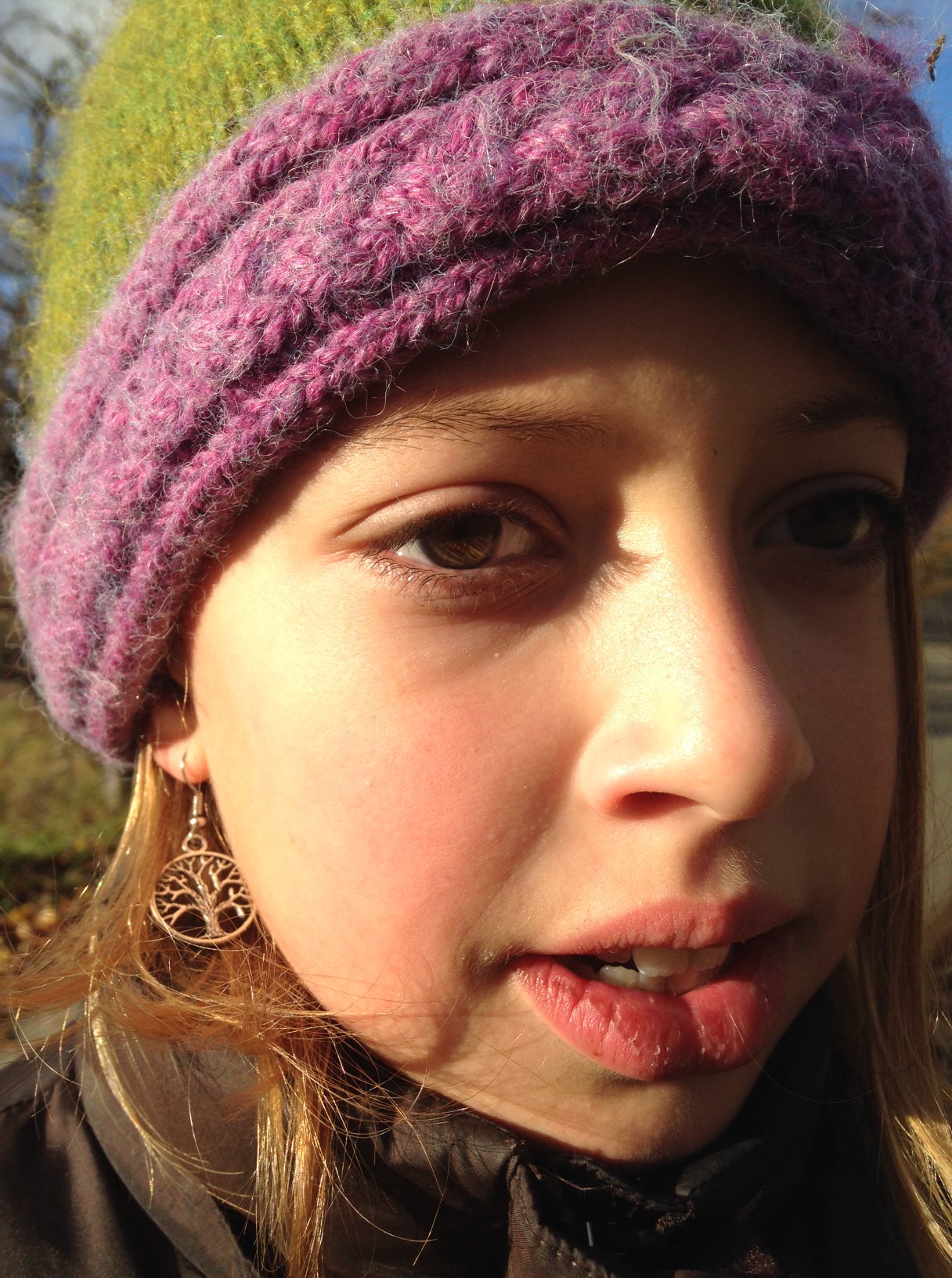
My teenager often ponders her career path these days. She wants a salary (likely because neither of her parents, being self-employed, ever managed that little detail). She wants to love what she does.

My younger daughter listed the various what-I-want-to-be desires she’s cycled through: a pop star, a race car driver, a jeweler in Boston. Then she thought for a moment and said, I’m happy doing what I’m doing now. I’m a really good fifth grader.

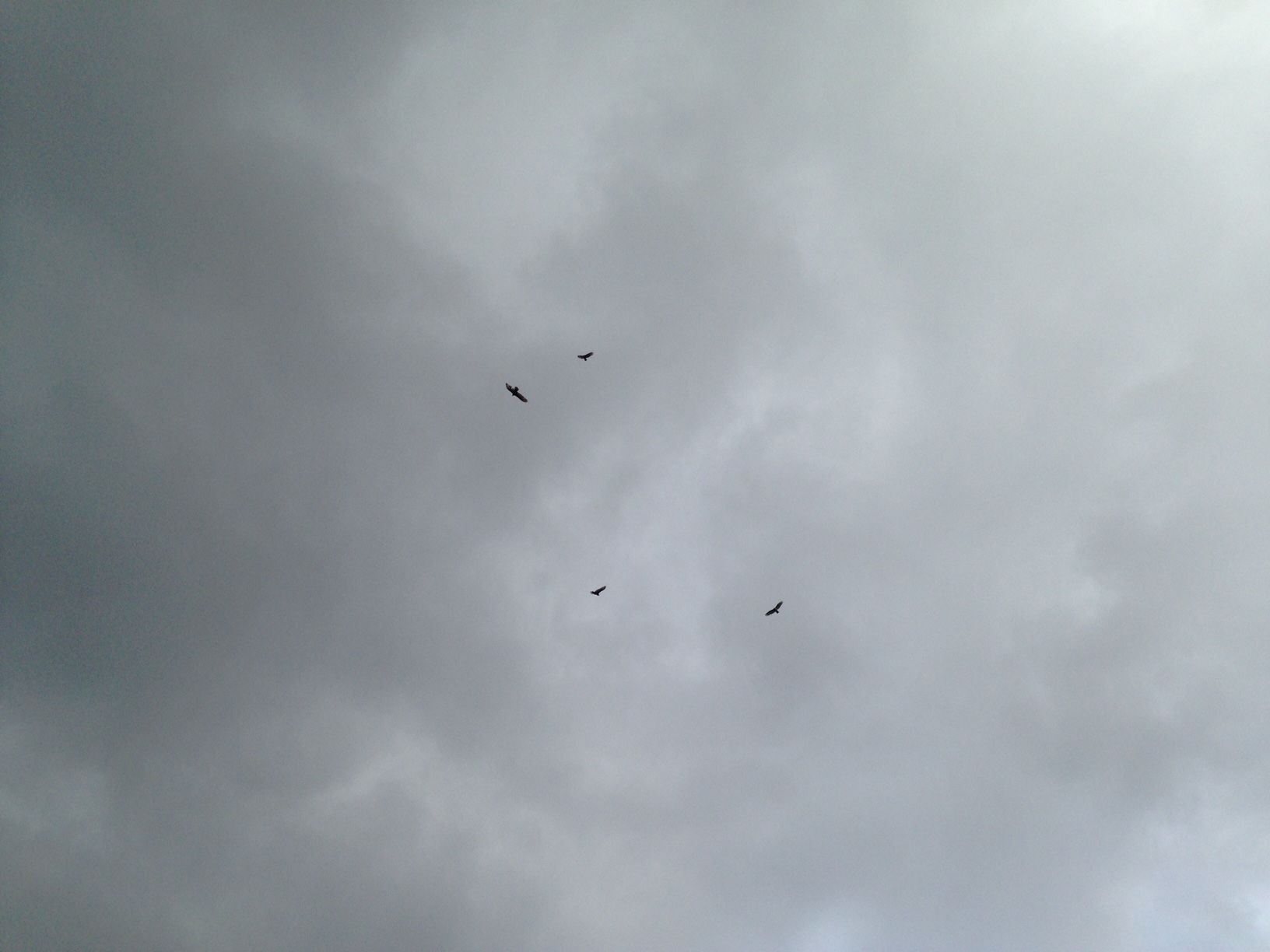
I interrupted their conversation to pull over on the road’s shoulder at the mini-storage, and we stood on a strip of frost-bitten grass staring up at a confluence of turkey vultures, circling around and around in the air currents.

Back in the car, my older daughter in her pragmatic way told her sister, Do fifth grade while you’re there, and then worry about the rest of your life.

If these rescuers (of Jews in WWII) had anything in common… it was self-knowledge. When you know yourself there is little to say. This is worth brooding upon as we consider how we, who know ourselves so poorly and have so much to say about ourselves, will respond to challenges to come.

— Timothy Snyder, Black Earth

IMG_0105

Hardwick, Vermont