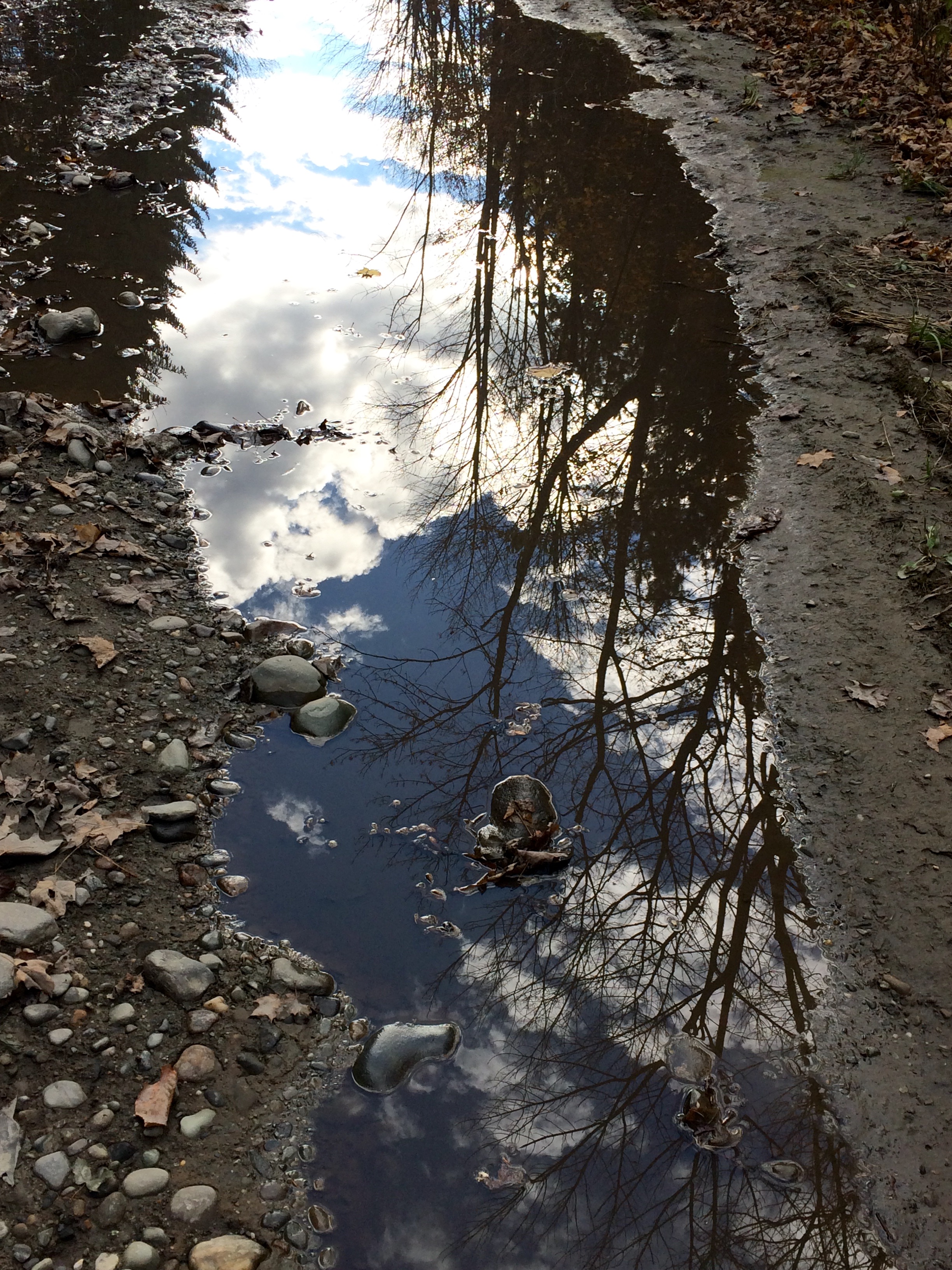
November Blooms

I drove along the road to East Hardwick today, a narrow road I’ve driven countless times. I’ve transported numerous kids in many vehicles, often to the lake’s beach, wearing our swimsuits, the trunk filled with floaties, our bags packed with sunscreen and snacks and knitting. This road means to me little children in diapers, stacks of library books, and the long winter the crew worked on an old farmhouse along this road. The snow blows mercilessly across this road. This road means the public library at the end, and the general store where I buy groceries, mud boots, sugaring supplies and lemonade.

Today, driving a companion to a doctor’s appointment, we talked about his dream to get piglets and sheep. You have to think about something, he said.

There’s a line from a TC Boyle novel, World’s End, where a character defines himself as hard, soulless and free. How I aspired to that in my brash youth. But now, fully immersed in Dante’s woods, I see hardness crazes and breaks, whereas a malleable heart, smeared across the terrain of a road and intersecting journeys and lives, offers a tensile strength, the possibility for growth, the chance to bloom in this brief, dear life.

… The spring
will come soon. We will have more birthdays
with cakes and wine. This valley
will be full of flowers and birds.

–– Hayden Carruth

IMG_2678

Molly S. Photography

Fear of the Dark

I wrote my novel Hidden View in bits and pieces, in notebooks, on a computer, in endless rewrites on the back of printed pages. I began this book during my daughter’s nap time, those golden hours when I could sit down and breathe creativity in the solitude writing demands. I wrote for no one but the novel itself: to write as well and truly as I could.

This book has joined the world. It’s out there, for the taking and reading. When I think about what made this book, I took what I had at hand: a ball of yarn, imaginary rabbits, Vermont’s exquisite and desolate winter, a house both a solace and a menace. But equally driving the book are three forces. One of these is mothering. Like the ceaseless gritty wind in a canyon, my children have formed and hewn me, in a multitude of ways I never could have imagined. My children are my anchor, the physical weight that has pinned me to this soil and forced me to know the world in an expanse I never could have imagined.

When my older daughter was a baby, my husband left the state for work, and the baby and I remained. On a 100 acres, our house is surrounded by woods. At that time, I was afraid of the dark. When the baby slept at night, I had to walk down to the unlit sugarhouse in the dark, by only the thin light of a flashlight and the stars overhead. Those months were late fall then, around this time of year, and the nights were cold. The rural dark in Vermont is so profound I have held my hand inches before my face and yet been blind to my own flesh. I forced myself to go out in the dark, because I knew every journey would lessen my fear. And I knew I could not mother this baby, in this house, in this agricultural life, if I feared the dark.

Of the dark, at least, I am no longer afraid.

The true self seeks release, not constraint. It doesn’t want to be corseted in a sonnet or made to learn a system of musical notations. It wants liberation, which is why very often it fastens on the novel, for the novel seems spacious, undefined, free.

–– Rachel Cusk

IMG_0262

Milkweed Seed/Morrisville, Vermont/Photo by Molly S.

Wild Gulls

In Vermont, November is a month of diminished color, the profusion of blooming gardens long since gone the way of frosty death. This afternoon, I stopped by the Hardwick reservoir, drained low. Seagulls crouched in the center, surrounded by shallow water skimmed over with green algae. The summer lake had sunk into a thick, foul-smelling muck, its bank strewn with a rusting car gas tank, broken bits of plastic, crumpled paper cups. The creatures had left their debris, too. My fingers reached down for an emptied snail shell about the size of a quarter.

A mist began falling, and the wind blew dried leaves. A flock of gulls, far down the reservoir, lifted into flight, a great white undulation of wings, rising and falling, carrying these birds across the sky, spread out between the water and sky like dozens of fluttering prayer flags. They landed and hunkered into small knobs on the muck.

I had stopped there hoping to see a heron with its immense wings and steady flight. Instead, these common birds – the trash pickers and pesky divers –  opened like an ornate fan in surprise and exquisite splendor, pristine white against the gray sky and trees, before folding shut again.

…Whoever you are, no matter how lonely,
the world offers itself to your imagination,
calls to you like the wild geese, harsh and exciting-
over and over announcing your place
In the family of things.

— Mary Oliver

FullSizeRender

West Woodbury, Vermont/photo by Molly S

Child’s Starry Point of View

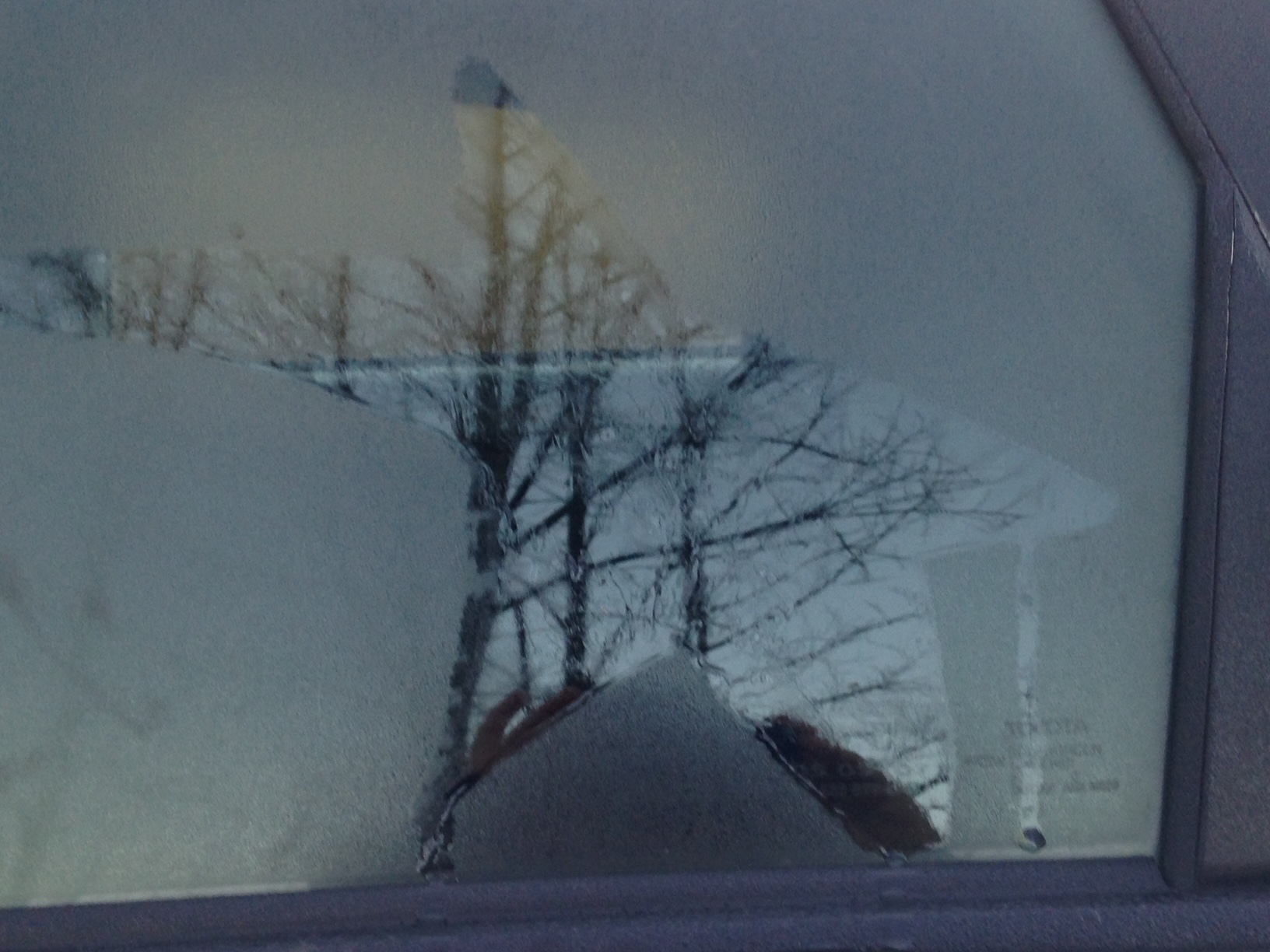
This November morning, stepping out on the porch in the early light, the air was balmy, that tender place of a nascent day. In the dew on the car’s back window, my younger daughter rubbed a five-pointed figure. So I can look out through a star, she told me.

From the clear day on our hillside, we drove down into the thick fog along the Lamoille River, and then up through the Woodbury gulch, where the clouds thinned and abruptly ceased. When we got to school, she gathered her things, then stood for a moment outside the car, looking at the window where the star had disappeared, leaving no trace.

She tipped her head to one side and pressed her hand over the glass. I asked her name.

She shrugged and laughed, then went into school to begin her day. Overhead, a heron winged its silent way to the wetlands.

If gold has been prized because it is the most inert element, changeless and incorruptible, water is prized for the opposite reason — its fluidity, mobility, changeability that make it a necessity and a metaphor for life itself. To value gold over water is to value economy over ecology, that which can be locked up over that which connects all things.

— Rebecca Solnit

IMG_0223

Ten-Year-Old Point of View

Both my children were very much planned and desired babies. I desperately – more than anything – wanted to become a mother. But what I didn’t anticipate was how much fun the kids would be. Now years past the baby and toddler stage, I returned from another long school meeting to my children reading beside the wood stove. The younger daughter, when she looked up at me, immediately launched into the rather long and complicated plot of the novel she’s reading.

She rubbed her fingertips over the pages and said, I love this book.

I love that she loves this book. Of course I do – I’m a writer and a reader myself – and, for  better or worse, I know parents often desire their children to be at least somewhat like themselves. Beyond myself, though, this child at 10 is opening up into her own person, too excited at night to sleep because she’s excited for school the next day. She’s curious and questioning and articulate about her world, living more deeply into what a writer calls POV: point of view. Her POV is her lens of the world, dynamic and shifting and, generally, infinitely interesting to me.

What’s most intriguing is that this child is decidedly not me, that she’s her own unfolding person. By the roadside this morning, on the way to school, she released a mouse from the trap. Look, mama, she insisted. The mouse is cute, really.

I crouched down beside my child and joined her point of view for a moment. The mouse, I saw, was perhaps not that vile, after all….

Take point of view. Editors will breezily comment that POV is child’s play, that naturally one is on top of simple stuff like that. But one is not. POV is far more subtle, complicated, and permanent….

–– Thomas McCormack

IMG_0220

West Woodbury, Vermont, November

Gift of Abundance

When I belonged to the Stowe Farmers Market years ago, as a maple vendor, I knew many farmers. For innumerable reasons, I admire the tenacity and dedication of small scale Vermont farmers, but at the end of this November day, I admire my neighbors for their practical generosity.

For an ill friend, a single father, I stopped by one farm and the back of my Toyota was loaded with carrots, onions, beets, potatoes, squash. I was told that the door’s open; come back. I dropped these boxes at his house, where two young women mopped the kitchen floor. The freezer, empty yesterday, was filled with beef from a nearby farm.

I would never want to sentimentalize my hardscrabble state, but in the face of dire unhappiness, time and again I’ve seen farmers give unstintingly – perhaps in the knowledge that larders fill and dwindle, and fill and dwindle again, as the time of need comes knocking on everyone’s door.

John Cheever famously said, Writing is not at all a competitive sport. How often I think of that line – in school board meetings, for instance, when I think, Educating children is not a competitive sport. Nor is life. In this season of diminishing light, anyone whose hands work the earth knows we’ll each meet our own comeuppance one day, and if golden beets and garlic sweeten our days until then, how lucky we are.

IMG_0212