Evening Out — Of Sorts

A friend and I stand in the high school parking lot, watching our daughters finish soccer practice on the field. At least, I say as the girls walk towards us, laughing and talking, they’ve had one practice.

That’s where we are — maybe our world will fold up again tomorrow, but at least the girls had an afternoon together, running on the field on this sunny August day.

At dinner, I quickly realize the soccer team is angry about a school board position, and my daughter glares at me. I have a seat on the board; I listen to her complaint, and think, Let her be mad at the board.

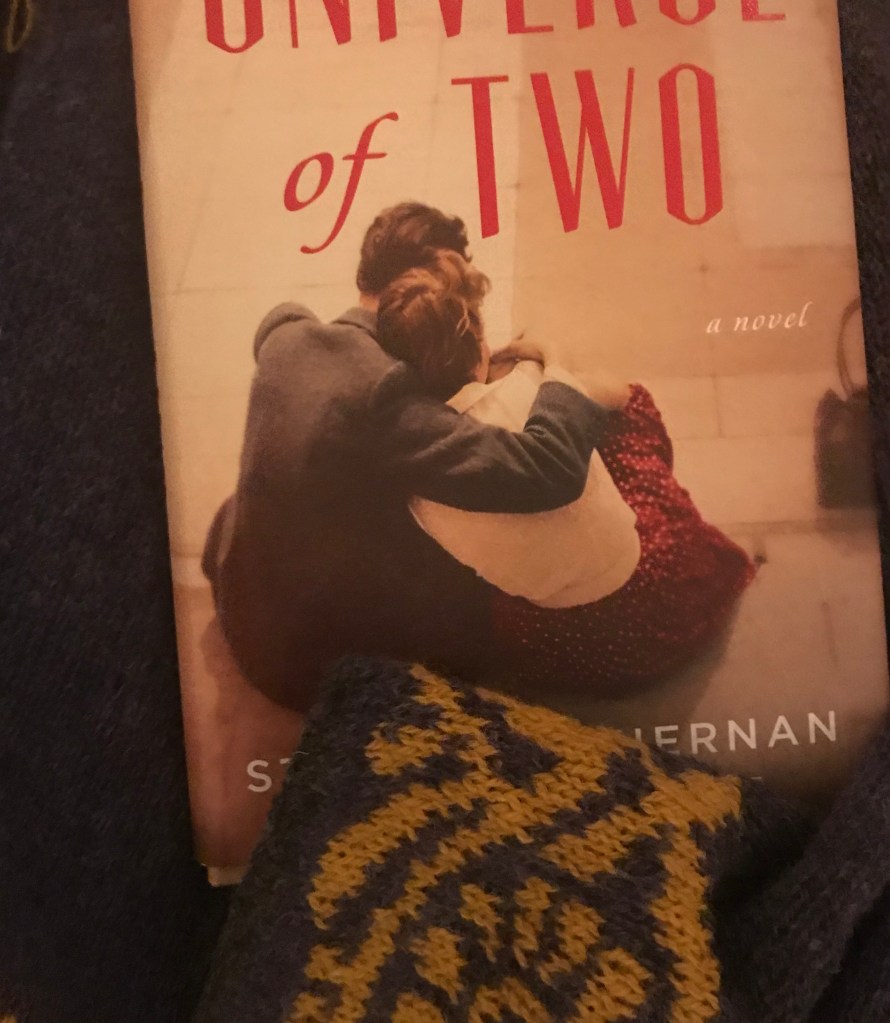
I almost don’t head down the hill to Atkins Field, for the first reading I’ve attended in months, in a beautiful post-and-beam gazebo. A strong breeze blows up, threatening rain. There’s just over a dozen of us, bundled in jackets and blankets folks have pulled from their cars, sitting in lawn chairs. I’m regretting coming, when the author begins speaking. I’ve heard this author before — Stephen Kiernan — and loved his stories. Before coming, I knew nothing about his book, but as he begins speaking, I realize the book is about Los Alamos — a place I know. I put away my knitting, huddle into my chair, and listen.

The dusk comes down. Across the way, I see a single turkey vulture flying across dark clouds, its rising wing glossy with sunset as it struggles to fly into the wind.

At the very end, Kiernan reads the opening page of his book. Kiernan reads particularly well. Listening, for just a moment, I sense all these things coming together — the craziness of attending a reading spread out with masks, unable to whisper and giggle, the ever-present pandemic, but also the setting of Kiernan’s book — WWII — and how ordinary people have endured through terrible times, and we will, too. The chilly wind reminds us of autumn’s imminence, but for these moments, the beauty and power of Kiernan’s writing pulls us together.

And when I arrive home, my daughter is waiting for me on the porch, happy again to see me.

“I met Charlie Fish in the Chicago in the fall of 1943. First, I dismissed him, then I liked him, then I ruined him, then I saved him.”

— Stephen Kiernan, Universe of Two
August

Sunday morning finds us walking in the rain on Nature Conservancy property — a place I’ve visited for over two decades now. We meet another couple walking a small pug. Other than that, no one other than cows.

We walk along old farm roads, flanked by towering maples, looking for wild raspberries. The rain warms into a humid mist.

Immense maple, white quartz, rusting barbed wire fences, myriad shades of green. Here’s where we are, and nowhere else.

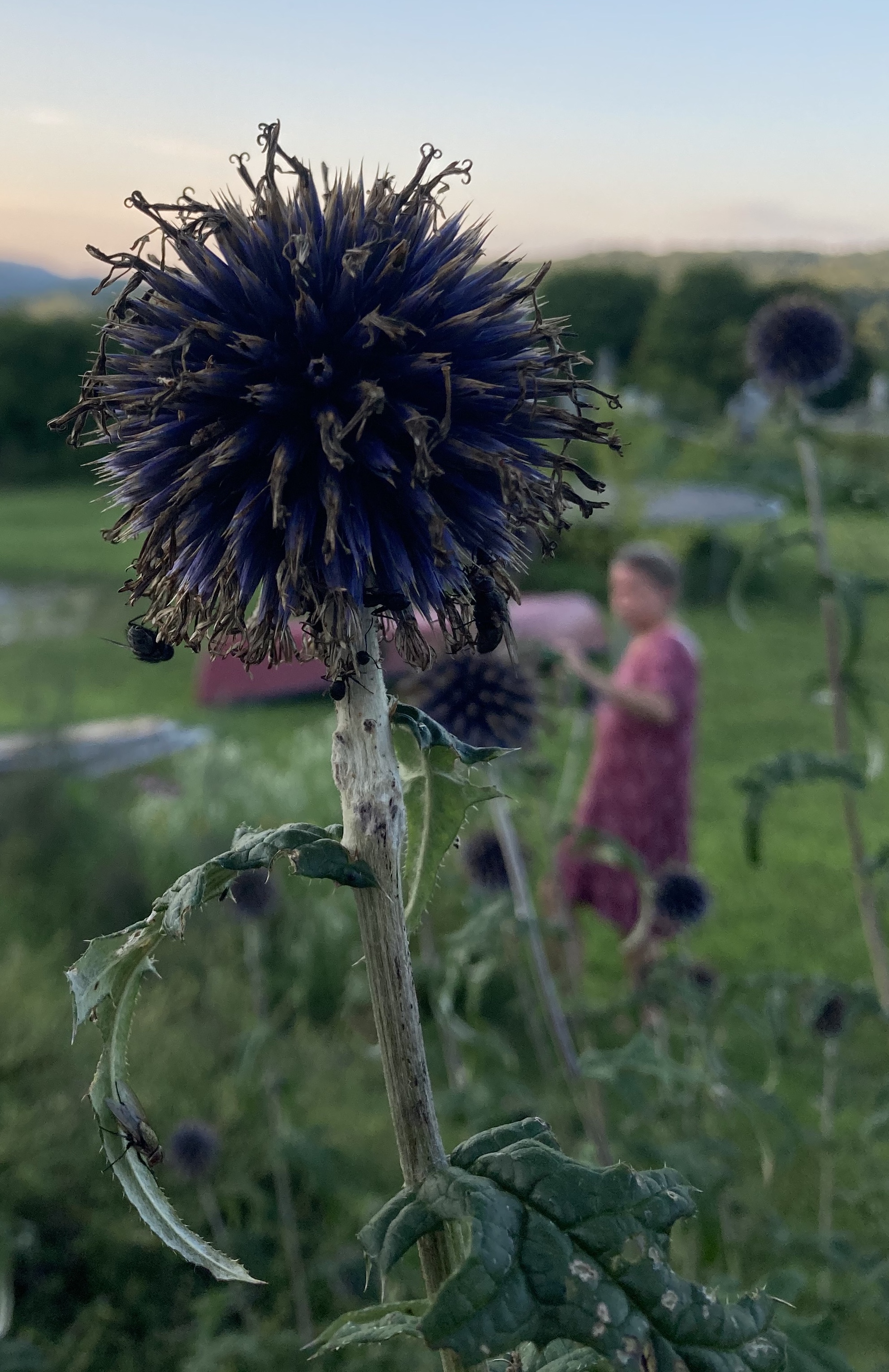
At home, the garden has grown half-wild, the cosmos taller than my head. That evening, eating sausage and onions and peppers, we sit outside, talking. Even for the teenager, everything drops away — maybe school? maybe soccer practice? — as the warm August evening slowly pushes in.

A crescent moon lights the sky over our house. My oldest yawns. There’s nothing else but this moment.

The oak tree:
not interested
in cherry blossoms.

— Basho

Random Evening

After dinner, I suggest walking to the post office with the mail that needs to go out.

My 15-year-olds says hopefully, Drive?

I’d rather not. I rather walk by the food pantry and admire their stunning flower garden before this season’s blossoms fade, but I say sure. For a few more months, she can’t drive without me.

There’s hardly anyone out this evening, as she drives to the post office, then up to the high school where she parks, and we laugh, and we walk around the building. The school’s been closed for months now. Weeds from the front flowerbed spread across the cement walkway.

There’s no one around. A heron wings across the sky.

At the parking lot’s exit, she brakes and asks me, Which way?

You’re driving, I answer.

She turns away from home.

As she drives, I think of that old cliché, that having small children brings you into the hear-and-now. Same for the pandemic, I suppose. She circles through town and stops at the community gardens, where I get out and admire the raised beds.

Each of these days is a kind of bouquet — filled with work and exhaustion, with garden picking and wood stacking, with my daughter’s wondering, Will soccer really begin this Monday?, with our little family, sometimes getting along, sometimes out of sorts, but always pulling together in one way or another.

As she drives, I think of history and all the hard, hard times people have endured. The future lies before us, a great unknown, and yet, each day, this daughter edges one day closer to her own womanhood.

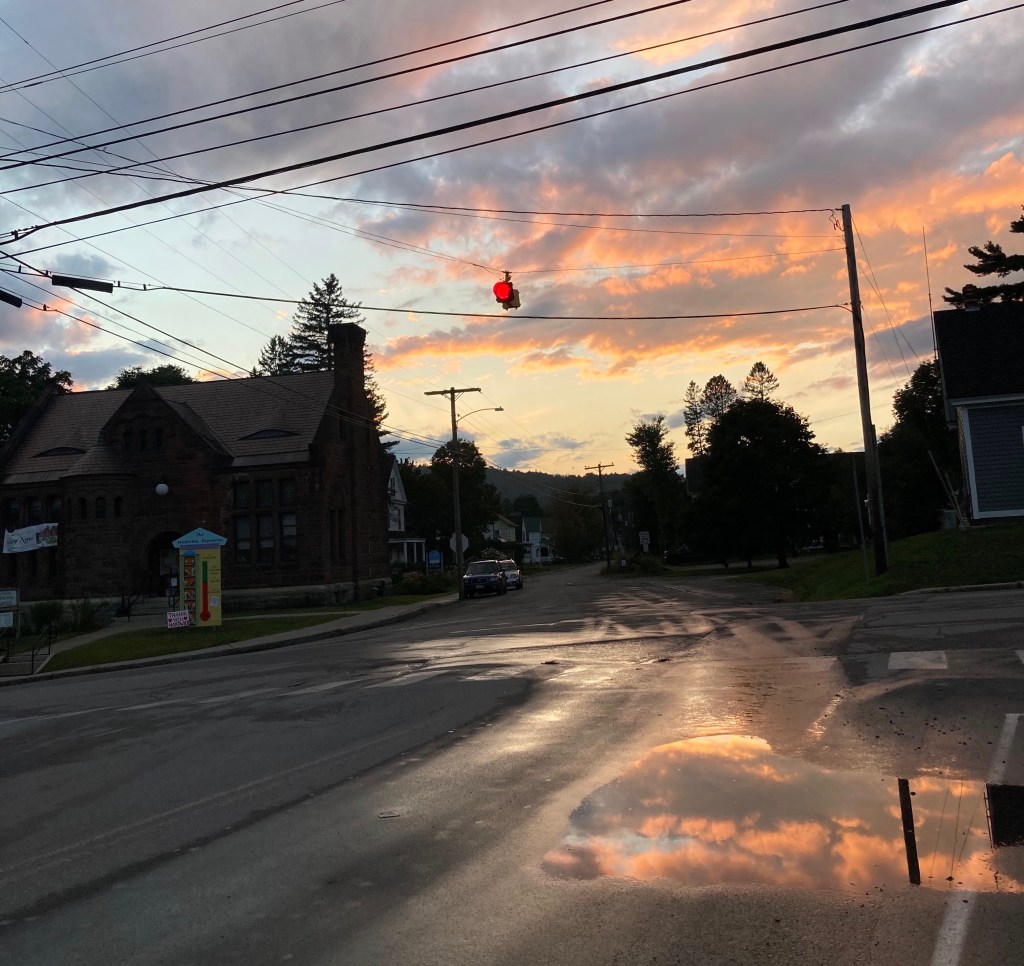
She pulled over to the side of the road, parks, and get out. Look at the sky, she says. She snaps a photo, making a memory of these days.

Photo by Gabriela S.

Outside of Time

For work reasons, I’m often driving these days on a backroad in Greensboro, Vermont — a wooded stretch of dirt road with few houses. At a particular place, I always remember the August day when I was driving along with a friend, our two five-year-olds in the backseat. The five-year-olds were likely conspiring or arguing. We were driving home from a circus performance in a tent in a large hayfield.

My friend got out of the car and ran off the road with her camera. She wanted to photograph some giant flowers in the woods. Were they Giant Hogweed? Cow Parsnip? She took her time while I stayed with the five-year-olds. The kids were buckled in, and we weren’t letting them out.

Oh, August. Memories upon memories. Who wants to remember January with its endless days of 20 below zero? But August? Somehow, in these days, we’re always young parents, with that enthusiasm for enormous wildflowers and all the time in the world to take photos — at least for these few, gorgeously shimmering days.

IMG_8163

Photo by Gabriela S.

More Summer

Every month might as well be a whole entire season in Vermont. August is the month of the best things — wood stacking and pickle canning, tart made from the first fruit from our tree, whipped cream, purring cats, and all this sunlight. Sure, we need rain, but in Vermont I can’t help but relish these days after days of sunlight. Early mornings, I work outside on the deck, the air chilly, drinking coffee, watching the rising sun pinken the horizon.

For a brief bit of time, I’m ignoring the math of counting down to autumn.

Saturday afternoon, my older daughter suggests eating tart before dinner. Why not? Really, why not?

So we do.

Late August, given heavy rain and sun
For a full week, the blackberries would ripen.
— Seamus Heaney, from “Blackberry-Picking”

IMG_8171

Small Joys

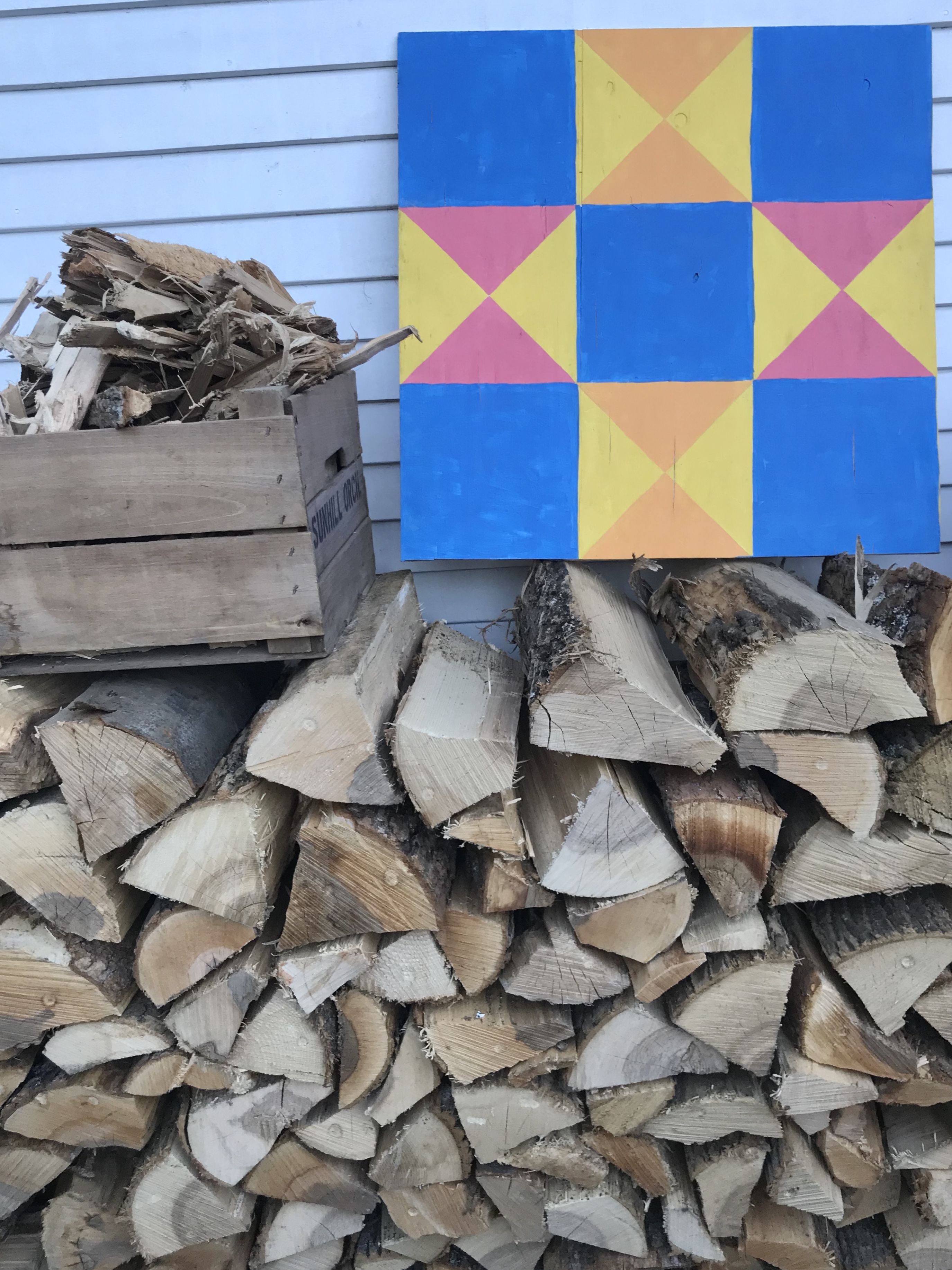
Friday afternoon, I knock off work early and stack wood with my youngest.

She’s a far better wood stacker than I am, precise in her ends, creating long tight rows on our porch. About the only thing I have going for me is endurance; I’m determined to stack it all, on this fine sunny day — that endurance, and my utter pleasure to be working outdoors, breathing the sweet smell of sap.

She rakes the piles of bark and the slivers we’ll use for kindling, as we talk about little things, nothing much. Later, she swims with a few friends, the three happy. Seeing her happiness fills me with joy.

On the cusp of school reopening, uncertainty is palpable. Will school open for a week? A month? What kind of crazy plan is this? Like most parents, I’m wondering what’s the way forward? What’s the way to feed her desire for learning and friends — in a pandemic? Who knows?

When I set the rake back in the barn, I find our hatchet. Its head is dull and loosened, in need of repair. Years ago, ax repair would have been my husband’s purview. I hold its hardwood handle. Okay, I think. Find a different solution.

The neighbor’s cat sprawls on our woodpile, gray belly up to the sun, purring.

The cool breeze.
With all his strength
The cricket.

— Issa

IMG_8167.jpg

Photo by Gabriela S.