Failure and Writing

One of the real assets to working in a bookstore is the Advance Reader Copies–those paperbacks that appear in a white box shortly before everyone else gets their hands on them. Early this morning I read a little book of Pema Chödrön’s, Fail Fail Again Fail Better but, heads up, the interview at the end is the better part of the book. An eighty-year-old nun now, Chodron is refreshingly honest about her mistakes as a young woman, her two failed marriages, her struggles with parenting.

In this book, she writes about how to live a life in the present–with mindfulness–and yet acknowledge the wrongs we’ve all committed in our lives. In other words, how to reconcile what we’ve screwed up–and we all screw up, badly, one way or another–with a creative and loving and productive life. Isn’t that a fine place to aim for? To hold the past, acknowledge it, hold it before you like the foulest and ugliest of your fears, and yet move on.

Canoeing with my daughters today is a wholly present moment–sunlight and dragonflies, the water almost too warm at the surface, then cooler the deeper down I dove–and yet I carried with me, secreted, as if beneath a middle rib, thoughts of the book I’m rewriting–taking apart and taking apart–and will begin to put back together, better. Finer. Smarter.

“Fail better” means you being to have the ability to hold… “the raw of vulnerability” in your heart, and see it as your connection with other human beings and as a part of your humanness. Failing better means when these things happen in your life, they become a source of growth, a source of forward… If it’s something like writing, just start–don’t not write the book.

–– Pema Chödrön

IMG_8448

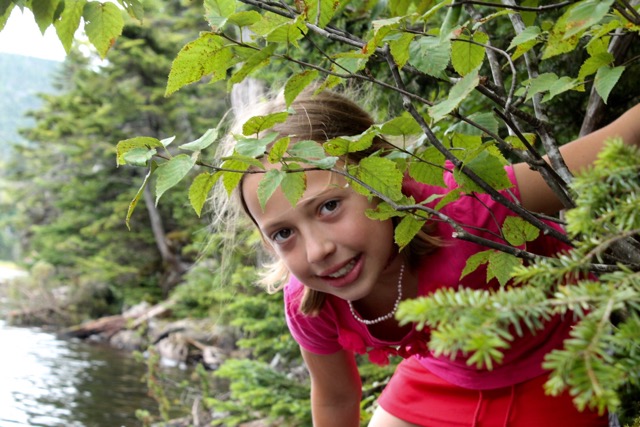
Photo by Molly S. Number 10 Pond, Calais, Vermont
Writing Your Life

By this time of year in Vermont, much of what will come to fruition has been sowed and thrives. You’ve either had a crop of blueberries or not. The strawberries have long since gone by, only the verdant green remaining. Carrots, kale, squash, all should be well on their way.

What’s gone is gone. My chard, devoured by the woodchuck, will not grace my kitchen table this year. This digs at the question of poetry. I could turn my gaze and blind myself to how my garden lies at this time, weedy and gnawed in places, the peppers sweet and savory, the green ripening on the ear, the cucumbers proliferate. A metaphor for raising a child, acknowledging where wiser tending could have happened – or not. The elements of rain and cold and disease will thrust in.

But writing, perhaps, is a different endeavor than life. You get a rough draft; with diligence, you can rewrite and rework, burnishing your words. Easier, less risky, less dear.

Isn’t this all a matter of hunger, of desire in one raw form or another, a great maw of longing for satiation? The woodchuck to fill his belly. The carrots to thicken. A writer’s desire to reflect and hold the world’s mysterious complexity and beauty. A child’s yearning for growth and expansion.

A mountain can be a great teacher–not only because it manifests that cosmology of sincerity and restless hunger with such immediacy and drama, but also because it stands apart, at once elusive and magisterial…. (Walking up Hunger Mountain) reminds me yet again that things in and of themselves remain beyond us, even after… the most concise and penetrating poem.

–– David Hinton, HUNGER MOUNTAIN

DSCF0031 1

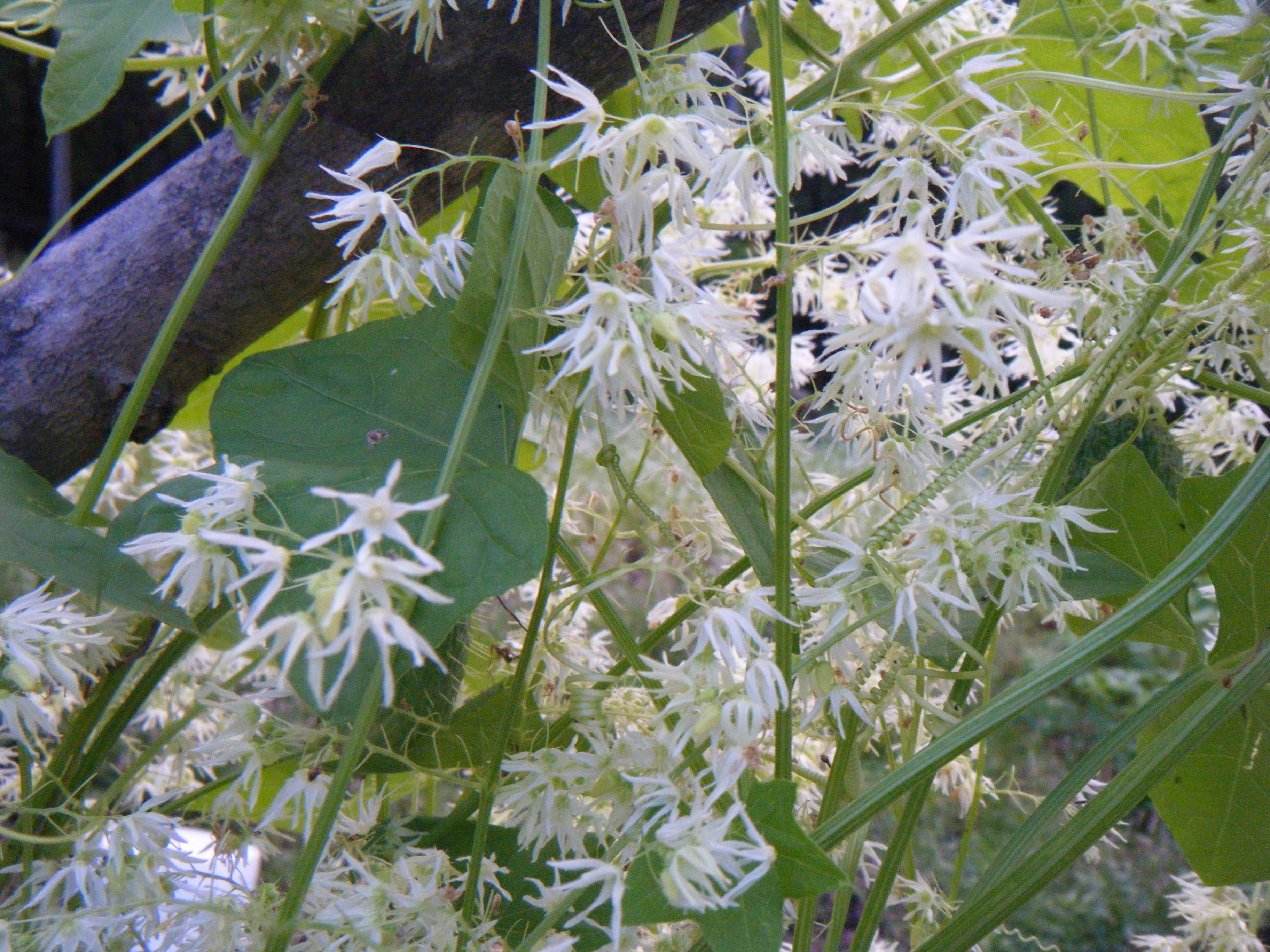
Wild cucumbers.

Storytelling, or What to Learn From a Ten-Year-Old

Smugglers Notch perches high up in Vermont’s Green Mountains, a haven of enormous, tumbled boulders. We hiked up to pristine Sterling Pond, then the children played in the caves at the trail’s origin. On a lichen-covered boulder, high up above the road, my younger daughter claimed her house. She invited me in, and, like any proud householder, showed me the hemlock stoutly growing in the midst of her living room. Out of the rock, she said, this tree grows.

When it comes to storytelling (and it’s all storytelling) I often tell my students that we need to be dumb like animals. Storytelling itself is primal. It’s the way we’ve always come to understand the world around us–whether recited around a campfire, or read aloud in an East Village bar. And so it stands to reason that in order to tell our stories, we tap into something beyond the intellect–an understanding deeper than anything we can willfully engage. Overthink and our minds scramble…. Our minds obscure the light. We second-guess. We become lost in the morass of our limited consciousness.

– Dani Shapiro, Still Writing

Photo by Molly Blume S.

Photo by Molly Blume S.

August 9, 1945

At a particular juncture this year, although I increasingly make my living from words, I became, quite simply, fed up with talking. I wanted action. Action infused with intentionality, with great thought and empathy, but action.

This summer, with my nephews’ extended visit, I determined to alter – in at least one small degree – the course of our lives by action, to swing the pendulum one minor stroke toward happiness. A raw truth of myself is that the outer dark of despair, of pain’s gnashing teeth, the fiercely cold howling winds of evil, hover perpetually just an arm’s length from my own outstretched fingertips, those turkey vultures I keep writing about silently soaring. There’s not a bit of schizophrenia in this worldview, not one jagged bit of insanity, not one curl of my toes over the edge into any abyss; our world is not a two-dimensional plane where grief can merely be rubbed away for the wishing.

The children are tucked into their beds, sleeping the slumber of children who have played and swam and biked together, all day. Bickered and made up and told each other stories, their faces scrubbed clean, their hair scented with lake water and wood fire smoke, at ease.

To every thing there is a season, and a time to every purpose under the heaven:
A time to be born, and a time to die; a time to plant, and a time to pluck up that which is planted…
A time to rend, and a time to sew; a time to keep silence, and a time to speak;
A time to love, and a time to hate; a time of war, and a time of peace.

— Ecclesiastes 3:2

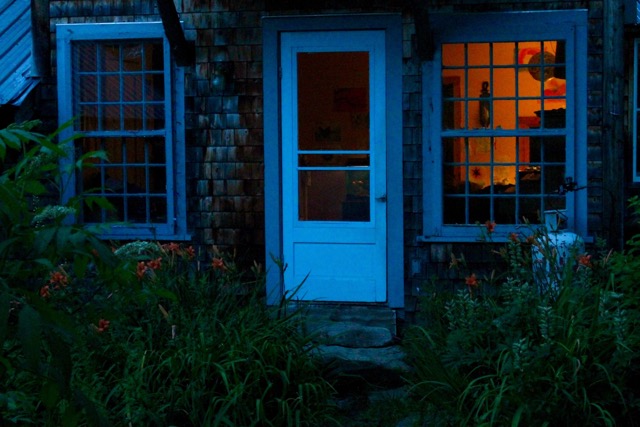
DSC01125

Summer Evening

One simple and incredibly marvelous piece of our summer so far has been making a ring of rocks into a fire pit. The small daughter has naturally seized on this as a daily s’more opportunity. With the fairly regular rain, we’ve put up my old farmers market tent, and now we seem to be moving more and more outside. Dinner? I stir fried peas and garlic scapes and carried the skillet outside, while the girls roasted sausages. Sadly, our chocolate s’more supplies are depleted. The other morning I twisted my ankle leaping off the porch and spent the bulk of the day with my laptop outside. Since I couldn’t walk, that pretty much eliminated chores, which – while as a long-term scenario is hugely unappealing – for a July day really was an odd kind of opportunity. In summer, I’d rather live outside than in, and the smoke dispels some of the opulent bug life….

Whereas he baled hay. I baled sentences into paragraphs of prose. The meadows revealed themselves as pages, and the barn itself became the equivalent of the book where it all goes, to feed the mind and soul.

– Julia Shipley

IMG_6793

Writing and Sowing

I found that plowing land, traversing rows of vegetables, mowing, traveling back and forth from barn to house – this shuttling is akin to writing, the body a pen, the land an endless tablet. I learned that the words within us, under our gambrel skulls, are waiting to be let out to pasture.

– Julia Shipley, Adam’s Mark

DSC01010