This Small, Good Moment

When I was 17, I was infatuated with James Joyce. I remember watching a documentary with a woman who knew Joyce and described the undercurrent of his life as filled with tristesse. I was learning French at the time and found that notion so romantic. What would that mean, to have tristesse in one’s life? Oh, naiveté.

As a young mother, I endeavored (oh, how hard I tried) to never let unhappiness or want cross my daughter’s life. I failed, of course, miserably and utterly predictably. Now, I’m at that place in my life where I know human life is filled with tristesse and also fear, longing, happiness, and laughter: an ever-changing sky boundless with wind and cloud, studded with arcs of rainbows, their roots eternally concealed.

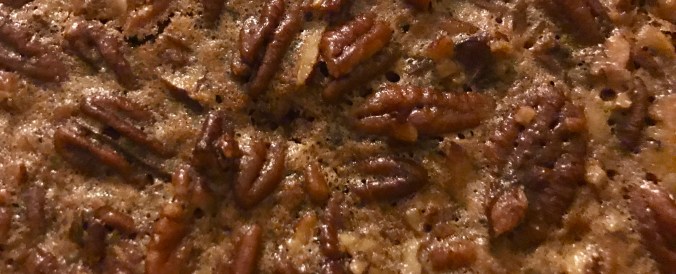
Over and over, I have wondered what I could give my daughters instead, what arms might they raise against the inevitable slings and arrows of their earthly lives? At the very least, this: my own pleasure in this tangible world, in a handful of strawberries, a kite cartwheeling across the spring sky, a daughter’s haircut. In this moment, in this time together.


One of the things I know about writing is this: spend it all, shoot it, play it, lose it, all, right away, every time. Do not hoard what seems good for a later place in the book or for another book; give it, give it all, give it now. The impulse to save something good for a better place later is the signal to spend it now. Something more will arise for later, something better. These things fill from behind, from beneath, like well water. Similarly, the impulse to keep to yourself what you have learned is not only shameful, it is destructive. Anything you do not give freely and abundantly becomes lost to you. You open your safe and find ashes.

– Annie Dillard

FullSizeRender

A Need for a Nap

The other day, I sat beside a woman who was breastfeeding her baby, and I remembered just how physical were those early years, so much milk and baby holding, so much need and so much affection. Mothering growing girls remains remarkably physical, too.

Who ate all the strawberries? Braid this girl’s hair, race down to the mailbox, rule on which friend is now taller than me. Sweep dried mud from boots, bake chicken legs with sage scavenged from the garden, whisper good night.

No wonder mothering can be so exhausting. Like writing, parenthood is something we take in, our very bodies forever expanding with this dimension.

Only after the writer lets literature shape her can she perhaps shape literature. In working-class France, when an apprentice got hurt, or when he got tired, the experienced workers said, “It is the trade entering his body.” The art must enter the body too. A painter cannot use paint like glue or screws to fasten down the world. The tubes of paint are like fingers; they work only if, inside the painter, the neural pathways are wide and clear to the brain. Cell by cell, molecule by molecule, atom by atom, part of the brain changes physical shape to fit the paint.

– Annie Dillard


FullSizeRender.jpg

Hardwick, Vermont

Travels Around the Globe & Through the Centuries

Late into last night and early this morning – two periods of darkness – I read Caroline Alexander’s The Bounty, the travels of Captain William Bligh and his misfortunes. She writes of the exquisite natural beauty of Tahiti, and about the chaos of Western men sailing on their rampage for vengeance, men sailing the seven seas, the seven deadly sins rioting through this story.

This evening, walking with my daughter in the early spring evening, the robins singing, I imagined how divine that virgin land must have been, with its contrasts of color and elevation, its welcoming inhabitants, the plethora of food. As a writer, I can’t help but admire the endless metaphorical possibilities….

Reading about the great strife and literal journeys of others deepens the geography of my own domestic Vermont life, reflecting my black sandy beaches. Greater misery of others doesn’t diminish the suffering of those in my world, but widens the landscape, per se, of what it means to be human.

… under cloudless skies and mild breezes…. the lush, dramatic peaks of Tahiti. Closer in, and the mountain cascades, the graceful palms, and the sparkling volcanic black beaches could be seen beyond thundering breakers and surf. The few ships that had anchored here had all attempted to describe the vision like beauty of the first sight of this island rising into view from the blue Pacific. Bligh had called Tahiti “the Paradise of the World.”

– Caroline Alexander, The Bounty: the True Story of the Mutiny on the Bounty

FullSizeRender.jpg

Woodbury, Vermont


Maize v. Corn

When I was ten, my family and I camped one summer all the way from New Hampshire to Wyoming to Mexico. One of the places we visited was Mesa Verde, in Colorado. In the visitors’ center, we saw an ancient urn found in a cave (as I remember), filled with corn seed. The archeologists planted some of the precious seed; the kernels germinated. The seedlings grew and thrived.

A few summers ago, I returned to Mesa Verde as a grown woman with my family, and that urn was still there, in that same visitors’ center. For a few days, we stayed with friends, who took us to one of the many once-upon-a-time villages, which had been excavated and filled back in, and now seemed traversed mainly by wildlife. We walked among the remains of walls and abode houses, theorizing where these families might have planted crops, how they harbored water, what kind of lives they might have lived.

Water and maize: clearly the narrative of life for these people: material and undoubtedly spiritual, too. As I begin planting seeds again this season, I can’t help but think of that ancient clay vessel, so reverently crafted and painted, its dear contents preserved. And, 21st woman that I am, I can’t help but remark what a far distance those precious seeds have travelled to the industrial giant of King Corn.

This is the yin and yang of the earth, an energetic feedback. What happens below relates directly to what is happening on the surface and in the atmosphere and vice versa. Tectonics does not end at the ground beneath your feet. It is a dynamic system from the earth’s interior all the way into the sky and back.

–– Craig Childs

FullSizeRender

Koyaanisqatsi: Unbalanced Life

Not long ago, one of my daughter’s friends remarked that everyone desires the warm feeling of home. And yet, why is it so darned hard to keep the home in balance? The stuff of literature is family, never wholly at ease, always shifting and turning, brimming with hunger and unmet desire…. the stuff of life: this material I write about; this very matter I live.

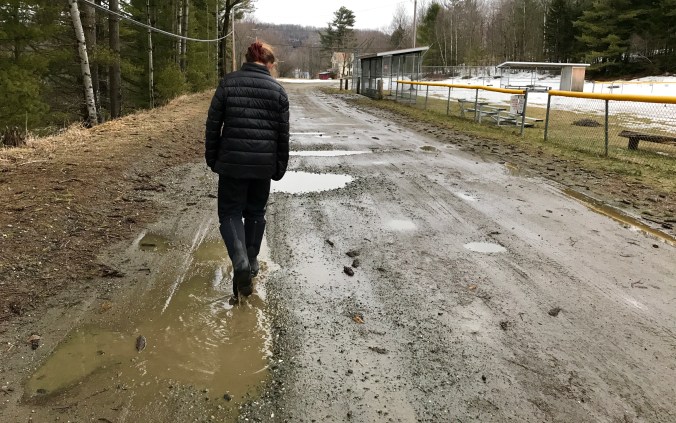
This winter, even a mouse came to die beneath my wood stove, spreading out its little furry body, relinquishing fear of us in its desire to expire on the hearth. The snow is all gone but the hard ugly leavings of dirtied lumps. Vermont in March should be heavy winter, sun bright over fresh snow, and we should be skiing in t-shirts, sunburning. The wind has been blowing every night, bringing neither spring nor storm. It’s off, all of it, this winter that never was.

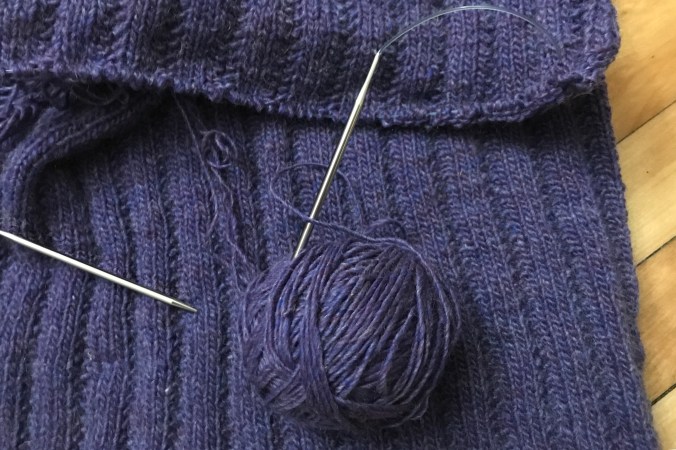
Long after dinner tonight, the girls and I sat at the table, talking, myself knitting, pulling together through language. They tell me, this happened today, and we did that, while I’m thinking of those sunny faces of coltsfoot, the deep yellow blossoms that push up through the rockiest and poorest of soils. When will they return? I rely on language and story, yes, to bind us together, and my other old stand-by – resilience – thinking…

Surely some revelation is at hand…

– Yeats

FullSizeRender.jpg

March, Vermont

Private v. Public

This morning, after driving through a surprisingly thick snowstorm, I found myself in a tiny room in the radio studio of WDEV in Waterbury. Hester Fuller, the host, had kindly read my book and interviewed me for a bit, then Gary Miller (author of the fine collection Museum of the Americas) came in, too, with Joe Citro on the phone line.

We were literally knee-to-knee in a tiny room, talking about the intimacy of writing. Writing is that curious mixture of intense privacy – literally, the stuff of our own experiences – spun into shared stories. John Steinbeck’s East of Eden wound into my life when I was fifteen, lodging deeply in my blood cells, its influence surfacing in my own writing. Over and over, I have hammered myself against Steinbeck’s anvil that insists on seizing human choice despite the chaotic happenstance of human life. How will I understand my life? The lives of those I dearly love?

Driving home in the dark tonight, I realized my character, Fern, understood her life like this: finding an abandoned sweater in a library’s free box, she washed and then unravelled the yarn, discarding what was ruined beyond repair, saving what she could. Then she knitted, by trial and error, a sweater patterned with trees and mountains and Lady Moon, creating a work of beauty – and practicality.

Only after a writer lets literature shape her can she perhaps shape literature. In working-class France, when an apprentice got hurt, or when he got tired, the experienced workers said, “It is the trade entering his body.” The art must enter the body, too.

– Annie Dillard, The Writing Life

FullSizeRender

Burlington, Vermont, March 2016