Under the kitchen vinyl.

While the radio carries in terrible news, the carpenter tears off the vinyl on my kitchen floor. I run my hands over the worn maple boards that are revealed to the daylight again. In one corner, a rotten board where perhaps the sink leaked. The carpenter cut out those pieces, and I look down at the basement’s graveled floor. In another corner, there’s a blackened place where perhaps a woodstove once charred the flooring. He and I stand there, considering, wondering about who once lived in this house. I wonder about their patterns of heat and sustenance, these people who passed from this world, decades ago.

When the carpenter leaves, I vacuum, then sit on the cold floor while the cats sniff curiously. I rub my hands over these boards bruised from living and speculate that I can sand and polish this small space, quicken it again.

I began this project with a desire to take down a wall, open a room, and chase away the dismal memories of illness, to acknowledge that, indeed, this is the house where cancer devoured my body, tore at my flesh and mind. I survived. To continue surviving, I must revise my life, change my patterns of living.

I know a few of the names of the people who lived in this house on a village hillside. Now, barefoot on these cold hard-worn floorboards, I sense the mysterious stream of connection that runs between the dead and myself and those who will someday live here, when I have moved on myself, to other earthly or unearthly places. Who laid this floor I’ll never know, but I’ll put my hands and my muscle to it, lend my energy towards restorative beauty, towards the scantness I can do.

I am beginning to understand that healing is not about returning to what was, but about accepting the change and adapting to the brokenness. This is happening all around us, for people, for the land. People have done damage to the earth and to each other that can’t be undone. We can lament what was, but that won’t help us take care of what we still have. In fact, it might just hold us back. Nature herself keeps giving and never giving up. ~ Helen Whybrow. The Salt Stones

Mired in fog.

I hole up for the weekend reading Wallace Stegner, a pastoral novel about friendship and mortality, about the pre-internet world when complicated events unraveled perhaps not more kindly but more slowly. Vermont March is the season of live-or-die, the fits and starts of spring, jagged with driving ice, whirling snow, delirious sun.

I drive home from a dinner out in a fog so thick that the car before me pulls off, turns on flashers, and maybe simply intends to wait it out. It’s not late, but there’s no one else out, the wind throwing twigs at my windshield, the radio jingling Lou Reed. I’ve not driven in a fog so profound since I was in my twenties, living in the wooded spine of the Green Mountains, in the years when I was brash with youth and amor. The edges of the road vanish. I pull over at the spring with its pipe where people gather water, and I stand just outside the beam of my headlights, the nearby stream gushing against what remains of its winter ice. I surely can’t stay here for the night, shivering, on the edge of my own mad solitude. The way back, the way forward, all around: pathless, and surely a metaphor for this time.

I’m still shaken to the core by lymphoma, by chemo, by the surgeons who sliced me open and removed those physical scars so I might live. I’m here for this moment, flesh over my slender shoulders, my now bony hips that once carried two babies, and flesh—well, so easily ruined. I spent most of last March in one ED or hospital room or another. While the world spun on, I leaned into treatment, propped up by dear ones, who ferried me to remission.

Now, shivering, nearly blind with fog, I turn off my car and the headlights. The fog wraps around me. I drink it in.

“In the gnostic gospel of St. Thomas, Jesus says, “If you bring forth what is within you, what is within you will save you. If you do not bring forth what is within you, what is within you will destroy you.” — Andrew Solomon

Dad, at 89.

In the summer of 1980, my parents had the summer off. Dad was a college teacher, and my mother, an RN, was encouraged to take unpaid time as the hospital census was low. My parents owned a Jeep, and my dad loaded sleeping bags and two tents in an oilskin on the luggage rack, and secured the bulk with bungee cords. From New Hampshire, my parents headed west with their three kids.

Now, older than my parents were at that time, I wonder what the heck my parents were searching for. As a kid, of course, you simply go with the family flow, show up at the picnic table and eat chili from a plastic bowl. As a writer, I know that all life is propelled by desire, for that bowl of chili, for the wilderness my parents loved, for the far murkier desires that lurk in a human heart. We were never a Bobbsey Twin family (although good lord how I longed for that, a long-quelled desire), but three of us grew up and created our own complicated lives, never far from the wilderness.

Today, my old man is 89, a remarkable age. I woke thinking of him on one of those summer trips, back in the world before cell phones and internet, when no one knew where the five of us were, just us—dad, mom, the three kids—rattling around in that Jeep. Dad always packed tools, and he fixed our vehicle along the way. High up in the Wyoming mountains one summer, it was cold as heck. He got up before any of us, brewed coffee on the Coleman stove and made buttered toast. He unzipped the tent and handed in toast and hot coffee. Stay in your sleeping bags until it warms, he said. We’d been on the road for weeks by then. He was unshaven, bundled in a jacket, and he kept that makeshift hearth of the Coleman stove burning, feeding us toast. Happy birthday, dad. ❤️

And the Hayden Carruth poem that reminds me of my parents…

Birthday Cake

For breakfast I have eaten the last of your birthday cake that you
had left uneaten for five days
and would have left five more before throwing it away.
It is early March now. The winter of illness
is ending. Across the valley
patches of remaining snow make patterns among the hill farms,
among fields and knolls and woodlots,
like forms in a painting, as sure and significant as forms
in a painting. The cake was stale.
But I like stale cake, I even prefer it, which you don’t
understand, as I don’t understand how you can open
a new box of cereal when the old one is still unfinished.
So many differences. You a woman, I a man,
you still young at forty-two and I growing old at seventy.
Yet how much we love one another.
It seems a miracle. Not mystical, nothing occult,
just the ordinary improbability that occurs
over and over, the stupendousness
of life. Out on the highway on the pavement wet
with snow-melt, cars go whistling past. 
And our poetry, yours short-lined and sounding
beautifully vulgar and bluesy
in your woman’s bitterness, and mine almost 
anything, unpredictable, though people say
too ready a harkening back
to the useless expressiveness and ardor of another
era. But how lovely it was, that time
in my restless memory.
This is the season of mud and thrash, broken limbs and crushed briers
from the winter storms, wetness and rust,
the season of differences, articulable differences that signify
deeper and inarticulable and almost paleolithic
perplexities in our lives, and still
we love one another. We love this house
and this hillside by the highway in upstate New York.
I am too old to write love songs now. I no longer
assert that I love you, but that you love me,
confident in my amazement. The spring
will come soon. We will have more birthdays
with cakes and wine. This valley
will be full of flowers and birds.

The truth is erasure.

Saturday morning, I chip at my day’s list, persistent: my thousand creative words, email that shouldn’t linger, the house chores of wood and compost. On the nearby trails, I ski and later drink coffee with my beloveds, and we ponder construction that will tie up this town, Hardwick, until the sundress-wearing season. At home again, I finish the 2025 taxes, stow things in boxes, preparing for a carpenter who will remove a kitchen wall and put a window in my kitchen. This plan I hatched while I was marooned in my house for months, struggling through chemo. Now, this winter, I wondered, Am I mad? Will I still proceed? But opening the heart of my house to the view of the village seems a hopeful act, a kind of creative resistance against dismal five-year survival statistics, an act of beauty in contrast to the darkening world.

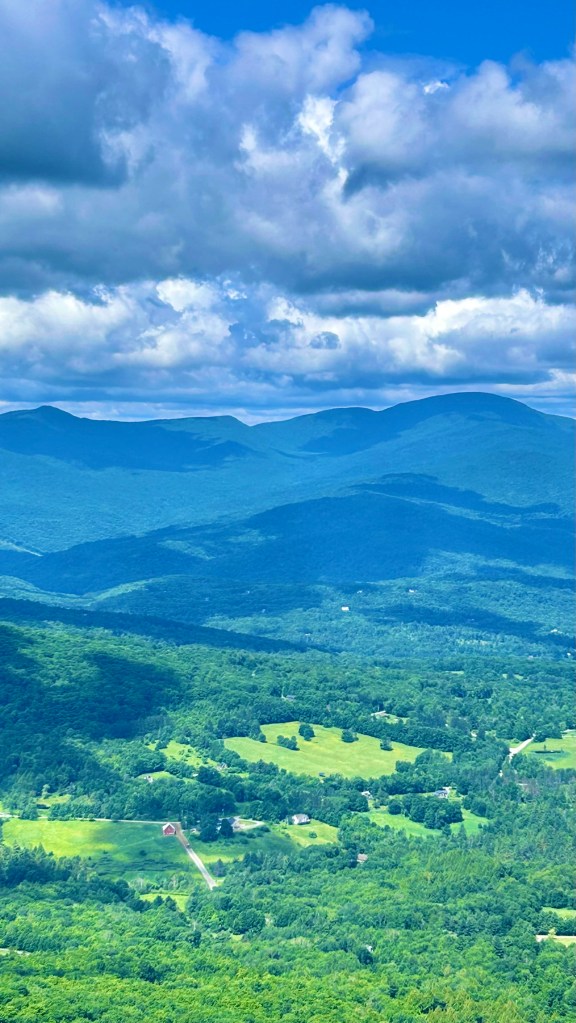
I abruptly need the sky and the muddy earth beneath my boots. I consider phoning this friend or that friend to walk with me, but I doubt anyone will jump at the sudden request. On this ridgeline road, I see a friend who quickens my blood. We walk and talk for bit about the things that nourish my winter-worn soul: about the unexpected in our lives, about writing and doubt, an April event of poetry and art and food. About what Bashō called “the journey itself is home.”

She heads home, and I keep on along the maples. All winter I’ve walked here. One frigid January, I’d gone too far and considered flagging a stranger in a car for a ride, but I didn’t. I kept on, as we all do. An eagle spreads its wings over a hayfield then disappears over a treeline. Blackbirds sing. A skunk waddles along the road. The snowbanks are above my head. The creature and I consider each other. Then, on our respective sides of the road, we each ease along. When I look back, the skunk is hurrying along, too.

Another spring. So many years I’ve lived through a New England winter, so many springs, and yet each March arrives as a surprise, a fresh reckoning. The wind smells of the opening earth. Twilight will soon be nestling in, and I’ll be home again, feeding my cats and the woodstove, eating a blood orange. A friend plans to visit, and we’ll keep each other company. Better to think of the days without names or numbers. Wiser to place these with a friend’s name, with skunk, puddle, blood moon.

You ask the sea, what can you promise me
and it speaks the truth; it says erasure.

… Nothing can be forced to live.
The earth is like a drug now, like a voice from far away,
a lover or master. In the end, you do what the voice tells you.
It says forget, you forget.
It says begin again, you begin again. ~ Louise Glück

Stars as a trail of crumbs.

When I was a little child, age six or so, I lay awake before sleeping and wondered at the borders of the darkness. My sister, brother, and I shared a room that seemed vast, although now I remember the footprint of that townhouse and realize my memory of that room is child-sized. Above the kitchen and entryway, the room could not have been large. Across the upstairs landing was our parents’ room with a view of the interstate and, some nights, a flickering drive-in movie screen. While my younger brother slept, my sister and I discussed the limits of infinity.

We lived there for two years. Now, I realize my parents turned 40 in that townhouse with the orange-painted metal door. In those two years, I have no memory of the stars in that place, an odd thing given that the night constellations are my earliest memory, my father parking our Volkswagen bug on a roadside, and my mother admiring how the Santa Fe city lights mirrored the stars.

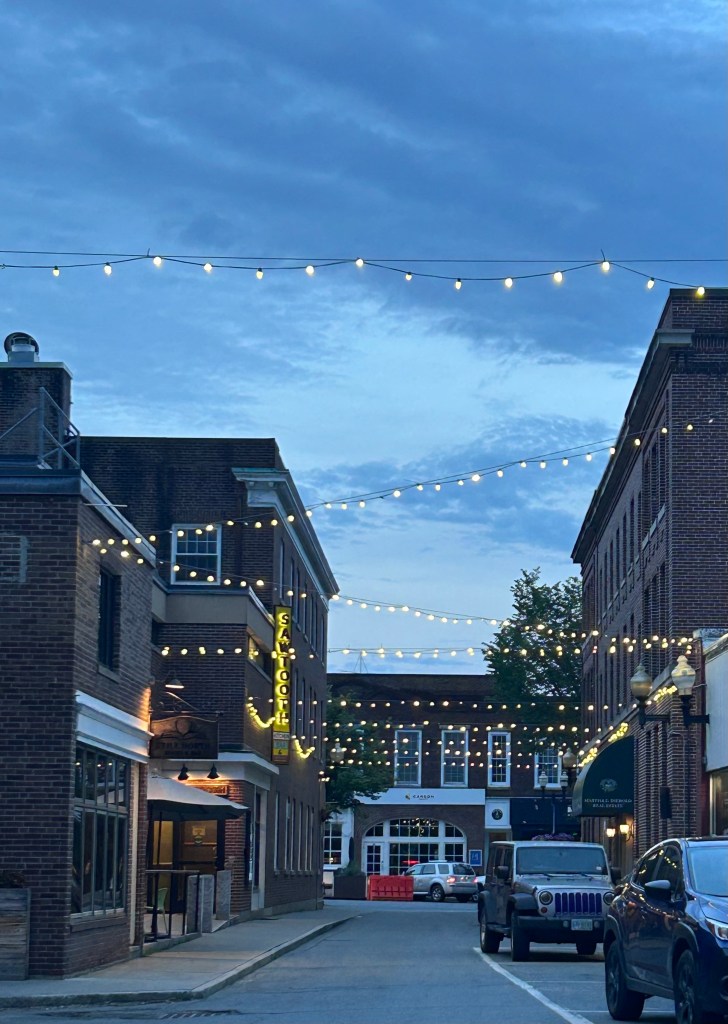
The night before I realized I had cancer I stood on a back road in rural Vermont. It was late autumn, and, my God, how the country dark gleams its power, how radiant the ineffably distant stars. I carried that memory with me as I descended into the depths of profound illness. A few nights ago, over a year after that autumn night, I parked in Montpelier and walked along the sidewalk that was mostly empty in the sharp cold. Small lights gleamed in the closed-up shops—the candy store, the bookshop, the AT&T outlet. The stars pierced the night: sacred and profane illumination. The cold drove me back to my car, and my headlights showed me the way over the low mountains, back home again. I’d left my porch light on. I stood on my step for a moment, shivering. I was more perceptive as a child, before language encouraged me to divide the world into categories. Wonder. For this moment, nothing but wonder.

“Sometimes I think we can learn everything we need to know about the world when we read fairy tales. Be careful, be fearless, be honest, leave a trail of crumbs to lead you home again.
― Alice Hoffman

Making more tracks than necessary…

I’m standing on a dirt road, looking up at the blue sky unblemished by any smear of cloud as my friend wraps a scarf around her face, when a Subaru speeds over the crest. Jolted, I lurch to the roadside.

$750k in cancer treatments and I’m felled by wrong-place, wrong-time on an otherwise untraveled back road? Not this afternoon.

Bitter cold warnings jam the local news. In snow-drenched Vermont, February marks winter’s swing, where the daylight begins to rush back, the light tinged with warmth, suffused with this second-half-of-winter’s promise that seeds will stir again. In the meantime, I take off my mittens as we walk and talk about writing and people and the value of a precise query letter.

We step aside for intermittent vehicles, a silver pickup, a friend’s Prius, a Corolla with split exhaust. A year ago, I’d been sprung from a stay at Dartmouth-Hitchcock and returned to my cancer-and-chemo habits that shifted from bed to couch to what felt like a Herculean effort to open my notebook at the kitchen table and scrawl a few lines, my shaky pencil a balloonist’s line that tethered me to the world. What I didn’t know then was that the hard things I’d endured in my life, some of my making, some not so (sobriety, a divorce, selling a house and lighting out for new territory with my daughters, writing and selling books, the pandemic, the constant wear of subpar home economics), was training for the next 10 weeks. In what is now a blur of that back-and-forth from home to Dartmouth, at one point my oncologist’s eyes widened just the slightest; I wondered if my life was tapering to its end. Was my body about to be driven under?

But not last winter. Not this sunny afternoon, either. What rich luck to walk on a Vermont ridgeline road, the snowy mountains in the distance, finches in a roadside maple. To work, to share a plate of roasted salty Brussels sprouts with a friend, bake a chocolate cake for my daughter’s birthday.

I will never escape this cancer, whether I live a year more or thirty. Its fearsome and awesome power churns through my heart. How it revealed unequivocally to me the brutality and dearness of this world.

Meanwhile, as I cherish these days, these hours and minutes, the country where I live hemorrhages, the last moment of a man’s life pounding through the chaos, his words to a stranger, “Are you okay?” illuminating suppurating wounds. All the things, sadness and delight and such sorrow, the radiant sunlight. Each of us, moving along our paths: separate, together.

Be like the fox
who makes more tracks than necessary,
some in the wrong direction.
Practice resurrection.
― Wendell Berry