What we can’t know.

The cold hammers down around us in the way we’ve known Januarys before — nothing fierce, but sharp. January is a season that draws us up against our own mortality. Stumble and you’ll break a bone. Sleep outside, ill-prepared, seriously down on your luck, and you could perish.

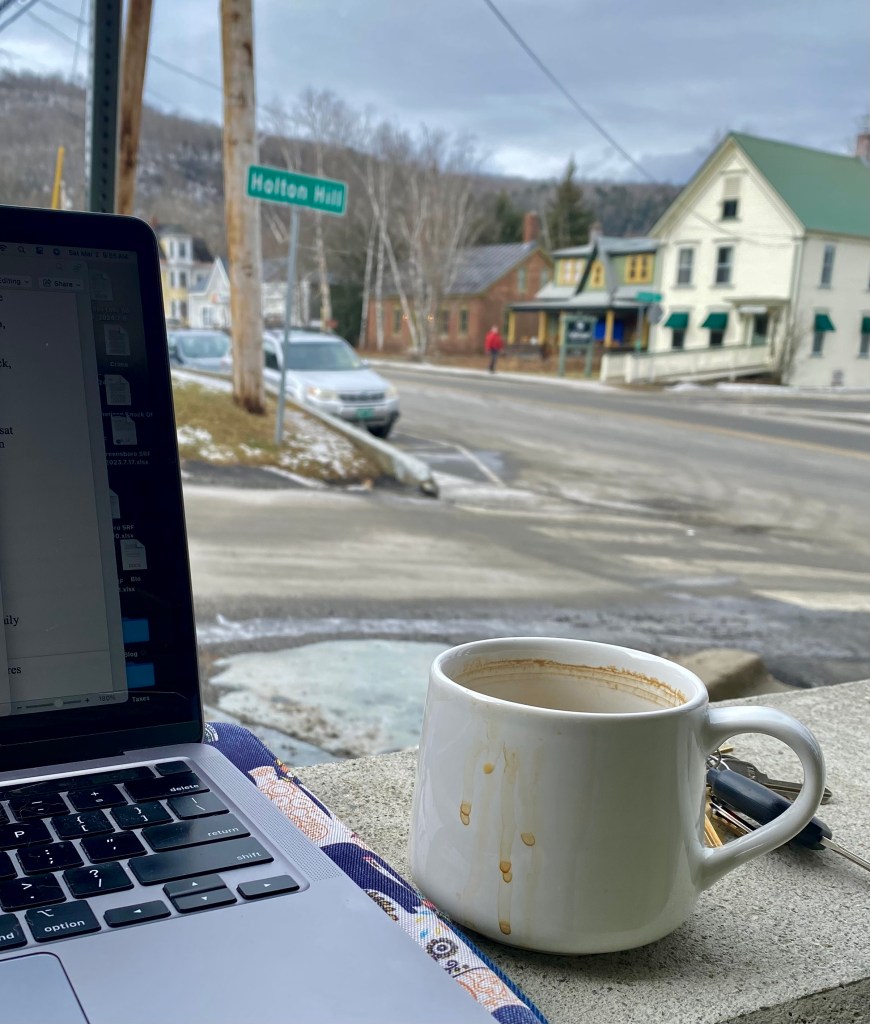
Wednesday morning on the early side, I’m drinking coffee and staring at the snowflakes that have appeared in the downtown again, a memory for an absent person. News has wound my way of the death of a person distant from me by numerous steps, the fate we’ll all meet, one way or another, the great leveler. In the afternoon, when I return from work, the window washers are carefully removing the lacy paper, setting the delicate flakes to one side, and then re-taping them on the windows. A gentle, wordless act of care. A piece of our human puzzle.

These winter days, I’m devouring Paul Lynch, about as good as anything can be.

“I believe it is worth writing to remind ourselves of what we can’t know. To remind ourselves that certainty is dangerous. That factual knowledge of the world casts only a small light. Fiction is necessary because it seems to me that only fiction can accommodate the total strangeness that is life. To remind us that truth is actually impossible.”

Household chores and world events.

The last day of 2023, I let the fire in my wood stove extinguish, and I take my stove apart. The stove has been spitting ash and spark through a damper, a chore I’m driven to by sheer necessity.

I unscrew the stovepipe and the back heat shield and plate, and carefully remove the two honeycomb metal filters that are choked with fine ash. It’s a messy job, and I’m a messy woman. My curious cat walks through the cinders and leaves dirty paw prints on my white enamel kitchen sink.

When I’ve put the stove together again, I find the driest kindling I can in my barn and build a small fire and slowly heat the stove again, kneeling before the glass where the flames ripple, listening to public radio hash over the year. I add wood, study the flames, murmur to my cat who is seriously invested in this warmth and the doubtless impending feline nap.

I’d once torn a photograph from a New Yorker issue and thumbtacked it near my desk of Marina Oswald, taken the morning after her husband Lee Harvey Oswald was arrested for assassinating President Kennedy. Her face twisted unhappily, she’s pinning cloth diapers on a line. So it goes: the necessity of domestic life as the great events of the world unfold.

My stove burns merrily. I bake spanakopita and invite a few dear ones who bring chocolate. This morning, January. A drift of snowflakes. The lean winter light.

The snow is melting
and the village is flooded
with children.

— Issa

Real Things.

Much as I pushed the hippie thing in my younger years, I’ve often sneered (albeit silently) at the tea drinkers, save for my pregnancy years. I’ve always been much more of a knock-back-a-couple-of-espressos woman. But this sodden late afternoon finds me leaning against my woodpile in the dreary rain, sipping steaming tea, remembering my girlhood love of The Secret Garden, Jane Eyre, and scorned Sylvia Plath.

As for the photo above, our Christmas adventures involved inspection of the July flood’s toll on the rail trail’s bridges. Christmas Day, we followed the former railroad bed deep into the woods, where this enormous culvert was skillfully and laboriously constructed a few generations ago. For reasons that need no elaboration, this seems a fitting photo for the trailing end of 2023. Unless you know by word-of-mouth or friend, you could walk through these woods and never see this beauty. Which would be a kind of loss.

I’ve never been a fan of New Year’s resolutions or wishes, so easily broken. But here’s a small one: less of the superficial hashtag life. Hold scorching tea. Share a secret marvel with a stranger. Adhere to the tangible.

And last — I was lucky yesterday to be invited with Vermont Almanac editor Patrick White on Brad Ferland’s radio program Vermont Viewpoint on WDEV. It’s always a joy to participate in radio — especially with my friend Brad and talking about Vermont and writing.

Hope you’re all dry and warm….

The Long Night Moon.

In the year’s tail-end days, the neighbors’ children sled down their short hill, hats off, snowsuits unzipped in the warm afternoon. I wander over with a tin of sweets and chat for a bit about sledding conditions, getting the low-down on the mixture of slush and ice. The full moon rises silently, December’s Long Night Moon. Various blues layer the sky, the hues that remind me of the sea in my land-locked geography.

During the in-between pieces of holiday and work, I’m slowly savoring The Eight Mountains by Paolo Cognetti, an Italian novel about deep friendship and love of great mountains. A main character, Bruno, speaks about rebuilding a tumbled-in Alpine house: “Look, it doesn’t matter how long it takes. If you try to think too far ahead with this kind of work, it’ll drive you nuts.” Likewise: writing a book, parenting, living a life.

The neighbors’ children offer me a handful of wet snow, chock-full with dirt and last year’s sunflower seed hulls.

Hello, Darkness, my old friend.

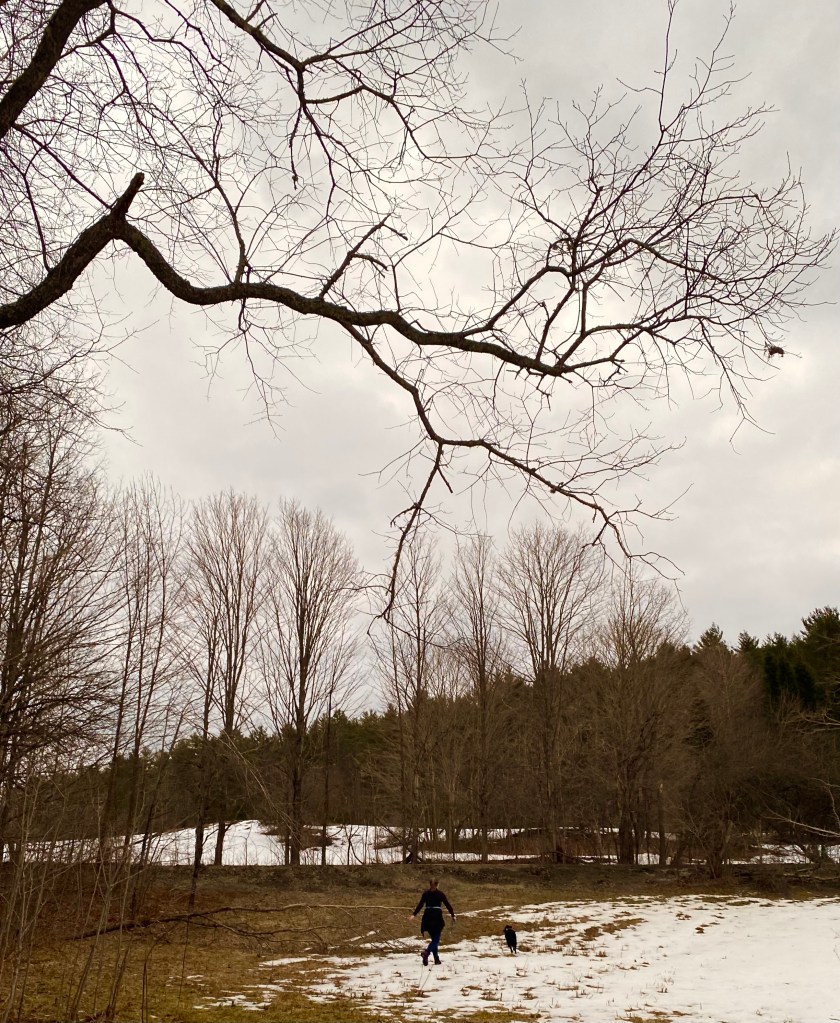
Heading towards the winter solstice, the days are cropped short. I ski in the woods. The next afternoon, after a spurt of warmth, I remove my skis to navigate around patches of tree roots, the exposed carpet of pine needles.

By 4:30, darkness envelopes us, velvety and broken only by our brief human endeavors of a line of twinkling holiday lights, streetlamps, parking lots lit up like precious jewels. Like a wild creature roused by these warm December nights, I prowl through the village and along the river.

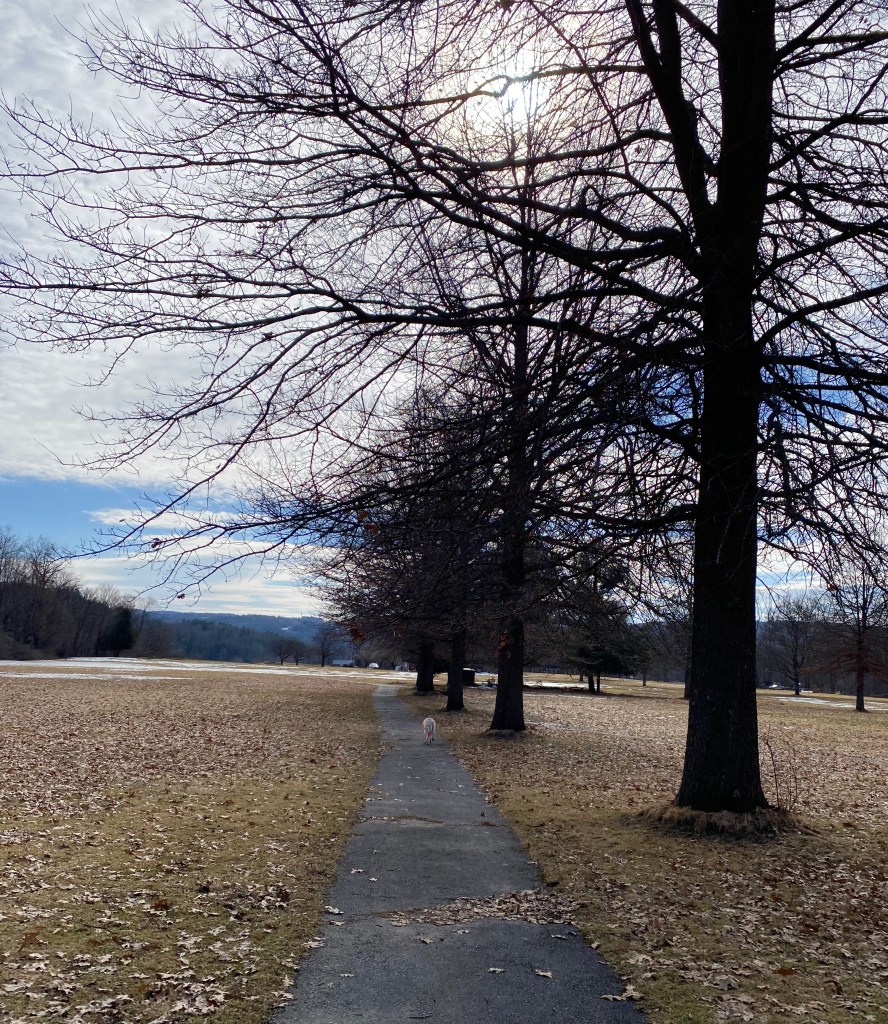
Returning home one late afternoon, I pause beside Woodbury Lake. A crescent moon illuminates the blue-black sky, the outline of its orb a faint round: a promise of January’s full wolf moon. Twilight’s but a few moments, molten gold rapidly consumed by the unstoppable night.

I remind myself that December is the time of descent, that the darkness I eyed so warily in October is now my mellifluous friend. I’ve been here before, in so many seasons of my life — dissatisfied and cracked, heart-full, my eyes attuned to starlight. Living into December and the solstice and the winter stretching ahead means stepping into the world’s great vessel, full of so much.

Here’s an article about the world’s first seed bank forwarded to me by a reader.

Vermont Almanac.

My copy of the fourth Vermont Almanac arrives in my mailbox. Remember real mail? I remember exchanging long letters with friends for years. Email is fine and dandy, but email has no smell. I open the book in my kitchen and breathe in the scent of ink and paper. I was fortunate to write and edit a bit for this issue.

These days, on my moonlit evening walks, living in Vermont is often on my mind. So much has happened in my own life and in this dear state: a summer of rain and wildfire smoke, a flood, beloved Montpelier drowned, a rise in violent crime. And yet, I’m tugged more deeply into this state I’ve called home nearly all my adult life. Reading this hefty book, I’m reminded, again, of how yankee ingenuity is so often yankee generosity, too. While our nation (and much of the globe) as a whole is navigating unsettled and often stormy waters, I’m heartened by Vermonters’ ruggedness, tenderness, and, so often, outright humor. Who could imagine a world without these fine things?

Hope is no mere aspiration that things will turn out well. Hope instead takes our hand, shines a light ahead, and pushes us onward into the messiness and uncertainties of life.

Bryan Pfeiffer, Vermont Almanac, Volume IV