The Goddamn Gray, the Brilliance of Language.

A year ago, my daughter was driving me to the local ER, yet again, under the frigid winter sky. Wordless, I leaned my head against the side window of her Subaru, staring at the faraway pricks of stars vanishing and reappearing among the clouds. In the darkness, I fixated on one thought—the white hospital bed, the clear liquid drugs that would make the pain cease—and held to that, my lifeline. Cancer-and-chemo, in its infinite complexity, is a monotone landscape. In all those months, my existence was the blackness of pain, the temporary light of relief-from-pain, the crimson drug injected into my veins. Occasionally, a cardinal at a feeder, blood oranges, and then I couldn’t eat those, either, and I remained alive on Saltines and water.

I keep thinking of those below zero nights as I drive this night to the opposite end of town. There, with a friend in a place where I’ve never been, we eat drunken noodles and green curry, and then drive again through the darkness and the drifting snow that’s no threat, simply prettiness. At the Vermont Studio Center for the Arts, we settle into the dining hall with the residents. We’re greeted warmly, and the room is scented with the lingering remains of a savory dinner, of coffee and wine and the fragrance of flowers likely from the tables freshly scrubbed. This is a dear place, where I’ve been lucky to stay and work hard, meet friends and share stories about creativity, its hardness and joy.

Rigoberto González reads magnificently, his words, reminding me of when I was a teenager reading James Joyce for the first time, thinking yes, yes, this is what writing can do, push us into a place where we glimpse the world for a moment in all its shimmering and confounding complexity, its immense sorrow, utter fun, or the way a hand plucks a pebble from a river and holds it dripping and glistening to the sunlight.

At home, I stand in the darkness that is sodden with cold, a forerunner of the mighty freeze rushing this way. The crescent moon pushes against the clouds. In those underworld months, the goddamn gray occasionally scattershot with goldfinches exploding from bare branches, my fate might easily have veered another path. A storm and brutal cold loom over this nation submerged beneath political nefariousness.

This terrible disease, this exacting instructor, taught me brutal lessons. Among these, savor these draughts of warmth, recognize heart. Know this value. Do not disparage.

“Every person with a body should be given a guide to dying as soon as they are born.”
― Anne Boyer

Holy Nightsky.

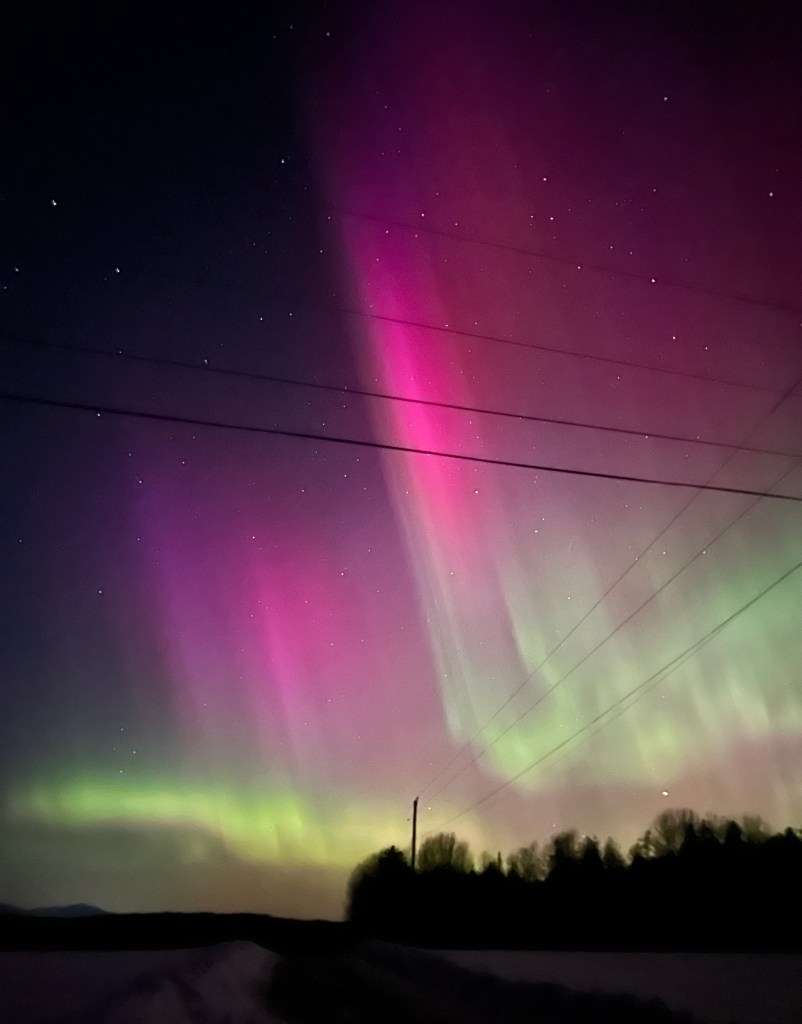
10 degrees on a starry night, my daughter phones me while I’m cramming more wood in the stove. She’s on a dark-soaked back road, the northern lights resplendent, and urges me to go in search. Up Bridgeman Hill, she tells me, with the ridgeline view.

So, bundled in coat and hat, I drive through the little village and up the hill where the town lights cannot touch. In my headlights, wind scatters snow gathered from the wide hayfields, winter dormant. I pull over at the hill’s crest where two farms join. I get out of my car and walk down the road. The limitless sky gleams ruby and emerald, an immense shaft of white light luminescent. In the east, the black spreads profoundly, the stars so radiant I imagine I could reach out and grasp these gems.

John Donne wrote that illness is a “holy room.” My oncologist taught me that we are all the ailing; if not now, to come. Mortality’s cut makes zero discrimination. A cancer diagnosis gained me admission to inner chambers. Unwanted—let me reiterate again, I did not request admission. But I hung up my coat in the anteroom and set my hiking boots against the wall, and I walked barefoot and thirsty into the nexus, me and that fiercely multiplying lymphoma. The lymphoma and me — one of us was not going to survive this go-round.

In the night’s darkness, the rushing wind tore at my cheeks and hurled ice in my eyes. In the distance, a cow barn glowed with light, a scatter of houses in the valley. Around me, that immense and mysterious beauty over small human beings, at whatever mundane chore or decency or devilment we conjure, be it the evening milking or washing supper dishes or plotting a wrong against another.

The sharp-clawed cold shoves me back towards my car, back towards the village and my hot woodstove, my little house in the great holy room of this planet, this universe, this precise moment.

“It seemed like I was doing something ludicrous, trying to build a permanent work of literature out of broken little whimpering bits about the most ephemeral experiences when I was still mostly broken and half-ephemeral myself.”
― Anne Boyer

Call It Madness

My newest novel’s advance copies arrived in a great big box at the post office that I hefted on my shoulder. The postmistress said, “You wrote another book? How cool is that.” Indeed. Then she wondered if I could carry out this box that she described as nearly large as myself. I laid the box on the passenger seat and then walked across the street to the co-op where I bought an orange and peeled it and ate the sweet sticky fruit in a drippy wet snow.

Call It Madness? A novel about a young woman who realizes her mother had spun lies all her life—a grandfather who hadn’t died, a beloved house that hadn’t sold, only tumbled apart with rot and rodents. How does she get out of the madness-making of family and salvage some shreds of happiness?

June 30 the book will be released from Regal House Publishing. You can find it at my beloved local bookstore, the Galaxy Bookshop, or from the big A here.

Here’s the opening page….

White Quartz

2016

I didn’t know what made my parents drive from Bellingham to faraway Vermont the summer I turned four. I had never met my great-grand-father Opa until that afternoon my mother rolled our station wagon down Breadseed Lane. Earlier that day, a stranger had helped my parents change a flat tire on the New York turnpike, but the spare was a misfit. For hours, our car had been thumping while I stared through the backseat windows at the trees and fields passing by, pondering the puzzle of that strange word breadseed. Could seeds blossom into loaves?

We hadn’t stopped for lunch, and I was hungry. Was this Opa character cooking us dinner? Turned out, he was not.

In a rain that was just beginning to let up, the old man stooped in his yard beneath an enormous pine tree, fists curled behind his suspender buckles. I was not quite yet four, remember, and I knew suspenders only from picture books. In a strange coincidence, I had asked my mother for a pair the last Christmas. She had laughed and said suspenders only existed in fairy tales about grandfathers who were woodcutters and chased away starving wolves.

I loved that trip so much that the next summer I begged to return to Opa and his house that smelled of sugary rotting apples. I whined, Please, Mama, please. Which apartment we lived in then I’ve long forgot-ten, but in my memory, I’m sitting on the floor. At the end of the galley kitchen, a glass door streams in cloudy light. I’m watching the hem of my mother’s skirt graze her bare knees. The polyester skirt is one she wore for years, zigzag black lines over white. The hem has opened and hangs down, its frayed edge unraveling into threads. She’s smoking, the cigarette held impatiently in her teeth, and ashes drift down in the murky light. That morning, my mother tells me that Opa died soon after we left. The house was sold.

Landscape, Here, There.

Late afternoon, the January darkness chasing away the chickadees at the window feeder, a friend phones about a film at a nearby arts center. Turns out, the film is about the broken-upness of relationships in America. Post-lymphoma, post-chemo, my energy by day’s end is something I can cup in one hand, a diminishment never illuminated by a nap. Grateful for the nudge and the company, I fill my woodbox, feed my cats.

It’s been a day of plenty here—of yoga and work, of slush on the roads and mush falling from the sky, a softness that threatens to harden overnight to ice. Midafternoon, I drop my car for an oil change and open my laptop in the waiting room. A stranger sits down in the otherwise empty room and drops his tablet on the table between us. I’ve kept much of this blog off the political realm, although surely any reader perceives my alignment is not with the aggressor in power. The stranger begins talking in a way that’s not angry but maybe more mystified about what’s happening in the country, the prohibitions about who can come in, with real consequences.

He’s newly retired. When I ask what he did for work, he says you don’t want to know, but oh I do, and so he begins unspooling his life. He worked for the fed’s immigration service. Military service, 19 nineteen moves, a residency in Germany during the Cold War, four grown children, one of whom is estranged. He says again, as if baffled, she kind of went nuts over this Trump thing.

The windows reveal spitting snow. He’s at a crossroads, that weighty retirement time. What will he do now? He says he’d like to put his hands to some good, maybe a Habitat for Humanity project. I close my laptop. He grew up in very rural Vermont, and he shares an accident that happened to him as a teenager, how it defined his life. Midafternoon, the light is as sooty as twilight. As a writer, I’m always looking for junctures: which way will a character act now? But I know, of course, that we meet crossroads every day. Crab at the post office woman? Curse the town snow plow driver? And I know well my own fallibility and hesitation. But I also understand how our lives and choices are enfolded into our culture and nation, that, as we live by the law of gravity, we live also by the constrictions of time and place. As for the country…. an immense crossroads. A collective atlas is under dispute.

Driving home in the snow that may or may not amount to much besides a dusting of ambiance, my friend’s son phones from a Texas freeway, lanes choked with rushing traffic. My headlights slice through the darkness. On either side lie hayfields, snowed in for the winter. The stars are swallowed in dense clouds. A year ago, another phase of terrible things that happen to cancer patients was barely beginning in my life. I didn’t yet know that there would be so many rushing drives down the icy interstate to the ER, all those grim hours when my daughters and I wondered which was this was going to shake out. Disease is a fierce and demanding instructor. The first lesson I learned, as I smartened up quickly, was to ask What’s real? What’s happening? even when I didn’t want to know the terrain of the landscape.

Because here’s something else that’s true. In the day-to-day trenches of adult life, there is… no such thing as not worshipping. Everybody worships. The only choice we get is what to worship…

Look, the insidious thing about these forms of worship is not that they’re evil or sinful; it is that they are unconscious. They are default-settings. They’re the kind of worship you just gradually slip into, day after day, getting more and more selective about what you see and how you measure value without ever being fully aware that that’s what you’re doing. And the world will not discourage you from operating on your default-settings, because the world of men and money and power hums along quite nicely on the fuel of fear and contempt and frustration and craving and the worship of self. Our own present culture has harnessed these forces in ways that have yielded extraordinary wealth and comfort and personal freedom. The freedom to be lords of our own tiny skull-sized kingdoms, alone at the center of all creation. This kind of freedom has much to recommend it. But of course there are all different kinds of freedom, and the kind that is most precious you will not hear much talked about in the great outside world of winning and achieving and displaying. The really important kind of freedom involves attention, and awareness, and discipline, and effort, and being able truly to care about other people and to sacrifice for them, over and over, in myriad petty little unsexy ways, every day. That is real freedom. ~ David Foster Wallace

Brief Thaw.

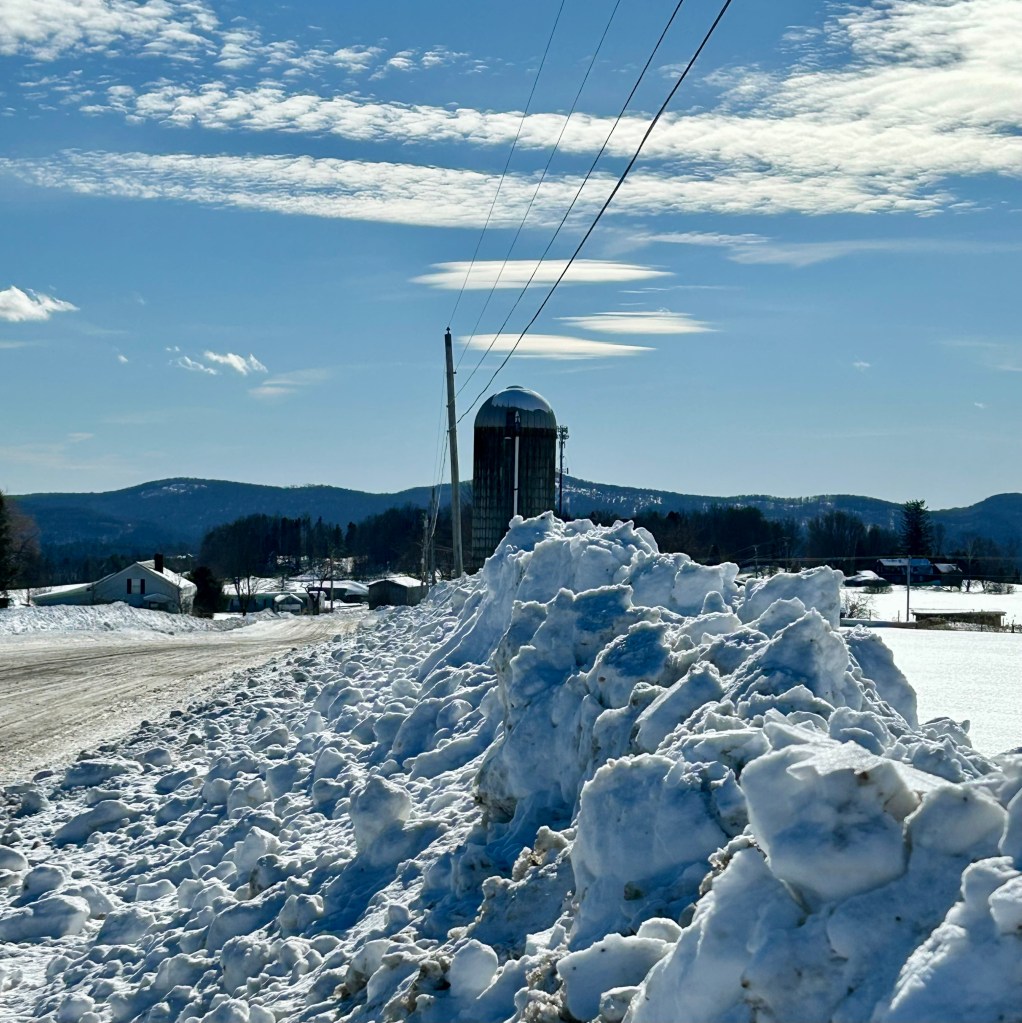
In the January thaw, a wind — balmy for winter — curls around my house, and all night long the chimes hung on the back porch jangle their melody. The chimes are the song of this house, in all the seasons of this northern climate.

Despite the thaw, the hours of these days are yet short. I wake ages before light bleeds over the horizon, my cats ready for breakfast, the woodstove in need of feeding, myself hungry for hot coffee and work. I gather what I can of my energy and cup this in my hands, gauging how the day lies ahead. Not so long ago, I could work, and work, and work. Offer me twenty dollars for a quick edit, and I’d jump. Post-cancer, post-chemo, not so.

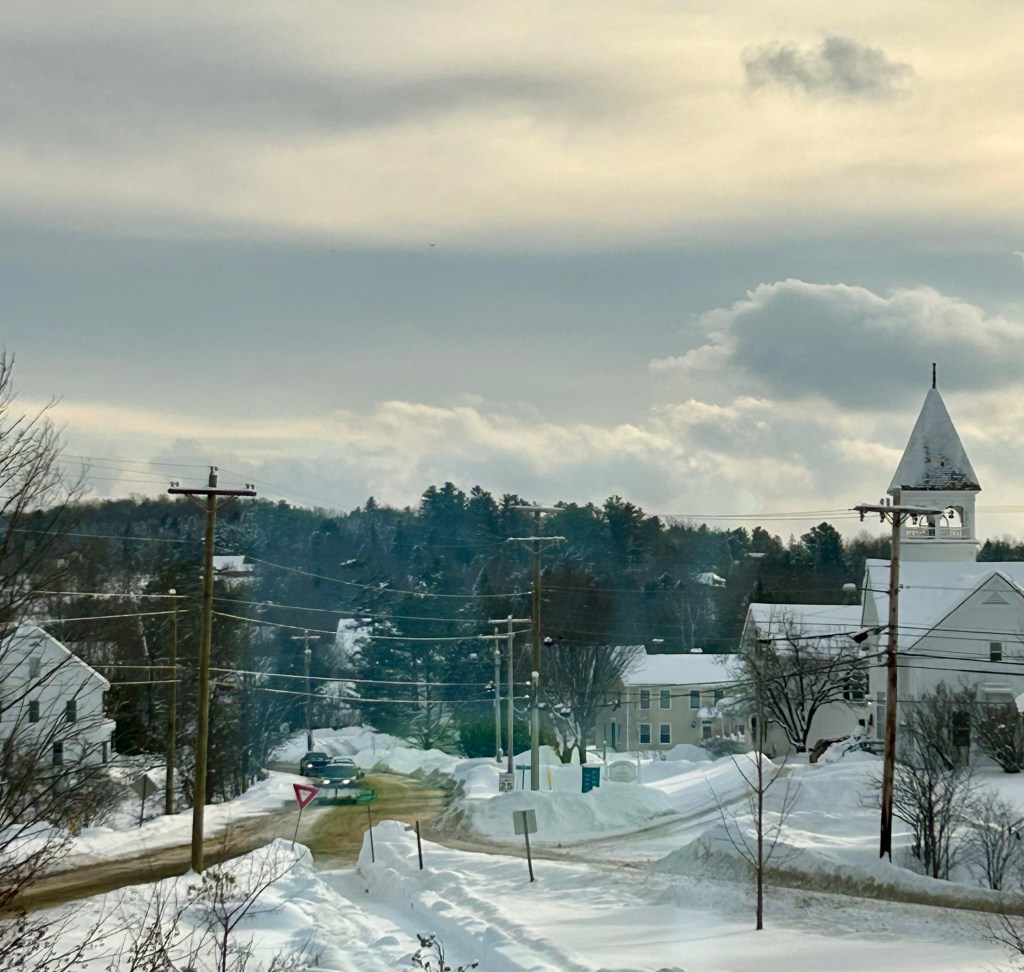
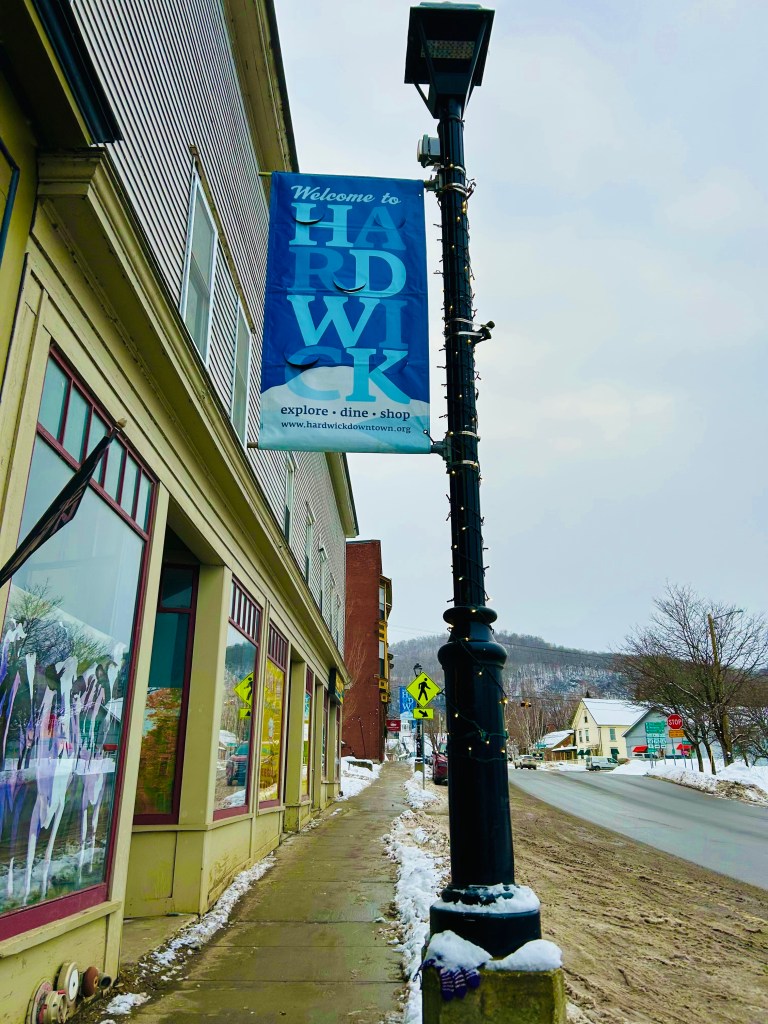
Walking downtown, I pass the coffee shop. Two friends at a window table wave at me to come in, come in. Inside, I shrug off my coat that’s in need of washing and set my backpack on the floor. We talk books and woodpile status, politics and the amnesia of American consciousness. Above the coffee shop is the yoga studio with the gleaming maple floors, where I stand at the window, watching traffic ebb into the diner parking lot. The river bends through the village here, heads westward beneath the cover of ice towards Lake Champlain, whose waters flow north. In the alley between this brick building and the next, the wind cuts upward. Snow drifts towards the sky.

There are days when I think that everything I know is upended. That snow has no mind for gravity.

Before dawn, I carry out ashes and stand in the dark, icicles dripping, cold breath from the snow grabbing my wrists. In the thaw, the earth smells of rotting compost, woodsmoke from my house and my neighbors’, the assured promise of spring, yet far in the offing.

… I work with the consciousness of death at my shoulder, not constantly, but often enough to leave a mark upon all my life’s decisions and actions. And it does not matter whether this death comes next week or thirty years from now, this consciousness gives my life another breadth… — Andre Lorde

Making Effort

Under the waxing full moon, January’s hungry Wolf Moon, I hurry along in the few degrees above zero. I’ve forgotten my scarf, so when I turn and lean into the wind, I cover my cheeks and lips with my mittens and breathe in the scent of wool. It’s too cold for wetness, yet my mittens are redolent with sheep.

The wide sky and the fierce cold winnow me to shivering bones. Nonetheless, I walk further than I’d planned, thinking through a piece of writing, and then, so cold, words abandon me for images, then those, too, vanish, and it’s me in my boots and that good down jacket and the mittens just beneath my fluttering eyelashes, and intermittent pickups passing, their drivers lifting their hands silently.

My life flickers as a candle flame in my curved ribs. What great fortune to be walking along the earth’s curve as the planet bends into twilight, the ancient moon electrifying the new snow. By the time I return to the village, it’s not long after five and the darkness has settled in for the long go of the night. Nonetheless, it seems to me these wintry days are gradually lengthening. I mail a letter at the post office and then talk with an acquaintance for a few minutes in the co-op, a waxed bag of curry power in one mitten, an onion in the other. At the last moment, I remember to buy milk for the morning’s coffee.

Winter. This starkly elegant season, straight-forward, no fussing around. A librarian friend passed me Andrew Miller’s The Land in Winter, a novel I’d longed to hold and read. A book of my soul. My cat Acer, eight-years-old, has discovered the pleasure of purring. We lie stacked on the couch—me, this tabby, library book—content. Who knew this was possible, my slow learner cat, my slow learner self?

“And though he was not much given to thinking about love, did not much care for the word… it struck him that in the end it might just mean a willingness to imagine another’s life. To do that. To make the effort.”
― Andrew Miller