Small Victories

Like so many places, I’ve limited occupancy in my one room library, and, for the most part, that’s worked. This afternoon, just before the after school program started for the first time in months, the adults stood around in our usual pow-wow and returned to the same theme: we’ll make do.

We did.

One boy leaned in the open door, begging to come in. I told him to wait, wait, that I’d come for him when the space emptied out a little.

When it did, I stepped out on the grass and spied him across the playground. When I gestured for him and called his name, he came running.

Messed-up world notwithstanding, what utter joy to see this sprinting boy.

In honor of RBG, her words:

Earlier, I spoke of great changes I have seen in women’s occupations. Yet one must acknowledge the still bleak part of the picture. Most people in poverty in the United States and the world over are women and children, women’s earnings here and abroad trail the earnings of men with comparable education and experience, our workplaces do not adequately accommodate the demands of childbearing and child rearing, and we have yet to devise effective ways to ward off sexual harassment at work and domestic violence in our homes. I am optimistic, however, that movement toward enlistment of the talent of all who compose “We, the people,” will continue.

— Ruth Bader Ginsberg

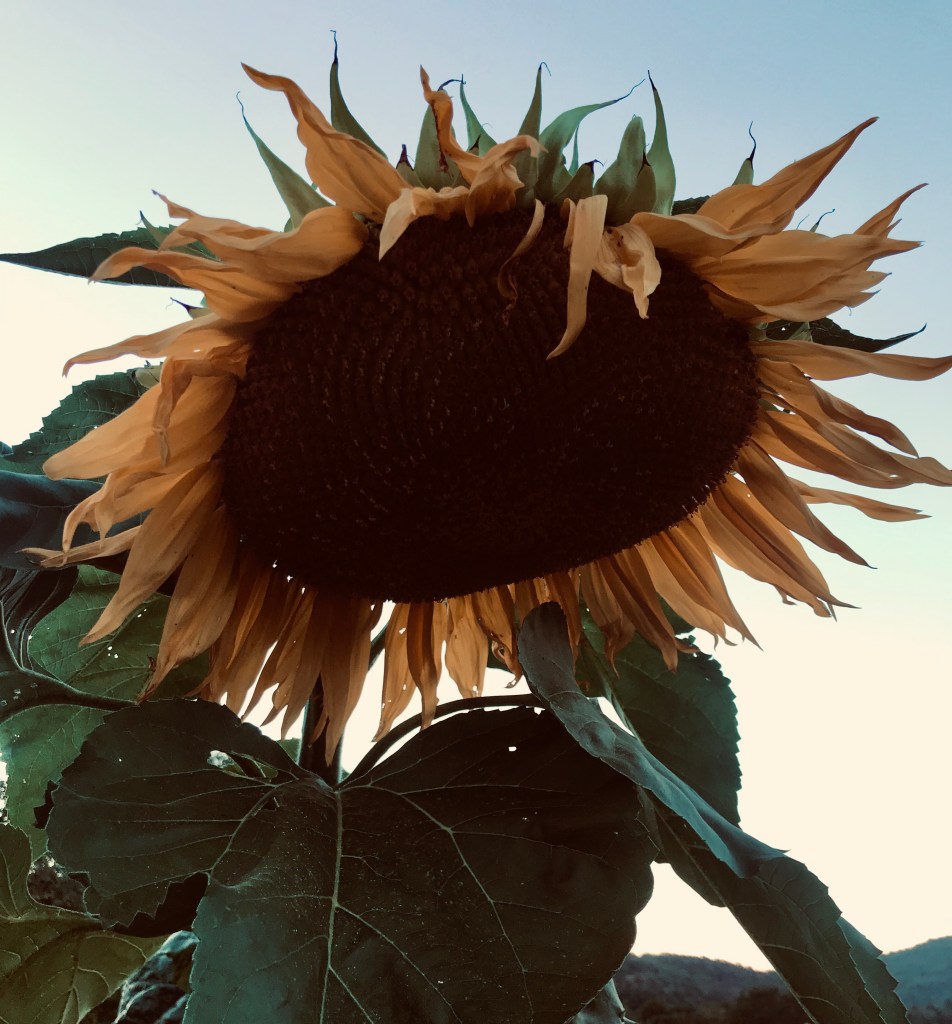
Photo by Molly S.

Jack Frost? Not Yet

At breakfast, my daughter mentioned a frost warning.

What? I thought. Already?

At the post office later that day, I chatted with an acquaintance who was at the counter buying stamps, his tiny dog tucked under his arm. He said, Why is frost always such a shock every year?

Indeed.

My girl and I picked the remainder of the tomatoes and peppers, covered what seemed like it should be covered. At the end, I tossed an old sheet over a patch of my zinnias. Really? she asked. You’re covering flowers?

But they’ve given me such pleasure, I said, even autumn-ragged as they are now.

The frost passed us over. A few more days of summer here.

The autumn grass

Wilts at once.

Playing with it. 

Homework

In the evening, with the windows open to the crickets’ songs, my daughters sit on the couch, doing homework together, while I read about the 1918 pandemic and knit.

Half-listening, I hear my daughters figure out the answer to a chemistry question, googling definitions. Decades beyond my own high school science classes, I’m no good here. Inevitably, these discussions always remind me of my adolescent years — well before google — when my father was the in-house reference for anything from trigonometry to weird geography questions.

Not so, in this house. I advise the girls to call my brother.

But as I listen, I realize they’re piecing through an interesting problem about change on the molecular level, and my youngest notes that change is the one constant.

It’s a particularly poignant observation for a 15-year-old, and I lay down my knitting and take a walk in the darkness around our house.

This week — heck, these months — seem filled with stories of people around me whose lives are in upheaval. These are all people I know and care about, in varying degrees. I keep thinking how, on a political level, so much misery is caused by exploiting the weakness of others. So, too, in our own personal levels, where so much of our energy often jockeys for a position of strength, betraying a marriage, a confidence, a professional relationship.

Meanwhile, change is the one constant. Surely, if nothing else, that could be a theme for 2020.

And yet, perhaps, it’s not.

In the darkness, I stand near the woodpile, breathing in the scent of sap and fresh wood, of damp soil turned up. Our cat sits on the windowsill, peering out at me. Overhead, the Milky Way spreads across the sky. My daughters’ voices drift through the screen, figuring out their answers, laughing a little — for the moment — happy.

True Compass

Yesterday, my 15-year-old drove on the interstate for the first time. Fittingly, this route was one of our favorites — a hardly used stretch across northern Vermont and New Hampshire.

Coming home, we took the long way around St. Johnsbury, where one interstate joins in with another.

At a particular but unremarkable place, just as we crested a hill, I remember driving this same highway in our old blue Volvo, my then-husband in the passenger seat, our girls in the back, talking and doing some kid craft project. My then-husband and I were listening to an NPR report about Teddy Kennedy and the late senator’s true compass.

So many years have passed since then. Our youngest is now driving, utterly confident, her sister and I offering advice — be wary of semis, know that blind spot. As I’m chauffeured by her, I think how my daughters will be tested in their lives in ways neither of their parents have, their own forming compasses pushed and challenged. So often, I feel I endlessly run my mouth with advice — don’t trust any other driver, suspect impairment and incompetence — but I know my girls always make their choices, create their own lives, enact their own unique dramas.

Mostly, I’m just so damn glad to be here, still part of their lives, ragged and worn out, the worrying mama….

True compass, I ponder as we drive home. This piece I keep to myself.

Ordinary Day

Like so many parents, the impending opening (or not) of school looms over us. My 15-year-old is desperate to go. Every afternoon, picking her up from soccer practice, my friend and I stand in the parking lot, talking. As we share trivial and not-at-all trivial snippets in these few moments, I eye the sprawling brick high school, thinking, Really? How is any of this possible? Lumping teens together, here or in any other building? Does this make sense at all?

What my kid wants is clear — to hang with her friends, to rise up in a real challenge, to learn, to begin finding her forward to her own adult life. Basic stuff.

I’ve hit places of indecision in my life before, like when I uncoupled myself from a marriage. But now? My friend and I stand in collective indecision. Finished, our girls walk towards us in their cleats, sweatshirts slung over their shoulders, masks dangling from their hands. They’re looking at each other and at us, laughing, maybe making a joke about the two of us, or maybe simply happy in this sunny August afternoon, tired from practice and hungry for dinner.

My friend and I look at each other and remark on our girls’ happiness — thankfully. We lean against our cars, talking.

For this moment, there’s no school, no tomorrow, no next week, not even these past lonely months.

And because my mind works this way, I think of how a river turns when it meets an obstacle, never bullying forward, but shifting with the lay of the land. The lay of our land has changed.

The girls look at each other, giggling, and I’m suddenly sure they’ve been laughing at my friend and me. I’m utterly happy about that.

“Life is always rushing away from us.”

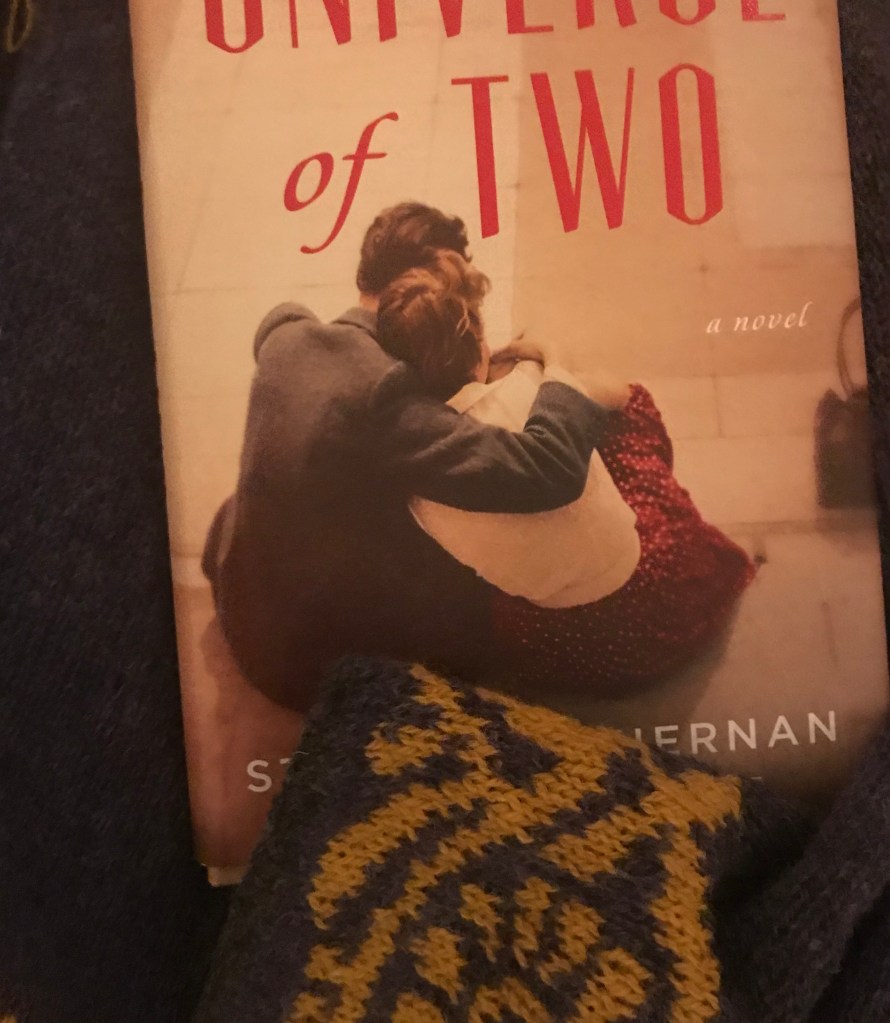
— Stephen Kiernan, Universe of Two

Evening Out — Of Sorts

A friend and I stand in the high school parking lot, watching our daughters finish soccer practice on the field. At least, I say as the girls walk towards us, laughing and talking, they’ve had one practice.

That’s where we are — maybe our world will fold up again tomorrow, but at least the girls had an afternoon together, running on the field on this sunny August day.

At dinner, I quickly realize the soccer team is angry about a school board position, and my daughter glares at me. I have a seat on the board; I listen to her complaint, and think, Let her be mad at the board.

I almost don’t head down the hill to Atkins Field, for the first reading I’ve attended in months, in a beautiful post-and-beam gazebo. A strong breeze blows up, threatening rain. There’s just over a dozen of us, bundled in jackets and blankets folks have pulled from their cars, sitting in lawn chairs. I’m regretting coming, when the author begins speaking. I’ve heard this author before — Stephen Kiernan — and loved his stories. Before coming, I knew nothing about his book, but as he begins speaking, I realize the book is about Los Alamos — a place I know. I put away my knitting, huddle into my chair, and listen.

The dusk comes down. Across the way, I see a single turkey vulture flying across dark clouds, its rising wing glossy with sunset as it struggles to fly into the wind.

At the very end, Kiernan reads the opening page of his book. Kiernan reads particularly well. Listening, for just a moment, I sense all these things coming together — the craziness of attending a reading spread out with masks, unable to whisper and giggle, the ever-present pandemic, but also the setting of Kiernan’s book — WWII — and how ordinary people have endured through terrible times, and we will, too. The chilly wind reminds us of autumn’s imminence, but for these moments, the beauty and power of Kiernan’s writing pulls us together.

And when I arrive home, my daughter is waiting for me on the porch, happy again to see me.

“I met Charlie Fish in the Chicago in the fall of 1943. First, I dismissed him, then I liked him, then I ruined him, then I saved him.”

— Stephen Kiernan, Universe of Two