Pandemic Pause

When I was a young newlywed, I read Green Mountain Farm by Elliot Merrick — a nonfiction account of a Quaker family. At the very end, Merrick ends with a short section saying that World War II changed their lives, as it changed so many lives.

Last evening, after supper and dishes, I was outside, moving stacks of library books from one car to another, waiting for my daughters. Although it wasn’t late, the stars were already spread across the sky. I was waiting for my daughters to come out and join me for a walk.

Finished, I leaned against my car, waiting, remembering how I had walked around this house before I bought it. I had wanted to see how bright the stars were, and if the property had a good view of the moonrise.

My daughters came out. Lit by the porch light, I saw they were both wearing black jackets and scarves. Watching them, I realized my oldest daughter was all grown up. And my youngest? Rapidly heading there.

Tuesday

… one can either choose to live, or not. We have to tell ourselves a story that makes living possible.

— Katherine E. Standefer, Lightning Flowers: My Journey to Uncover the Cost of Saving a Life

And so we go on, telling our stories. My daughter returns from her one high school class on Monday morning, and tells me so many teachers were out.

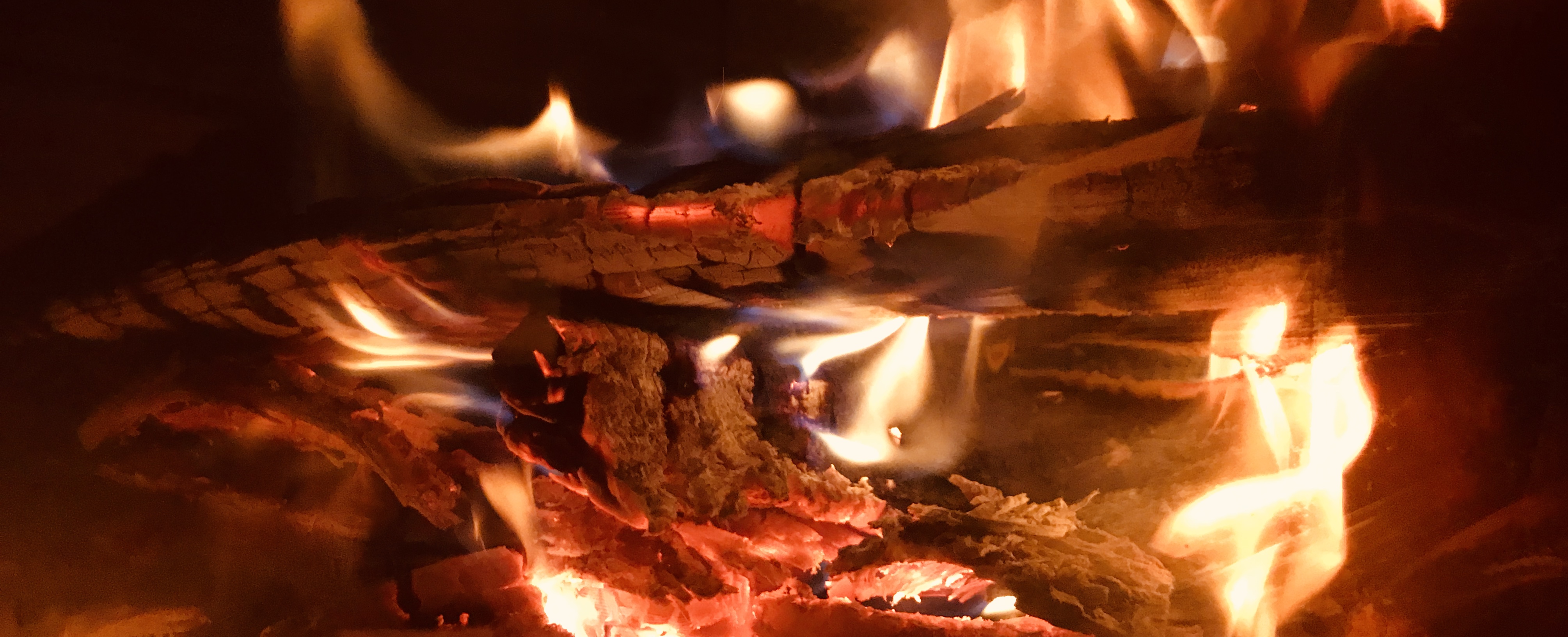
I head to work, leaving her in front of the wood stove with her chrome book, the cats sprawled on either side of her.

At the library, a teen comes in and tells me he thinks the school will close soon. The teen lives on a back road and can’t drive yet. He’s a voracious reader. In the spring, he told me, he read everything in the house, then everything again and again, and finally resorted to Netflix. I tell him to take as many books as he wants. He fills a bag. When he leaves, I wonder when I’ll see him again. Maybe Wednesday. Maybe not.

And so we go on. I name our little wood stove Jenny.

Okay, my daughter says. She is part of our family.

Stay well.

Warmth

When I return home from work in the evening, one cat is stretched on the rug before the wood stove, the other lies on the coffee table, front paws draped over the table’s edge. It’s a scene of utter cat joy.

My daughters are laughing on the couch about something foreign to me — some kind of iPhone. I pull over a chair and sit down with a bowl of potatoes and vegetables and meat.

While they share a story about their negotiations over dinner dishes and compost and wood chores, I soak in the warmth of our living room.

All around us rages the virus, a rising irritability, utter uncertainty over the future. For years, I’ve relied on my ability to figure out a plan. Listening to my girls, I decide this is the heart of my plan: be like the cats. Drink in where we are now. Let that nourish us. And, for God’s sake, laugh at the jokes the kids tell.

“Perhaps home is not a place but simply an irrevocable condition.” 

— James Baldwin

Starting Stick Season

At the end of our dead-end road, my neighbor and I call to each other, checking in, seeking news.

Their 5-year-old loves kindergarten, cut his own hair, lost his first tooth, and is learning to read.

My neighbor laughs at all this, holding a giant box of diapers. When they came down with a cold, he and his wife had to get a Covid test — negative! hurray! — and daycare has been screwed up as their provider had to get her own Covid test.

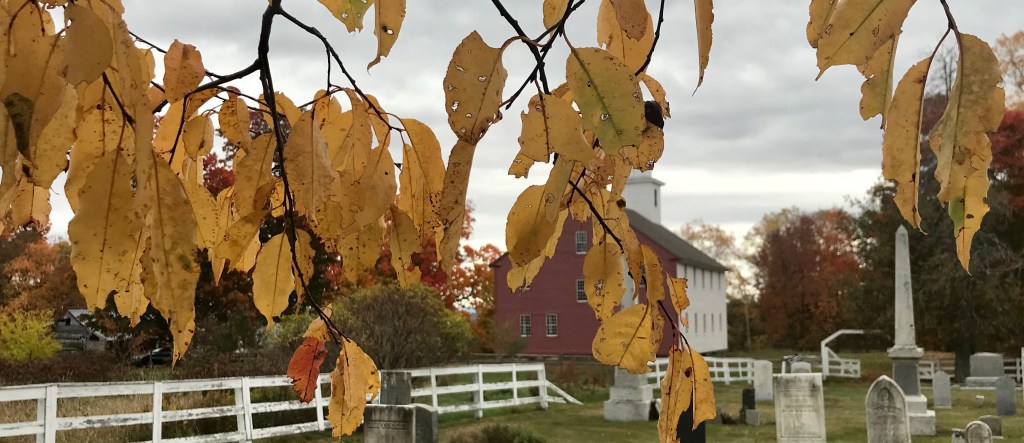
The old lilac bushes surrounding our houses turned a particularly pretty shade of gold this year, but those little leaves have fallen now. Across the cemetery from our two houses, one sugar maple determinedly holds its leaves, a shimmering reflective pool for sunlight in the afternoon.

And so life goes on.

The kindergartner jumps down the front porch steps, sees me, and points into his mouth. See!

From my distance, I nod and cheer. And so Saturday goes.

Fire and Dark

I parked at the wrong entrance to the Enchanted Forest walk in Montpelier’s Hubbard Park, so we walked backwards down the path in the dark for a while before reaching the beginning and backtracking.

Rain has been scarce in Vermont all summer, but the path was lit with hundreds of white paper bag luminaries. Fires crackled in cauldrons. Women danced with fire. Paper lanterns glowed in trees. The effect was not frightening, but magical — my teens murmured that we had stepped into Lord of the Rings. I imagined we had entered Shakespeare’s world.

As we approached the final hill, a torch burned on the stone tower’s top. We spread out on the lawn — socially distanced, all of us bundled in coats and masks — and watched a simple light show with hand-cut slides featuring a snail traveling through the woods and fields and ocean.

We were in Montpelier — Vermont’s leftist capital — and I wondered if the climax would bend towards an urge to vote. Instead, the simple and not-so-simple ending was that the slow-moving snail carried a galaxy on its back. Carry hope with you. Don’t lose your path in the great, wide world.

Along that path lit only by fire — in jack-o-lanterns, torches, lanterns — we walked through the dark woods.

All the drive home, the girls laughed and talked. We are snails.

Survival often depends on a specific focus: A relationship, a belief, or a hope balanced on the edge of possibility.


― Elisabeth Tova Bailey. The Sound of a Wild Snail Eating

The Obvious

In a terrible mood on Friday afternoon, I’m driving too fast through town when I round a corner and see a rainbow spread over Hardwick.

The arc shines so brilliantly and near I imagine I can reach out and touch its particularly vibrant green. I pull into the Village Market, and a woman I know gets out of her car, wearing a mask, too. For a moment we stand there, marveling, then walk towards the market door.

Another woman — vaguely familiar to me, in the way of small town Vermont — is loading her car with groceries. My companion and I urge her to go see the rainbow; it’s just a few steps around the building.

She shakes her head, saying she can’t see it.

But we insist and walk those few steps with her. The rainbow by then has morphed into a double arc. Then, as we watch, the rainbow fades.

Over her mask, the woman looks at us and says, “Well, that’s a nice thing after all today. Something good.”

October 5. So much more winter to come. Watch for rainbows.

It was the Rainbow gave thee birth,

And left thee all her lovely hues;

“The Kingfisher” by William Henry Davies