Another Brick in the Wall….

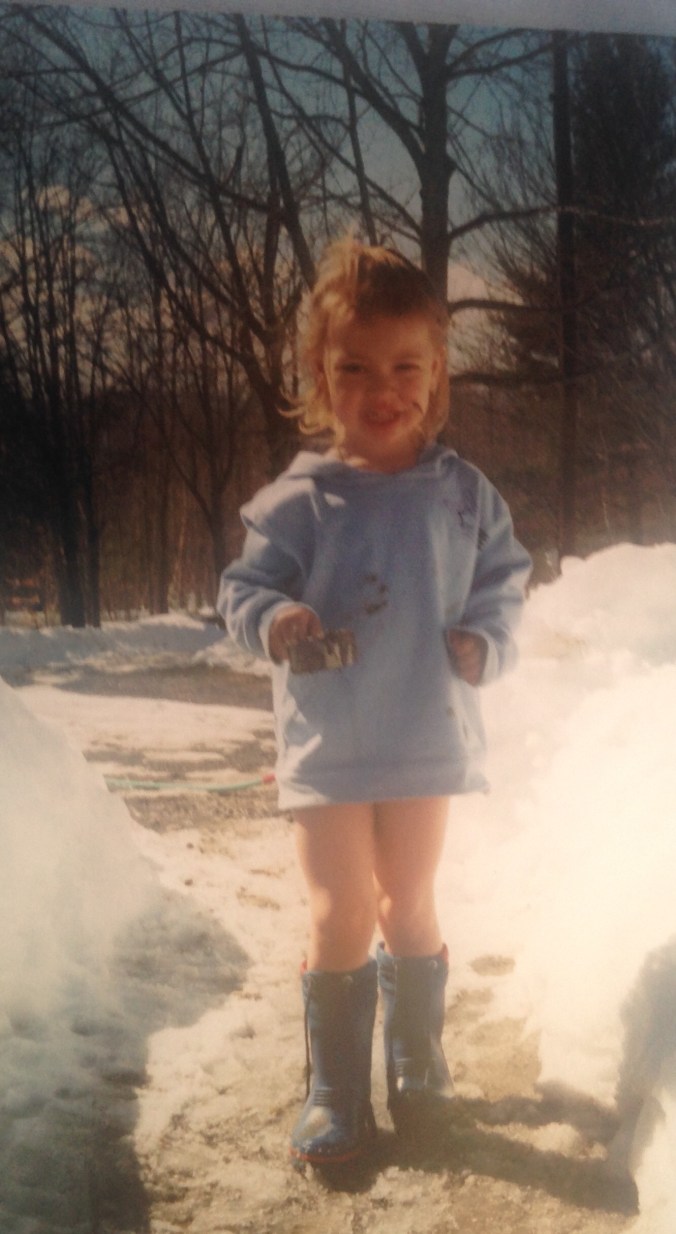
Today I visited a high school that reminded me of the high school I attended, and I remembered just how badly I wanted to dismantle that building, brick by brick. I wanted windows. I wanted to lie beneath leafy trees. I wanted to hike up behind the athletic fields and wander into woods I hadn’t explored.

So at 18 when I enrolled in a tiny Vermont college at the end of a paved road, where an old farmhouse housed the administrative offices and classrooms were in a former hay barn, I knew I was in the right place. The first night I slept there, I fell asleep staring through the window at the crystalline stars.

I’ve tried many paths with my own daughters, from private school to homeschooling to public school, and perhaps the one thing I learned is not follow what your own adult peer group is doing – that initial impulses are sometimes dead-on – and that if you’re feeling penned in, look for the egress, or at least a window sash to open.

Education is not the filling of a pail, but the lighting of a fire.

William Butler Yeats

FullSizeRender

February garden, Vermont

Maple

This week, I gave away maple leaves, small shapes of pure maple sugar. For so many years, maple was queen in my life. Maple is all taste and scent, literally the life of the tree boiled into steam or crystallized into sweetness. Both my babies, when I carried them back to the house after long afternoons-into-night of boiling had a satiny patina of maple sugar glazed on their cheeks, from condensation descending through the sugarhouse.

For years, maple was livelihood in our house, but also a gift, particularly sugar which is harder and dearer to make. For numerous reasons, this year queen maple has laid her scepter down in my household – and yet, the other day, eating crumbles of this candy, I remembered this world in a grain of amber sugar: the immense fire’s roar, the billows of steam that stretched across the road, the daughters’  play tea sets and how they chalked on the cement floor and rough wood walls – and the satisfaction in drinking good syrup.

To see a World in a Grain of Sand
And a Heaven in a Wild Flower
Hold Infinity in the palm of your hand
And Eternity in an hour….
– William Blake, Auguries of Innocence
DSCF2816

Woodbury, Vermont 2013


Birth

An image appears in art, over and over, of a human down a deep narrow well: trapped. What’s at the bottom? What’s at the top?

17 years ago, I had a prolonged labor with my first daughter, where, hours into it, I knew I was descending headfirst down a stone-lined chasm. In all that darkness, I saw only my outstretched hand, reaching down. At the bottom, I knew with a certainty, as clear as I have ever known anything, lay my death.

I never reached the end of that chasm that night. Instead, I met my daughter, born via emergency caesarian. When I saw her tiny, wrinkled body for the first time, held up for me in the surgeon’s bloodied gloves, her eyes were wide open, and I thought with a fierceness I have never relinquished, She’s mine.

These few lines are but a piece of her traverse into this earthly world, and my soulful journey to meeting her is as real as the glinting scalpel in the surgeon’s hand that released her from my body. So, as fiction writer, when I write of rock-lined tunnels or starless nights, I’m not fabricating stories from nothingness. The interior roads we take may be unseen to the eye but are just as vital, just as humming with mysterious life, as a newborn’s eyes.

…(my mother) was
bearing down, and then breathing from the mask, and then
bearing down, pressing me out into
the world that was not enough for her without me in it,
not the moon, the sun, Orion
cartwheeling across the dark, not
the earth, the sea--none of it
was enough, for her, without me.

–– Sharon Olds
FullSizeRender

Montpelier, Vermont

Creative Mountains

Driving to Stowe this morning, my ten-year-old daughter pointed at Mt. Mansfield and said with utter joy, I’m going up in those mountains today.

She did. With her companion and the child’s mother, they skied higher than she ever had, returning at the day’s end with cheeks sweaty red, her braids tumbled. On the way home, as she told me about her day, I realized she had made a mental map of her journey, laying winter skiing over her summer hiking.

While she skied, I sat in a sun-filled room with strangers and climbed my own mystical creative mountain, traversing the terrain of novel writing through rock and streams, dusty back roads and the variated sky bent over a village. My villagers (like the people I know) sleep and dream, wake and eat, their hearts filled with desire and lust, with unhappiness and the unrequited past, with daily pleasures, like eating salad and enchiladas with a child and listening to her story.

How I admire this child and her fearless joy, her unalloyed pleasure in sun and snow, in steep mountains, and the wind over her face. As creative adults, shouldn’t we aim for that confidence in hard places, that dusting away of doubt that so frequently plagues us?

More to the heart, perhaps, like a child, we should savor unfettered happiness in our hours.

And then, of course, the novel-writing itself affects the novelist, because novel-writing is a transformative act.

Jane Smiley, 13 Ways of Looking at the Novel

IMG_4372

Photo by Molly S./Woodbury, Vermont

Midwinter Hunger

A sizable deer appeared in my garden this morning among the bean stalks I never pulled, lifting its head, listening. In the woods around our small field, a flock of wild turkeys comes and goes, bent over dark creatures who remind me of Puritan old women dressed in black, crouched at their work. In the kitchen, my daughters mix pork, scallions, garlic, vinegar, for soup dumplings.

This stillness of winter is a false cliche; overhead, the crow flies for its meal. Squirrels run rampart over the compost. Even the wood stove devours. The children, asleep in their beds, dream of journeys. In the morning, sleepy at breakfast, they appear to have grown in those dark hours.

When we eat a steak, we build its proteins into our bodies and become part cow. Eat an artichoke, become part artichoke. Drink a glass of orange juice, become part orange tree. Everything eventually corrupts: from our first draft of milk, we are corrupted, the world is corruption, time is corruption, and we are forever hungering for more.

–– Anthony Doerr, Four Seasons in Rome

FullSizeRender

West Woodbury, Vermont


Seeing & Writing

A rare epiphany today. Sitting in on a grade school math class, I listened to children figure strategies to determine the precise number between 28 and 43.

Like that, I saw in the sunny classroom the mistaken path I’d taken in my novel’s rough draft. So intent was I on constructing the whole that I’d overlooked the necessity of knowing each particular piece – the unknown that will carry me from 28 to 43. Is it merely that I feared to lose sight of the whole? In each of my characters – as in every one of us – there’s an empty place, a yearning of trembling hunger.

After school, sprawled on the dim staircase while the kids practiced basketball, I wrote my own variation of strategies for those missing pieces – about the teenage boy who lost the lucky rabbit’s foot he had stolen from a corner store years before, while his uncle argued with the cashier about a lottery ticket. As stolen contraband (and girly pink), the boy had kept the rabbit’s foot hidden. Through coincidence, a woman finds the broken thing ground into an icy road….

In the handful of those classroom moments, I realized these pieces might form the schematic of this novel yet-in-the-writing, and while amorphous destiny hides from us, the coincidences winding us unwittingly together are a misplaced rabbit’s foot or a sweater left on someone’s chair.

… over time, we stop perceiving familiar things – words, friends, apartments – as they truly are. To eat a banana for the thousandth time is nothing like eating a banana for the first time. To have sex with somebody for the thousandth time is nothing like having sex with that person for the first time. The easier an experience, or the more entrenched, or the more familiar, the fainter our sensation of it becomes. This is true of chocolate and marriages and hometowns and narrative structures. Complexities wane, miracles become unremarkable, and if we’re not careful, pretty soon we’re gazing out at our lives as if through a burlap sack.

— Anthony Doerr, Four Seasons in Rome

IMG_0500