What we can’t know.

The cold hammers down around us in the way we’ve known Januarys before — nothing fierce, but sharp. January is a season that draws us up against our own mortality. Stumble and you’ll break a bone. Sleep outside, ill-prepared, seriously down on your luck, and you could perish.

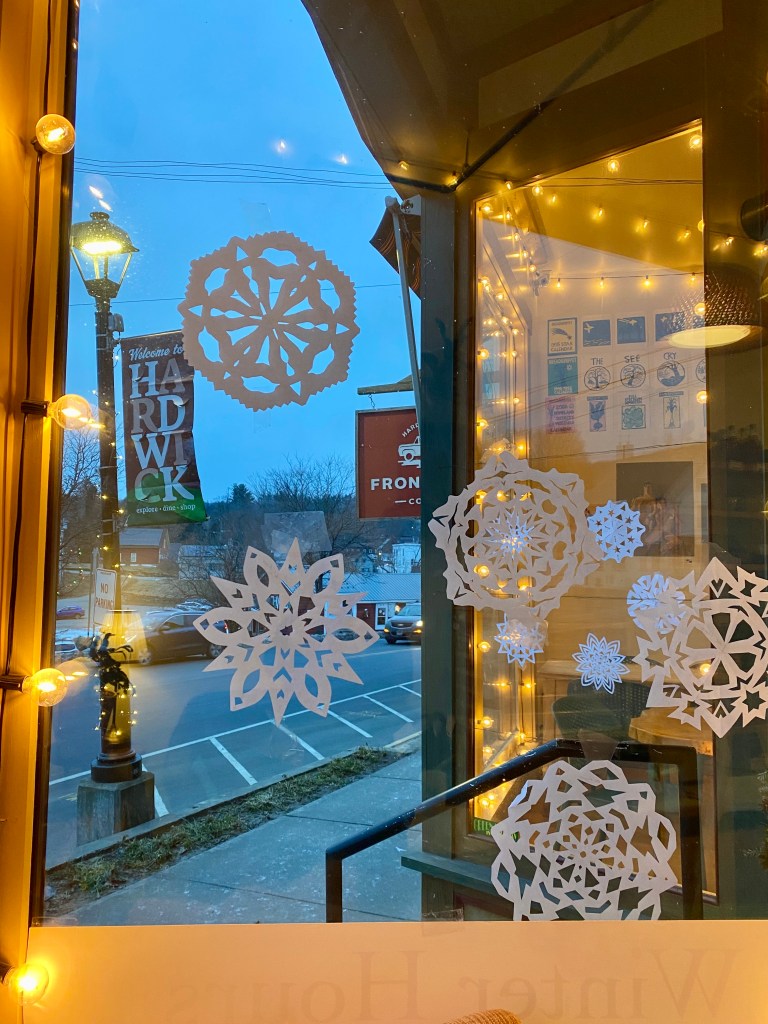
Wednesday morning on the early side, I’m drinking coffee and staring at the snowflakes that have appeared in the downtown again, a memory for an absent person. News has wound my way of the death of a person distant from me by numerous steps, the fate we’ll all meet, one way or another, the great leveler. In the afternoon, when I return from work, the window washers are carefully removing the lacy paper, setting the delicate flakes to one side, and then re-taping them on the windows. A gentle, wordless act of care. A piece of our human puzzle.

These winter days, I’m devouring Paul Lynch, about as good as anything can be.

“I believe it is worth writing to remind ourselves of what we can’t know. To remind ourselves that certainty is dangerous. That factual knowledge of the world casts only a small light. Fiction is necessary because it seems to me that only fiction can accommodate the total strangeness that is life. To remind us that truth is actually impossible.”

Household chores and world events.

The last day of 2023, I let the fire in my wood stove extinguish, and I take my stove apart. The stove has been spitting ash and spark through a damper, a chore I’m driven to by sheer necessity.

I unscrew the stovepipe and the back heat shield and plate, and carefully remove the two honeycomb metal filters that are choked with fine ash. It’s a messy job, and I’m a messy woman. My curious cat walks through the cinders and leaves dirty paw prints on my white enamel kitchen sink.

When I’ve put the stove together again, I find the driest kindling I can in my barn and build a small fire and slowly heat the stove again, kneeling before the glass where the flames ripple, listening to public radio hash over the year. I add wood, study the flames, murmur to my cat who is seriously invested in this warmth and the doubtless impending feline nap.

I’d once torn a photograph from a New Yorker issue and thumbtacked it near my desk of Marina Oswald, taken the morning after her husband Lee Harvey Oswald was arrested for assassinating President Kennedy. Her face twisted unhappily, she’s pinning cloth diapers on a line. So it goes: the necessity of domestic life as the great events of the world unfold.

My stove burns merrily. I bake spanakopita and invite a few dear ones who bring chocolate. This morning, January. A drift of snowflakes. The lean winter light.

The snow is melting
and the village is flooded
with children.

— Issa

Real Things.

Much as I pushed the hippie thing in my younger years, I’ve often sneered (albeit silently) at the tea drinkers, save for my pregnancy years. I’ve always been much more of a knock-back-a-couple-of-espressos woman. But this sodden late afternoon finds me leaning against my woodpile in the dreary rain, sipping steaming tea, remembering my girlhood love of The Secret Garden, Jane Eyre, and scorned Sylvia Plath.

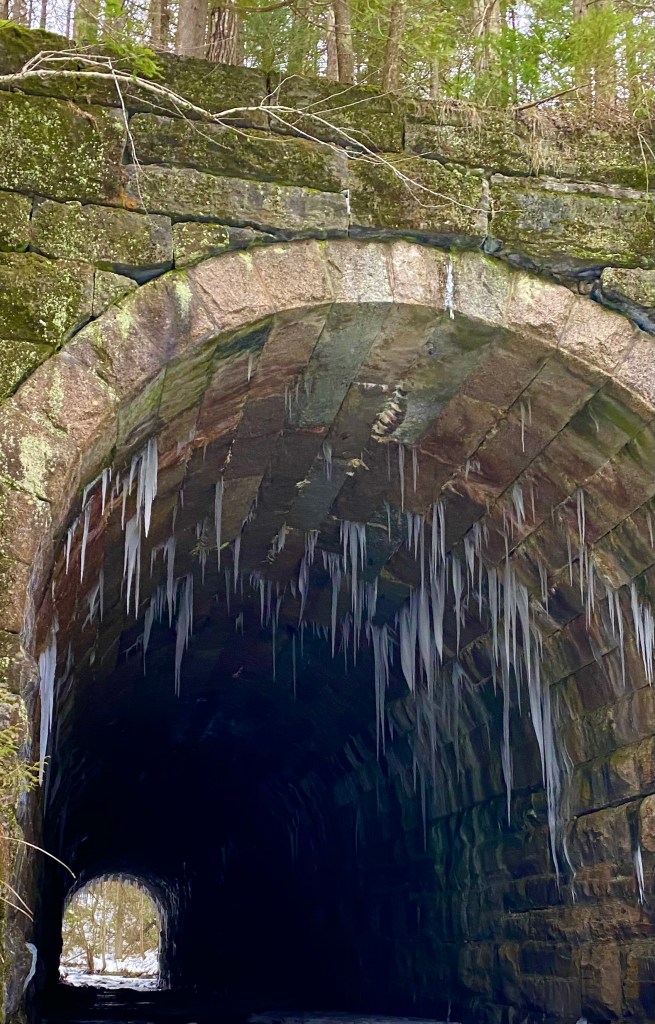
As for the photo above, our Christmas adventures involved inspection of the July flood’s toll on the rail trail’s bridges. Christmas Day, we followed the former railroad bed deep into the woods, where this enormous culvert was skillfully and laboriously constructed a few generations ago. For reasons that need no elaboration, this seems a fitting photo for the trailing end of 2023. Unless you know by word-of-mouth or friend, you could walk through these woods and never see this beauty. Which would be a kind of loss.

I’ve never been a fan of New Year’s resolutions or wishes, so easily broken. But here’s a small one: less of the superficial hashtag life. Hold scorching tea. Share a secret marvel with a stranger. Adhere to the tangible.

And last — I was lucky yesterday to be invited with Vermont Almanac editor Patrick White on Brad Ferland’s radio program Vermont Viewpoint on WDEV. It’s always a joy to participate in radio — especially with my friend Brad and talking about Vermont and writing.

Hope you’re all dry and warm….

Duskier and Duskier.

Chickering Bog

My brother and I have this odd (and likely annoying) habit of repeating the same word or phrase back to each other. In a November weekend interlude, he says duskier, which sums up these November days. I toss it back to him — duskier — then add gloaming.

To break the gloom, we walk through woods not far from my house. Little streams run. Somone has built enchanting steps of fieldstones. At the path’s end, a bog stretches out, the tamarcks’ gold faded pale. Spring, summer, the birds sing wildly happy here. Now, the flutter of wings, nothing more.

There’s a place for all of this: silence and settling down, the drawing in for winter.

Come, for the dusk is our own….

— Lucy Maude Montgomery

Continuing without a sign.

An inveterate list-writer, at the end of each day, I’m often summing what I’ve done. Somedays, my hands and my hand seem to come up empty. Or my heart has articulated a question.

I pass a few days drinking coffee and talking with my daughters, walking through the woods, along rivers and streams and a rock-throated gorge. They’ve teased me for years about my focus on the gritty and hardscrabble, my fascination with wandering into abandoned cellar holes, my curiosity about abrupt turns in human stories. But when has the world ever not been falling into pieces? There’s this, though: surely at times the world’s misery spins harder and swifter and unbearably more painful.

In those cellar holes, gardens of flowers and sustenance once bloomed at doorsteps, their seeds dormant in the soil. Sunday, nearing dark, I brake for wild turkeys meandering across a dirt road. There’s no one around. I pull over and walk down the road to snap a photo, but the turkeys suddenly rush, hearing my footsteps, and I’ve forgotten my phone in the car anyway. I’m at a driveway that bends up the hillside, the house of out sight. Many years ago, the man who lived there offered me his dead wife’s fur coat. He must be long gone, too. I’ve long since lost any sense of who lives there now.

“Matins”

You want to know how I spend my time?
I walk the front lawn, pretending
to be weeding. You ought to know
I’m never weeding, on my knees, pulling
clumps of clover from the flower beds: in fact
I’m looking for courage, for some evidence
my life will change, though
it takes forever, checking
each clump for the symbolic
leaf, and soon the summer is ending, already
the leaves turning, always the sick trees
going first, the dying turning
brilliant yellow, while a few dark birds perform
their curfew of music. You want to see my hands?
As empty now as at the first note.
Or was the point always
to continue without a sign?

— Louise Glück

Go on and wonder.

I skip out halfway through a Selectboard meeting and take a backroad home. Since the floods, I haven’t driven these dirt roads. The roads are back together mostly, with rocky channels on either side of the steepest places. At the road’s highest place, I pull over.

August light.

I’d started that morning in jeans and a sweater, working on my back deck while rain splattered down, the morning large with a cold damp breeze that made me wish for socks in my sandals. This evening, I’m wearing a sundress again.

All summer long, we’ve been collecting complaining about the summer in Vermont. First, no rain. Then, too much rain. I have plenty of firewood left from the tepid winter, and then burned fires into the summer.

The evening spreads out radiantly. For this moment, I’m in no rush to head anywhere, so I park and walk down the road a short ways, crickets sizzling in the hayfields. A pickup rolls slowly down the road. The driver, an acquaintance, stops, and we chat for just a moment, about the particular green and blue surrounding us, then he glides away.

Light in August. My father bought me a used copy of Faulkner’s novel for a dime in a used bookstore. I was a teenager, a fanatic of Tolstoy and Dostoyevsky, those immense Penguin paperbacks that were so gratifyingly fat. I kept that copy with me for so many moves, thousands of miles, and I’m guessing I have that version yet, crammed on my bookshelves.

Faulkner’s world is the complexity of past and present, the world jammed against our faces right now, floods and fires. This morning, again, a crimson dawn, curls of fog in the blue valley. My east windows need washing. Get on this, I think, get on this…

“Wonder. Go on and wonder.” 

— Faulkner