The Kingdom’s Rocky Peaks

Hiking the peaks in Vermont’s Northeast Kingdom, it’s easy to see how glaciers and rock and time have shaped the northern landscape where my family lives, once-upon-a-time channeling immense grooves into the earth and strewing the territory with boulders. Clear, deep lakes – tantalizing for swimming – lie in these cuts.

Maybe it takes the sweeping vista of a mountaintop view over immense valleys, coupled with the immediacy of childhood, to place time in that perspective of distance juxtaposed against the immediacy of the here-and-now: our world was shaped and formed by ancient movements, and yet we go about our day-to-day lives as though the past was merely story, an anecdote over lunch’s cheese and mesclun sandwiches.

Yesterday, my 11-year-old, dutifully and non-too-cheerfully starting out on yet another hike, came around a wooded bend to the base of an immense boulder where she gasped with pleasure. Scrambling up the rock, she found herself stranded at a steep pitch on crumbling lichen. Afraid, she edged to the trail again, summited, then later feared again, seeing stormy clouds rolling in from a distant horizon, foreboding lightning and thunder.

I can’t help but think that’s an encapsulation of time: the radiant pleasure of a child swimming in a lake and discovering one tiny shell on the sandy bottom and the real presence of an electrical storm moving in. All that in one day: and then the journey back home again.

Scars have the strange power to remind us that our past is real.

– Cormac McCarthy

IMG_1924.JPG

Lake Willoughby, Vermont


On the Road

Every now and then, I find myself (generally with my kids) in some space of time, either waiting for this particular thing or that, often under duress, and generally beside some road.

Is this just American life? That so much of it takes place beside the paved (or in Vermont the dirt) road? These spaces of time usually catch me by surprise. Today, with no knitting, the library books left at home, unwilling to enter any store and shop, I lay on the medium’s grass, beneath scraggly southern pines I had never noticed before, although I’ve driven by this part of Vermont – Tafts Corner – for years.

I had the oddest memory being four-years-old. Traveling with my family, my sister and I had run on a lawn one evening beneath a sprinkler. A desert child then, the grass was a fragrant anomaly, a curiosity beneath small bare feet.

Driving back home this afternoon, I kept looking at the spiny ridges of Mt. Mansfield, longing to be off this asphalt road, footloose, following the song of the hermit thrush.

Travel is fatal to prejudice, bigotry, and narrow-mindedness, and many of our people need it sorely on these accounts. Broad, wholesome, charitable views of men and things cannot be acquired by vegetating in one little corner of the earth all one’s lifetime.

– Mark Twain

FullSizeRender

Williston, Vermont

The Tall and the Short of It

Running through the Atlanta airport – far larger than the Vermont village we live in – my 17-year-old daughter is the sharp one among us, pointing her younger sister and I through the crowds to the T concourse, up an escalator and a second one, laughing as we rush for our plane, breathlessly relaying how she ran in high heels last winter, alone, for the final flight into Burlington before a snowstorm.

In an underground train, the younger sister reads aloud, “Hold on when the train starts,” and then immediately asks, “Hold on to what?” Surrounded by people, the younger girl and I look up. We are both under five feet, and I stretch my hand up hopelessly for the overhead strap.

As the train lurches forward, we both clutch her older sister (a girl who is, as Raymond Carver wrote, a long tall drink of water), and everyone around us laughs out loud.

With a delayed flight, we currently remain in Atlanta, waiting with chipper Vermonters we don’t know but are beginning to, exchanging weather, geography, and history stories – beneath a stunning double rainbow.

Here’s a few lines from Thomas Christopher Greene‘s novel If I Forget You I’m reading:

She climbs into the yellow cab that is first in the line of yellow cabs. Henry is running now. He is at the window. She looks up at him – those eyes, unchanged, the pale blue of sea glass – and he stretches his hand toward the closed window and the cab lurches out into traffic, merging quickly, a damn sea of yellow cabs, and he tries to keep his eyes on the one that carries her, until he is no longer sure which one it is and a phalanx of them moves up Broadway and out of sight.


FullSizeRender

Atlanta airport, GA

The Wild Blue Yonder

Early in her third-grade year, my daughter came home chatty about Magic E’s might, the incredibly tasty Italian salad dressing at lunch, and that her teacher jumped out of airplanes. What, she wondered, would that be like? She had never considered this a human possibility. In a poem, she wrote,  I want to fly.

At 2:30 a.m. on a rainy night, I woke the girls and drove that familiar way to Burlington I’ve traversed so often, passing through small towns where houses were dark save for a single outside light beside the front door. A store clerk leaned against the door of Morrisville’s Cumberland Farms, smoking a cigarette, the empty parking lot illuminated. That day, we flew from Vermont’s wooded green, high over the upper midwest’s great lakes, and the enormous plains of the country’s middle. At the end of our journey, the pilot tipped the wings, and we began what always seemed to me a long and gradual descent over the northern New Mexican desert, the red and black-lava mesa land slowly rubbing into focus – pinion trees, houses, the wash of dry arroyos, the blue Sandia Mountains rising mysteriously in this open landscape.

My child pressed her face against the small window. Of everything in that day, what she loved most was lift-off, that graceful moment when the boundary between earth and sky is crossed, and, Icarus-like, she entered the realm of birds.

“Flying at Night”

Above us, stars. Beneath us, constellations.
Five billion miles away, a galaxy dies
like a snowflake falling on water. Below us,
some farmer, feeling the chill of that distant death,
snaps on his yard light, drawing his sheds and barn
back into the little system of his care.
All night, the cities, like shimmering novas,
tug with bright streets at lonely lights like his.

– Ted Kooser
FullSizeRender-13

Photo by Molly S.

Where You Can Find Us

Late last night, cleaning up my desk for the morning’s work, I found a flip book my daughter had made, with scraps of white paper from my recycling box and stapled together. On its cover, she had written in pencil Where You Might Find Me.

The first page began with a band of rainbows stars drawn in colored pencil – the Milky Way – followed by the classic solar system with orbiting planets, and then the azure and emerald orb of Earth. Her maps decreased to graphite renditions of North American, the United States, New England, Vermont, Washington County, and finally the town of Woodbury.

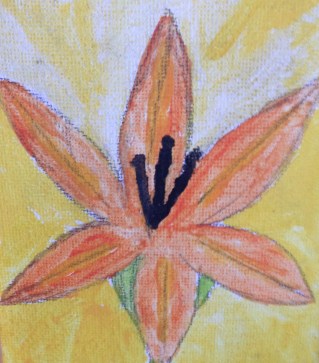
At the very end, I anticipated her typical drawing of our house, with a second floor balcony and the cupola that yet remains unfinished, the front door flanked by tiger lilies. Instead, she drew the Woodbury Schoolhouse, smoke cheerfully curling from its matching chimneys.

I love Vermont because of her hills and valleys, her scenery and invigorating climate, but most of all because of her indomitable people. They are a race of pioneers who have almost beggared themselves to serve others. If the spirit of liberty should vanish in other parts of the Union, and support of our institutions should languish, it could all be replenished from the generous store held by the people of this brave little state of Vermont.

– Calvin Coolidge

FullSizeRender

Tuesday: a Few Miles Travelled

Eleven years ago, I drove away from Copley Hospital in Morrisville, sitting in the backseat of a car – a place I never sit. My six-year-old daughter was in the backseat, too, her infant sister between us, just days old. Although it had rained every single day in May – either a drizzle or deluge – the beginning days of June were sunny and hot. Leaving the hospital, we passed enormous corn fields where emerald shoots of corn had emerged from the dark soil in those few days I had been cloistered.

Sick through almost the entire pregnancy, by the end I was less alive, submerged in that pregnancy’s difficulty. But all that passed immediately with the birth of my second daughter. Within minutes of her birth, I felt myself returning to life.

In all the marvelous experiences of my life, those minutes driving by those June corn fields rank very near the apex: the two children I was meant to have, beside me birthed and healthy, the gloomy raininess of a long hard season dispersed, and all around us, radiant in sunlight, those fertile fields rich with life pushing upward, in those long sweeping rows of gems.

blessing the boats
(at saint mary’s)

may the tide
that is entering even now
the lip of our understanding
carry you out
beyond the face of fear
may you kiss
the wind then turn from it
certain that it will
love your back
may you
open your eyes to water
water waving forever
and may you in your innocence
sail through this to that

— Lucille Clifton

FullSizeRender