The Might of Flowers.

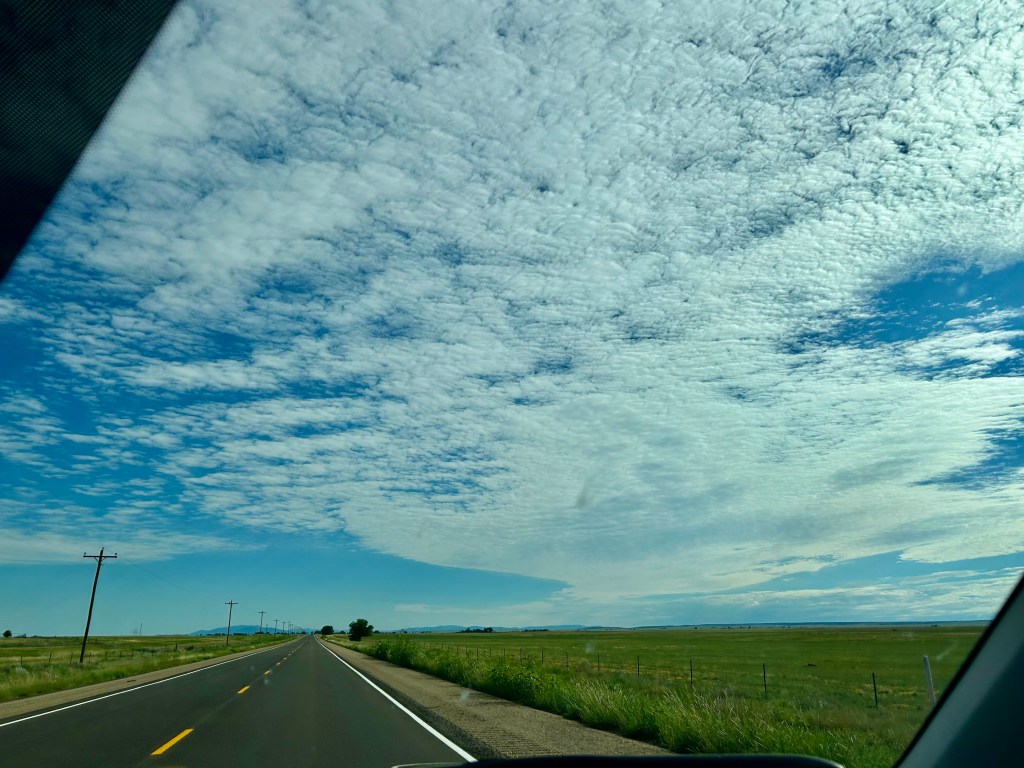
My daughter suggests I get coffee before driving home. It’s midnight, balmy. Sprinklers water the grass outside the airport. After the New Mexican desert, the air is redolent with growth. Thinking gas station coffee will be sour, I pass, and buy lemonade instead.

In Burlington, the streetlights blink red, and I drive quickly through town. My daughter lives in a neighborhood where gardens and yards spread into the sidewalks. Hollyhocks lean out from the neighbors’ front porch. I’m reminded of my graduate school days in Bellingham, Washington, when the world seemed chockfull of flowers whose names I had yet to learn.

Then, it’s a long drive home through the darkness, with no traffic and the Daily podcast about The Great Gatsby. In this week, my garden has grown wildly, the hydrangeas pale globes in the dark. For a moment, I stand in the driveway, suitcase in my hand, staring up at the sky and breathing in the wet air. There’s that line in Gatsby about the impossibility of repeating the past — or Gatsby’s wager that, indeed, the past can be salvaged. Returning from New Mexico is always this complicated mixture of past and present. My birthplace, Northern New Mexico holds my earliest memories, of listening to the wind and squeezing red mud between my bare toes. Northern Vermont, where I’ve lived for decades now, is suffused with my bad past of a marriage gone awry, a story I can’t shake.

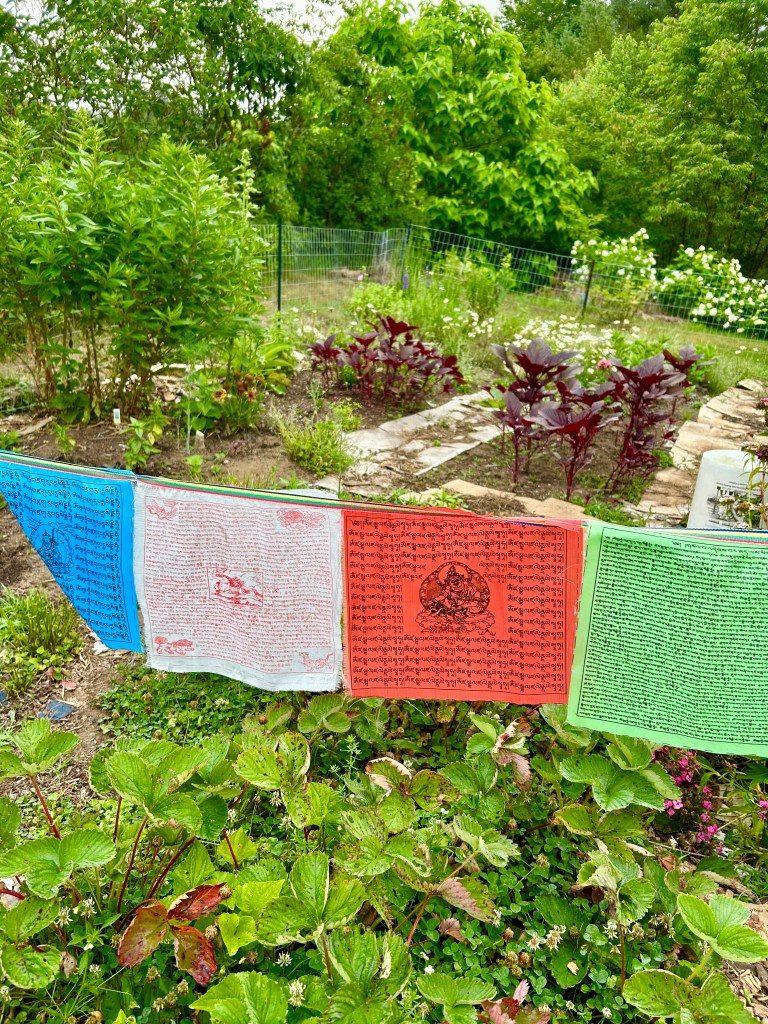
Yesterday afternoon, talking with a friend, I felt myself slipping into the past again, that sinkhole. But don’t we all have that? Heading into this summer, I believed that nurturing the flower gardens around my house would sweeten my life, balm the ravages of the cancer world. A few years back, I planted compass flowers, the six-foot high plants I wrote into the ending of my last book. The plants are now blooming their sunshiny joy. This morning, goldfinches layered in the leaves and petals. I crouched on the dewy grass, in the here and now, nowhere else.

“The need is not really for more brains, the need is now for a gentler, a more tolerant people than those who won for us against the ice, the tiger and the bear. The hand that hefted the ax, out of some old blind allegiance to the past fondles the machine gun as lovingly. It is a habit man will have to break to survive, but the roots go very deep.”
― Loren Eiseley

In the great [and holy] darkness.

In these sultry July days which I love, I walk in the evenings. Wildfire smoke from Canada renders the sun bloody. In the heat, there’s few folks out. I often follow the trail along the river to the pastures where cows graze. The air, fat with humidity, is redolent with wet earth and cowshit. The smell reminds me of those childhood camping trips and those journeys in my twenties when we explored the West, driving around with Rand McNally and pitching a tent in a forest or farmer’s field.

The world indeed might be going mad, the planet hurtling into fire and heat. On these July evenings, though, it’s me and those cows and the wildflowers blooming rampantly. In the night, rain patters. I leave the cats sleeping in their hot fur and slip outside. It’s so far along in the night that this village is sleeping, too early yet for milk trucks, too late for teenagers. I sit on the steps in the tiny cool bits of raindrops, tree frogs and crickets chorusing.

I’ve posted this poem before, but Hayden Carruth is always worth reading again, and this remains one of my favorites.

The Cows at Night

The moon was like a full cup tonight,
too heavy, and sank in the mist
soon after dark, leaving for light

faint stars and the silver leaves
of milkweed beside the road,
gleaming before my car.

Yet I like driving at night
in summer and in Vermont:
the brown road through the mist

of mountain-dark, among farms
so quiet, and the roadside willows
opening out where I saw

the cows. Always a shock
to remember them there, those
great breathings close in the dark.

I stopped, and took my flashlight
to the pasture fence. They turned
to me where they lay, sad

and beautiful faces in the dark,
and I counted them–forty
near and far in the pasture,

turning to me, sad and beautiful
like girls very long ago
who were innocent, and sad

because they were innocent,
and beautiful because they were
sad. I switched off my light.

But I did not want to go,
not yet, nor knew what to do
if I should stay, for how

in that great darkness could I explain
anything, anything at all.
I stood by the fence. And then

very gently it began to rain.

Living in the Edge.

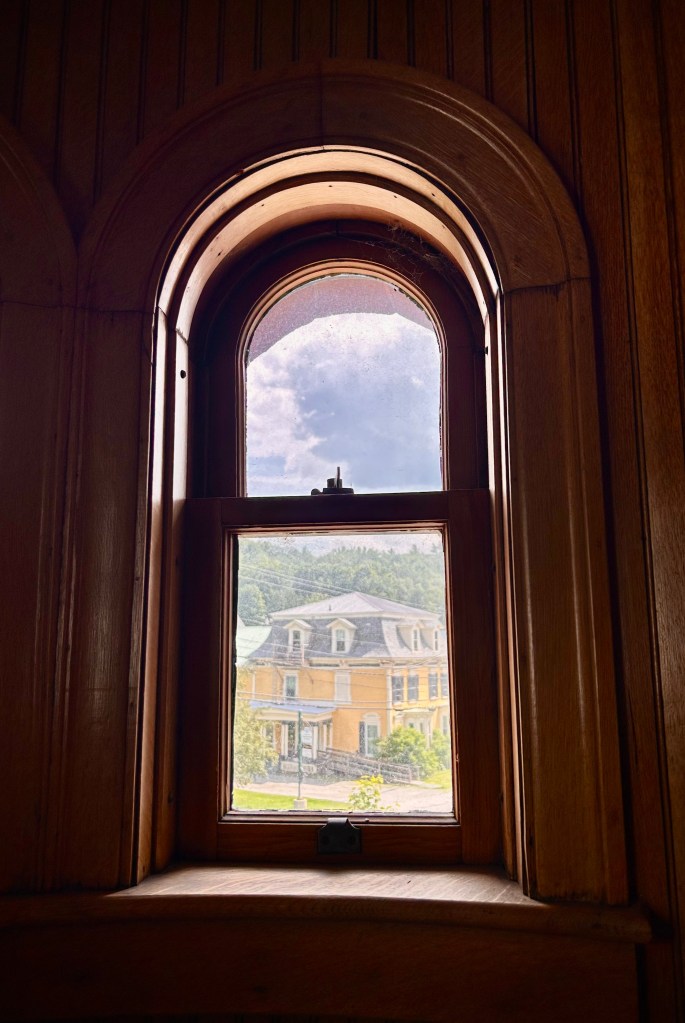
As part of my heal-from-cancer and keep-the-cancer-from-returning approach, I borrow my daughter’s yoga map on Thursday mornings and walk through the cemetery and along Little League field to the village. The studio is above the town’s coffee shop. The windows frame the town’s main intersection of routes 14 and 15, the Lamoille River, flanked by July’s burgeoning green.

As I lie on the polished maple floor, the sound of the traffic comes and goes. This calmness reminds me of those years I lived in Brattleboro, pre-internet, when the main source of my twenties’ activities was walking to the public library or a favorite bar, hiking, or hanging out with my roommates in the house we rented, running our mouths about the state of the world. There was a lot of laughter, a whole lot of discussion about morals and relativity.

This particular Thursday is the anniversary of the floods in 2023 and 2024, exactly a year apart. The class leader repeats a theme of in the edge, that fertile and sticky place between terrains. I think of this summer’s profuse wildflowers – trefoil and asters and Canada lilies – that spread between the river and the fields. Afterwards, I spread out my notebooks and papers and laptop in the coffee shop, plunge into a hard piece of work. I’ve no illusions that yoga will set me floating down any peaceful river. The edge, that complicated habitat, has long been my domain. Friends appear and tell me they’ve sold their house, are pulling up stakes and heading overseas. Around me, people come and go, talking and eating, figuring out or not figuring out parts of their lives.

Later, at home, the catbirds screech. A robin perches on the porch railing and studies me. The woodchucks scurry under the steps from den to woodpile, or have they slowed to a who-gives-a-damn saunter?

Winter, the edge terrain is a cold beast. July, I’m all in…

“Not so much a game
as a sphere,
a mystery.
Held up to light,
a small hole
into another dimension.” ~ Ruth Stone

Mad World, Abundant Wildflowers.

For no particular reason, I walk on the path along the river which leads to the road where I once lived. In the meadows and beside the trail, the wildflowers blossom abundantly: yellow toadflax and pink asters, bluets and Black-eyed Susans, cinquefoil.

I dawdle at the dirt road. At a turnout, long ago I had a carpool meeting spot. Over the years, my daughters and I passed hours there. In the afternoons, I lingered with my friend, the girls lingered with their friends. The girls played in a brook. The fields have been used for hay, vegetables, seeds, THC. In the past few years, the flooding river dumped sand in these acres. Burdock and thistle claim this terrain now. These fields are for sale again.

A few pickups zoom by. When my ex and I were splitting up, we’d meet here, too. I’d run down the mountain road and leave the girls at home, baking cookies or riding bikes. In my then-husband’s truck, we’d argue about our lives. That autumn as an early dusk washed in, I leaned my head against the truck window and watched two coyotes running across the field. He kept talking and talking and I kept thinking about our daughters who would be hungry for dinner. Someone else lives in that house now. Our lives have long ago moved on.

A friend pulls up, and I get in her car. We talk about kids and aging parents, about money and oranges. The world around us is falling apart. What we see now might be just the cracks of a shifting society. Yet, our lives spin on. My friend and I keep talking and talking. Children grow up. The fields’ bounty changes. I no longer live a few stones’ throws down an empty road from this friend, but how I love her.

I walk back slowly on that trail, under the cool shading trees. Chicory, knapweed, Canada lily. In the covered railroad bridge, I pause in its interior dimness, light at either end. There’s no one around at all. I soak it in.

The heart’s actions
are neither the sentence nor its reprieve. 

Salt hay and thistles, above the cold granite. 
One bird singing back to another because it can’t not.

~ Jane Hirshfield

The contours of your heart…

Not February, a long time ago, at our house…

Prying an aluminum safety-seal off a bottle, I remember drinking a tiny plastic bottle of cherry-red juice as a girl when a soft piece of aluminum was the top: once you peeled it back, you were committed to drinking the whole thing. In our sugar-free house, we rarely drank sweet things. This was somewhere in that vast expanse of the Midwest, land of a long-ago sea. In our parents’ green Jeep, we hurtled along I-80, two kids in the back and another up front in the middle between my parents. The Jeep had no radio. In a fit of enthusiasm, my mother had bought a transistor radio that she insisted would work. My dad insisted it would not, despite my mother unrollling the window and jamming the antenna into the wind. (The radio did not, although she did play music at a campground picnic table. We insisted she turn it off: too suburban, mom…)

In the floor of the Jeep’s backseat compartment was a hole where a screw must have fallen out and disappeared. In these pre-seatbelt years, we sometimes lay on the hot floor and stared down through the hole at the interstate whizzing beneath the wheels. A steady blow of hot air blew upwards.

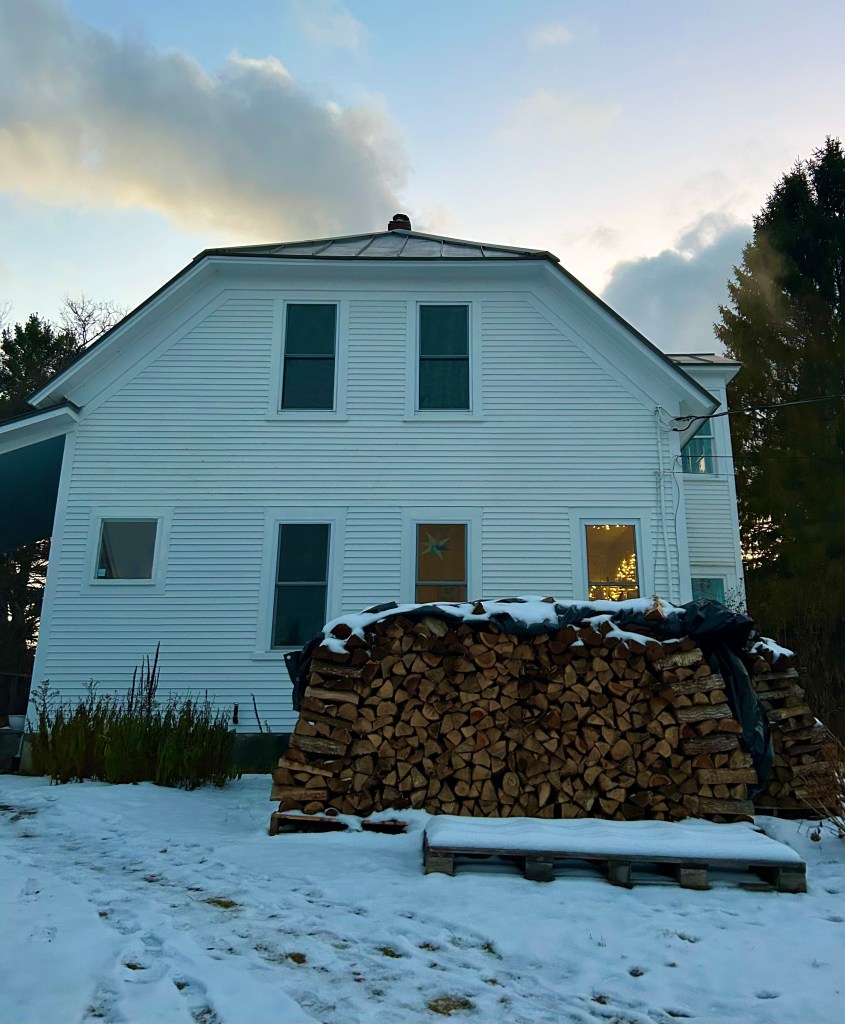
Midwinter now in Vermont, that eternal season of accumulating snow and intermittent dazzling sunlight. My parents, bickering or laughing in their front seat domain where the three of us kids were clearly only intermittent visitors, were enmeshed in their crazy lives, scooping us along in their journey. As for us kids, the void of that quarter-sized hole in our family car and the pleasure of those unexpected sweet drinks, the promise, perhaps, of a swim in a campground pool later that evening, defined those summer days.

Now, decades beyond that cherry drink, I see my own rugged journey spanning decades, my daughters always along and still along, as we’ve come together and parted and reunited with so many people over these years…. In the end, perhaps, what remains with a child might simply be that special drink, not the mighty panorama of ancient geology or the American landscape of truck stops and diesel fumes and KOAs, not even my parents’ own struggles to figure out their lives — where are we going? what are we doing? — that, in my parenting turn, I’m hammering out, too.

From the inimitable essayist Leslie Jamison: “Don’t assume the contours of another person’s heart. Don’t assume its desires.”

What’s at the heart of a story?

Crack in the windshield, the snowy interstate, the winter metaphor for this cancer journey.

25 hours. Here’s a smattering of highlights… A hard-knuckled drive on unplowed and marginally plowed roads, a side stop to avoid a collision on the exit ramp. Who knew these things gathered such snow? The town lights dimmed by snowfall. On a hotel’s second floor, I lay in bed talking to my siblings while my daughter ate chicken curry. In the bleach-smelling night, I limped up and turned off the heat, stood at the wide window looking out at the neon lights across the midnight-empty highway. The storm had ceased; the neon gleamed GARDEN, so brilliantly red and commercial that, in my sleep-addled mind, I couldn’t pair that word with loamy soil, coiled earthworms, the promising nub of May sugarsnap peas. Unable to sleep, I lay awake, parsing together a story: hook, conflict, and what does resolution mean, anyway? What’s at the heart of a story?

In the early morning, two full lanes of traffic streamed towards Dartmouth Medical Center. On the short cold drive, we drank hot coffee. From here, the story unfolds into the parking garage, blue paper masks, the complexity of so many stories, with so many words. The words alone are brand-new to me — Doxorubicin, Methotrexate— and I labor to learn these, to put pieces of what I can know of my story together. The wide halls in this building soar high, softening voices as the daylight falls down. Always, I hold in my body this conflicted and twisted sense of how much I do not want to be here and how immeasurably grateful I am to be here — but more, too, the profound and sacred sense of so many people, patients and families and the immense staff, each with their own mighty stories, living these stories, in pain and in joy.

In the infusion room, where I sleep and sleep, this time no longer needing small talk, I wake and watch the juncos and chickadees, the nuthatches, flitter in and out of the hydrangea bushes with their brown last-year’s blossoms, perch on the feeders the nurses fill and tend.

The interstate home is clear. The cats yowl for dinner. My house is warm, the dishes washed, the hearth fed. February. The story spins on.