Closing February

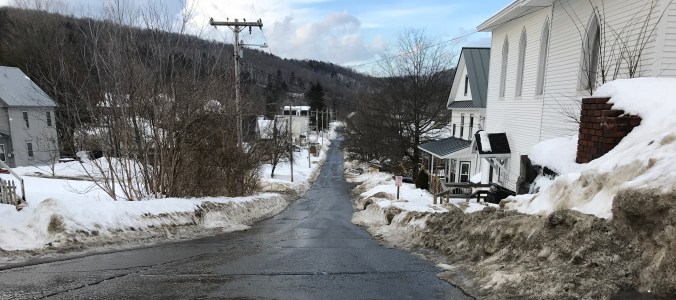
We wake to rain, the sound more reminiscent of March than April in Vermont, but not unheard of. So it begins: this back and forth marching to spring, freeze, thaw: put that on repeat.

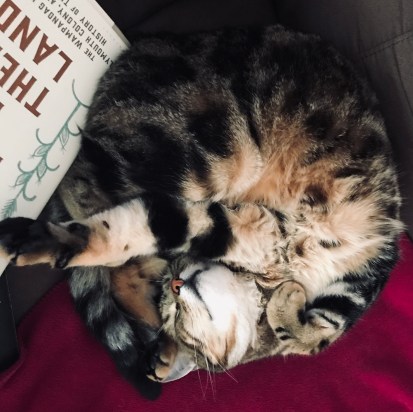
My little cat sits at the glass door in the kitchen, staring out at the rain, dreaming of chickadees and grackles.

Likewise, my daughter gets a little better from her illness each day, the fever emptying from her. So it goes in this winter: this season when I’ve felt surrounded by so much unhappy news. Sad deaths, lost jobs, injuries. Against this, a fever looms almost welcome, as if a lesser, harmless inoculation.

Spring’s a distance away: there’s no arguing with that. But the season change looms inevitably now. Outside my library door, deep in the pebbles against the southern wall, the first green shoots press upward, tentative, persistent, resilient.


IMG_7250

Dribbles of Spring

Light returns in a rush in these clear sunny days, where the sun has warmth but the shadows are frigid. My daughter abandons her coat.

The days, once so slow with toddlers, spin along, dawn to evening to the night’s constellations, as if the final years of my youngest’s childhood have accelerated. Living on the edge of this small Vermont valley, the sky stretches out as much as it ever does in Vermont, unlike the endless horizons of the west. Come summer, this world will be dense with leaves and gardens, but for now, we’re living in layers of snow and sky, beginning that push-pull of warmth-cold heading toward spring.

What was difficult
was the travel, which,
on arrival, is forgotten.

Louise Glück
IMG_7238

IMG_7240

February: Light

Entirely out of keeping with the season, I’m thinking of spring. Save for houseplants, the Vermont world is entirely without a single leaf of tender green leaf — in utter hibernation — but the days are lengthening.

Groundhog’s Day holds no suspense here — that garden-eater always turns around and burrows back down for more winter. In the meantime, a spring haiku.

The spring breeze.
Being pulled by a cow
To the Zenkoji temple.

— Issa

59726909138__BF33AA8B-25A4-4628-93FC-66383F62A886

Community Bonding

Written with a finger on a muddy car door in Montpelier: Spring is here! Hooray!

I mention this to my daughter at dinner, saying, I think a kid wrote this….

Why a kid? she asks. Why not a little old lady?

Why not?

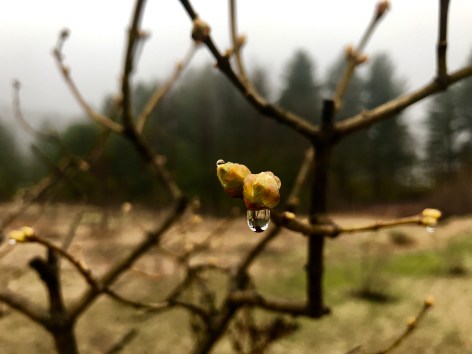
A single day of rain has pushed up green.

As January’s bitter cold links people when strangers comment about the cruel weather, spring does, too. It’s finally here. What a day….

This dewdrop world
Is but a dewdrop world
And yet —

— Issa

IMG_1673.jpg

Way Past the Ides of March

I read The Long Winter to my six-year-old when I was pregnant with my second daughter, lying down at 4 in the afternoon, too tired for anything else but reading. She was entranced — although not enamored. Twist hay into fuel? Grim.

Like so many kids, I loved those books, with the childhood stories of vanity cakes and rag dolls, the excitement of Christmas ponies and a family who lived in a dugout. I’m reading Caroline Fraser’s Prairie Fires — the adult story around the Wilder family revealed as loss, loss, loss…. How glad I am for our warm house, the morning sunlight in our kitchen with the cats sleeping at my feet. We’re on the far side of winter today.

15 degrees today, with brilliant sunlight: I flung open the doors and windows, whooshing out the winter air in our house, throwing blankets over the porch railings and leaning over the snowbanks, listening to robins.

Here’s illustrator Garth Williams:

(Laura Ingalls Wilder) was never overcome by drabness or squalor. She never glamorized anything; yet she saw the loveliness in everything.

Prairie Fires, by Caroline Fraser

IMG_1131.jpg


Robert Pirsig

Robert Pirsig, dead at 88, I hear this morning, driving along a rutted back road.

I pilfered Zen and the Art of Motorcycle Maintenance from my dad’s bookshelf when I was a teenager, intrigued by its title, lured by the lush fatness of reading material. Not that many years later, my dad showed me an article (in the Times Book Review section, maybe?) Pirsig had written about his son’s murder.

What I’ll always remember about that book is the high school teacher who told me the book saved his life. What higher complement to give a writer? And yet every time I think of Pirsig, I think of that essay, too…..

Sometimes I like to think about truth in the image of an old and wrathful Buddhist master who grabs us, shakes us, and shouts, ‘Drop it now!’ Truth can be wrathful.

– Anam Thubten, No Self, No Problem: Awakening to Our True Nature

FullSizeRender