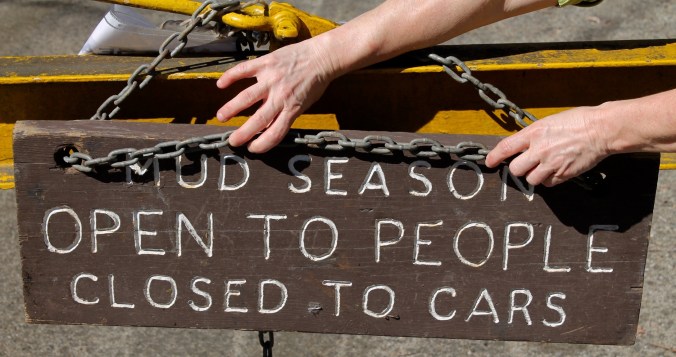
Hope Springs

Some unexpected events in our thawing patch of Vermont:

  • dinner guests of chatting children eating grilled eggplant and chicken wings, with gusto
  • exquisitely beautiful poems read at the Galaxy Bookshop last night – and adult companionship, too
  • clouds of frog eggs, knots of trillium blossoms, profuse sunshine and clothes drying on the line
  • a rotten tooth mended

But hope is not about what we expect. It is an embrace of the essential unknowability of the world, of the breaks with the present, the surprises. Or perhaps studying the record more carefully leads us to expect miracles – not when and where we expect them, but to expect to be astonished, to expect that we don’t know.

Rebecca Solnit, Hope in the Dark

FullSizeRender.jpg

Brattleboro, Vermont/Photo by Molly S.

Watching the Light

I walked into work yesterday morning with a woman who didn’t grow up in this country. She’s learning to drive, an oddity here for a woman in her thirties. In rural Vermont, just about every kid – usually long before the requisite 16-years-old – drives.

Although like most Americans I’ve had a romantic fling with the happy motoring years (just how many times have I driven around the country?), I told this woman part of me longs to hang up the keys and know the earth only through the soles of my boots.

Our world is so overly, crazily full of images – mine as much as anyone’s. As one kind of antidote, our after-dinner twilight walks are as much about the walking and conversation as wandering through the lingering bits of daylight and spying the first stars twinkling overhead. Spring, drenchingly wet, raw, gloriously full of minute surprises, tugs us.

Last evening, my younger daughter and I stood outside as the cool night came down, listening for the peepers. These tiny creatures haven’t stirred in our neck of the woods yet, but the streams tumbled melted snow, in a steady song, to Lake Champlain.

My sister-in-law is a painter, and I’ll say, how long did it take you to paint that painting. She’ll say, It took me maybe three days, but it took me all my life to get the skills to paint that painting.

– Anthony DoerrFullSizeRender


Reflections

Long after sunset last night, my daughters and I went walking, in that thick rural dark broken only by the lights of the single house across the road, the lights of our kitchen behind us, and overhead all those stars. The little girl, fearful of the dark, walked between her sister and me. Those glimmering, oh-so-bright stars twinkled in the treetops, still bare and leafless at this time of year.

Earlier that day, the younger girl had dug quartz pebbles from the roadside mud, washed them clean in a puddle, and gave them to me to put in my pockets for safekeeping. My diamonds, she called them.

Shiny bits of stars, bright bits of stone.

As we walked back to our house, guided by the compass of our kitchen light, the older daughter told us she parted her curtains every night and slept every night with a windowful of stars over her bed.

I asked my daughters to imagine our world without stars, with only darkness, none of the constellations cartwheeling across the sky, no dipper pouring luck over our roof, no Orion standing sentry through those bitter winter nights, no Milky Way – that mesmerizing arc of the eternally and ever-beautiful mysteriously ineffable. What kind of world would this be without the lights of the great heavens that have endured, before and after, any human stirrings on this green and blue planet?

My daughter, age 17, pondered this as we stood with our faces tipped upward. Then she said, That would suck.

Indeed, daughter.

I experience a period of frightening clarity in those moments when nature is so beautiful. I am no longer sure of myself, and the paintings appear as in a dream.

– Vincent Van Gogh
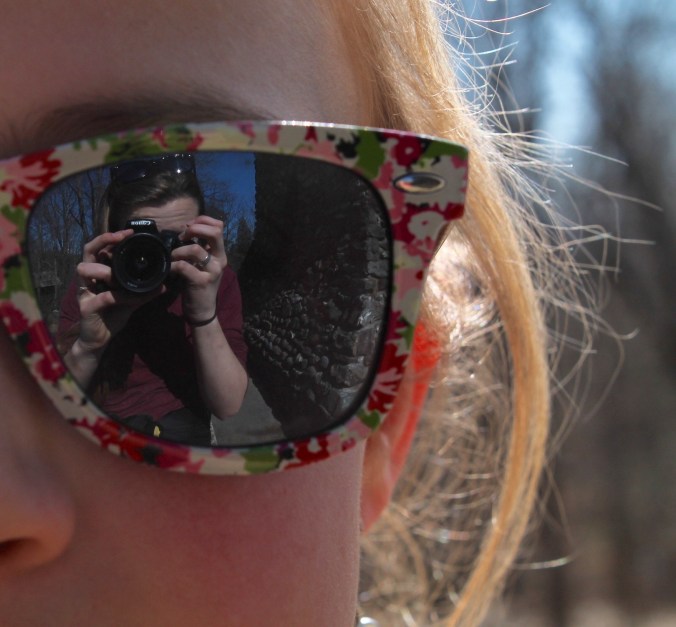
IMG_0485

Montpelier, Vermont/Photo by Molly S.


The Civility of Vermont


Like anywhere else, Vermont has its share of injustices, but also a steady practicality. People generally lend a hand in need, to friend or stranger.

This afternoon, the girls and I took a teenage friend on a steep walk. Why? she inquired.

Because it’s fun, I answered.

On a day like today, full of sunlight, the grass beginning to green even in March, with no bugs and no ice, what a joy to be human, and not a machine.

We are born with some things in our veins…

Virginia Reeves, Work Like Any Other

IMG_0473

Montpelier, Vermont/Photo by Molly S.


Surprise

On a lark, my daughters and their friend found a lacy fern today, pressed it over a hard-boiled egg, wrapped it in a piece of tights one of the girls had worn to ballet class, and buried the egg in a nest of red cabbage leaves in a pot. I added vinegar and water. When it had boiled and cooled, the older daughter pushed away the soft cabbage leaves.

She held the wrapped egg in her hands for a moment while we guessed what would happen.

The egg was a beautiful shade of blue, the fern hazy enough to be clouds in a summer sky.

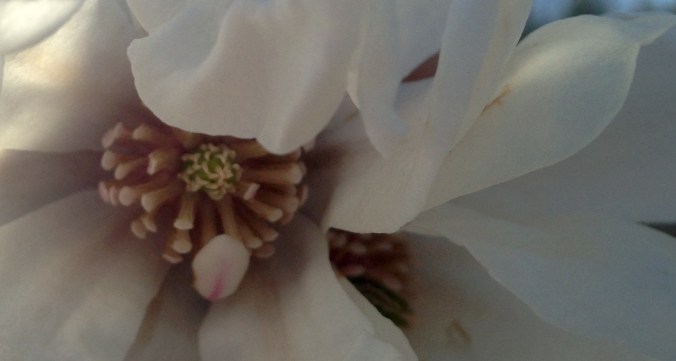
Could this be the appeal of egg hunts, beyond the chocolate? A wholly unexpected bit of beauty, sized to fit your hand? At the time of year in Vermont when all is variations of mud, scattershot with slushy snow?

…Nothing is so beautiful as spring —
When weeds, in wheels, shoot long and lovely and lush…

Gerard Manley Hopkins

FullSizeRender.jpg

Maple, Maternal

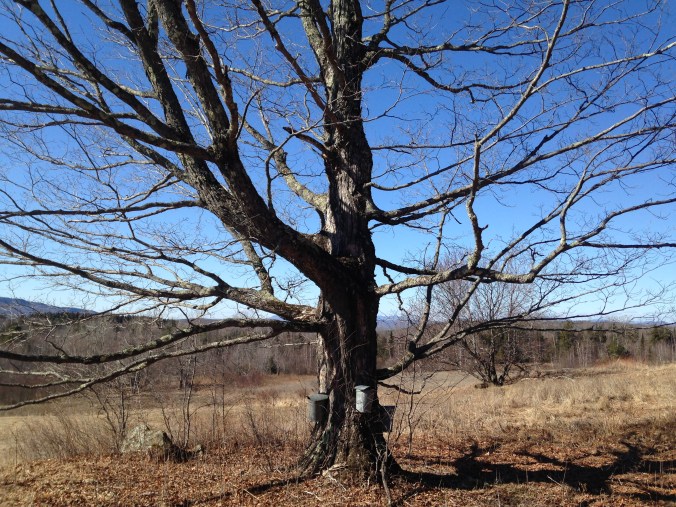
The granite foundation of a barn I never saw standing once spread across a field not far from our house. The barn burned before I lived on West Woodbury Road, and a number of years ago, the property changed hands. The new owners grazed cows in that field, and someone removed all the old granite blocks. Now, a young Menonnite couple and their two small boys live there. Last spring, they tilled an enormous garden and planted a huge strawberry patch. Those plants should produce this summer.

Over years, my growing daughters and I watched this field change. One summer afternoon, as we sat on the lawn of the long-abandoned farmhouse,  I noticed the electrical line stopped at the barn. I’d heard rumored the bachelor who last lived in the farmhouse had no electricity, but I’d never noticed that rural electrification must have brought juice right up to the barn and then stopped. The house was across the road. From when it was built until it was pulled down, electric lights never lit its rooms.

This spring, the young couple with their two merry-eyed boys tapped maples all along the road. Last summer, we saw them – father, mother in her skirts, boys in the bike seats – pedaling along the road in the well-lit evenings. May the sap flow generously for these kind people, from the trunks of these long-enduring, wide-reaching beauties. Today, I lay on the cold ground, staring up at that infinitely blue, March sky, world without end.

Whoever you are, go out into the evening,
leaving your room, of which you know every bit;
your house is the last before the infinite,
whoever you are.

– Rainer Maria Rilke

IMG_0875.JPG

West Woodbury, Vermont