A cup of tea, surrounded by ice, broken boards.

In the pale blue dawn, I wake with the taste of wild mushrooms in my mouth. In my dream, I’m eating tender stems from a soft paper bag. In the non-dreaming chemo world, I’m temporarily forbidden from dining on fresh anything from the produce world, but in this nubbly dream I munch on, relishing the residual taste of dirt, the forest itself.

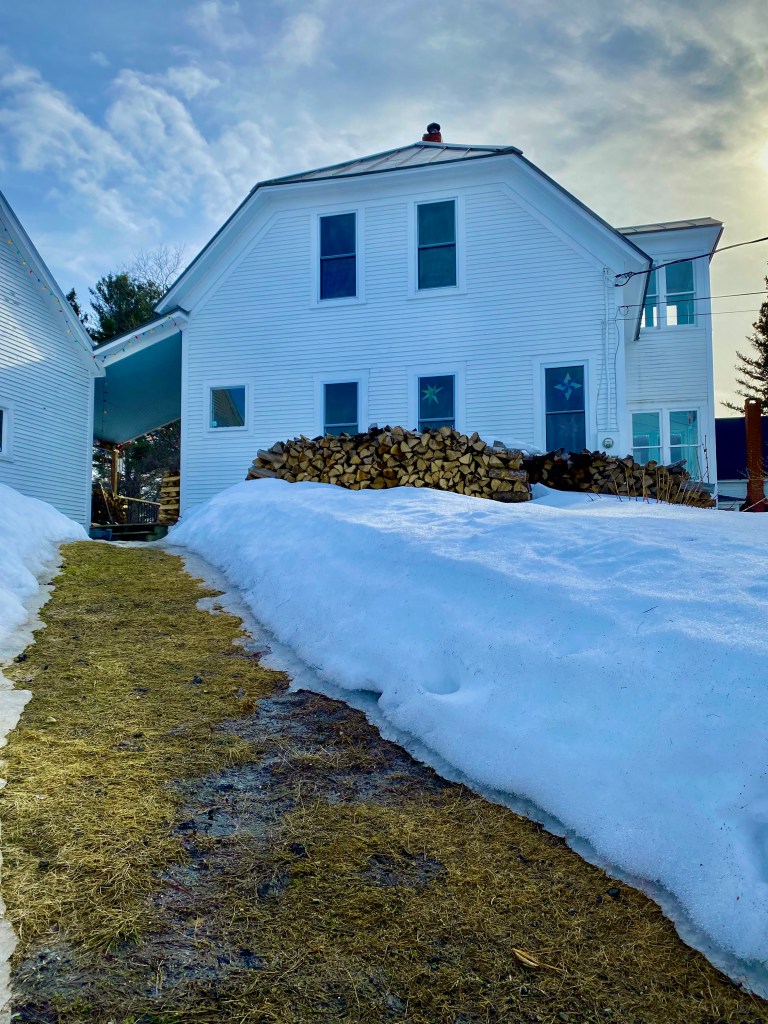
I open my eyes. Day 4 – oh, I am counting these 21 days until the sixth of these six chemo sessions – Day 4, and through my window, geese wing across the sky. These past few days, spring blew in, fierce sun. On my back deck, broken by ice, a friend stopped by yesterday. I made tea, and we talked about this and that, kids and disease and politics, when we might plant spring peas. On my desk waits a cardboard box of wildflower seeds, a gift for this summer.

Spring is radiant light and also brokenness. The ash buckets trailing coals, the deck joists smashed by the roof’s ice, the barn still desperately in need of paint. Me, too, broken, with my few hours of clarity in the mornings, the stumbling way I’m heading towards this final treatment. Around me, too, the remains of this winter: people who have helped me more than I could have imagined, others who have distanced themselves, the disease itself, perhaps, too much, the leer of mortality a shivering thing. All that is neither here nor there. The cancer has stolen a share of my vitality, my economic steadiness, a winter of my life. And yet, all these pinwheeling days and nights as I’ve traversed this tunnel – what an infinitely rich journey, one I never would have booked a ticket to join.

My daughter sends word of singing redwing blackbirds. Spring, mightier than winter’s brawn. The season of planning, putting things back together, rearranging and cleaning, of tipping our eyes up to the sun, relishing the light.

…. Ariel Gore repeatedly quotes Audre Lorde’s The Cancer Journals in her Rehearsals for Dying. In these lines, I was reminded how we each respond to crisis in others’ lives, too, from the soil of our lives.

Each woman responds to the crisis that breast cancer brings to her life out of a whole pattern, which is the design of who she is and how her life has been lived.

Go for a walk around the block?

March 7, my father’s 88th birthday today in what is doubtlessly sunny New Mexico. So much for my plans, months ago, to visit him on this day.

Here’s the thing about living such a long life — I could pick countless numbers of things to write about, but what I woke up thinking about this morning was how my dad would often say, “Let’s go for a walk around the block.” At any time of day, we’d set off. Sometimes just up the street and actually around the block, or other afternoons on hours-long rambles through the woods behind our neighborhood. We walked in sunny days, through sleet, through knee-deep snow, in the sweet spring rain. It’s a habit all three of his children have continued our whole lives, and his four grandchildren, too.

Sunny, here, in northern Vermont, too, a day of such optimism that the blue sky choruses the inevitable promise of spring. And for my father, one of our favorite poems from the unmatchable Hayden Carruth.

Birthday Cake

For breakfast I have eaten the last of your birthday cake that you
had left uneaten for five days
and would have left five more before throwing it away.
It is early March now. The winter of illness
is ending. Across the valley
patches of remaining snow make patterns among the hill farms,
among fields and knolls and woodlots,
like forms in a painting, as sure and significant as forms
in a painting. The cake was stale.
But I like stale cake, I even prefer it, which you don’t
understand, as I don’t understand how you can open
a new box of cereal when the old one is still unfinished.
So many differences. You a woman, I a man,
you still young at forty-two and I growing old at seventy.
Yet how much we love one another.
It seems a miracle. Not mystical, nothing occult,
just the ordinary improbability that occurs
over and over, the stupendousness
of life. Out on the highway on the pavement wet
with snow-melt, cars go whistling past. 
And our poetry, yours short-lined and sounding
beautifully vulgar and bluesy
in your woman’s bitterness, and mine almost 
anything, unpredictable, though people say
too ready a harkening back
to the useless expressiveness and ardor of another
era. But how lovely it was, that time
in my restless memory.
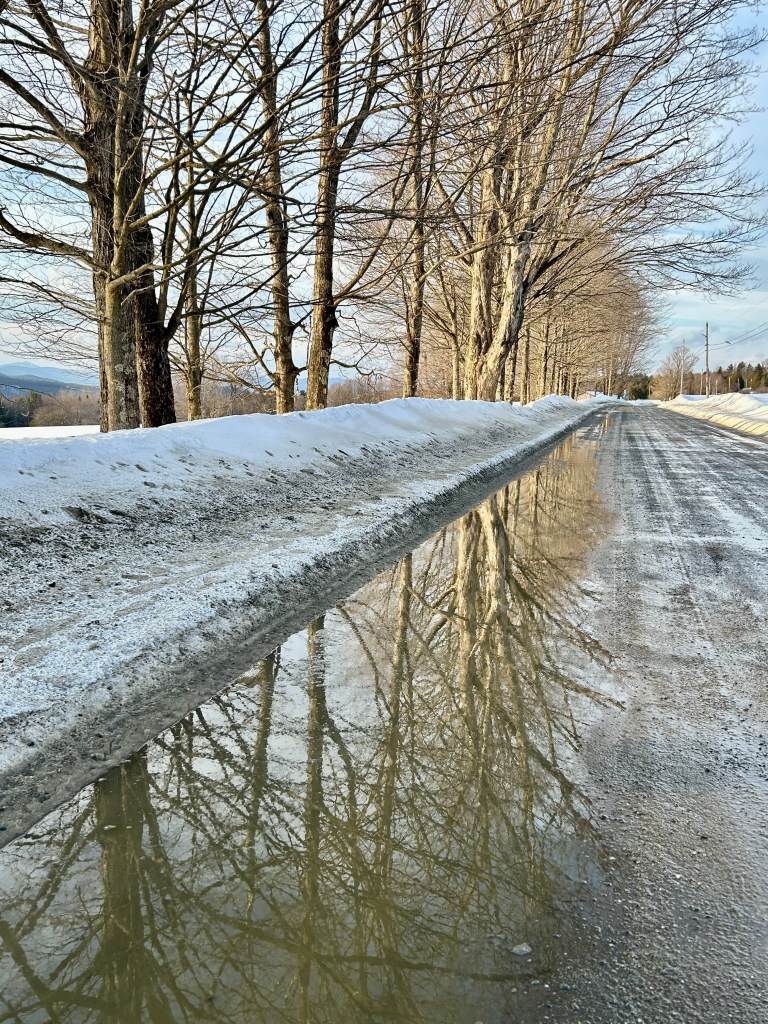
This is the season of mud and thrash, broken limbs and crushed briers
from the winter storms, wetness and rust,
the season of differences, articulable differences that signify
deeper and inarticulable and almost paleolithic
perplexities in our lives, and still
we love one another. We love this house
and this hillside by the highway in upstate New York.
I am too old to write love songs now. I no longer
assert that I love you, but that you love me,
confident in my amazement. The spring
will come soon. We will have more birthdays
with cakes and wine. This valley
will be full of flowers and birds.

“You ask the sea, what can you promise me…”

About 17 years ago – in what doesn’t at all seem like another lifetime but part of these continuous decades I’m living, I walked in the dark from our sugarhouse to our house with my two children. Having worked all day, I’d received a reprieve from sugaring and carried up the dinner chili pot and dirty bowls and spoons. March, the nights are always cold, although sometimes a balmy breeze stirs up as a teasing promise of spring.

I threw the kids’ soaked snowsuits in the washing machine (in those days, the washing machine was always churning) and banked the wood stove. I was knitting something from yellow yarn. What this was – a child’s cap, a gift pair of mittens – I can no longer remember. But I remember reading Maurice Sendak’s Chicken Noodle Soup with Rice to my five-year-old, who slept beside me, profoundly as a child sleeps, her cheeks flushed rosy from a day outdoors. In these hours of making syrup, the children had brought in the mail from the driveway box.

The house was warm after hours in the unheated sugarhouse and also cold, since no one had fed the fire all day. I opened The New Yorker and read “March” by Louise Glück, a poem I probably quote every March in this blog. 17 years later, I’m still reading this poem, even as that kindergartener is now a college sophomore. There’s that cliché, in like a lamb, out like a lion, but March is often lion and lamb, all the time. Now, 17 years later, less impatient with spring’s maddening dawdle, I no longer read Maurice Sendak. Yet, unlike the triteness that when the children are grown, they’re flown, our family delves into my disease, digs hard at the stuff of what family means.

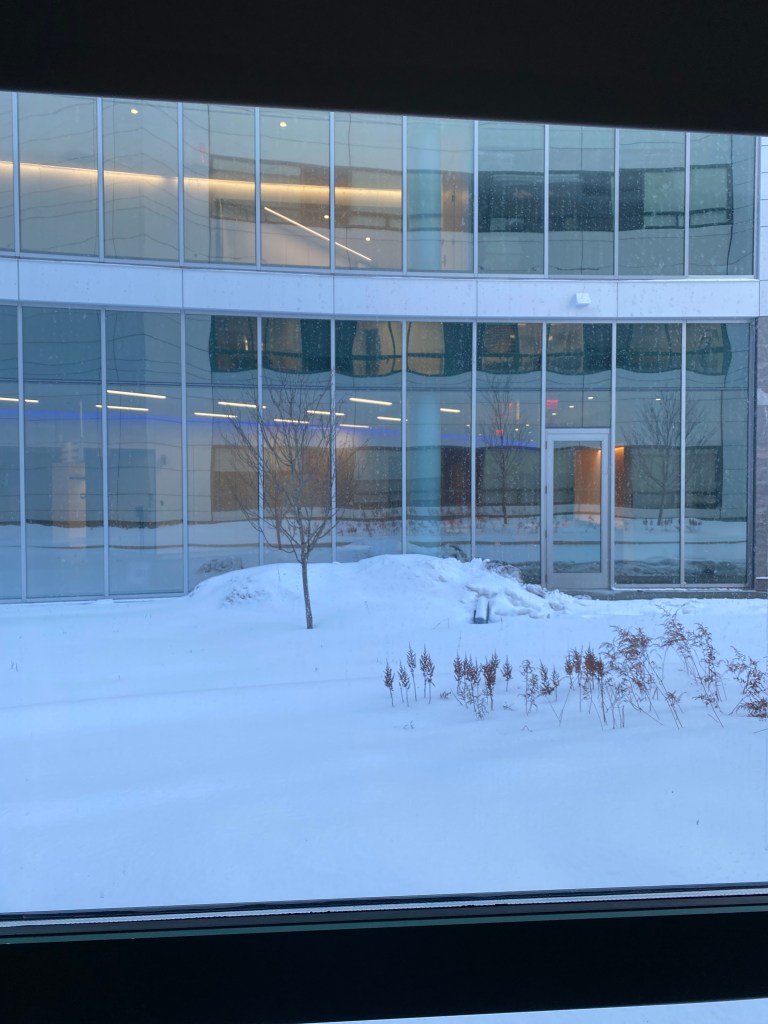
Still at Dartmouth, the nurse muses this morning about nine degree temperatures. March is a brutal tease and may leave more sharply than she arrives. But it’s March. The earth will thaw. The universe ambles along, dragging us, too.

You ask the sea, what can you promise me
and it speaks the truth; it says erasure….


The earth is like a drug now, like a voice from far away,
a lover or master. In the end, you do what the voice tells you.

Sips of May.

As the spring dusk settles down, I’m wandering around the edges of my garden. The lilacs have just begun opening, a tiny four-petaled blossom here, another there, the remainder of that lavender flower still knotted, not yet relaxed into the wide open spring season.

I’m in my ragged jeans, dirt under my nails, when my neighbor pulls into her driveway and gets out of her Prius. She’s wearing what she calls her rag-bag dress, and the two of us make a kind of pair. I’ve known her since our oldest kids were babes in arms, not yet eating smashed carrots.

It’s been a year for each of us — and I mean that: a year. We both have college-aged kids in and out of our houses. Under the fragrance of pear blossoms, we immediately head into that long-running conversation we have about her work and my work, about writing and art, about aging parents. The half moon rises over my apple tree.

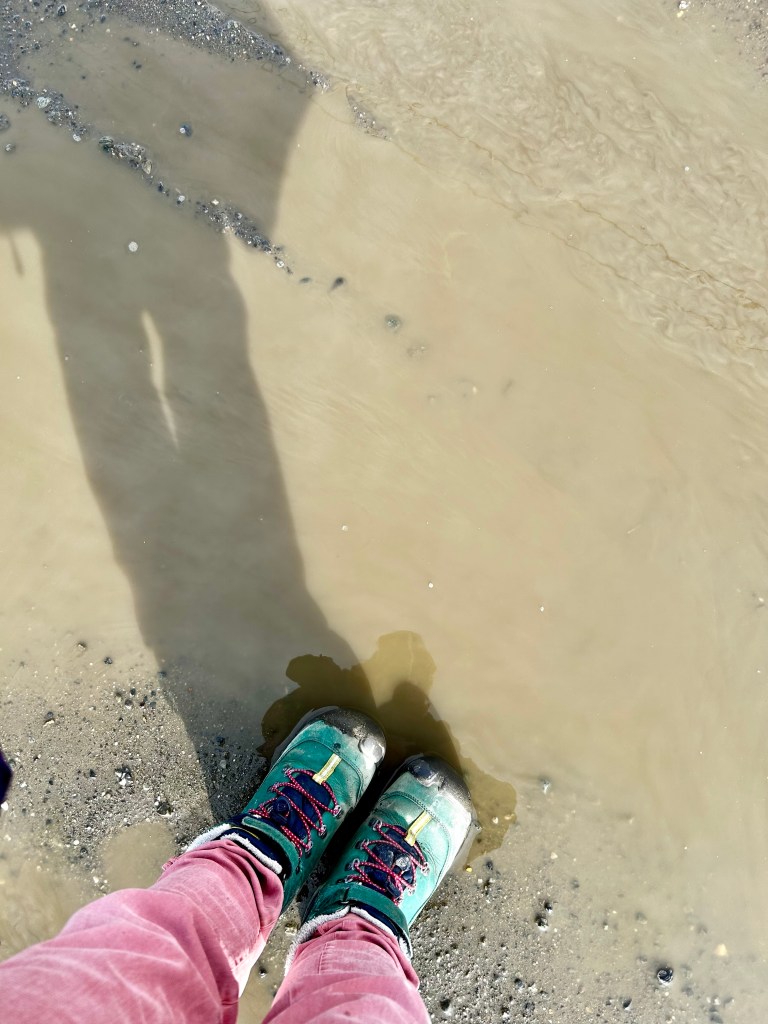
May, in all her radiant beauty. Here I am, with a hundred chores in one day — a hot water heater repair, more writing, plant arugula and Brussel sprouts, my constant fiddling with the wood pile, the daughter chat. How this Vermont world loves to green. Yes, and again, more, yes, yes.

A little Madness in the Spring.

Post-eclipse, rain moves in, balmy tinged with cold. Rain will force spring’s green. Our lives spin on — of course, of course — but the eclipse and all its radiant glory trails us, the collective experience of the cosmos’ unflinching steadiness and how the heavenly bodies align, majestically moving in their infinite complexity. No stasis in this life.

Someone recently asserted to me the caliber of her character — I’m a good person — and the phrase lingers with me, far more a reflection of my wavering self than of the speaker. We’re so unlike the celestial bodies, our mortal bodies driven by gravity and time, but our actions dominated by our uniquely strange brew of our jumbled lives, passions, weaknesses.

The eclipse’s profound beauty for a few moments swept away the pettiness of our thin ideas, our nattering chatter about so much that, in reality, amounts to scant little. Perhaps the eclipse unified us not only by its luminescent beauty, but tugged out the finer strands of us, too.

For a day or two, Vermont was jammed with visitors from so many places. Vermont’s not unique with much that’s happened in recent history — floods and wildfire smoke, the pandemic, and division and division and division. My state also has some of the greatest privileges on the planet: absence of warfare, significant wealth. Let the eclipse bloom last long, carry us through a muddy spring and into summer, keep us questioning what our own goodness might mean, and how goodness transmutes into action.

Last, not least: my giddy joy of gold crocuses. Chionodoxa, AKA glory of the snow, scattered over muddy hillsides, last year’s dull lawns.

A little Madness in the Spring
Is wholesome even for the King,
But God be with the Clown—

Who ponders this tremendous scene—
This whole Experiment of Green—
As if it were his own!

— Emily Dickinson

Your own darkness.

An old friend from years ago sends me a message. She’s persistent, wearing down through my imposed or self-imposed hermitage, whatever this thing is I’m doing, and I drive myself out on muddy roads. She has such a lovely little girl, I’m smitten immediately. I sit down on the floor and chat up the child, and eventually remember my good friend and how much I enjoy her world. She’s funny, with boundless good will and cleverness, in a life that’s had her share of lemons.

End of March, nearly Easter, my perennials spike up further every day. How the earth desires green. I’m far enough along now in my own life that I know the cupboard of my mortal life will always hold certain grooves and scars, its beaten shape, the way the material in my life has shaped me. Aren’t we all that way, though? Maybe this is why spring is the dearest of seasons, that from mud and ice emerge tender shoots, the improbable made manifest every year.

Beginning

The moon drops one or two feathers into the field.   
The dark wheat listens.
Be still.
Now.
There they are, the moon’s young, trying
Their wings.
Between trees, a slender woman lifts up the lovely shadow
Of her face, and now she steps into the air, now she is gone
Wholly, into the air.
I stand alone by an elder tree, I do not dare breathe
Or move.
I listen.
The wheat leans back toward its own darkness,
And I lean toward mine.

— James Wright